Tell us about the job
Takes about a minute. No obligation.
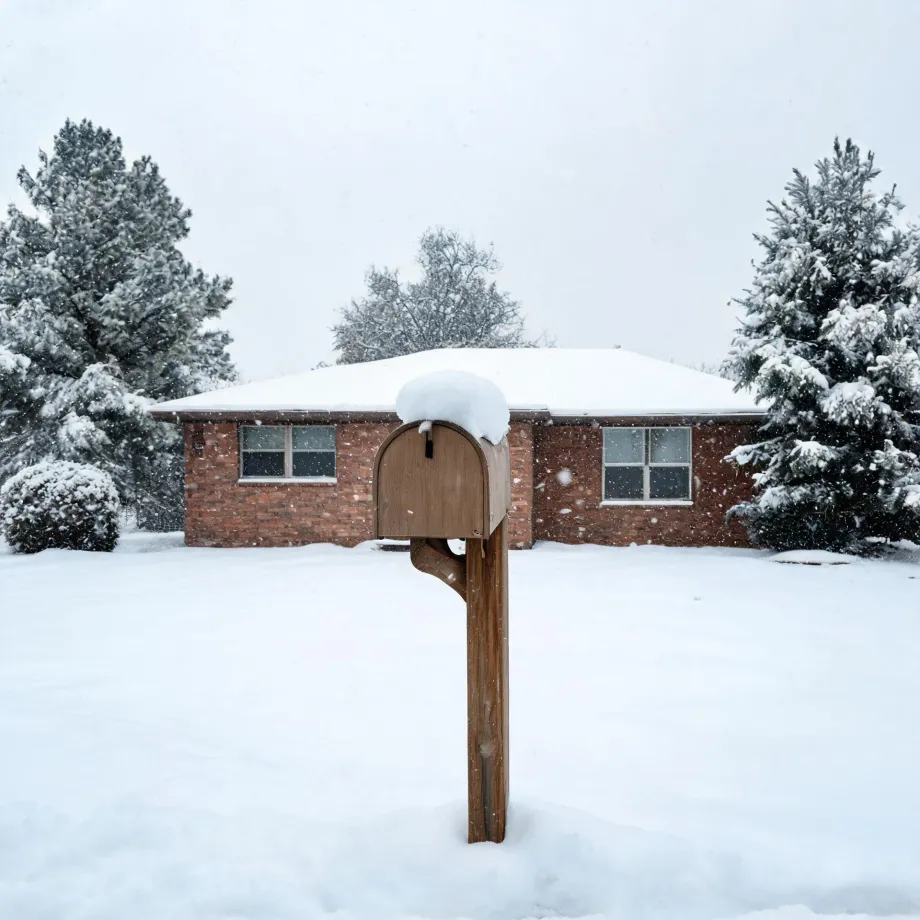
A furnace repair in Franklin County starts with the parts that actually cycle: the burner, the heat exchanger, and the ignition system. Homes in Franklin County, MO run heat about seven months a year, from October through April. By the time a homeowner calls, those components have already absorbed the bulk of what they will ever be asked to do. A contractor pulling a furnace here expects to find wear concentrated in the combustion side, not in parts that sit idle. Cracks in a heat exchanger or a degraded igniter rarely announce themselves mid-summer, so the first cold day of October is when failures that have been building for years finally show up.
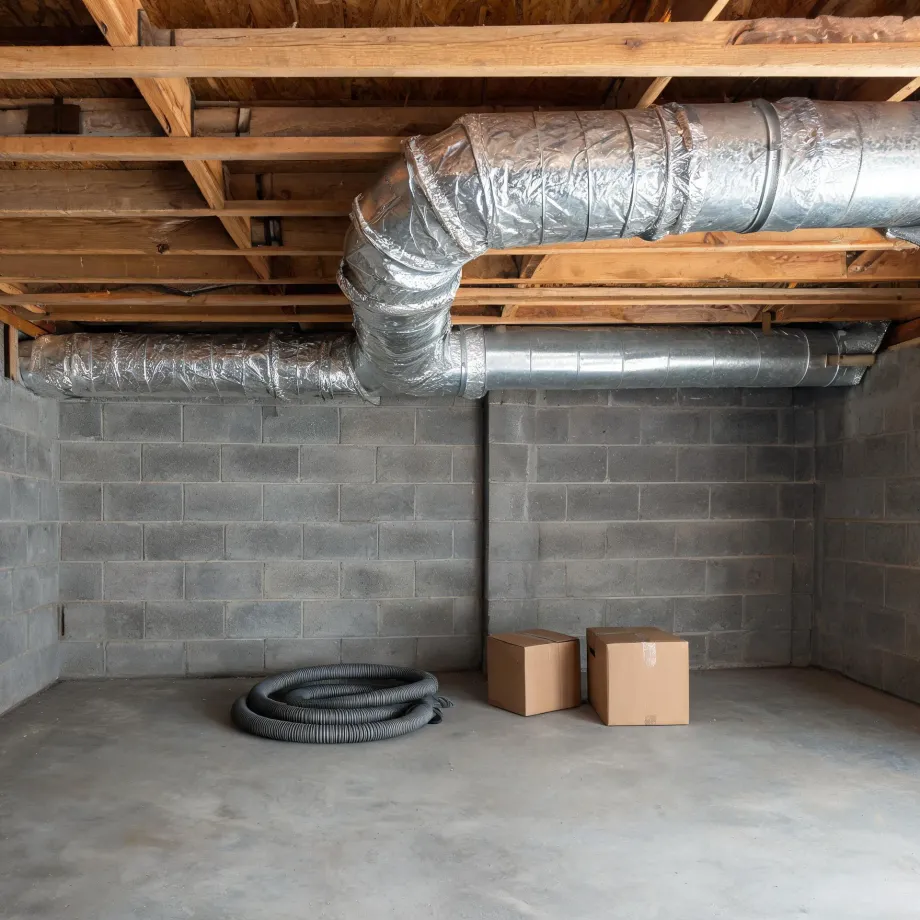
Half the homes in Franklin County, Missouri were built in 1984 or earlier (2020-2024 ACS 5-year). A furnace running in a house that old has likely been repaired before, and what a contractor finds once the heat exchanger or gas valve comes off the unit decides how the job goes. Some parts are still made. Others require a substitute that fits differently or carries different tolerances, and the contractor has to determine that before quoting, not after ordering. The ductwork in stock this age was sized for whatever was original, which is a separate question the repair scope does not reopen unless there is a problem pushing heat through it.
The Parts of a Furnace a Contractor Checks First
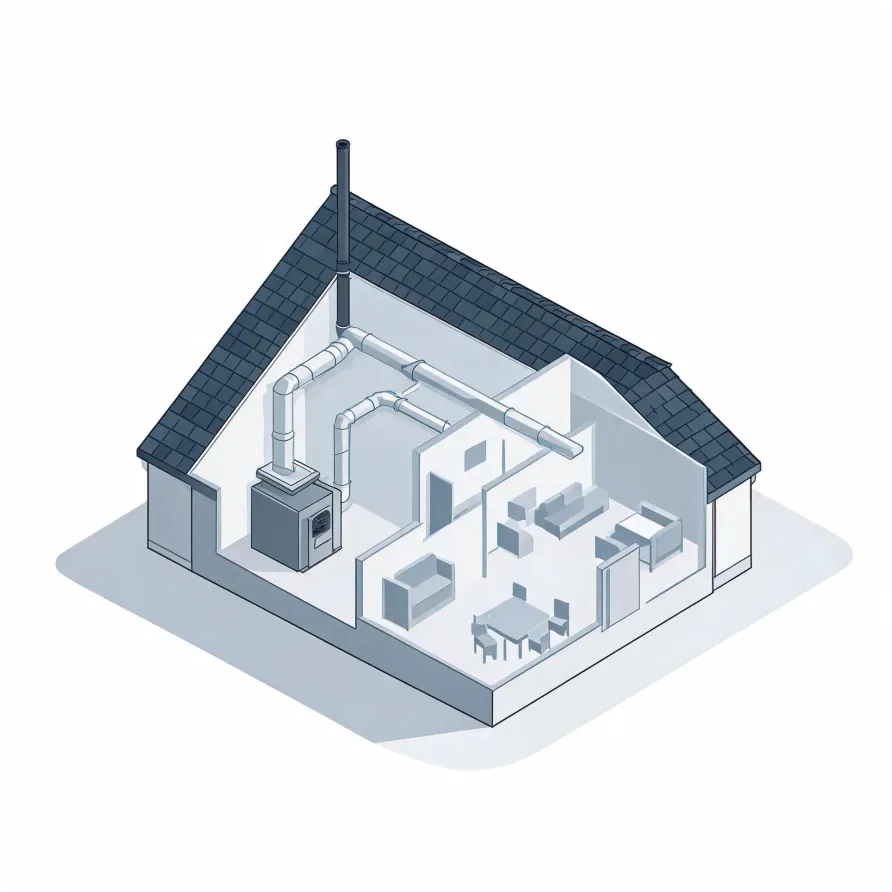
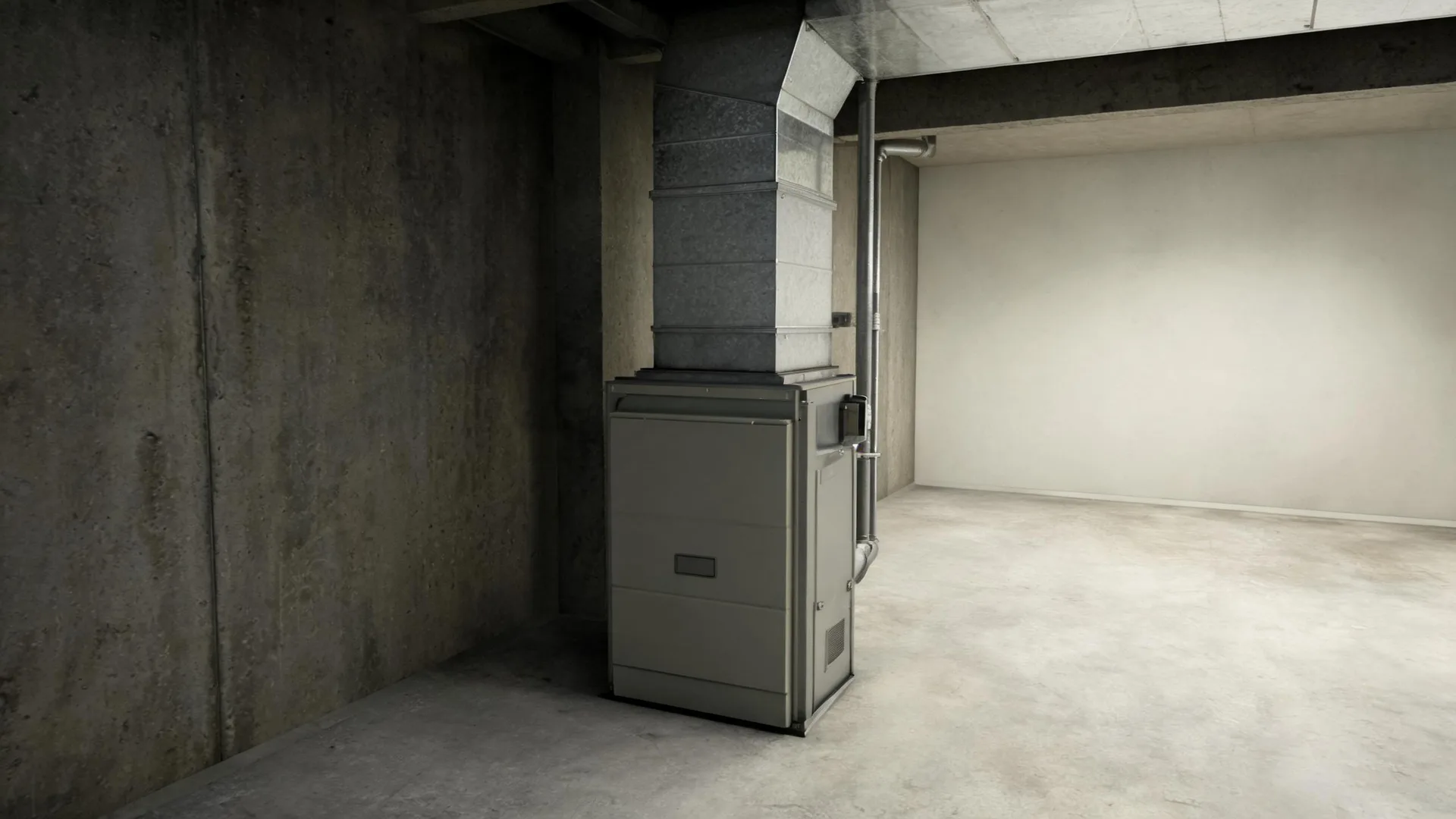
The furnace itself sits in a basement, utility closet, or mechanical room and is the piece a contractor goes to first. Inside it, the heat exchanger is the part most worth understanding: a crack or failure there is what makes a furnace dangerous rather than merely broken. The burners, which fire beneath the heat exchanger, and the igniter, which lights them, are the other pieces that stop a furnace from producing heat at all.
The blower motor sits inside the furnace cabinet and pushes conditioned air through the house. The flue pipe runs from the furnace to an exterior wall or chimney, carrying combustion gases out. A contractor also checks the control board, which coordinates every other component, and the flame sensor, a small rod that shuts the burners down if it reads that ignition has not happened correctly.
The drawing shows a typical furnace layout, and a licensed contractor will determine which components apply to your specific equipment and installation.
Get matched in Franklin CountyFranklin County, Missouri, by the numbers
129 severe weather events were recorded in Franklin County, Missouri between 2015 and 2024.
NOAA National Centers for Environmental Information, Storm Events Database, bulk CSV export, events 2015-01-01 through 2024-12-31.Half the homes in Franklin County, Missouri were built in 1984 or earlier (2020-2024 ACS 5-year).
U.S. Census Bureau, 2020-2024 American Community Survey 5-Year EstimatesFranklin County, Missouri holds 46,312 housing units (2020-2024 ACS 5-year).
U.S. Census Bureau, 2020-2024 American Community Survey 5-Year EstimatesOwners occupy 76.5% of the occupied homes in Franklin County, Missouri (2020-2024 ACS 5-year).
U.S. Census Bureau, 2020-2024 American Community Survey 5-Year EstimatesCodes & Standards Governing Furnace Repair in Franklin County, Missouri4 sourced rules and standards
What Happens When a Contractor Comes Out
Non-weatherized gas furnaces manufactured on or after November 19, 2015 must reach 80.0 percent AFUE.
Non-weatherized oil-fired furnaces manufactured on or after November 19, 2015 must reach 83.0 percent AFUE.
Mobile home gas furnaces manufactured on or after November 19, 2015 must reach 80.0 percent AFUE.
Non-weatherized gas furnaces manufactured on or after December 18, 2028 must reach 95.0 percent AFUE, up from the 80.0 percent minimum that applies to units manufactured before that date.
Severe Weather Events in Franklin County
Furnaces in Franklin County work against whatever the local climate delivers, and weather stress is one of the reasons heating equipment wears or fails. Knowing the pattern of conditions here is part of understanding why repair needs in this area look the way they do.
129 severe weather events, 2015–2024. Source: NOAA National Centers for Environmental Information, Storm Events Database.