Tell us about the job
Takes about a minute. No obligation.
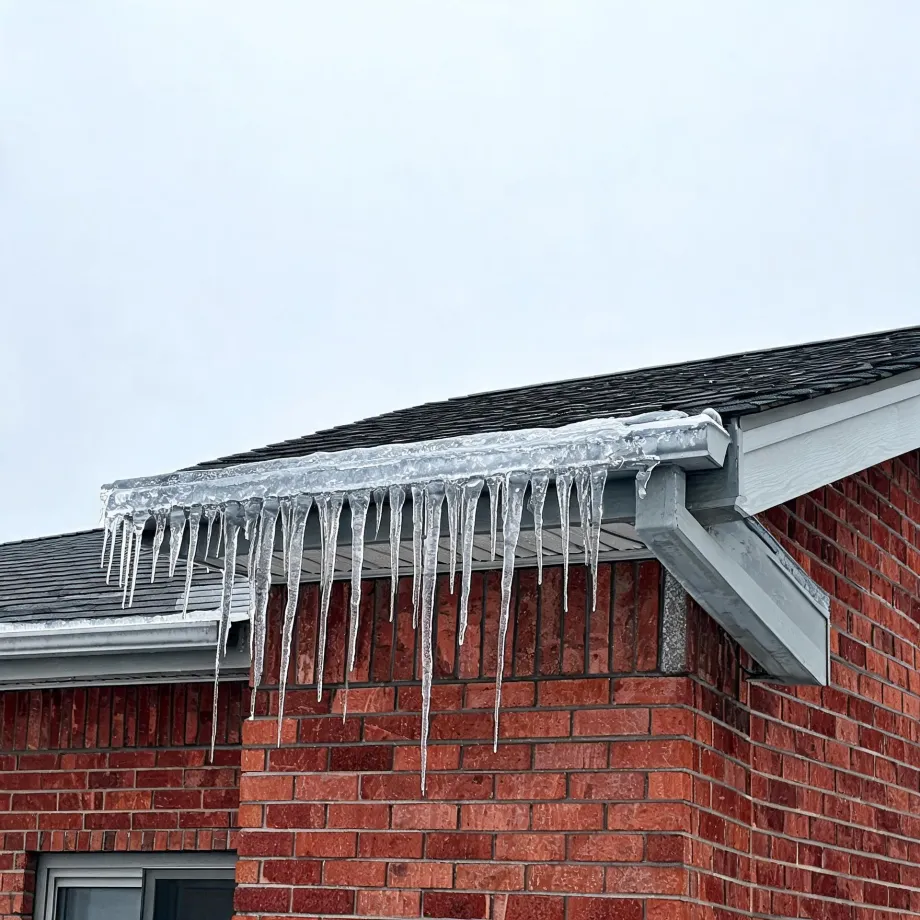
Homes in Crawford County, MO run heat about seven months a year, from October through April. A furnace that has run through that kind of season carries its wear on the heat exchanger, the burner, and the ignition system. Those are the parts that cycle every time the thermostat calls for heat, and in this county they cycle through most of the calendar before the system gets any rest. A contractor quoting a repair here will check the heat exchanger for cracks and the ignition system for degraded components first, because that is where the accumulated load shows up.
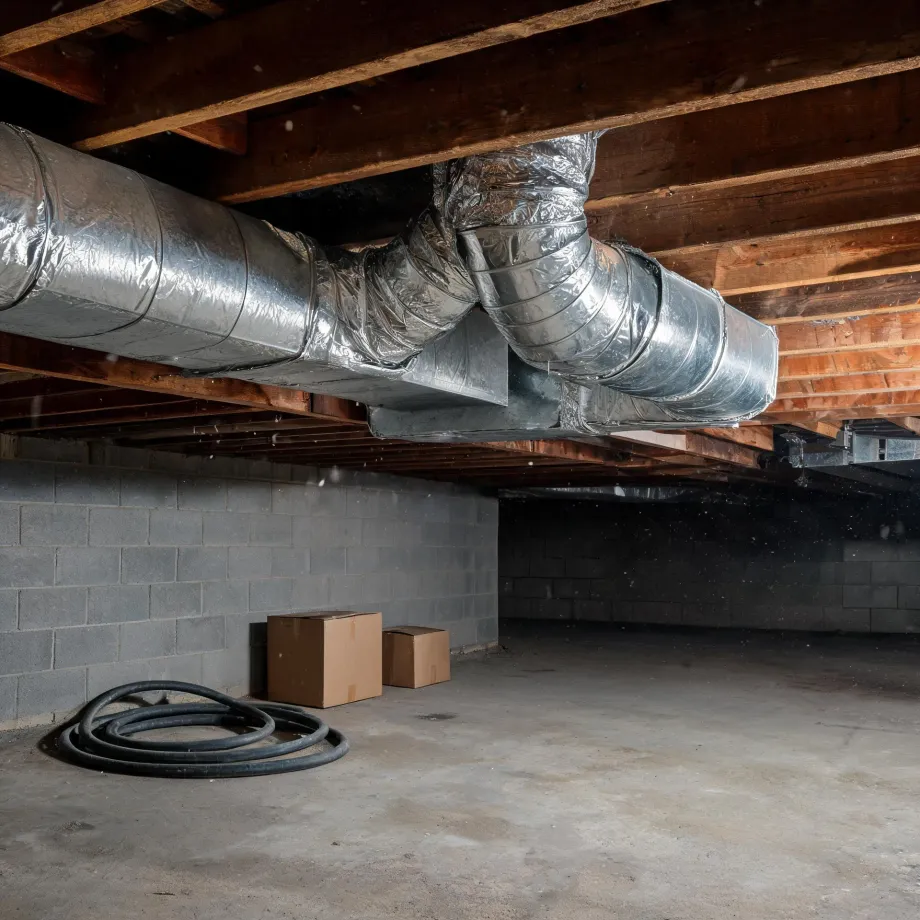
Furnaces running in houses built for a different generation of equipment accumulate stress in specific places: cracked heat exchangers, burner assemblies running outside their original tolerances, and flue connections sized for units that were replaced years ago. Half the homes in Crawford County, Missouri were built in 1981 or earlier (2020-2024 ACS 5-year). A contractor opening a furnace here has to price the actual components inside, because parts for systems adapted into older ductwork are not always a catalog pull and the condition of what surrounds the unit changes what the repair costs.
The Parts of a Furnace a Contractor Checks First
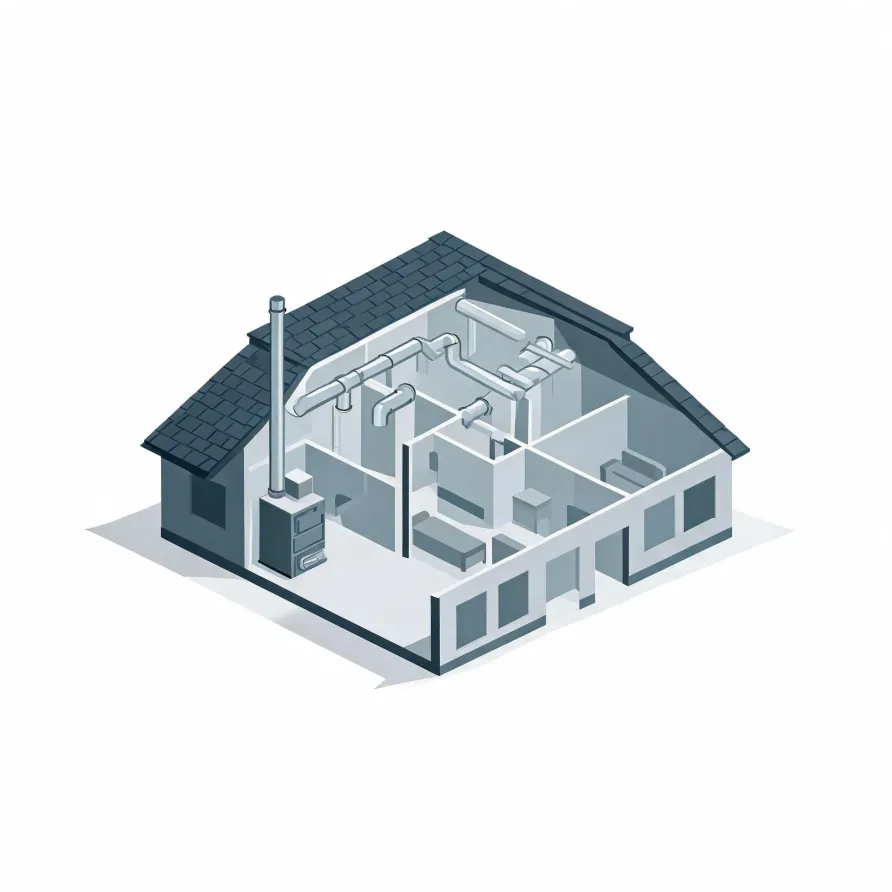
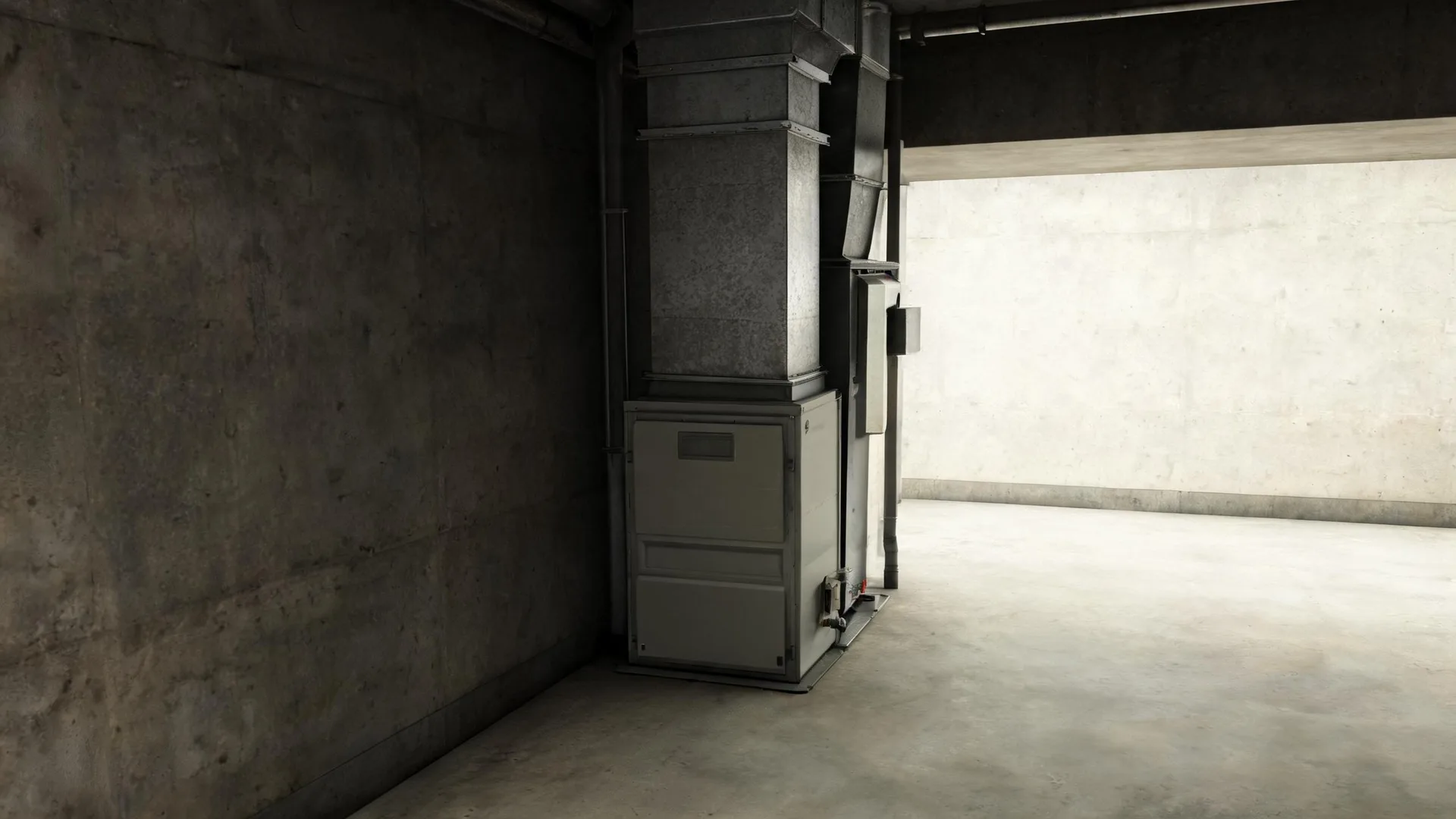
The furnace itself sits in a basement, utility room, or closet and is the piece a contractor goes to first. Inside it, the heat exchanger is the part that transfers heat to your air, and a crack or failure there is one of the more serious findings a repair visit can turn up. The burner assembly, the igniter, and the flame sensor all live inside that cabinet too, and any one of them can stop a furnace cold.
The blower motor sits at the base of the furnace and pushes conditioned air out through the house. The flue pipe runs from the top of the furnace up and out, carrying combustion gases away, and a contractor checks it for blockage or separation. The thermostat on the wall is part of the same system, and a wiring fault or failed sensor there can mimic a furnace problem.
The drawing shows a typical furnace layout, and a licensed contractor determines which components apply to your specific setup.
Find a contractor in Crawford CountyCrawford County, by the numbers
63 severe weather events were recorded in Crawford County, Missouri between 2015 and 2024.
NOAA National Centers for Environmental Information, Storm Events Database, bulk CSV export, events 2015-01-01 through 2024-12-31.Half the homes in Crawford County, Missouri were built in 1981 or earlier (2020-2024 ACS 5-year).
U.S. Census Bureau, 2020-2024 American Community Survey 5-Year EstimatesCrawford County, Missouri holds 11,416 housing units (2020-2024 ACS 5-year).
U.S. Census Bureau, 2020-2024 American Community Survey 5-Year EstimatesOwners occupy 69.2% of the occupied homes in Crawford County, Missouri (2020-2024 ACS 5-year).
U.S. Census Bureau, 2020-2024 American Community Survey 5-Year EstimatesCodes & Standards Governing Furnace Repair in Crawford County, Missouri4 sourced rules and standards
What Happens When a Contractor Comes Out
Non-weatherized gas furnaces manufactured on or after November 19, 2015 must reach 80.0 percent AFUE.
Non-weatherized oil-fired furnaces manufactured on or after November 19, 2015 must reach 83.0 percent AFUE.
Mobile home gas furnaces manufactured on or after November 19, 2015 must reach 80.0 percent AFUE.
Non-weatherized gas furnaces manufactured on or after December 18, 2028 must reach 95.0 percent AFUE, up from the 80.0 percent minimum that applies to units manufactured before that date.
Severe Weather Events in Crawford County
Extreme weather puts real stress on furnace systems, forcing them to run harder and longer than they would in mild conditions. How much of that pressure your equipment faces is a local question, and the record for Crawford County is what shapes the workload here.
63 severe weather events, 2015–2024. Source: NOAA National Centers for Environmental Information, Storm Events Database.