Tell us about the job
Takes about a minute. No obligation.
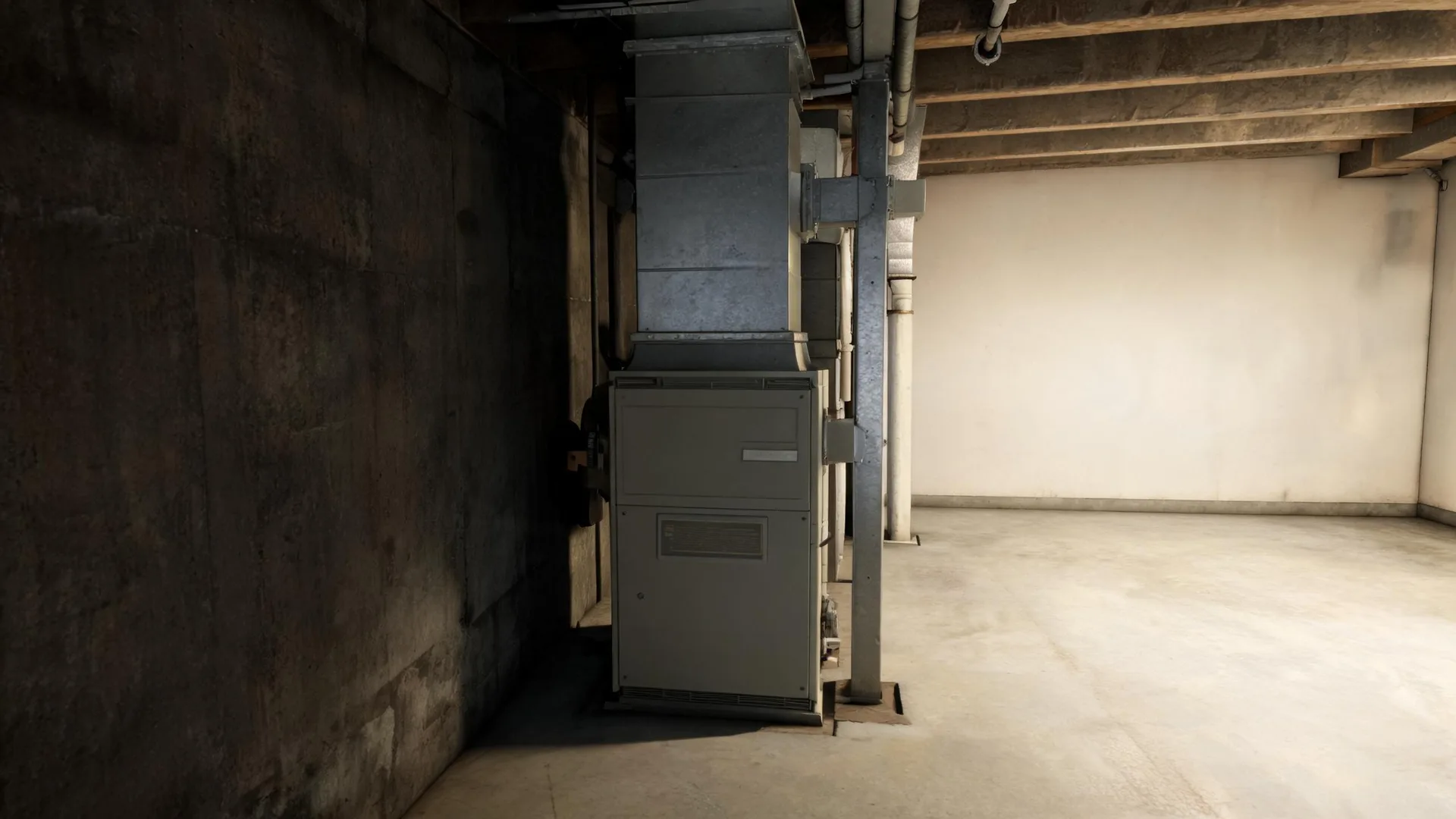
Furnace repair in Washington County starts with the parts that do the hardest work: the heat exchanger, the burner, and the ignition system. Homes in Washington County, MO run heat about seven months a year, from October through April. A furnace cycling through that kind of season accumulates stress on the heat exchanger above almost anything else, and cracks or fatigue there are what a contractor checks before pricing other repairs. Ignition components follow close behind, because repeated start cycles wear them in ways that show up as intermittent failures on the coldest days of the year.
Older ductwork and a furnace that has already been through at least one replacement are what a contractor frequently meets in this county. Half the homes in Washington County, Missouri were built in 1985 or earlier (2020-2024 ACS 5-year). A system running in stock that age has often had parts swapped across more than one product generation, and the repair scope depends heavily on whether a distributor still carries what that particular unit takes. When a part has been discontinued, the contractor's call shifts from a straightforward fix to a conversation about what is worth ordering and what is not.
The Parts of a Furnace a Contractor Checks First
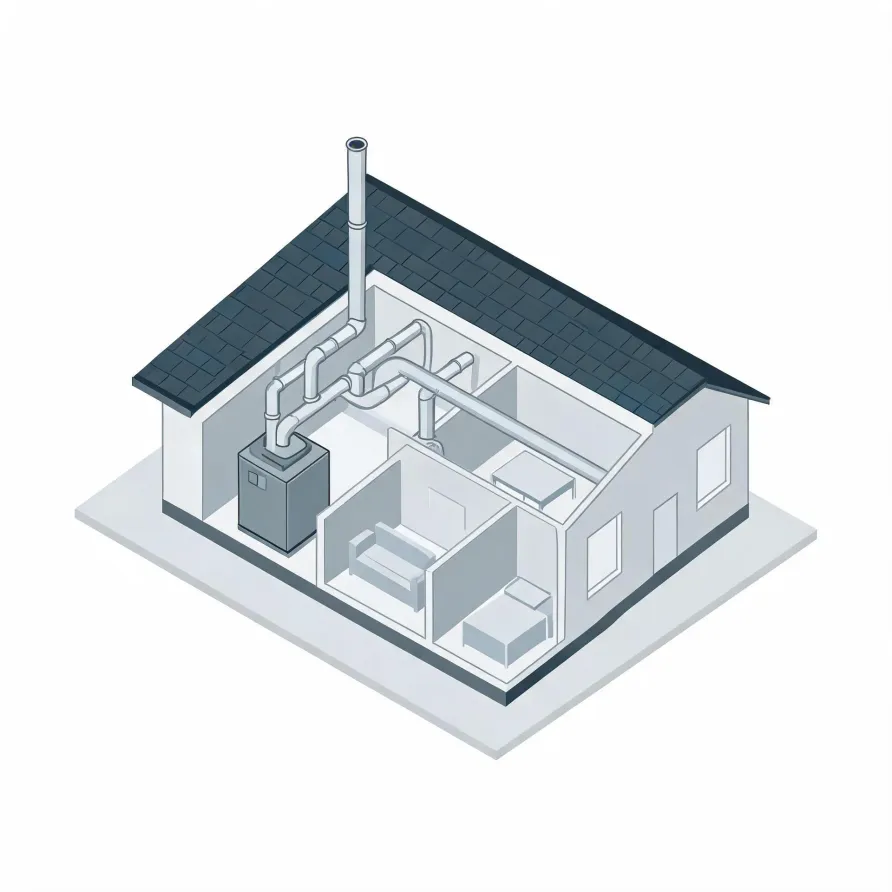
The furnace itself sits in the basement, utility room, or closet and is the piece a contractor goes to first. Inside it, the heat exchanger is the part most worth attention during a repair call: cracks or corrosion there can let combustion gases into the air supply. The burners and igniter sit just below it, and a failed igniter is one of the more common reasons a furnace stops producing heat at all.
The blower motor lives in the lower cabinet and pushes conditioned air out through the supply side of the house. Alongside it, the flue pipe runs from the furnace up and out of the building, carrying exhaust gases away. The control board ties the whole sequence together, and when the system behaves erratically rather than failing outright, that board is often where a contractor looks.
The drawing shows a typical furnace layout, and a licensed contractor determines which components apply to the specific equipment and configuration in your home.
Find a contractor in Washington CountyWashington County, Missouri, by the numbers
64 severe weather events were recorded in Washington County, Missouri between 2015 and 2024.
NOAA National Centers for Environmental Information, Storm Events Database, bulk CSV export, events 2015-01-01 through 2024-12-31.Half the homes in Washington County, Missouri were built in 1985 or earlier (2020-2024 ACS 5-year).
U.S. Census Bureau, 2020-2024 American Community Survey 5-Year EstimatesWashington County, Missouri holds 10,734 housing units (2020-2024 ACS 5-year).
U.S. Census Bureau, 2020-2024 American Community Survey 5-Year EstimatesOwners occupy 78.4% of the occupied homes in Washington County, Missouri (2020-2024 ACS 5-year).
U.S. Census Bureau, 2020-2024 American Community Survey 5-Year EstimatesCodes & Standards Behind Furnace Repair in Washington County, Missouri4 sourced rules & standards
What HVAC Repair Looks Like in Washington County
Non-weatherized gas furnaces manufactured on or after November 19, 2015 must reach 80.0 percent AFUE.
Non-weatherized oil-fired furnaces manufactured on or after November 19, 2015 must reach 83.0 percent AFUE.
Mobile home gas furnaces manufactured on or after November 19, 2015 must reach 80.0 percent AFUE.
Non-weatherized gas furnaces manufactured on or after December 18, 2028 must reach 95.0 percent AFUE, up from the 80.0 percent minimum that applies to units manufactured before that date.
Severe Weather Events in Washington County
Extreme weather puts a furnace under stress it was never designed to absorb continuously. How often that pressure hits Washington County shapes how hard the equipment works and how quickly repair needs stack up.
64 severe weather events, 2015–2024. Source: NOAA National Centers for Environmental Information, Storm Events Database.