Tell us about the job
Takes about a minute. No obligation.
A furnace repair in Jefferson County starts with the parts that have done the most work: the heat exchanger, the burner, and the ignition system. Homes in Jefferson County, MO run heat about seven months a year, from October through April. Across that span, those components cycle on and off every time the thermostat calls for heat, and the fatigue shows up in cracks, corrosion, and ignition failure before it shows up anywhere else. A contractor checking a furnace here pulls the heat exchanger and inspects the burner assembly early in the diagnosis, because that is where the load has gone.
Furnace parts for systems running in houses built for an earlier generation of equipment are not always stocked at a regional distributor. Half the homes in Jefferson County, Missouri were built in 1987 or earlier (2020-2024 ACS 5-year). A contractor opening a furnace here may find that the heat exchanger, igniter, or control board it takes has been superseded, consolidated into a different part number, or dropped from manufacture entirely. That gap between what the house was built around and what supply chains still support is where repair jobs stretch or simplify.
The Parts of a Furnace a Contractor Checks First
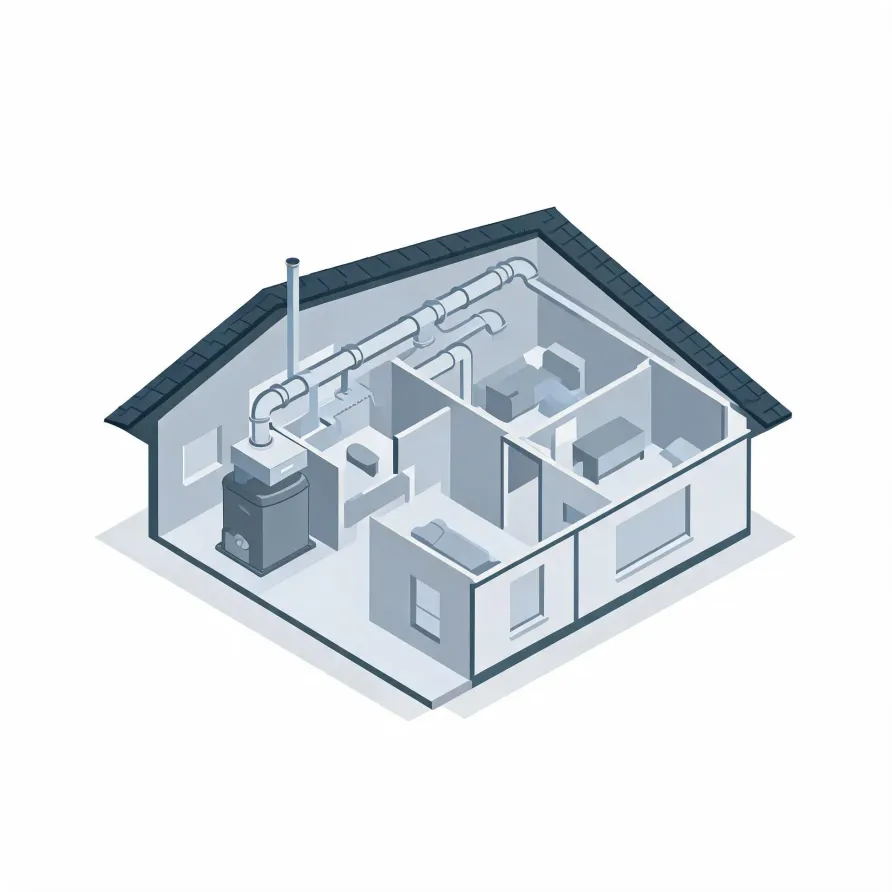
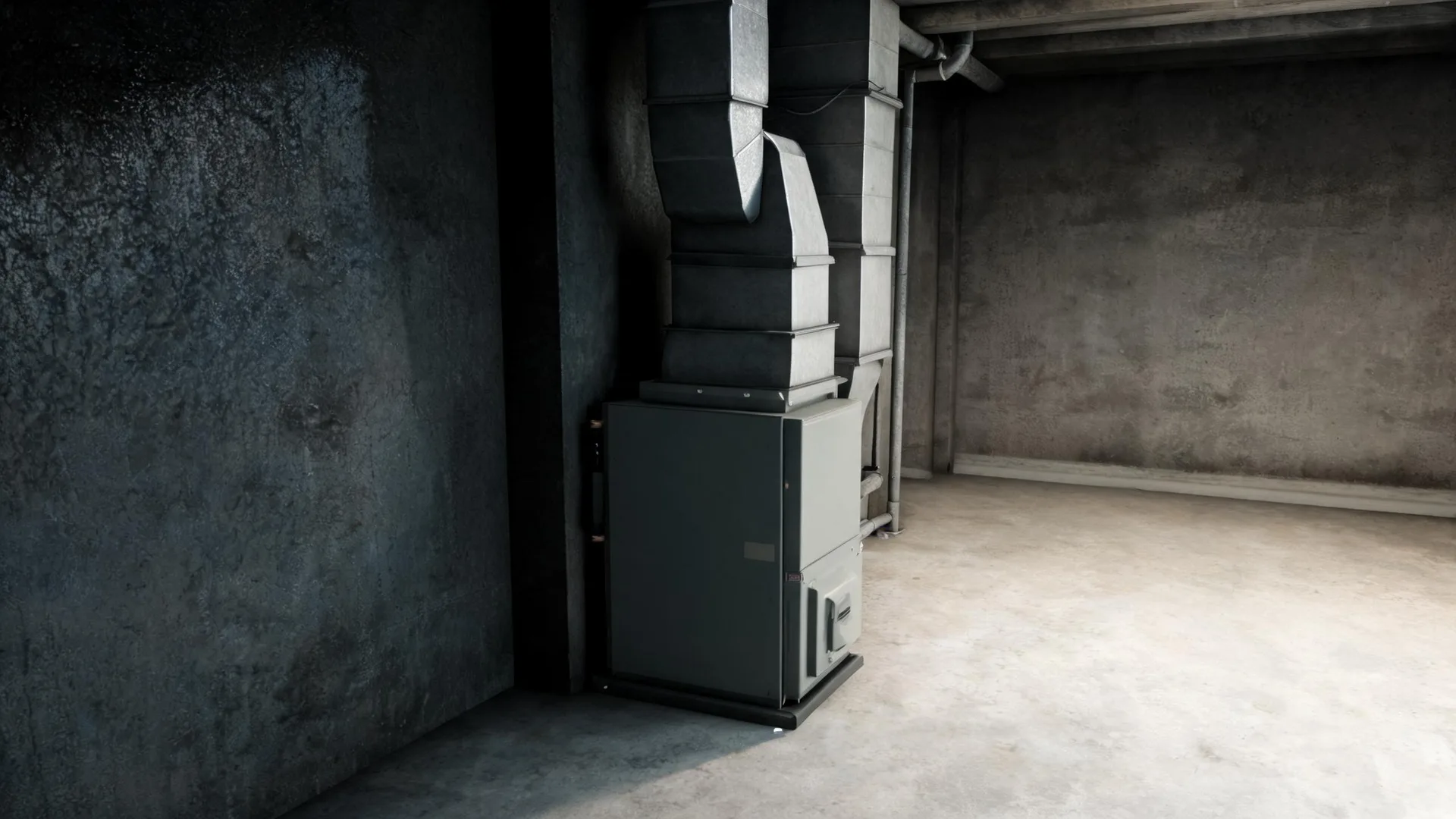
The furnace itself sits in the basement, utility room, or a dedicated mechanical closet, and it is the first place a contractor looks when heat stops arriving the way it should. Inside it, the heat exchanger, burners, and blower motor each have a distinct job, and a fault in any one of them shows up differently. A cracked heat exchanger, a burner that won't light, and a blower that runs but moves little air are three separate problems with three separate fixes.
The flue pipe carries combustion gases out of the house and connects the furnace to the exterior vent; a blockage or separation there affects how the burners behave inside the cabinet. The thermostat on the wall and the limit switches and control board within the furnace itself are the pieces that tell the system when to fire and when to stop, and a fault in any of them can look, from the outside, like a furnace that simply refuses to run.
The drawing shows the general layout of a furnace system, and a licensed contractor determines what applies to your particular house.
Get matched in Jefferson CountyJefferson County, by the numbers
122 severe weather events were recorded in Jefferson County, Missouri between 2015 and 2024.
NOAA National Centers for Environmental Information, Storm Events Database, bulk CSV export, events 2015-01-01 through 2024-12-31.Half the homes in Jefferson County, Missouri were built in 1987 or earlier (2020-2024 ACS 5-year).
U.S. Census Bureau, 2020-2024 American Community Survey 5-Year EstimatesJefferson County, Missouri holds 93,955 housing units (2020-2024 ACS 5-year).
U.S. Census Bureau, 2020-2024 American Community Survey 5-Year EstimatesOwners occupy 82.2% of the occupied homes in Jefferson County, Missouri (2020-2024 ACS 5-year).
U.S. Census Bureau, 2020-2024 American Community Survey 5-Year EstimatesCodes & Standards Behind Furnace Repair in Jefferson County, Missouri4 sourced rules
What HVAC Repair Looks Like in Jefferson County
Non-weatherized gas furnaces manufactured on or after November 19, 2015 must reach 80.0 percent AFUE.
Non-weatherized oil-fired furnaces manufactured on or after November 19, 2015 must reach 83.0 percent AFUE.
Mobile home gas furnaces manufactured on or after November 19, 2015 must reach 80.0 percent AFUE.
Non-weatherized gas furnaces manufactured on or after December 18, 2028 must reach 95.0 percent AFUE, up from the 80.0 percent minimum that applies to units manufactured before that date.
Severe Weather Events in Jefferson County
Extreme weather puts real stress on heating equipment. How often that happens in Jefferson County shapes how hard local furnaces work and how quickly wear accumulates.
122 severe weather events, 2015–2024. Source: NOAA National Centers for Environmental Information, Storm Events Database.