Tell us about the job
Takes about a minute. No obligation.
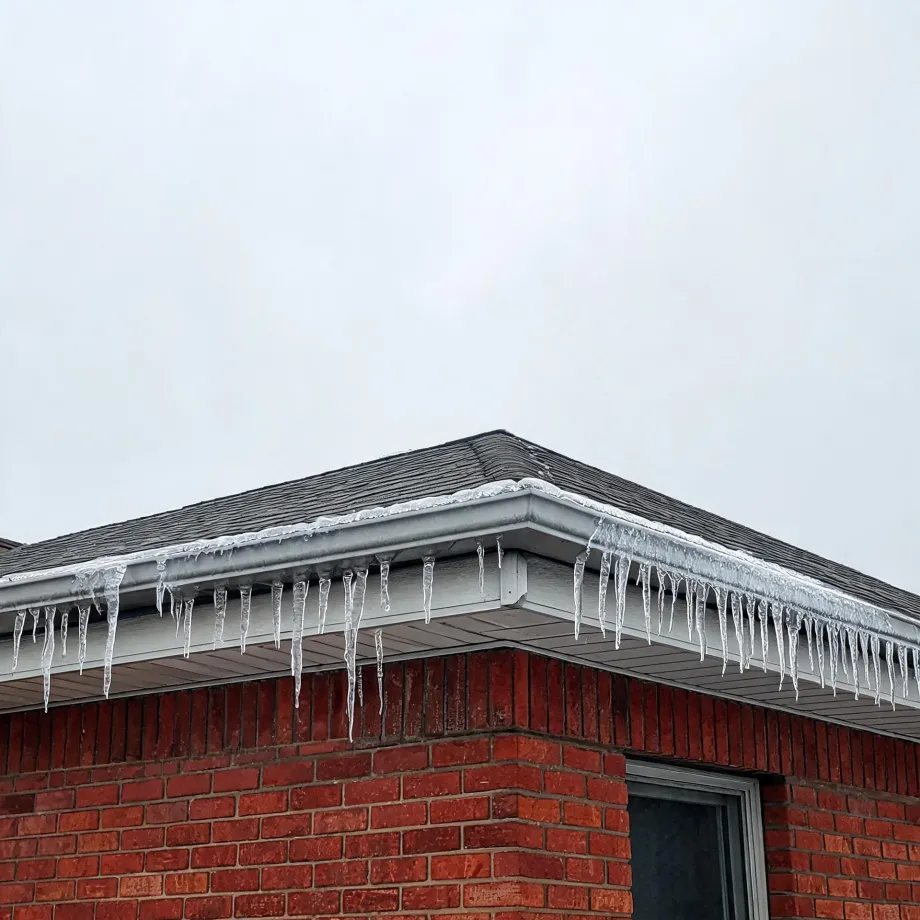
Sizing a furnace for this house means accounting for what the burner and heat exchanger will actually be asked to carry. Homes in Washington County, MO run heat about seven months a year, from October through April. A system that leaves the shop undersized or with leaky duct connections runs longer cycles to reach setpoint, and the heat exchanger takes that strain every firing across the whole season. A contractor quoting a replacement here establishes the load calculation before selecting equipment, because a unit that fits on paper but misses the real demand will show cracks in the heat exchanger sooner than the homeowner expects.
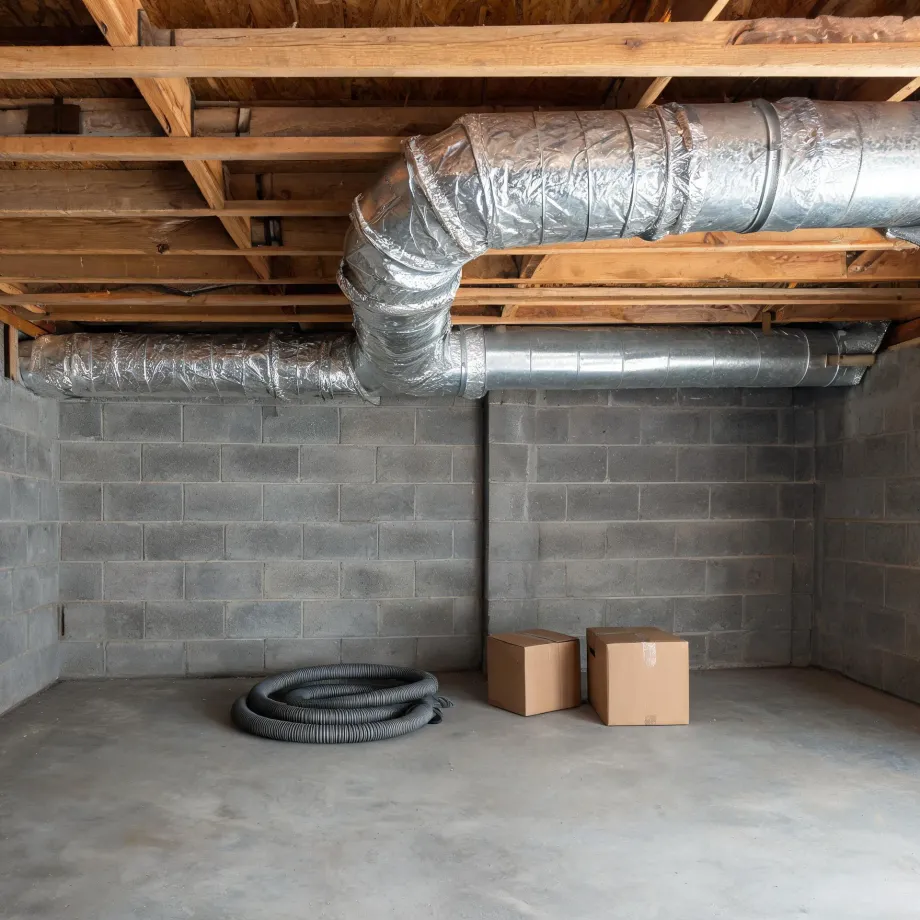
Ductwork laid in for a furnace that is long gone does not automatically carry what a contractor installs today. The routing, the sizing, and sometimes the material all reflect choices made for a different unit, and a new furnace may ask more of that system than it was built to give. Half the homes in Washington County, Missouri were built in 1985 or earlier (2020-2024 ACS 5-year). That history is what a contractor has to trace before the new equipment goes in, because ductwork that looked adequate for the old unit can restrict airflow or drop heat in ways the thermostat will not explain. The electrical follows the same logic: a service panel configured for an older load may need attention before the new furnace runs on it.
What Gets Installed With a New Furnace
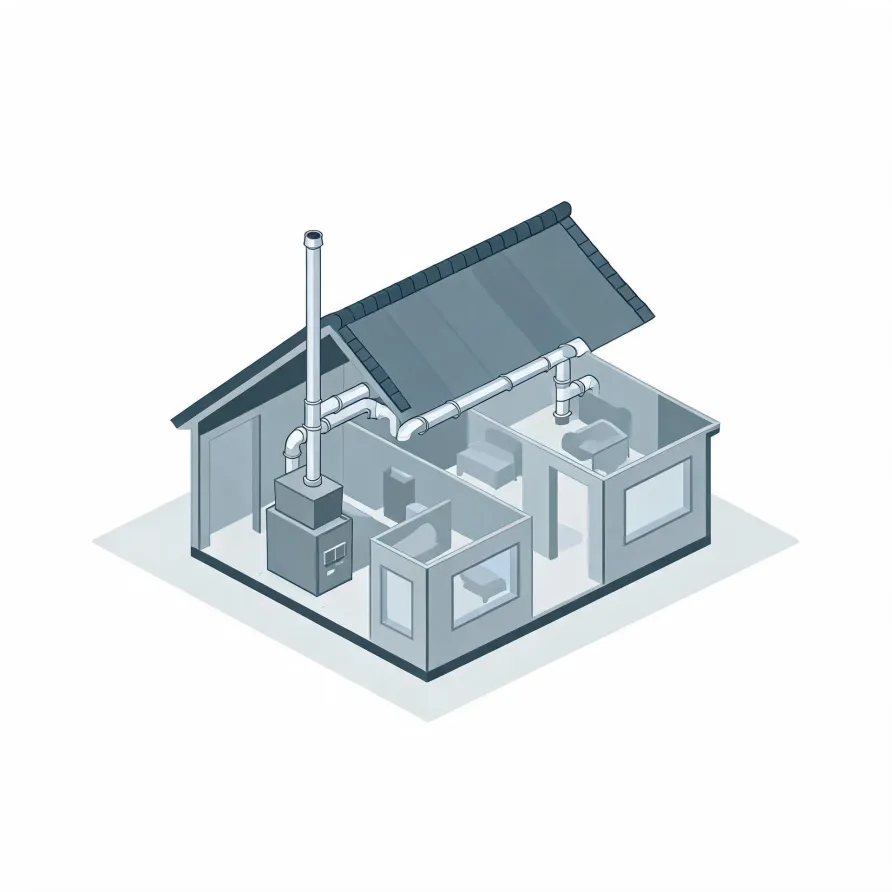
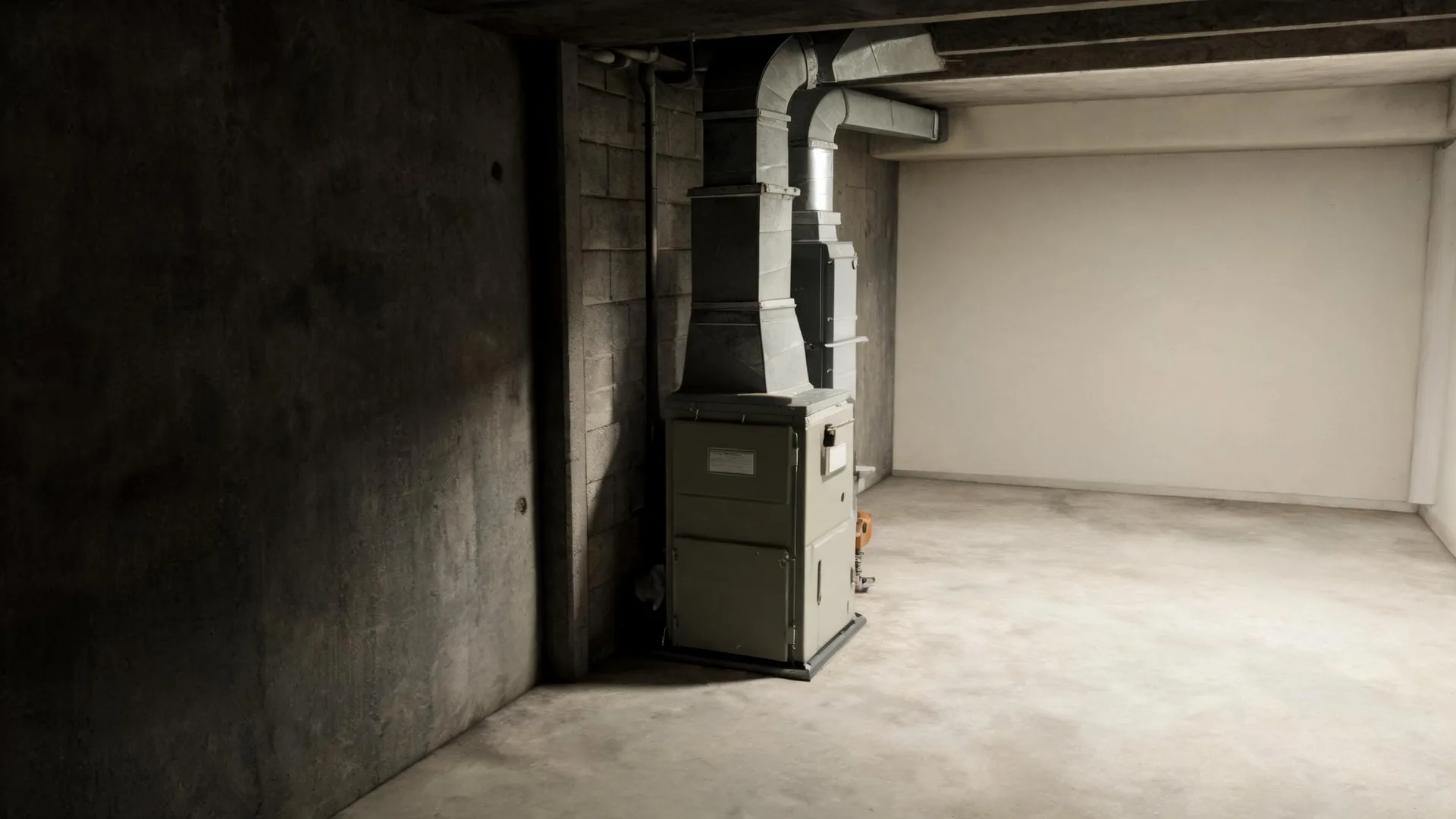
The furnace itself sits inside the house, usually in a basement, utility room, or closet. It is the unit that produces heat by burning fuel or running electrical elements through a heat exchanger. The blower motor inside it pulls air across that exchanger and pushes warmed air into the supply side of the duct system.
The flue pipe runs from the furnace to an exterior wall or up through the roof, carrying combustion gases out of the house. Alongside the furnace, a contractor installs the thermostat on an interior wall, which is the control point the homeowner uses to set temperatures and call for heat.
The drawing shows a typical layout, and a licensed contractor determines exactly what applies to your home and its existing setup.
Get matched in Washington CountyWashington County, Missouri, by the numbers
64 severe weather events were recorded in Washington County, Missouri between 2015 and 2024.
NOAA National Centers for Environmental Information, Storm Events Database, bulk CSV export, events 2015-01-01 through 2024-12-31.Half the homes in Washington County, Missouri were built in 1985 or earlier (2020-2024 ACS 5-year).
U.S. Census Bureau, 2020-2024 American Community Survey 5-Year EstimatesWashington County, Missouri holds 10,734 housing units (2020-2024 ACS 5-year).
U.S. Census Bureau, 2020-2024 American Community Survey 5-Year EstimatesOwners occupy 78.4% of the occupied homes in Washington County, Missouri (2020-2024 ACS 5-year).
U.S. Census Bureau, 2020-2024 American Community Survey 5-Year EstimatesCodes & Standards for Furnace Installation in Washington County, Missouri4 sourced rules and standards
What the Installation Actually Looks Like
Non-weatherized gas furnaces manufactured on or after November 19, 2015 must reach 80.0 percent AFUE.
Non-weatherized oil-fired furnaces manufactured on or after November 19, 2015 must reach 83.0 percent AFUE.
Mobile home gas furnaces manufactured on or after November 19, 2015 must reach 80.0 percent AFUE.
Non-weatherized gas furnaces manufactured on or after December 18, 2028 must reach 95.0 percent AFUE, up from the 80.0 percent minimum that applies to units manufactured before that date.
Severe Weather Events in Washington County
Weather in Washington County puts real demands on heating equipment, from how hard a furnace works through cold stretches to how long components last under repeated stress. That workload is a local variable, and it shapes what a properly sized and installed furnace needs to handle here.
64 severe weather events, 2015–2024. Source: NOAA National Centers for Environmental Information, Storm Events Database.