Tell us about the job
Takes about a minute. No obligation.
The burner and heat exchanger in a Pettis County furnace cycle hard every heating season, and by the time a system starts misfiring or losing efficiency, those parts have absorbed years of repeated ignition, combustion, and thermal expansion. Homes in Pettis County, MO run heat about seven months a year, from October through April. A contractor diagnosing a repair here checks the heat exchanger for cracks and the igniter and flame sensor for wear before moving on to anything else, because that is where the load lands. Control boards and blower motors matter too, but they rarely show the same pattern of fatigue that combustion components do after this many seasons of steady use.
Half the homes in Pettis County, Missouri were built in 1974 or earlier (2020-2024 ACS 5-year). A furnace sitting in a house that age has usually been through at least one equipment swap, which means the unit a contractor opens is not what the house was built for. What that contractor finds inside determines where the job goes: a cracked heat exchanger in a system whose replacement parts have been discontinued turns a repair call into a sourcing problem. The age of the ductwork is a separate question, but the opened furnace is where the real variables sit in stock like this.
The Parts of a Furnace a Contractor Checks First
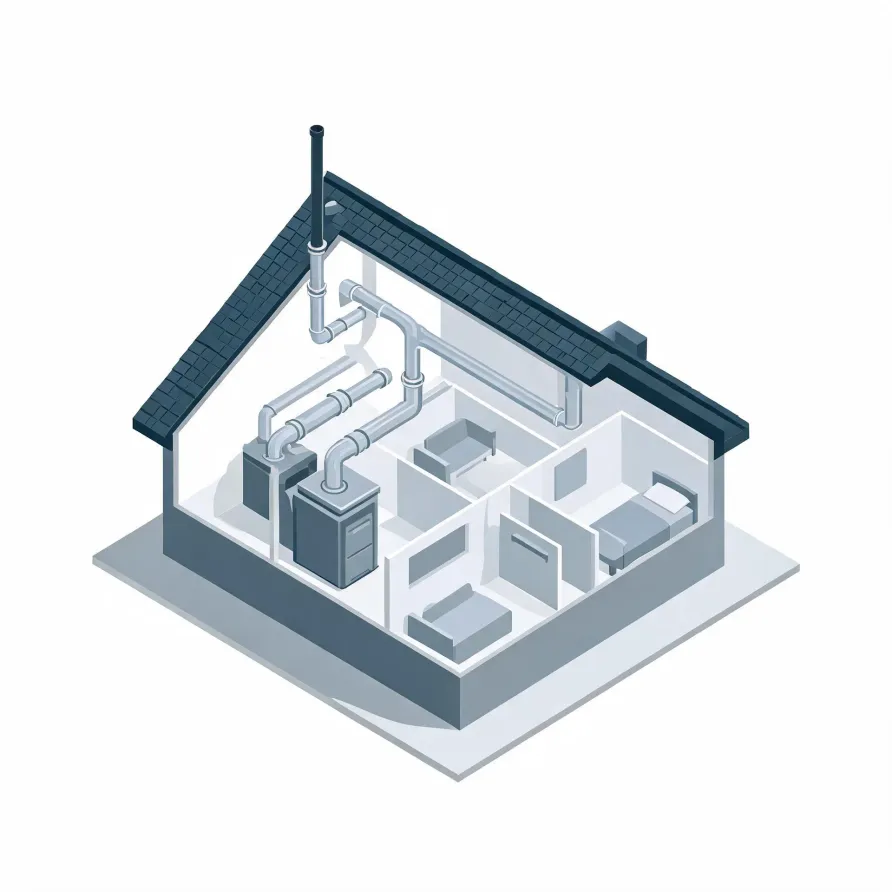
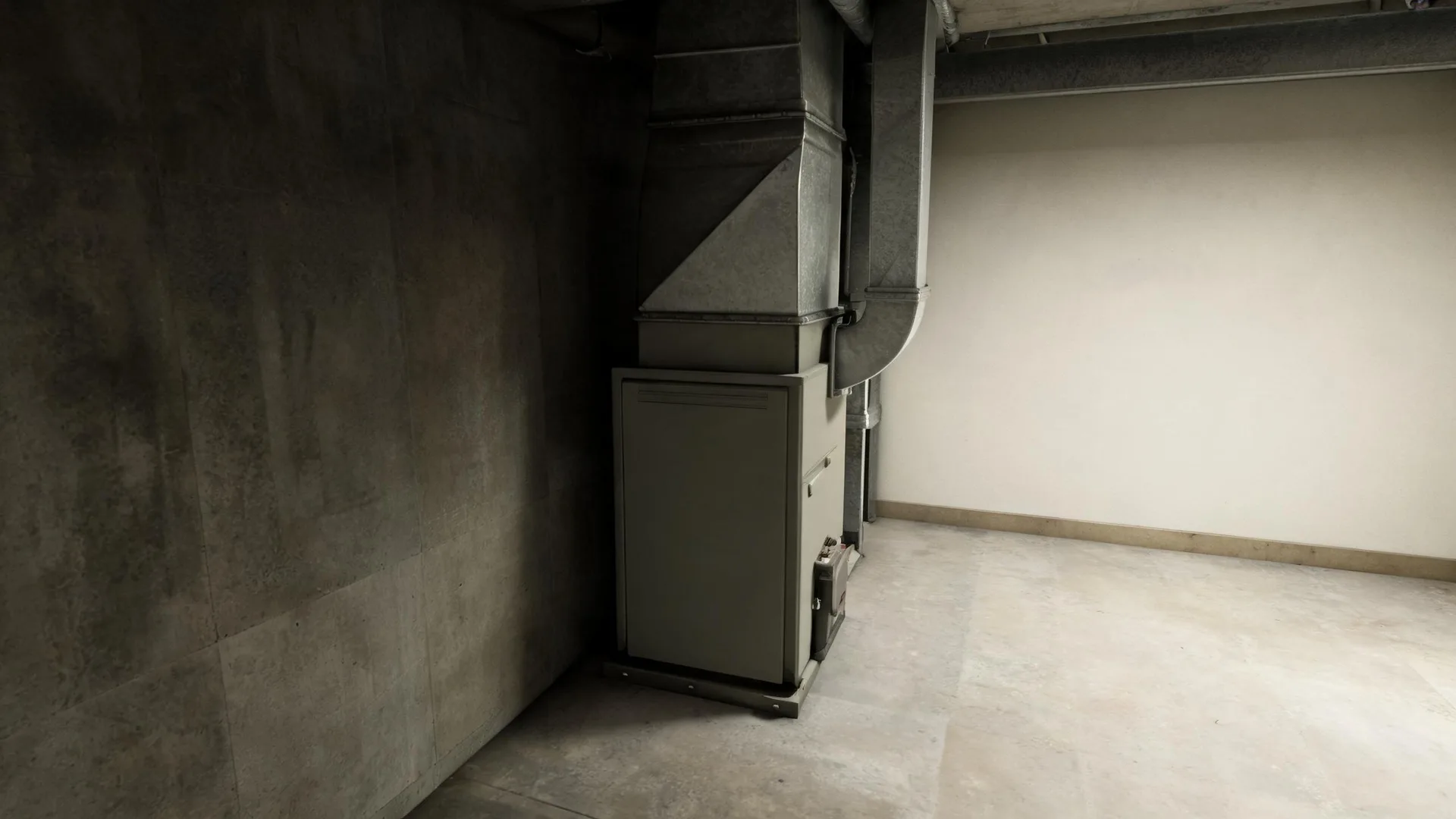
The furnace cabinet sits in a basement, utility closet, or mechanical room and houses most of what a contractor looks at during a repair call. Inside it, the heat exchanger is the piece that fails silently and matters most: cracks there let combustion gases into living air. The burners, the igniter, and the flame sensor are the other parts a contractor reaches first when the furnace runs poorly or refuses to start.
The blower motor and blower wheel sit at the base of the cabinet and push conditioned air out through the supply side of the house. Near the cabinet, the flue pipe carries exhaust gases out of the building, and the condensate drain handles moisture on high-efficiency units. The thermostat on the wall is the last piece in the chain, and a faulty signal from it can mimic a furnace problem that is not there.
The drawing shows a general layout of these components, and a licensed contractor determines which of them apply to the specific equipment and configuration in your home.
Find a contractor in Pettis CountyPettis County, by the numbers
94 severe weather events were recorded in Pettis County, Missouri between 2015 and 2024.
NOAA National Centers for Environmental Information, Storm Events Database, bulk CSV export, events 2015-01-01 through 2024-12-31.Half the homes in Pettis County, Missouri were built in 1974 or earlier (2020-2024 ACS 5-year).
U.S. Census Bureau, 2020-2024 American Community Survey 5-Year EstimatesPettis County, Missouri holds 18,673 housing units (2020-2024 ACS 5-year).
U.S. Census Bureau, 2020-2024 American Community Survey 5-Year EstimatesOwners occupy 69.1% of the occupied homes in Pettis County, Missouri (2020-2024 ACS 5-year).
U.S. Census Bureau, 2020-2024 American Community Survey 5-Year EstimatesCodes & Standards Governing Furnace Repair in Pettis County, Missouri4 sourced rules and standards
What HVAC Repair Looks Like in Pettis County
Non-weatherized gas furnaces manufactured on or after November 19, 2015 must reach 80.0 percent AFUE.
Non-weatherized oil-fired furnaces manufactured on or after November 19, 2015 must reach 83.0 percent AFUE.
Mobile home gas furnaces manufactured on or after November 19, 2015 must reach 80.0 percent AFUE.
Non-weatherized gas furnaces manufactured on or after December 18, 2028 must reach 95.0 percent AFUE, up from the 80.0 percent minimum that applies to units manufactured before that date.
Severe Weather Events in Pettis County
Extreme weather puts direct stress on furnace components, from heat exchangers to ignition systems, and that stress accumulates over time. How hard the weather hits Pettis County shapes how hard the equipment in this area has to work.
94 severe weather events, 2015–2024. Source: NOAA National Centers for Environmental Information, Storm Events Database.