Tell us about the job
Takes about a minute. No obligation.
On a furnace repair call in Saline County, a contractor starts at the burner assembly and the ignition system. Homes in Saline County, MO run heat about seven months a year, from October through April. Cycling through that stretch puts measurable wear on the heat exchanger and the igniter long before the blower motor or controls show trouble. A cracked heat exchanger or a fouled flame sensor is what a contractor expects to find, and quoting around anything else first leaves the likely failure unaddressed. The idle months between May and September do not reset that accumulated wear.
Parts availability is what decides how a furnace repair goes in much of Saline County, and the housing stock is why. Half the homes in Saline County, Missouri were built in 1970 or earlier (2020-2024 ACS 5-year). A system installed to serve a house of that vintage may run components whose manufacturers have discontinued the line entirely, or whose replacement parts now travel through specialty suppliers rather than regional distributors. A contractor opening the unit has to confirm what is actually inside before a repair scope means anything, because the difference between a part still in production and one sourced on a long lead changes both the timeline and the bill.
The Parts of a Furnace a Contractor Checks First
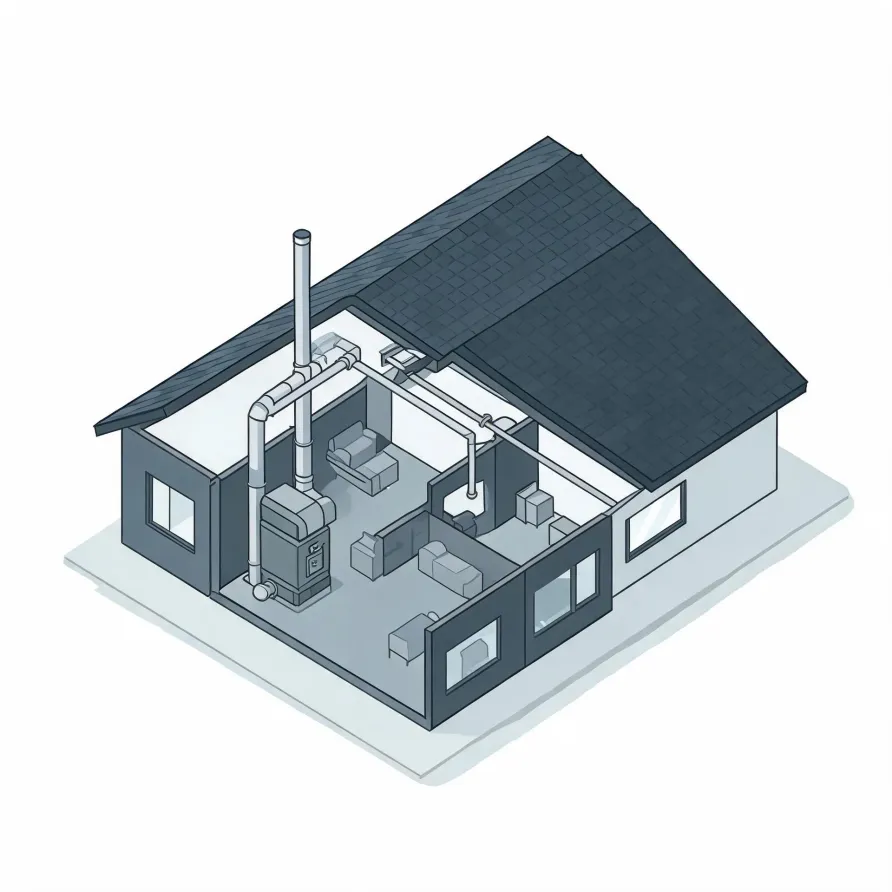
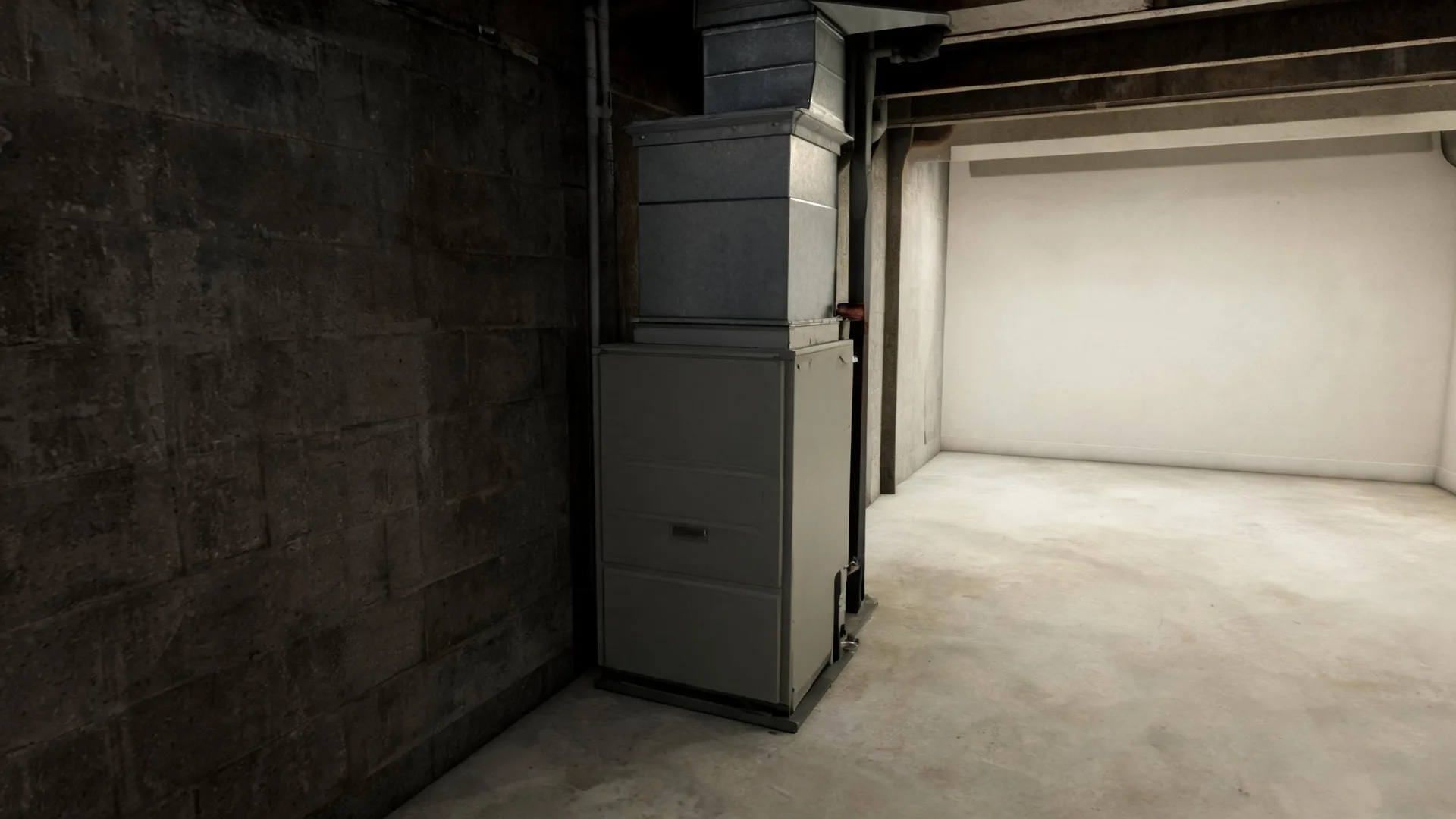
The heat exchanger sits at the core of the furnace cabinet in the basement or utility room, and it is where combustion gases are contained while the blower pushes air across its surface. When it cracks or corrodes, the furnace may run but deliver no useful heat, or worse, pull combustion gases into the living space. The burner assembly feeds the heat exchanger, and a contractor will look at both early.
The draft inducer and flue pipe pull combustion gases out of the cabinet and vent them through the house wall or roof. The control board ties the sequence together, reading signals from the thermostat and telling each component when to fire. A failed inducer, a cracked flue connection, or a board that has lost a relay can each stop the furnace cold.
The drawing shows a general furnace layout, and a licensed contractor determines which parts apply to the specific unit and installation in your home.
Find a contractor in Saline CountySaline County, by the numbers
52 severe weather events were recorded in Saline County, Missouri between 2015 and 2024.
NOAA National Centers for Environmental Information, Storm Events Database, bulk CSV export, events 2015-01-01 through 2024-12-31.Half the homes in Saline County, Missouri were built in 1970 or earlier (2020-2024 ACS 5-year).
U.S. Census Bureau, 2020-2024 American Community Survey 5-Year EstimatesSaline County, Missouri holds 9,813 housing units (2020-2024 ACS 5-year).
U.S. Census Bureau, 2020-2024 American Community Survey 5-Year EstimatesOwners occupy 69.8% of the occupied homes in Saline County, Missouri (2020-2024 ACS 5-year).
U.S. Census Bureau, 2020-2024 American Community Survey 5-Year EstimatesCodes & Standards Covering Furnace Repair in Saline County, Missouri4 sourced rules and standards
What HVAC Repair Looks Like in Saline County
Non-weatherized gas furnaces manufactured on or after November 19, 2015 must reach 80.0 percent AFUE.
Non-weatherized oil-fired furnaces manufactured on or after November 19, 2015 must reach 83.0 percent AFUE.
Mobile home gas furnaces manufactured on or after November 19, 2015 must reach 80.0 percent AFUE.
Non-weatherized gas furnaces manufactured on or after December 18, 2028 must reach 95.0 percent AFUE, up from the 80.0 percent minimum that applies to units manufactured before that date.
Weather Stress on HVAC Equipment in Saline County
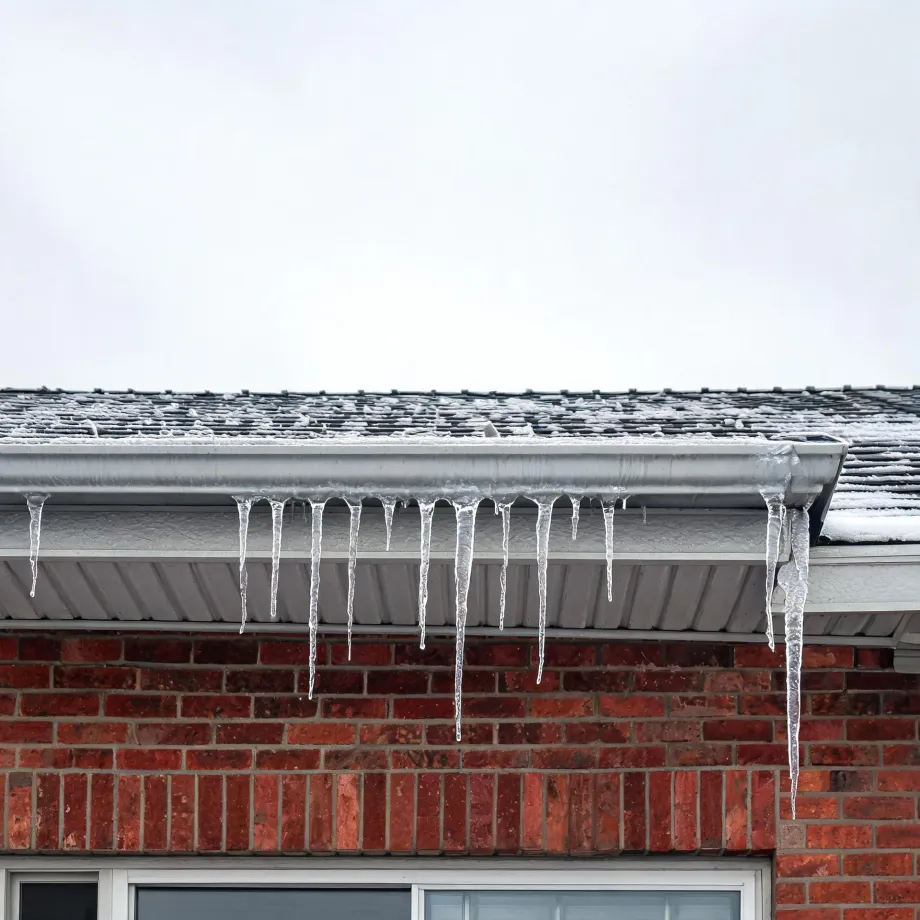
Furnaces work harder when the weather outside swings hard, and Saline County's climate shapes what local equipment faces over a season and across years. Repair frequency, part wear, and system strain are all tied to that load, which is why weather history is a useful frame for understanding what drives furnace service in this area.
52 severe weather events, 2015–2024. Source: NOAA National Centers for Environmental Information, Storm Events Database.