Tell us about the job
Takes about a minute. No obligation.
The burner and heat exchanger in a Cooper County furnace cycle hard from first frost through late April, and by the time a homeowner notices something wrong, those parts have already logged the bulk of their stress for the year. Homes in Cooper County, MO run heat about seven months a year, from October through April. A contractor called out to diagnose a furnace repair here goes straight to the heat exchanger for cracks and the ignition system for wear before looking at anything downstream, because those are the components doing the work. If either has degraded, the blower and controls become secondary questions.
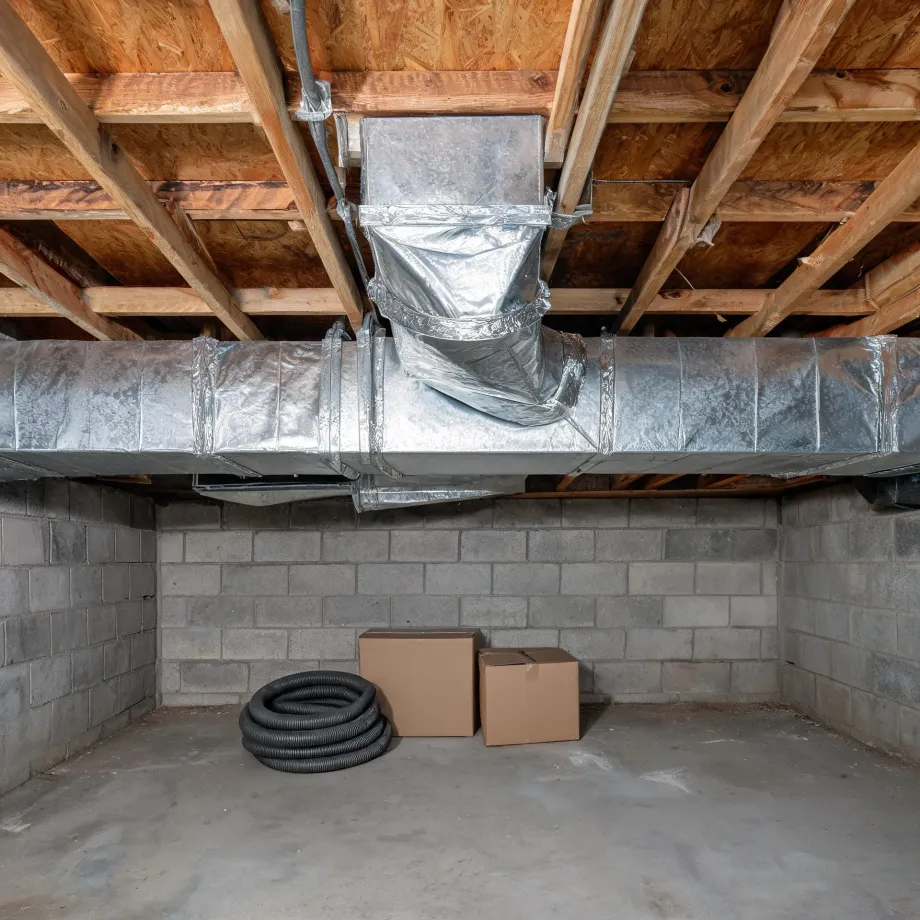
Ductwork built around older furnace designs does not flex to match whatever unit eventually replaced them, and in Cooper County that gap shows up the moment a contractor pulls a heat exchanger or traces a fault back toward the plenum. Half the homes in Cooper County, Missouri were built in 1974 or earlier (2020-2024 ACS 5-year). A furnace that has been swapped or repaired across those decades sits inside ducting that was never reconfigured to match it, so a repair call can turn on whether the duct connections are leaking heat before it ever turns on the part that failed.
The Parts of a Furnace a Contractor Checks First
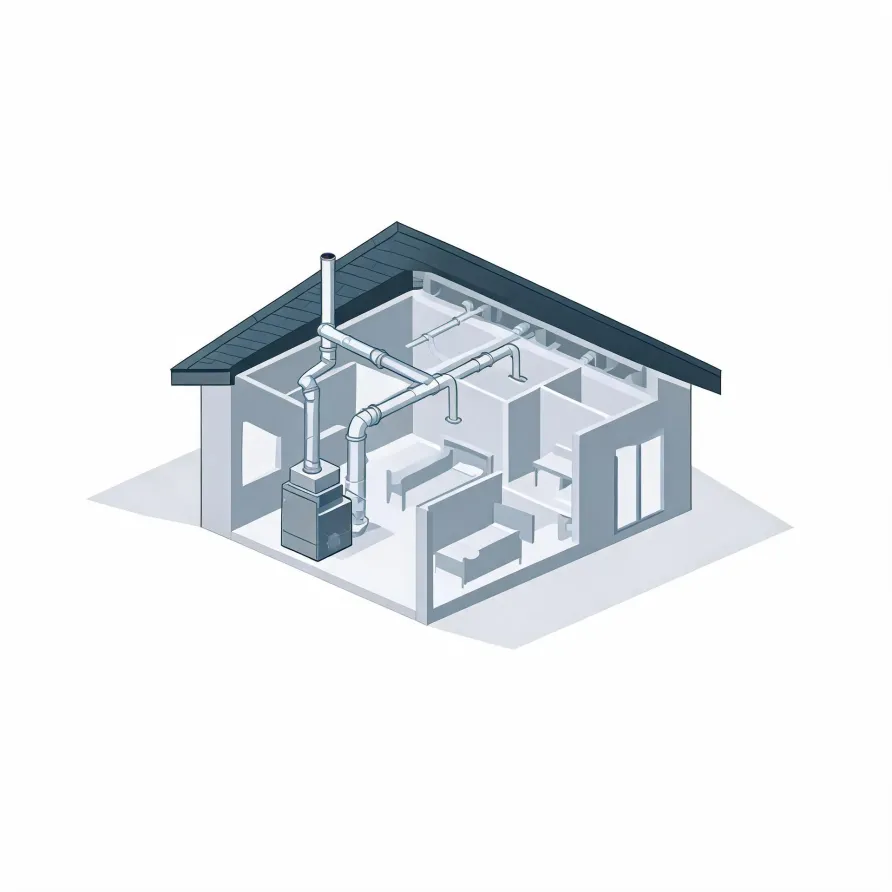
The furnace itself sits in a utility room, basement, or closet and is the piece a contractor goes to first. Inside it, the heat exchanger is the part most worth understanding: it is the wall between the combustion gases and the air your household breathes, and a crack there is what stops a furnace cold. The burners, which fire inside that exchanger, are checked next when heat output is weak or uneven.
The blower motor sits at the base of the furnace cabinet and pushes conditioned air out through the supply side of your duct system. The flue pipe runs from the top of the cabinet to an outside vent and carries combustion exhaust out of the house. The thermostat on your wall closes the loop, telling the furnace when to fire and when to stop, and a fault there can look exactly like a furnace fault.
The drawing shows a typical furnace layout, and a licensed contractor determines which components apply and what condition they are in for your specific home.
Find a contractor in Cooper CountyCooper County, by the numbers
42 severe weather events were recorded in Cooper County, Missouri between 2015 and 2024.
NOAA National Centers for Environmental Information, Storm Events Database, bulk CSV export, events 2015-01-01 through 2024-12-31.Half the homes in Cooper County, Missouri were built in 1974 or earlier (2020-2024 ACS 5-year).
U.S. Census Bureau, 2020-2024 American Community Survey 5-Year EstimatesCooper County, Missouri holds 7,300 housing units (2020-2024 ACS 5-year).
U.S. Census Bureau, 2020-2024 American Community Survey 5-Year EstimatesOwners occupy 75.7% of the occupied homes in Cooper County, Missouri (2020-2024 ACS 5-year).
U.S. Census Bureau, 2020-2024 American Community Survey 5-Year EstimatesCodes & Standards Governing Furnace Repair in Cooper County, Missouri4 sourced rules and standards
What Happens When a Contractor Comes Out
Non-weatherized gas furnaces manufactured on or after November 19, 2015 must reach 80.0 percent AFUE.
Non-weatherized oil-fired furnaces manufactured on or after November 19, 2015 must reach 83.0 percent AFUE.
Mobile home gas furnaces manufactured on or after November 19, 2015 must reach 80.0 percent AFUE.
Non-weatherized gas furnaces manufactured on or after December 18, 2028 must reach 95.0 percent AFUE, up from the 80.0 percent minimum that applies to units manufactured before that date.
Severe Weather Events in Cooper County
Extreme weather puts real stress on furnace systems, driving the kind of wear that leads to breakdowns and repair calls. How often that pressure arrives is a local fact, and it shapes what furnaces in Cooper County are actually asked to do.
42 severe weather events, 2015–2024. Source: NOAA National Centers for Environmental Information, Storm Events Database.