Tell us about the job
Takes about a minute. No obligation.
A furnace repair in Texas County starts with the parts that do the actual work: the burner, the heat exchanger, and the ignition system. Homes in Texas County, MO run heat about seven months a year, from October through April. Cycling on and off across that span wears the igniter and the heat exchanger faster than almost any other component in the house. A contractor diagnosing a problem here checks those parts before anything else, because that is where accumulated stress shows up as cracks, carbon buildup, or a failed igniter rather than a wiring fault or a blower issue.
Ductwork that was built around one generation of equipment and later adapted for another is where a furnace repair in Texas County tends to get complicated. Half the homes in Texas County, Missouri were built in 1979 or earlier (2020-2024 ACS 5-year). A contractor who opens a furnace here may find a unit that has been swapped in since the house was built, which means the parts it takes are specific to that unit and not to anything about the house around it. If a heat exchanger or a control board is no longer in production, the age of the walls tells a contractor nothing about where to find a replacement or whether one exists.
The Parts of a Furnace a Contractor Checks First
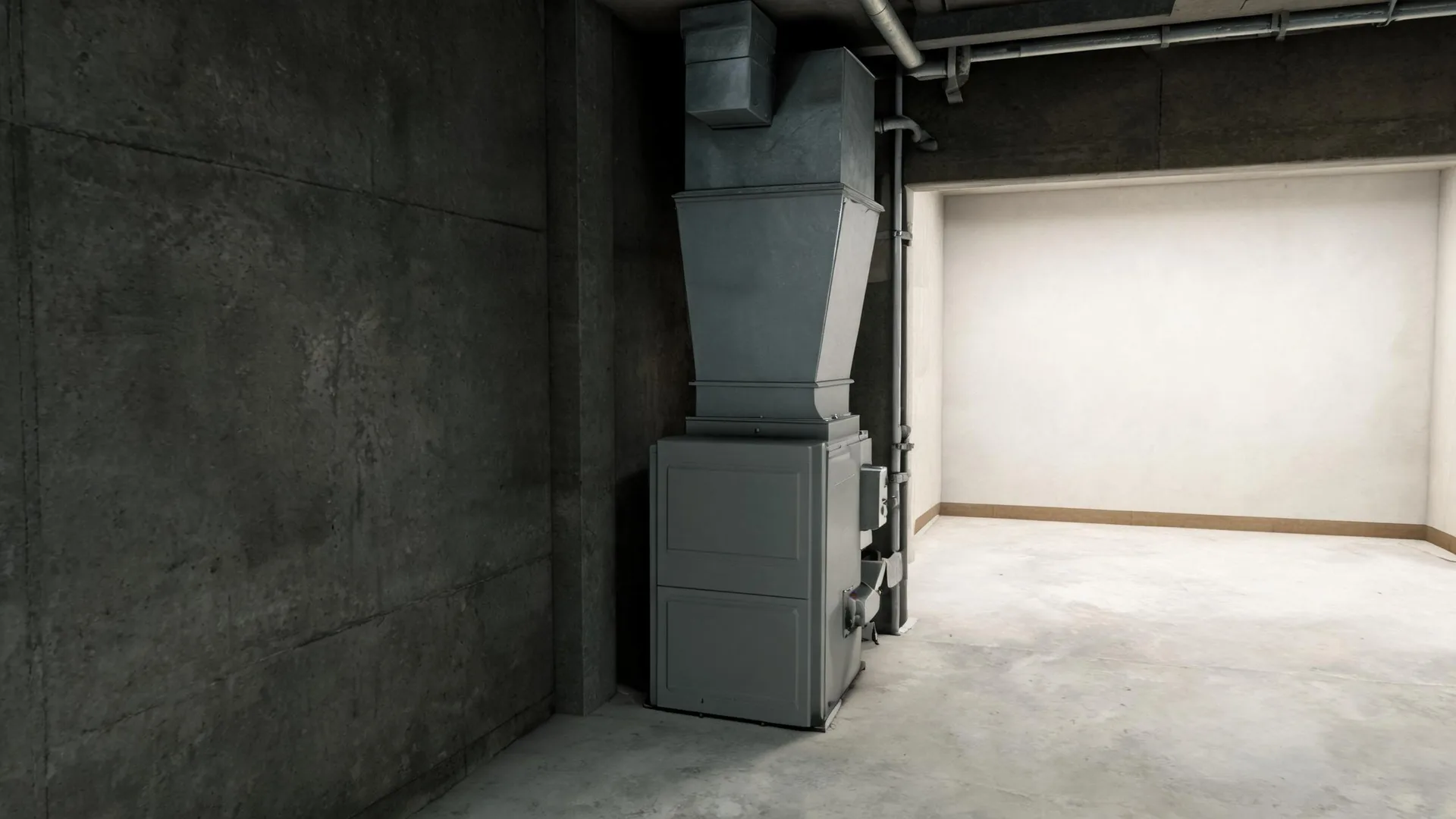
The furnace itself sits in a basement, utility room, or closet and is the piece a contractor goes to first. Inside it, the heat exchanger does the work of warming air, and a cracked or failing exchanger is one of the more serious faults a repair call uncovers. The burners, which fire inside that exchanger, are another early stop when the system is not heating properly.
The blower motor moves conditioned air out through the supply side of the house and pulls return air back in. When a furnace runs but heat does not reach the rooms, or the system short-cycles and shuts off early, the contractor checks the blower, the flame sensor, and the igniter, each of which can fail on its own and produce symptoms that look alike from the thermostat.
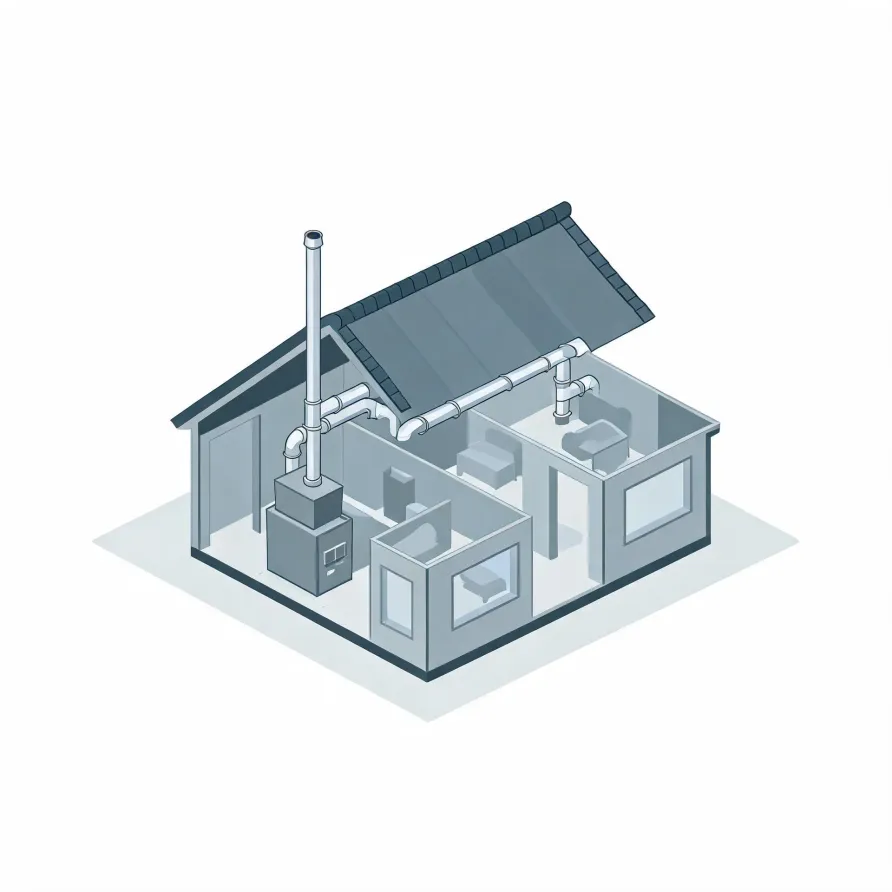
The drawing shows the general layout of a furnace system, and a licensed contractor determines which components apply to the specific equipment and configuration in your home.
Find a contractor in Texas CountyTexas County, Missouri, by the numbers
116 severe weather events were recorded in Texas County, Missouri between 2015 and 2024.
NOAA National Centers for Environmental Information, Storm Events Database, bulk CSV export, events 2015-01-01 through 2024-12-31.Half the homes in Texas County, Missouri were built in 1979 or earlier (2020-2024 ACS 5-year).
U.S. Census Bureau, 2020-2024 American Community Survey 5-Year EstimatesTexas County, Missouri holds 11,006 housing units (2020-2024 ACS 5-year).
U.S. Census Bureau, 2020-2024 American Community Survey 5-Year EstimatesOwners occupy 77.2% of the occupied homes in Texas County, Missouri (2020-2024 ACS 5-year).
U.S. Census Bureau, 2020-2024 American Community Survey 5-Year EstimatesCodes & Standards Covering Furnace Repair in Texas County, Missouri4 sourced rules and standards
What Happens When a Contractor Comes Out
Non-weatherized gas furnaces manufactured on or after November 19, 2015 must reach 80.0 percent AFUE.
Non-weatherized oil-fired furnaces manufactured on or after November 19, 2015 must reach 83.0 percent AFUE.
Mobile home gas furnaces manufactured on or after November 19, 2015 must reach 80.0 percent AFUE.
Non-weatherized gas furnaces manufactured on or after December 18, 2028 must reach 95.0 percent AFUE, up from the 80.0 percent minimum that applies to units manufactured before that date.
Severe Weather Events in Texas County
Weather puts real load on heating equipment. Hard conditions accelerate wear, and a furnace that has been working against the climate here will show it in ways a contractor who knows this area will recognize.
116 severe weather events, 2015–2024. Source: NOAA National Centers for Environmental Information, Storm Events Database.