Tell us about the job
Takes about a minute. No obligation.
A contractor called out to repair a furnace in St. Louis County starts by looking at the parts that cycle with every call for heat: the igniter, the heat exchanger, and the burner assembly. Homes in St. Louis County, MO run heat about seven months a year, from October through April. That runtime accumulates on the components that fire and quench with each heating cycle, and those are the ones most likely to show cracks, carbon buildup, or wear on the ignition system by the time a homeowner notices a problem. Ductwork and controls get checked too, but the combustion side is where the load lands first.
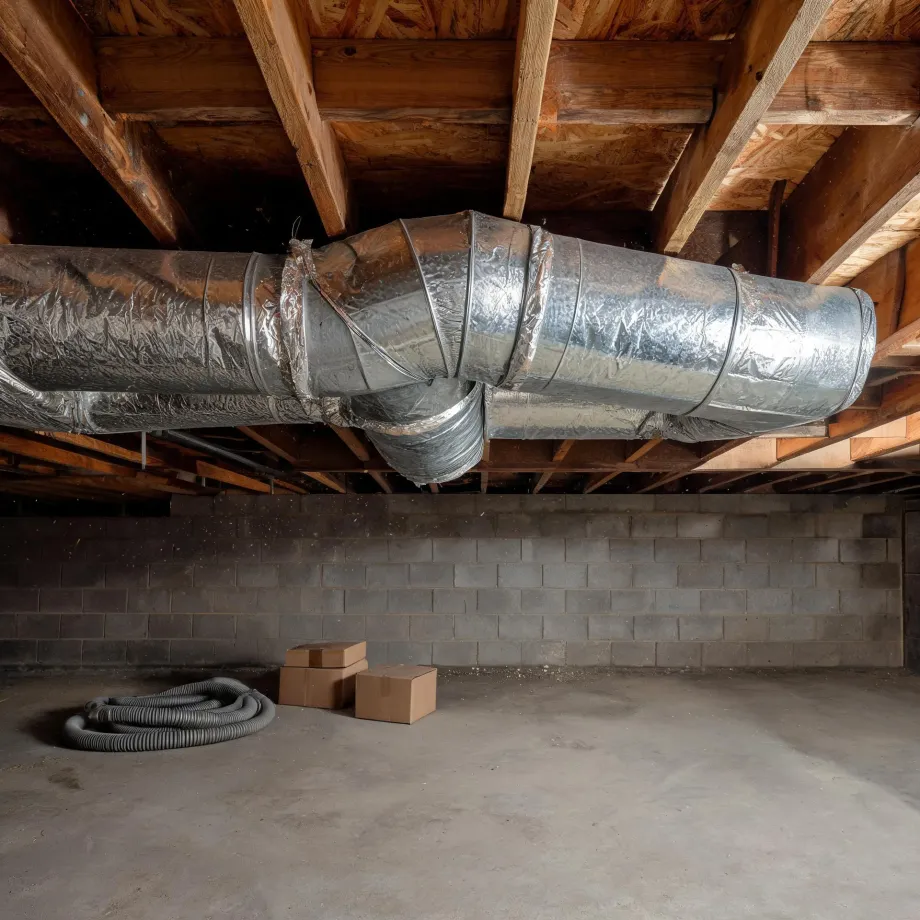
Older ductwork in a house still tells you what heating system it was designed for, and a furnace repair in St. Louis County runs directly into that history. Half the homes in St. Louis County, Missouri were built in 1969 or earlier (2020-2024 ACS 5-year). A furnace running in stock like this is often not the original unit, but its replacement was chosen to fit what was already in the house, which means the parts a contractor needs may come from a manufacturer who has since discontinued that line. If a heat exchanger or a control board is no longer in production, the repair either waits on a salvage search or the scope changes entirely.
The Parts of a Furnace a Contractor Checks First
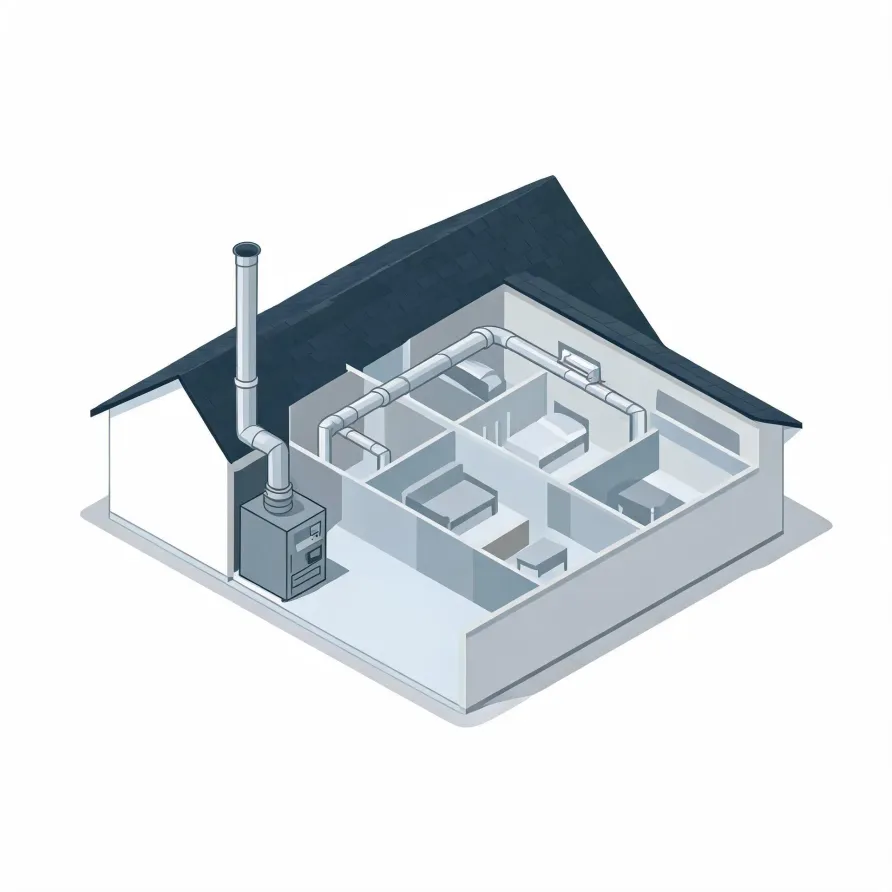
The furnace itself sits in a utility room, basement, or closet and is the first place a contractor looks. Inside it, the heat exchanger is the part most worth understanding: cracks or corrosion there let combustion gases mix with household air, so when that component is the problem, the symptoms tend to feel unrelated to heat output. The burners, which fire inside the exchanger, are checked next for buildup or misfiring.
The blower motor sits at the base of the furnace cabinet and pushes conditioned air out through the supply side of the system. Alongside it, the control board and the igniter are small parts that fail in ways that shut the whole system down. A contractor working through a repair traces faults from these components back through the sequence they run in.
The drawing shows a general furnace layout, and a licensed contractor determines which components apply to your specific system and situation.
Find a contractor in St. Louis CountySt. Louis County, by the numbers
208 severe weather events were recorded in St. Louis County, Missouri between 2015 and 2024.
NOAA National Centers for Environmental Information, Storm Events Database, bulk CSV export, events 2015-01-01 through 2024-12-31.Half the homes in St. Louis County, Missouri were built in 1969 or earlier (2020-2024 ACS 5-year).
U.S. Census Bureau, 2020-2024 American Community Survey 5-Year EstimatesSt. Louis County, Missouri holds 446,192 housing units (2020-2024 ACS 5-year).
U.S. Census Bureau, 2020-2024 American Community Survey 5-Year EstimatesOwners occupy 69.2% of the occupied homes in St. Louis County, Missouri (2020-2024 ACS 5-year).
U.S. Census Bureau, 2020-2024 American Community Survey 5-Year EstimatesFurnace Repair Rules & Standards for St. Louis County, Missouri4 sourced rules and standards
What Happens When the Contractor Comes Out
Non-weatherized gas furnaces manufactured on or after November 19, 2015 must reach 80.0 percent AFUE.
Non-weatherized oil-fired furnaces manufactured on or after November 19, 2015 must reach 83.0 percent AFUE.
Mobile home gas furnaces manufactured on or after November 19, 2015 must reach 80.0 percent AFUE.
Non-weatherized gas furnaces manufactured on or after December 18, 2028 must reach 95.0 percent AFUE, up from the 80.0 percent minimum that applies to units manufactured before that date.
Severe Weather Events in St. Louis County
Extreme weather puts furnaces under pressure: hard cold snaps force systems to run longer and harder, and storm-related power fluctuations can degrade components over time. How often that kind of stress lands on equipment in St. Louis County shapes what local repair work actually looks like.
208 severe weather events, 2015–2024. Source: NOAA National Centers for Environmental Information, Storm Events Database.