Tell us about the job
Takes about a minute. No obligation.
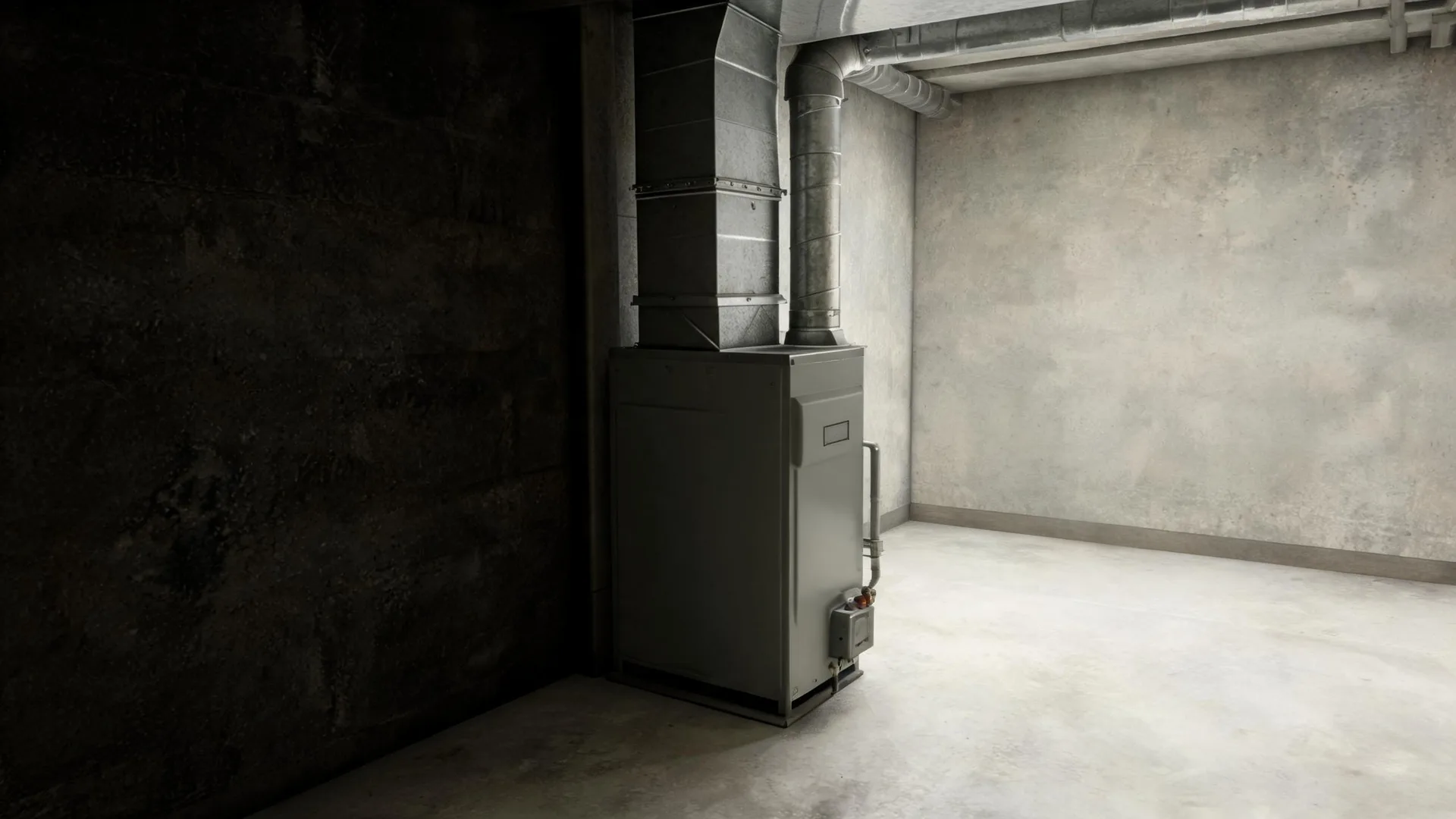
Sizing a furnace for Jefferson County starts with understanding what the burner and heat exchanger are actually asked to carry. Homes in Jefferson County, MO run heat about seven months a year, from October through April. A system that is undersized for that load cycles harder and more frequently, and the ignition system and heat exchanger accumulate wear faster than a correctly matched unit would. A contractor quoting a replacement here runs a load calculation against the house envelope and duct layout before settling on equipment, because an install that looks adequate at startup can fall behind once sustained cold sets in.
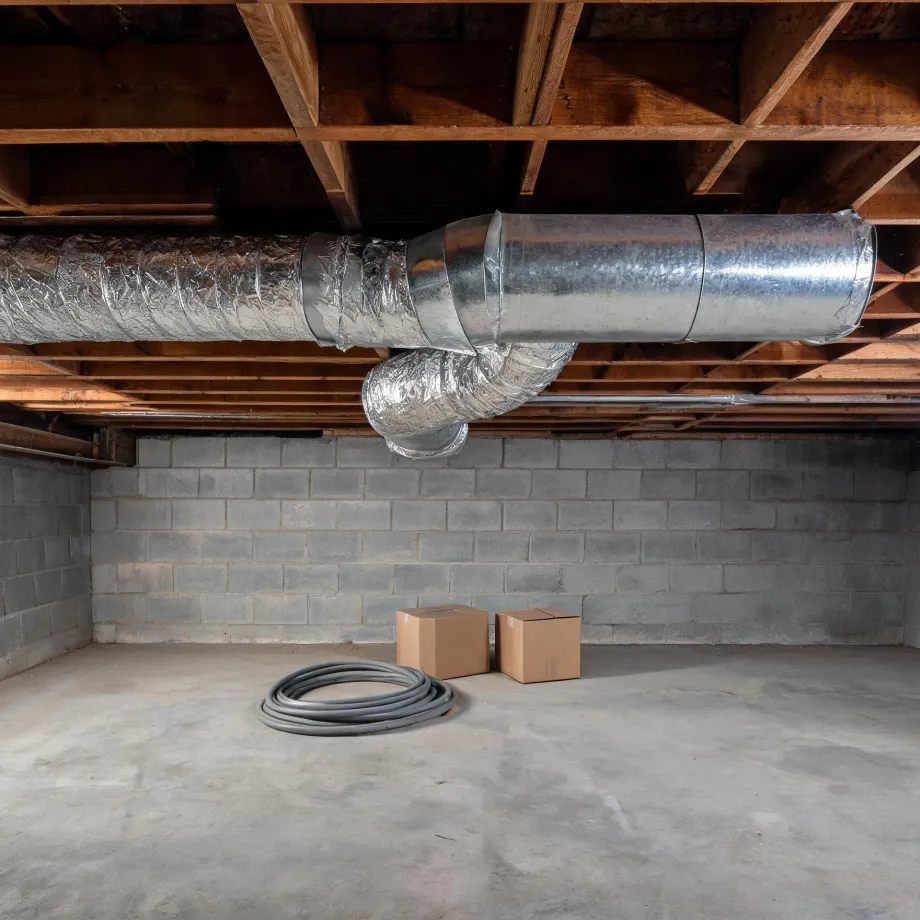
Existing ductwork is what a furnace installation in Jefferson County turns on. Half the homes in Jefferson County, Missouri were built in 1987 or earlier (2020-2024 ACS 5-year). Duct systems in houses of that vintage were sized and routed for equipment that is long gone, and what is behind the walls now is whatever a series of replacements left behind. A contractor installing a new furnace measures actual airflow at the registers and checks static pressure through the runs before anything else gets priced, because a box that fits the load calculation can still fail against ductwork that cannot move what the system asks of it.
What Gets Installed With a New Furnace
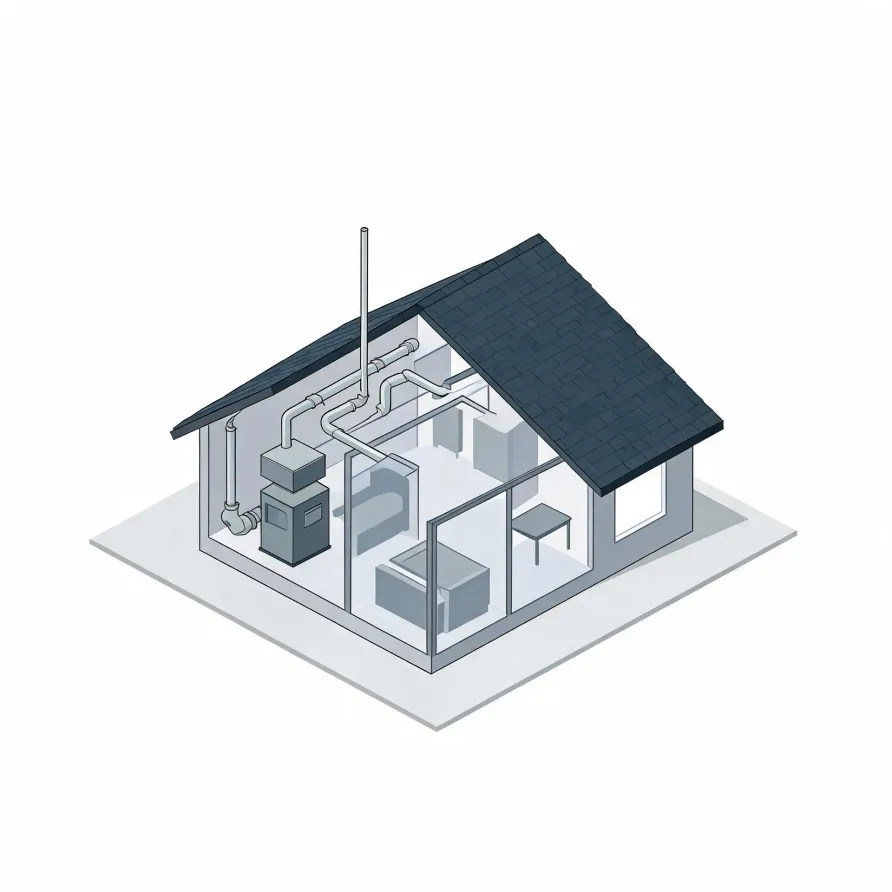
The furnace itself sits in the basement, utility room, or closet and is the unit a homeowner sees when they look at the system. A contractor sets it on a level surface with clearance on all sides. The heat exchanger lives inside the cabinet, transferring combustion heat to the air that moves through the house.
The flue pipe runs from the furnace cabinet up and out of the house, carrying combustion gases away from the living space. The blower motor and its housing sit at the base of the cabinet and push conditioned air into the supply side of the duct system. A contractor also positions the gas valve, the igniter, and the control board inside the cabinet during the install, and mounts the new thermostat on an interior wall.
The drawing shows a typical layout, and a licensed contractor determines exactly what applies to this house and its existing setup.
Get matched in Jefferson CountyJefferson County, Missouri, by the numbers
122 severe weather events were recorded in Jefferson County, Missouri between 2015 and 2024.
NOAA National Centers for Environmental Information, Storm Events Database, bulk CSV export, events 2015-01-01 through 2024-12-31.Half the homes in Jefferson County, Missouri were built in 1987 or earlier (2020-2024 ACS 5-year).
U.S. Census Bureau, 2020-2024 American Community Survey 5-Year EstimatesJefferson County, Missouri holds 93,955 housing units (2020-2024 ACS 5-year).
U.S. Census Bureau, 2020-2024 American Community Survey 5-Year EstimatesOwners occupy 82.2% of the occupied homes in Jefferson County, Missouri (2020-2024 ACS 5-year).
U.S. Census Bureau, 2020-2024 American Community Survey 5-Year EstimatesFurnace Installation Rules and Codes for Jefferson County, Missouri4 sourced standards and regulations
What HVAC Installation Looks Like in Jefferson County
Non-weatherized gas furnaces manufactured on or after November 19, 2015 must reach 80.0 percent AFUE.
Non-weatherized oil-fired furnaces manufactured on or after November 19, 2015 must reach 83.0 percent AFUE.
Mobile home gas furnaces manufactured on or after November 19, 2015 must reach 80.0 percent AFUE.
Non-weatherized gas furnaces manufactured on or after December 18, 2028 must reach 95.0 percent AFUE, up from the 80.0 percent minimum that applies to units manufactured before that date.
Severe Weather Events in Jefferson County
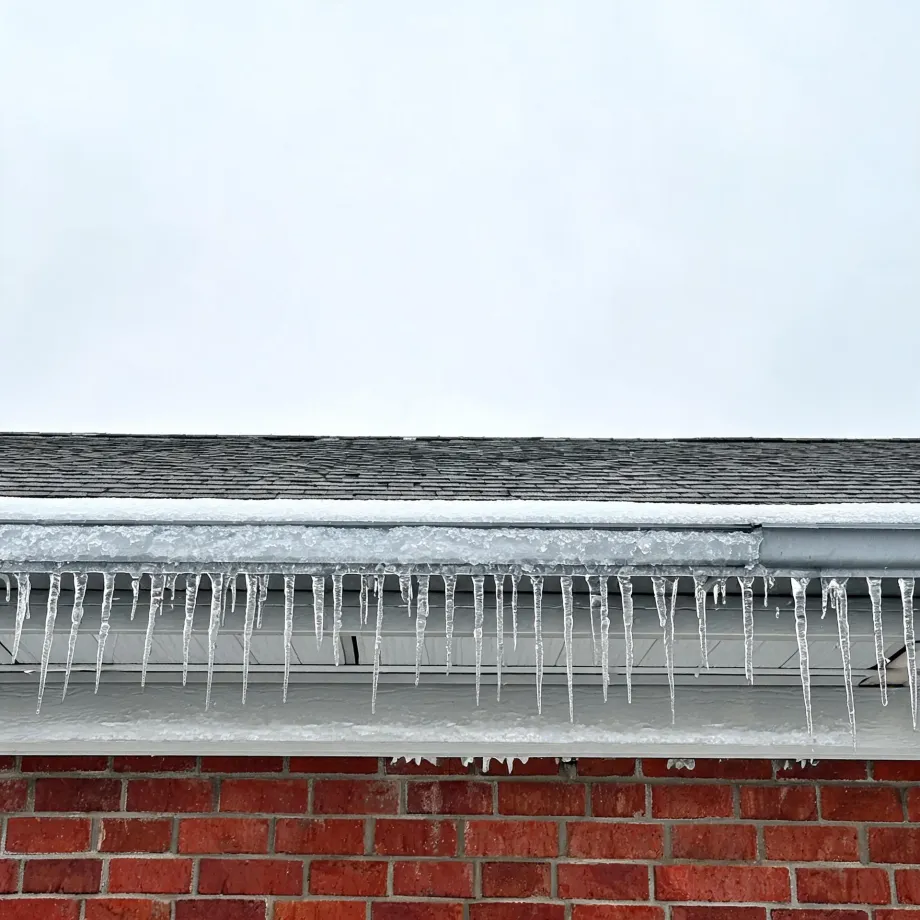
Weather in Jefferson County puts real demands on heating equipment, from hard freezes that push a furnace to run longer to sudden swings that wear on components faster than moderate climates do. How often that pressure arrives is a local fact, and it shapes what a furnace here needs to handle.
122 severe weather events, 2015–2024. Source: NOAA National Centers for Environmental Information, Storm Events Database.