Tell us about the job
Takes about a minute. No obligation.
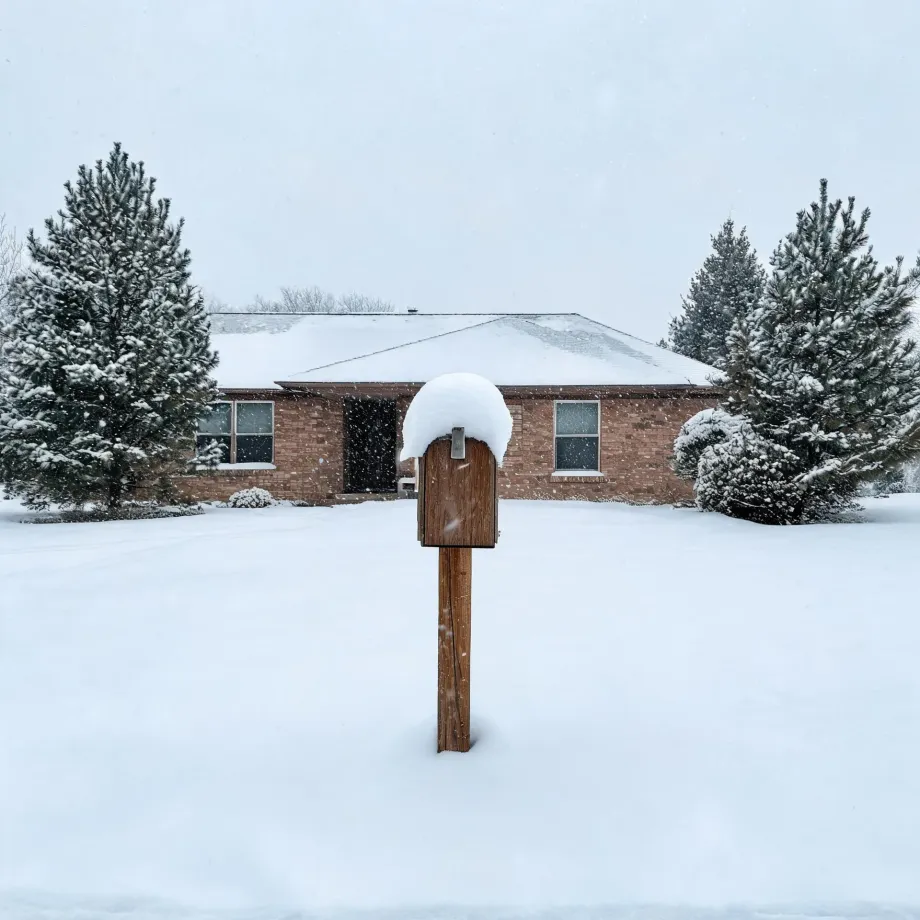
Sizing a furnace for Iron County means accounting for a burner and heat exchanger that cycle hard from the first cold week in October and do not rest until late April. Homes in Iron County, MO run heat about seven months a year, from October through April. A system that is undersized by even a modest margin runs longer duty cycles to hold temperature, and the ignition system and heat exchanger accumulate that stress across every month of the season. A contractor doing a load calculation here cannot treat duct layout or envelope insulation as secondary questions, because both directly determine how hard the furnace works to satisfy the thermostat.
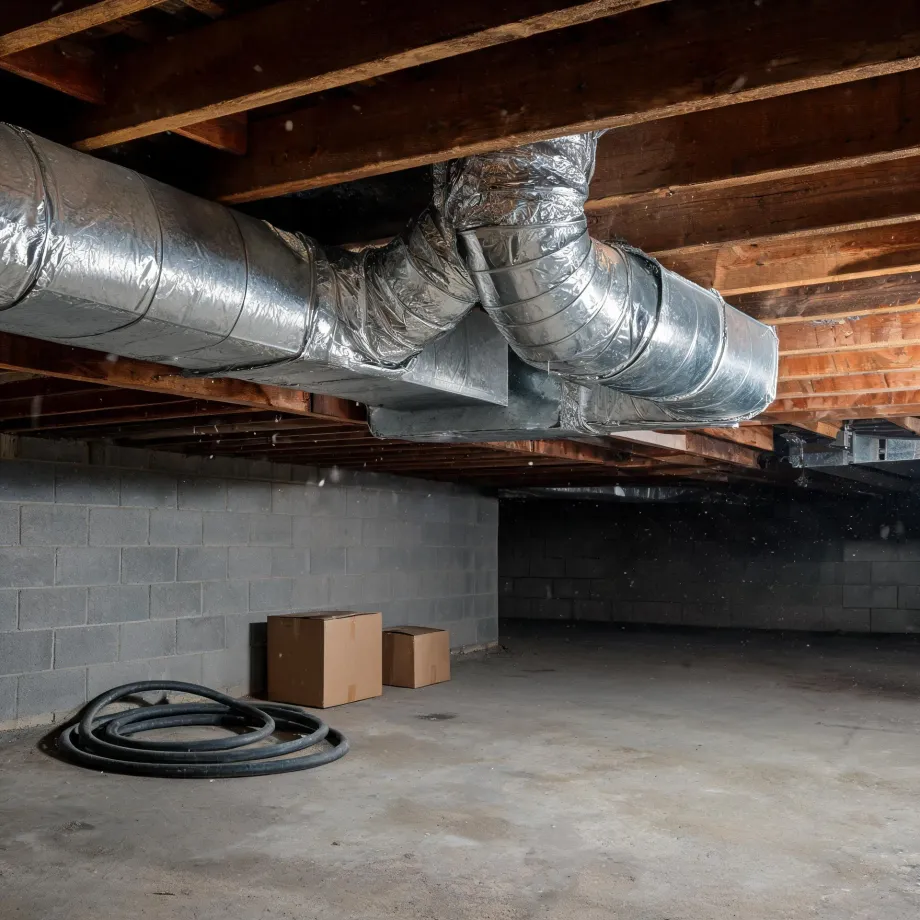
Ductwork laid down for an earlier generation of furnaces is often what drives the scope of an installation job here, and whether it carries what a new unit requires is a question a contractor has to settle before the equipment itself gets priced. Half the homes in Iron County, Missouri were built in 1974 or earlier (2020-2024 ACS 5-year). Trunks, takeoffs, and electrical service installed for smaller loads may need to be brought up to what a modern furnace draws, and that work is found by looking at the house, not by reading the box the unit comes in.
What Gets Installed With a New Furnace
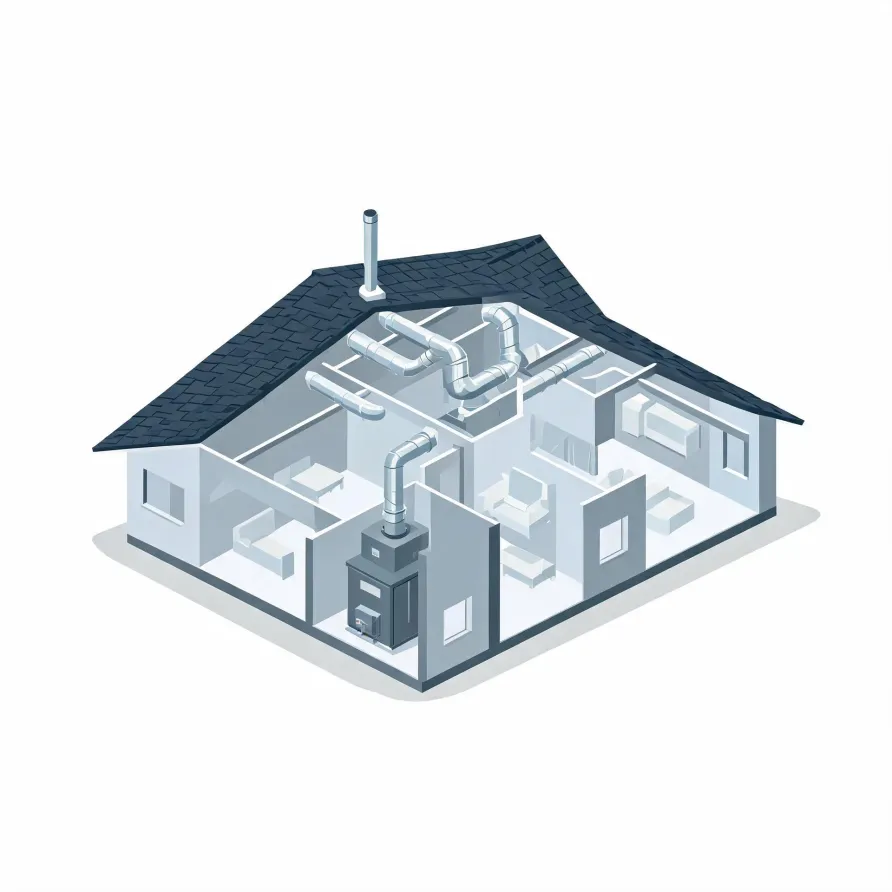
The furnace itself sits in a utility space, basement, or closet and is the unit that generates heat. A burner inside it ignites the fuel, a heat exchanger transfers that warmth to the air, and a blower motor pushes the heated air out into the home. The flue pipe runs from the furnace to an exterior wall or roofline and carries combustion gases out of the house.
The thermostat mounts on an interior wall and is the control point the homeowner touches every day. A contractor also installs the gas line connection at the furnace and the condensate drain line where the equipment requires one. The filter housing, which sits at the air intake, is fitted at the same time so the system is ready to run from day one.
The drawing shows a typical layout, and a licensed contractor determines exactly what applies to your house.
Get matched in Iron CountyIron County, Missouri, by the numbers
53 severe weather events were recorded in Iron County, Missouri between 2015 and 2024.
NOAA National Centers for Environmental Information, Storm Events Database, bulk CSV export, events 2015-01-01 through 2024-12-31.Half the homes in Iron County, Missouri were built in 1974 or earlier (2020-2024 ACS 5-year).
U.S. Census Bureau, 2020-2024 American Community Survey 5-Year EstimatesIron County, Missouri holds 4,682 housing units (2020-2024 ACS 5-year).
U.S. Census Bureau, 2020-2024 American Community Survey 5-Year EstimatesOwners occupy 75.1% of the occupied homes in Iron County, Missouri (2020-2024 ACS 5-year).
U.S. Census Bureau, 2020-2024 American Community Survey 5-Year EstimatesFurnace Installation Rules for Iron County, Missouri4 codes & standards
What Happens During an HVAC Installation in Iron County
Non-weatherized gas furnaces manufactured on or after November 19, 2015 must reach 80.0 percent AFUE.
Non-weatherized oil-fired furnaces manufactured on or after November 19, 2015 must reach 83.0 percent AFUE.
Mobile home gas furnaces manufactured on or after November 19, 2015 must reach 80.0 percent AFUE.
Non-weatherized gas furnaces manufactured on or after December 18, 2028 must reach 95.0 percent AFUE, up from the 80.0 percent minimum that applies to units manufactured before that date.
Severe Weather History in Iron County
Weather in Iron County puts real load on heating equipment, and that load shapes what a furnace needs to handle over its service life. What gets installed here has to fit the conditions here.
53 severe weather events, 2015–2024. Source: NOAA National Centers for Environmental Information, Storm Events Database.