Tell us about the job
Takes about a minute. No obligation.
A contractor quoting furnace repair in Vernon County starts with the parts that cycle every time the burner fires: the igniter, the heat exchanger, and the flame sensor. Homes in Vernon County, MO run heat about seven months a year, from October through April. That much runtime stacks wear on the ignition system specifically, because every heating call asks it to light the burner from cold. A cracked heat exchanger or a failing igniter in a house here has typically been working toward that point across many seasons of regular use. Those are the components a contractor prices first.
Furnaces in a house this old accumulate repair history the way ductwork accumulates tape: each previous fix leaves the next contractor something to read. Half the homes in Vernon County, Missouri were built in 1976 or earlier (2020-2024 ACS 5-year). A heat exchanger in stock this vintage has likely outlasted at least one ownership change, one fuel conversion, and several stop-gap repairs. What a contractor opens often shows cracked flue connections, corroded burner assemblies, or patch work around the heat exchanger that a previous owner considered good enough. Whether the parts that system takes are still being made is a separate question the contractor answers once the unit is open.
The Parts of a Furnace a Contractor Checks First
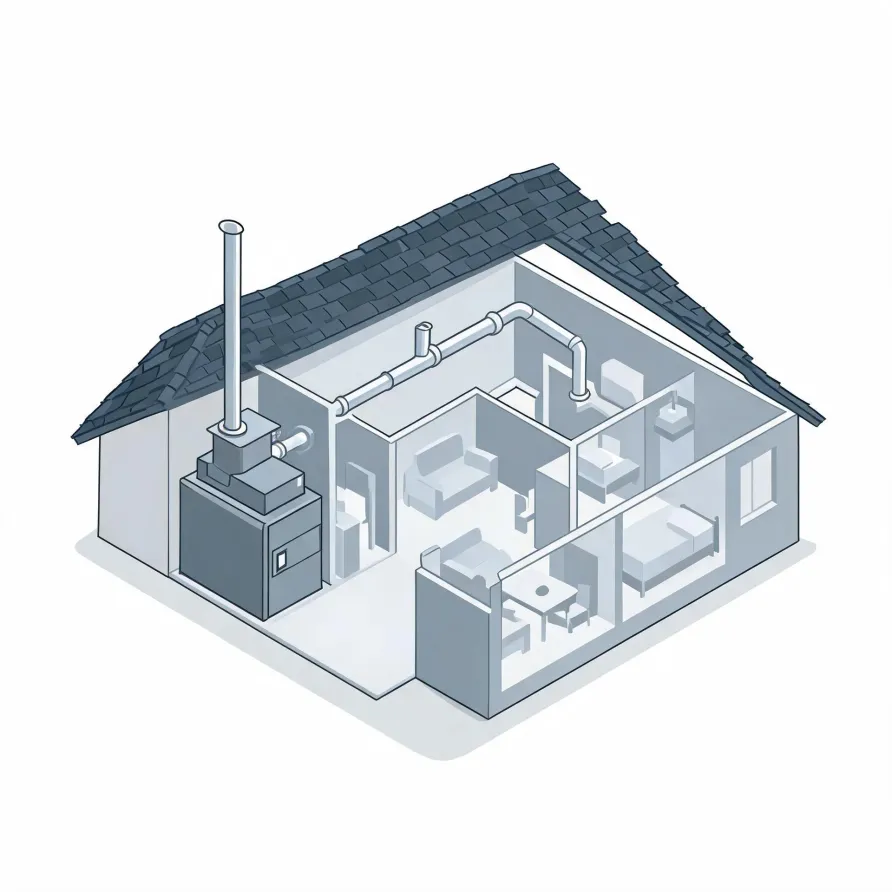
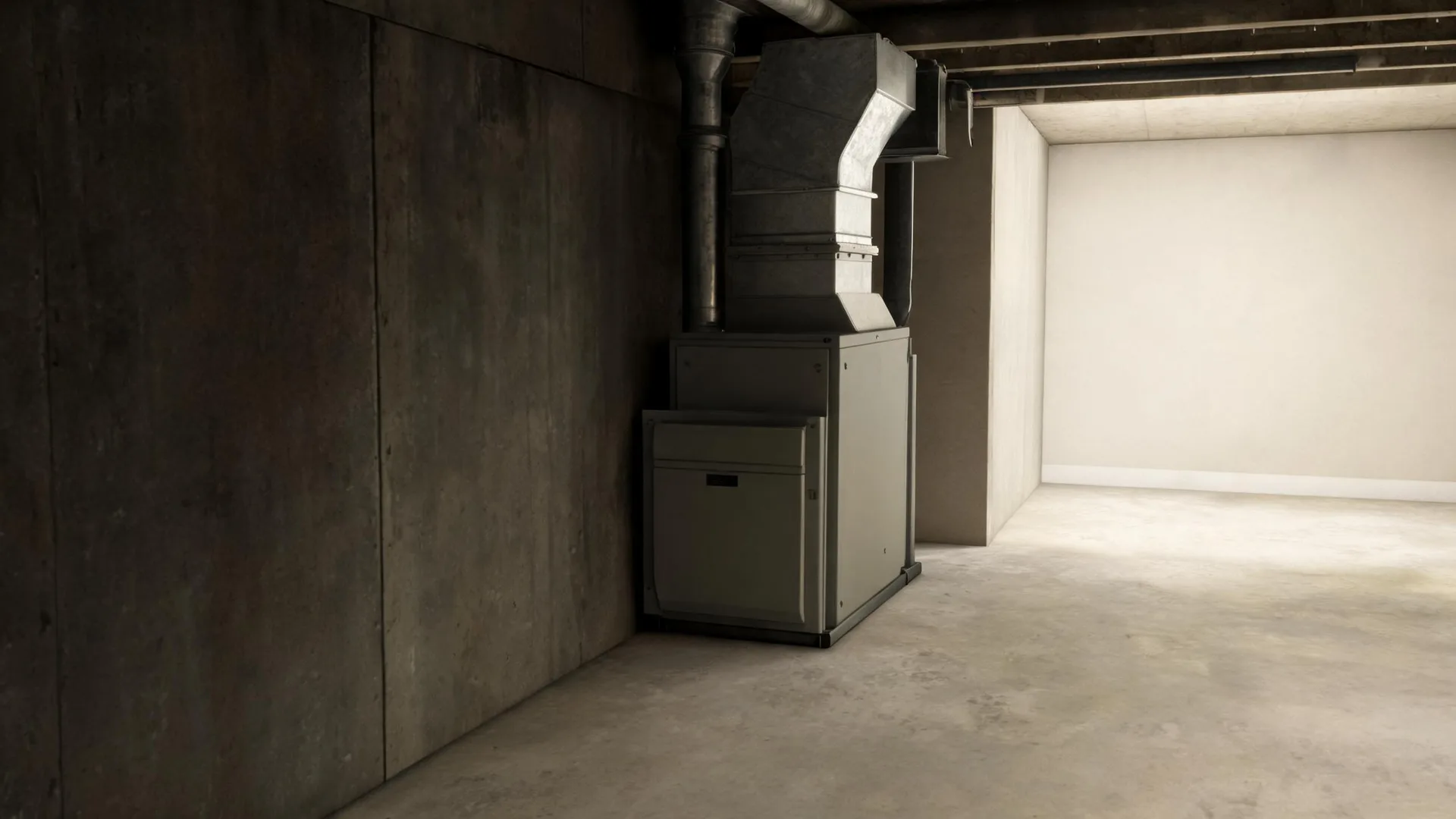
The furnace itself sits in the basement, utility room, or closet and is the piece doing the heating work. Inside it, the heat exchanger is the part a contractor looks at closely during a repair call, because cracks or failures there are what stop the system from working safely. The burners, which fire the heat the exchanger picks up, are another first stop.
The blower motor sits inside the furnace cabinet and pushes conditioned air out through the house. The flue pipe runs from the furnace up and out of the building, carrying combustion gases away. The thermostat on the wall controls the whole sequence, and a fault there can look like a furnace problem when the furnace itself is fine.
The drawing shows a typical layout, and a licensed contractor determines what applies to your specific system and home.
Get matched in Vernon CountyVernon County, by the numbers
114 severe weather events were recorded in Vernon County, Missouri between 2015 and 2024.
NOAA National Centers for Environmental Information, Storm Events Database, bulk CSV export, events 2015-01-01 through 2024-12-31.Half the homes in Vernon County, Missouri were built in 1976 or earlier (2020-2024 ACS 5-year).
U.S. Census Bureau, 2020-2024 American Community Survey 5-Year EstimatesVernon County, Missouri holds 8,928 housing units (2020-2024 ACS 5-year).
U.S. Census Bureau, 2020-2024 American Community Survey 5-Year EstimatesOwners occupy 71.3% of the occupied homes in Vernon County, Missouri (2020-2024 ACS 5-year).
U.S. Census Bureau, 2020-2024 American Community Survey 5-Year EstimatesFurnace Repair Rules & Standards on Record for Vernon County, Missouri4 sourced rules and standards
What Happens When the Contractor Arrives
Non-weatherized gas furnaces manufactured on or after November 19, 2015 must reach 80.0 percent AFUE.
Non-weatherized oil-fired furnaces manufactured on or after November 19, 2015 must reach 83.0 percent AFUE.
Mobile home gas furnaces manufactured on or after November 19, 2015 must reach 80.0 percent AFUE.
Non-weatherized gas furnaces manufactured on or after December 18, 2028 must reach 95.0 percent AFUE, up from the 80.0 percent minimum that applies to units manufactured before that date.
Severe Weather Events in Vernon County
Weather puts load on furnaces. Hard winters, sudden temperature swings, and storm-related power disruptions all push heating equipment harder, and what that looks like in Vernon County is a local fact that shapes how often repairs come due.
114 severe weather events, 2015–2024. Source: NOAA National Centers for Environmental Information, Storm Events Database.