Tell us about the job
Takes about a minute. No obligation.
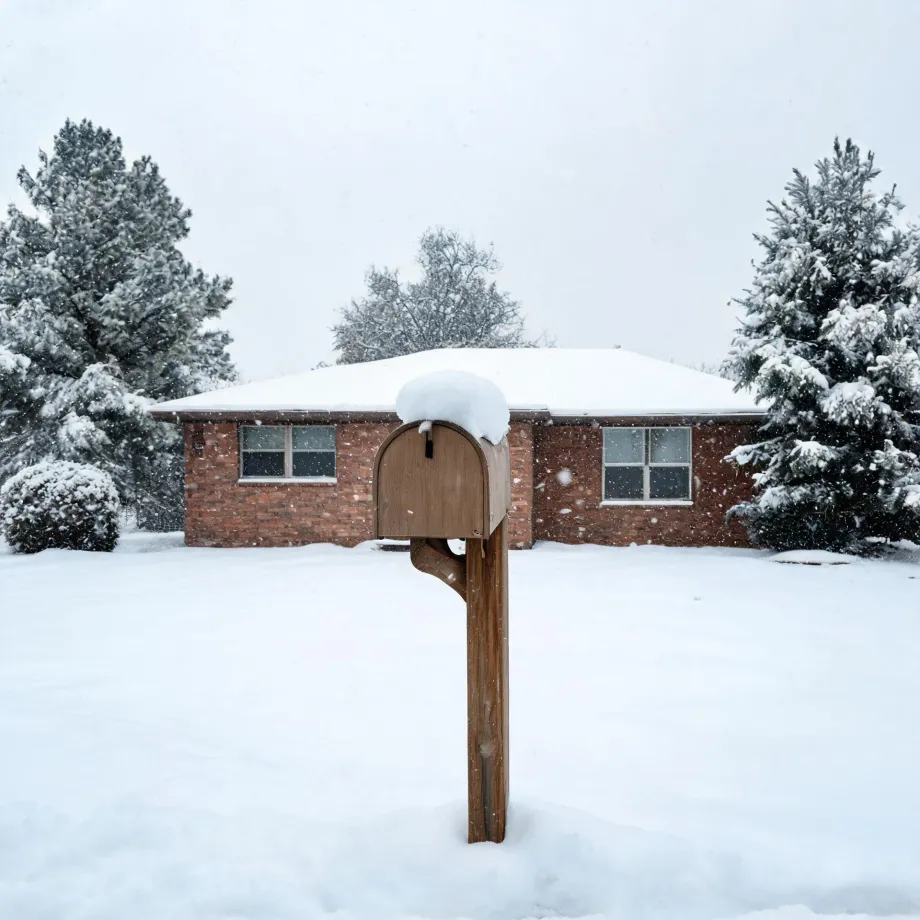
A furnace repair in Cedar County starts with the parts that have been working hardest. Homes in Cedar County, MO run heat about seven months a year, from October through April. The burner, the igniter, and the heat exchanger cycle on and off through all of those months, and the wear accumulates at those points first. When a system finally trips an error or stops heating, a contractor checks the igniter for cracking and the heat exchanger for fatigue before assuming the problem is simpler or cheaper. A cracked heat exchanger is a safety issue, not a convenience one, and a long heating season gives it plenty of time to develop.
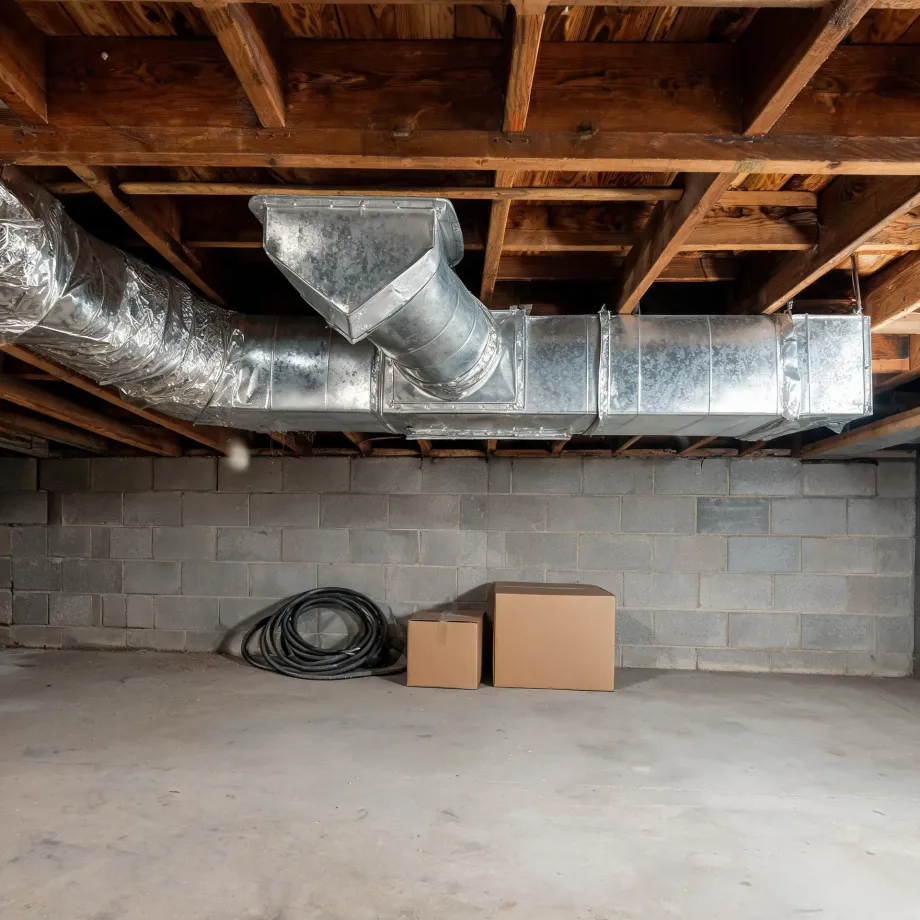
Furnaces in Cedar County sit inside houses that have already outlasted more than one heating system. Half the homes in Cedar County, Missouri were built in 1980 or earlier (2020-2024 ACS 5-year). A contractor who opens a unit here finds components that may have been married across different equipment generations: a heat exchanger from one era, flue venting adapted from another, burner parts that reflect whatever was available at the time of the last replacement. Whether a given part is still manufactured for that configuration is a question the opened furnace answers, and it shapes both what gets ordered and how long the job runs.
The Parts of a Furnace a Contractor Checks First
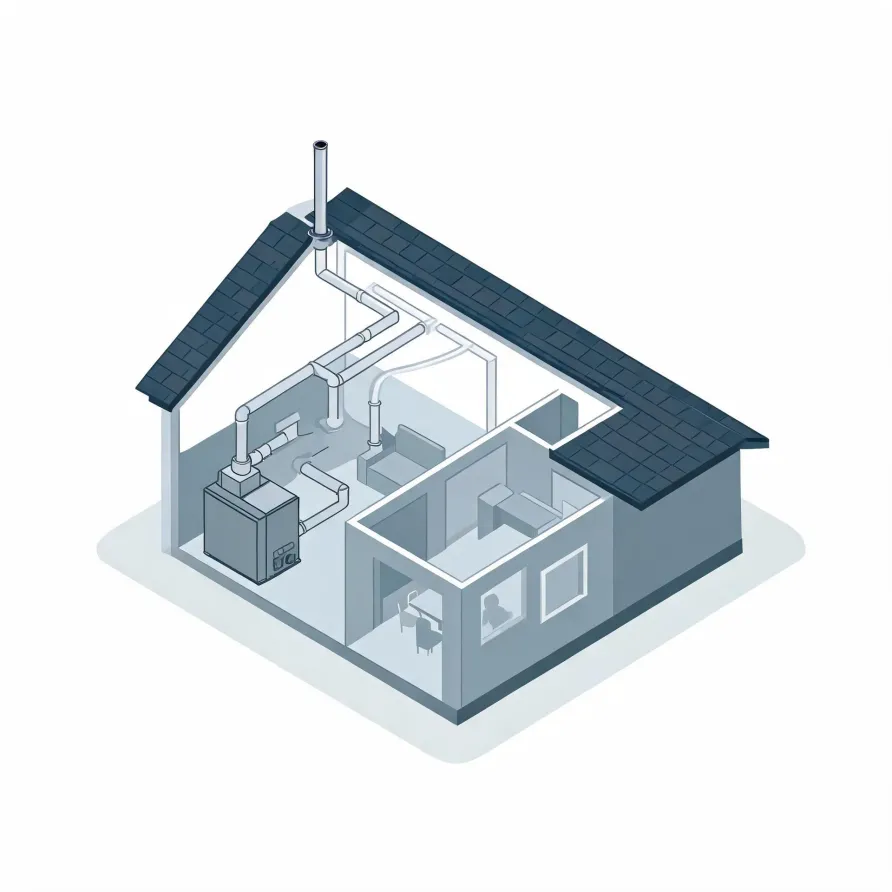
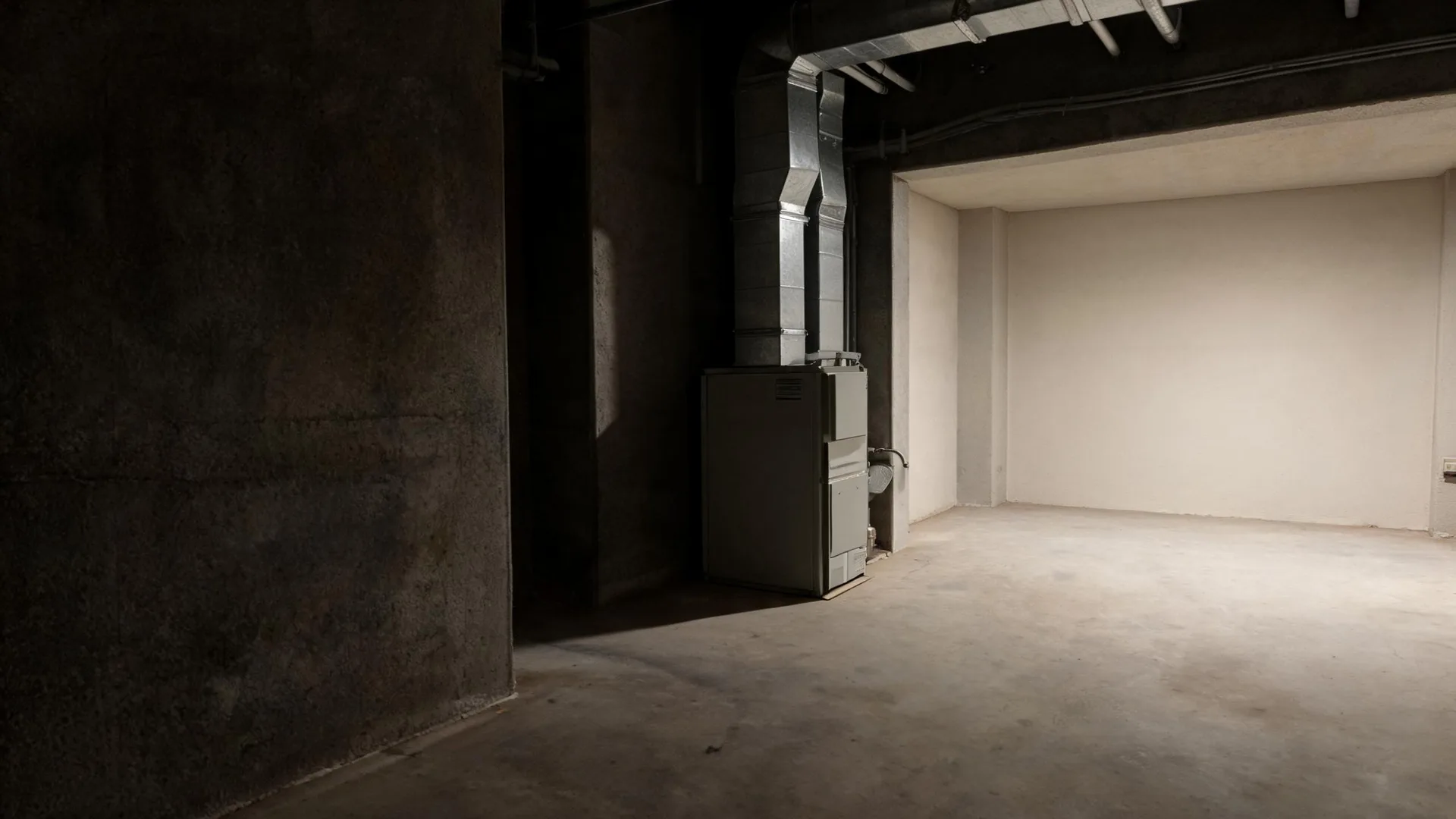
The furnace itself sits in a utility room, basement, or closet and is the piece a contractor reaches first. Inside it, the heat exchanger is the part that sees the most stress and is a common source of trouble when heat output drops or carbon monoxide is a concern. The burners, which fire directly inside the heat exchanger, are checked when the unit runs but fails to warm the house.
The blower motor moves conditioned air out of the furnace and into the supply ducts, and a failed motor is usually what a contractor finds when air stops moving even though the burners are firing. The flue pipe runs from the furnace to an outside vent and is examined for blockage or damage when combustion problems appear. The control board and thermostat wiring tie the whole system together and are inspected when the furnace behaves erratically or refuses to start.
The drawing shows a general layout of these components, and a licensed contractor determines which ones apply and need attention in your specific home.
Get matched in Cedar CountyCedar County, Missouri, by the numbers
67 severe weather events were recorded in Cedar County, Missouri between 2015 and 2024.
NOAA National Centers for Environmental Information, Storm Events Database, bulk CSV export, events 2015-01-01 through 2024-12-31.Half the homes in Cedar County, Missouri were built in 1980 or earlier (2020-2024 ACS 5-year).
U.S. Census Bureau, 2020-2024 American Community Survey 5-Year EstimatesCedar County, Missouri holds 6,946 housing units (2020-2024 ACS 5-year).
U.S. Census Bureau, 2020-2024 American Community Survey 5-Year EstimatesOwners occupy 74.1% of the occupied homes in Cedar County, Missouri (2020-2024 ACS 5-year).
U.S. Census Bureau, 2020-2024 American Community Survey 5-Year EstimatesFurnace Repair Rules & Codes for Cedar County, Missouri4 sourced rules and standards
What Happens When the Contractor Shows Up
Non-weatherized gas furnaces manufactured on or after November 19, 2015 must reach 80.0 percent AFUE.
Non-weatherized oil-fired furnaces manufactured on or after November 19, 2015 must reach 83.0 percent AFUE.
Mobile home gas furnaces manufactured on or after November 19, 2015 must reach 80.0 percent AFUE.
Non-weatherized gas furnaces manufactured on or after December 18, 2028 must reach 95.0 percent AFUE, up from the 80.0 percent minimum that applies to units manufactured before that date.
Severe Weather Events in Cedar County
Extreme weather puts real strain on furnace systems, and that strain shows up as repair calls. What the climate delivers in Cedar County shapes how hard local equipment works and how often it fails.
67 severe weather events, 2015–2024. Source: NOAA National Centers for Environmental Information, Storm Events Database.