Tell us about the job
Takes about a minute. No obligation.
Furnace repair in Bates County starts with what the burner and ignition system have already been through. Homes in Bates County, MO run heat about seven months a year, from October through April. A furnace cycling that steadily accumulates wear on the heat exchanger, the igniter, and the flame sensor well before the cabinet or the blower wheel show any trouble. When a contractor opens the unit, those are the components that tell the story of how the equipment has been loaded. Cracks in the heat exchanger or a degraded igniter are findings, not surprises.
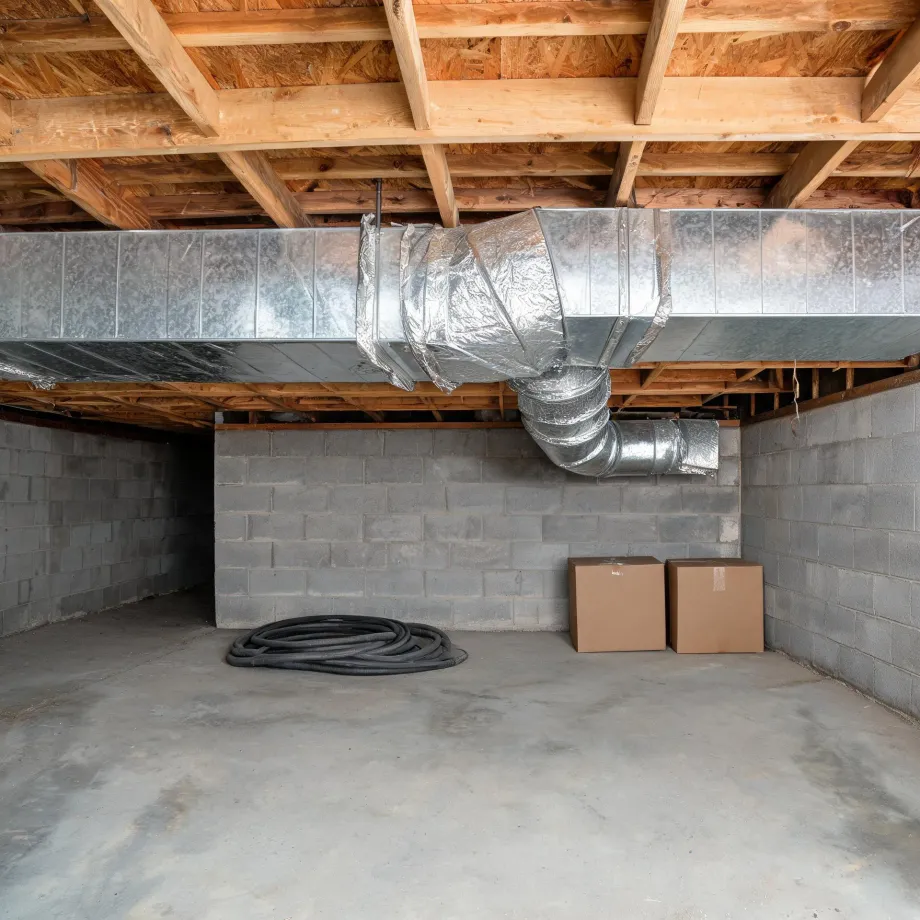
Furnaces in stock this old have often been replaced once or twice since the house was built, and each swap introduced parts chosen for fit rather than for what the original installation assumed. Half the homes in Bates County, Missouri were built in 1976 or earlier (2020-2024 ACS 5-year). That history means a repair call here is rarely straightforward: a contractor opening a cabinet may find a heat exchanger stressed by decades of expansion cycles, a flue assembly that has been adapted rather than replaced cleanly, or limit switches well past their rated life. What that contractor orders depends entirely on what they find inside, and for equipment running in houses of this vintage, some of those parts require sourcing that a newer unit would not.
The Parts of a Furnace a Contractor Checks First
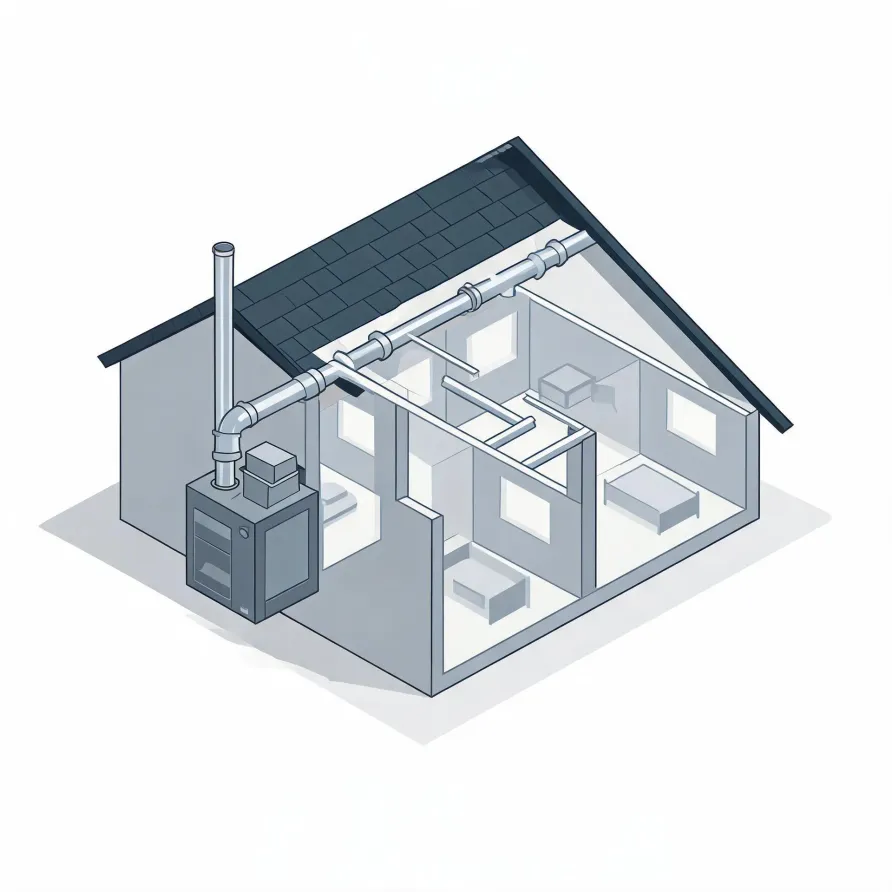
The furnace itself sits in the basement, utility room, or closet and is the piece a contractor goes to first. Inside it, the heat exchanger is the part most likely to be behind a heating failure or a carbon monoxide concern. The burners, which fire inside that exchanger, and the igniter, which starts the burn, are the other early suspects.
The blower motor sits at the base of the furnace cabinet and pushes conditioned air out through the house. The flue pipe runs from the top of the unit to an exterior wall or roof and carries combustion gases out. The thermostat on the wall ties the whole system together, and a faulty signal there can look like a furnace problem when the furnace itself is fine.
The drawing shows a typical layout, and a licensed contractor determines what applies to your specific system and home.
Get matched in Bates CountyBates County, by the numbers
90 severe weather events were recorded in Bates County, Missouri between 2015 and 2024.
NOAA National Centers for Environmental Information, Storm Events Database, bulk CSV export, events 2015-01-01 through 2024-12-31.Half the homes in Bates County, Missouri were built in 1976 or earlier (2020-2024 ACS 5-year).
U.S. Census Bureau, 2020-2024 American Community Survey 5-Year EstimatesBates County, Missouri holds 7,192 housing units (2020-2024 ACS 5-year).
U.S. Census Bureau, 2020-2024 American Community Survey 5-Year EstimatesOwners occupy 74.9% of the occupied homes in Bates County, Missouri (2020-2024 ACS 5-year).
U.S. Census Bureau, 2020-2024 American Community Survey 5-Year EstimatesCodes & Standards Covering Furnace Repair in Bates County, Missouri4 sourced rules & standards
What Furnace Repair Looks Like in Bates County
Non-weatherized gas furnaces manufactured on or after November 19, 2015 must reach 80.0 percent AFUE.
Non-weatherized oil-fired furnaces manufactured on or after November 19, 2015 must reach 83.0 percent AFUE.
Mobile home gas furnaces manufactured on or after November 19, 2015 must reach 80.0 percent AFUE.
Non-weatherized gas furnaces manufactured on or after December 18, 2028 must reach 95.0 percent AFUE, up from the 80.0 percent minimum that applies to units manufactured before that date.
Severe Weather Events in Bates County
Extreme weather puts real stress on furnace systems, running them harder and longer than normal conditions demand. How much stress depends on local patterns, which is why the record for Bates County belongs on a page about furnace repair.
90 severe weather events, 2015–2024. Source: NOAA National Centers for Environmental Information, Storm Events Database.