Tell us about the job
Takes about a minute. No obligation.
A furnace contractor diagnosing a repair in Montgomery County starts with the ignition system and the heat exchanger, because those are the components that absorb every start cycle across the heating season. Homes in Montgomery County, MO run heat about seven months a year, from October through April. The burner fires, extinguishes, and fires again on every cold night through that stretch, and the igniter in particular wears from that cycling in ways a visual check can confirm. Cracks in the heat exchanger show up in the same pattern. A contractor who skips those components and heads straight to the thermostat or the blower is working in the wrong order for this county.
Furnaces in this county get replaced and retrofitted into structures that have been adapted more than once already, which means the ductwork and wiring behind the walls are not where a repair job stalls. Half the homes in Montgomery County, Missouri were built in 1978 or earlier (2020-2024 ACS 5-year). Stock that old has seen its share of modifications, and by the time a furnace shows a fault, the building has usually been worked around enough times that it gets out of the way. What stops the job, or changes its scope, is what a contractor finds once the cabinet is open: the condition of the heat exchanger, whether the burners are firing cleanly, and whether the controls and safeties still have parts available.
The Parts of a Furnace a Contractor Checks First
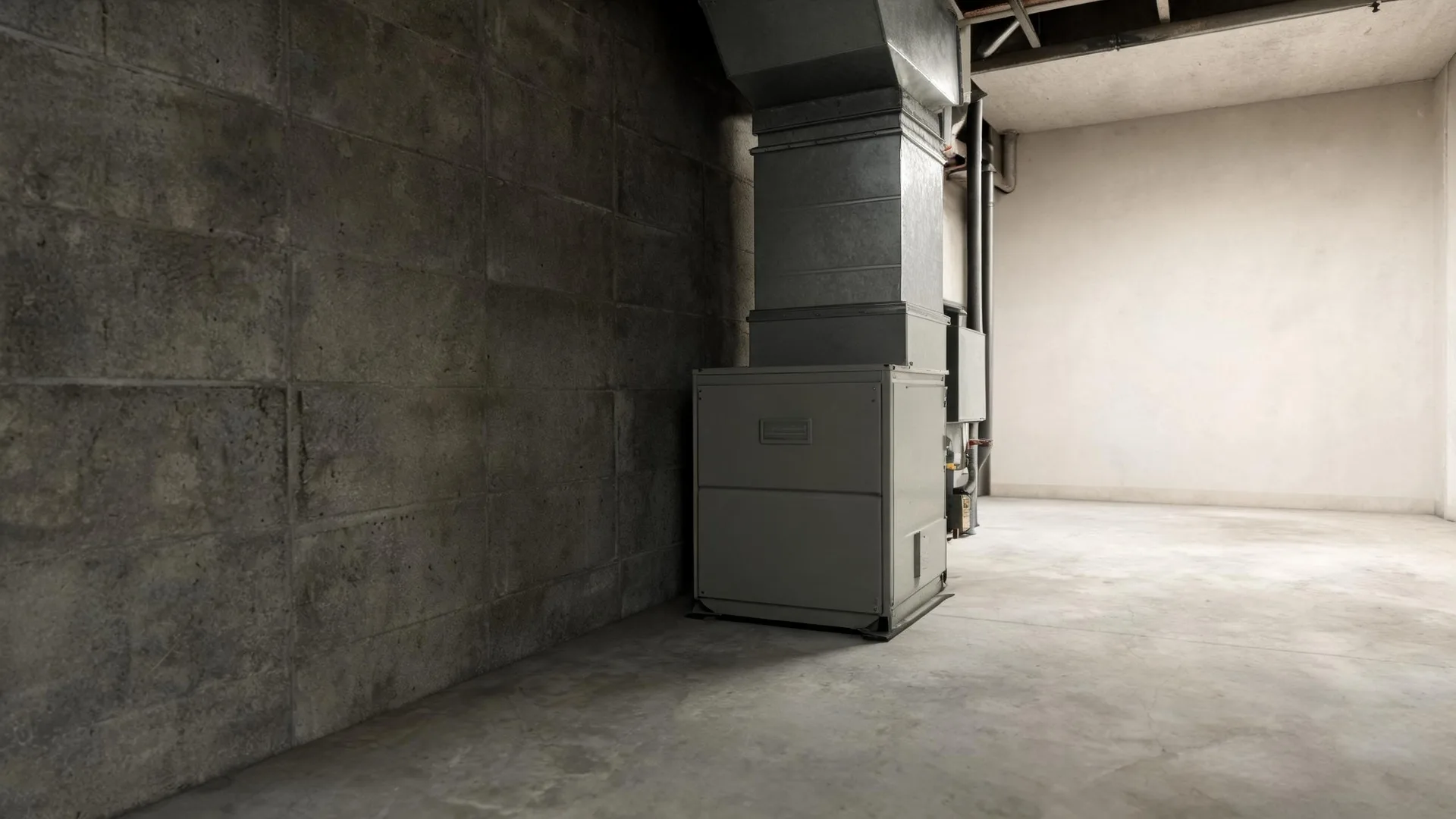
The heat exchanger sits at the core of the furnace cabinet and is where a contractor looks early. Cracks or stress in that metal wall let combustion gases into the airstream, so a failed heat exchanger is one of the first things ruled in or out. The burner assembly sits just below it and is the piece that actually produces the flame.
The blower motor and its fan wheel sit in the lower section of the cabinet and push conditioned air out through the supply side of the duct system. Alongside those, the control board, the igniter, the flame sensor, and the pressure switches each govern a specific step in the startup sequence, and a failure in any one of them can shut the furnace down or keep it from firing at all.
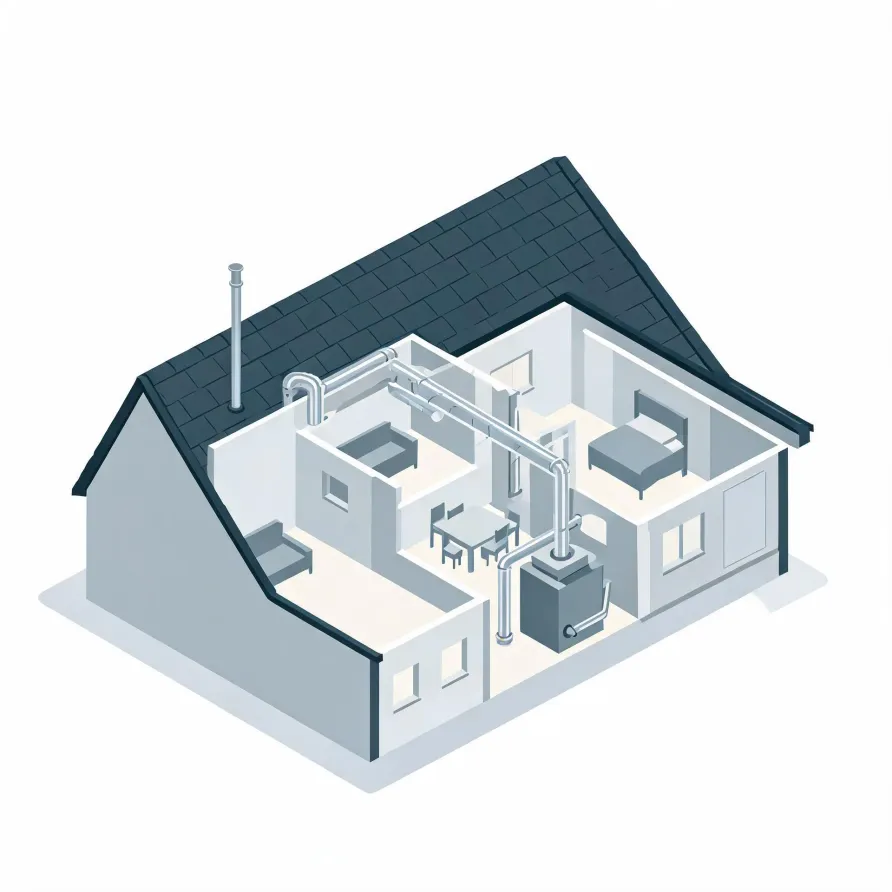
The drawing shows a typical furnace layout, and a licensed contractor determines which components apply and what condition they are in for your specific system.
Find a contractor in Montgomery CountyMontgomery County, Missouri, by the numbers
59 severe weather events were recorded in Montgomery County, Missouri between 2015 and 2024.
NOAA National Centers for Environmental Information, Storm Events Database, bulk CSV export, events 2015-01-01 through 2024-12-31.Half the homes in Montgomery County, Missouri were built in 1978 or earlier (2020-2024 ACS 5-year).
U.S. Census Bureau, 2020-2024 American Community Survey 5-Year EstimatesMontgomery County, Missouri holds 5,832 housing units (2020-2024 ACS 5-year).
U.S. Census Bureau, 2020-2024 American Community Survey 5-Year EstimatesOwners occupy 73.4% of the occupied homes in Montgomery County, Missouri (2020-2024 ACS 5-year).
U.S. Census Bureau, 2020-2024 American Community Survey 5-Year EstimatesCodes & Standards Governing Furnace Repair in Montgomery County, Missouri4 sourced rules & standards
What the repair visit looks like
Non-weatherized gas furnaces manufactured on or after November 19, 2015 must reach 80.0 percent AFUE.
Non-weatherized oil-fired furnaces manufactured on or after November 19, 2015 must reach 83.0 percent AFUE.
Mobile home gas furnaces manufactured on or after November 19, 2015 must reach 80.0 percent AFUE.
Non-weatherized gas furnaces manufactured on or after December 18, 2028 must reach 95.0 percent AFUE, up from the 80.0 percent minimum that applies to units manufactured before that date.
Severe Weather Events in Montgomery County
Extreme weather puts real load on furnaces: hard starts, long run cycles, and stress on parts that were already working near their limits. How much weather a county sees is a local fact, and it shapes how hard the equipment in this area has to work.
59 severe weather events, 2015–2024. Source: NOAA National Centers for Environmental Information, Storm Events Database.