Tell us about the job
Takes about a minute. No obligation.
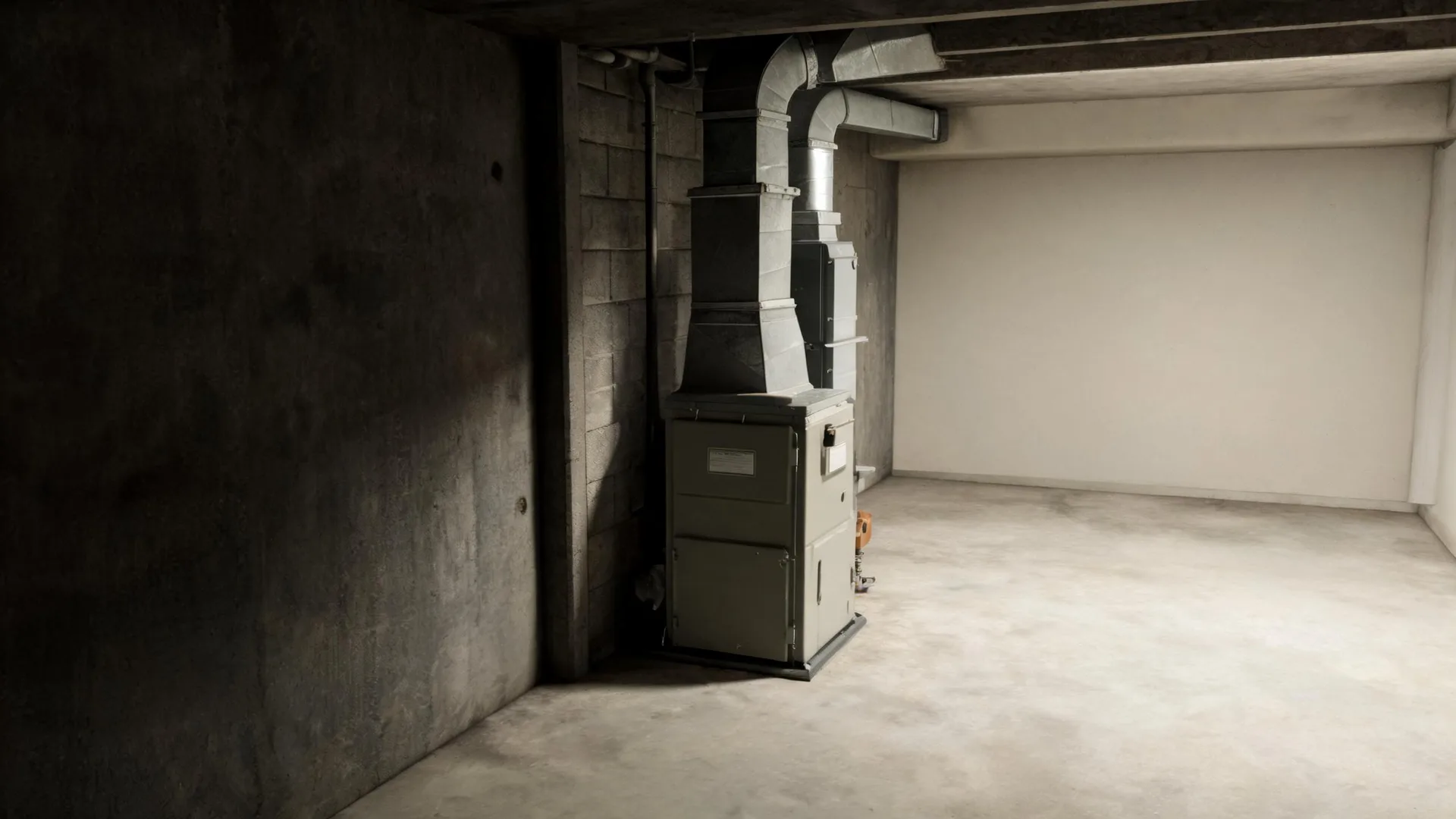
Homes in Osage County, MO run heat about seven months a year, from October through April. The burner, heat exchanger, and ignition system cycle through that entire stretch every year, and the wear shows in them before it shows anywhere else. A contractor diagnosing a furnace here looks at those parts first, not because the furnace is old but because that is where accumulated cycling leaves its mark. Cracks in the heat exchanger and igniter failures are the findings, not surprises.
Furnace parts that are no longer in production are the repair variable that catches homeowners off guard. Half the homes in Osage County, Missouri were built in 1982 or earlier (2020-2024 ACS 5-year). A system running in a house that old has often been through at least one major component swap, and what a contractor finds once the heat exchanger or burner assembly is open may not match what the serial plate suggests. If a part has gone out of manufacture, the contractor sources a compatible substitute or prices a full replacement. That decision comes from what is physically inside the unit, not from the age stamped on the cabinet.
The Parts of a Furnace a Contractor Checks First
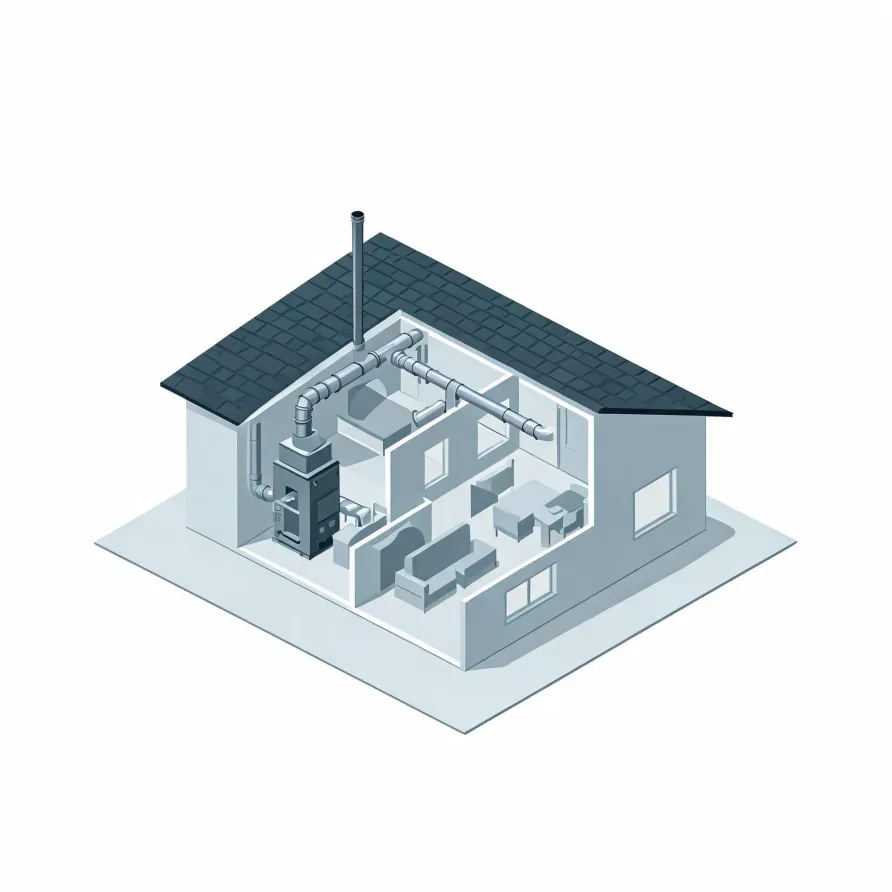
The heat exchanger sits at the core of the furnace cabinet, in the mechanical room or utility space, and it is where combustion gases and household air pass close enough to transfer warmth without mixing. When it cracks or corrodes, the furnace often short-cycles or throws a fault code. The burner assembly sits just below it and is usually the first thing a contractor pulls when the system fails to ignite.
The blower motor and its wheel occupy the lower section of the cabinet and push conditioned air into the supply plenum. The control board, mounted inside the same cabinet, reads the sensors and sequences every other component. The flue pipe runs from the top of the cabinet through the wall or roof and carries exhaust out of the house.
The drawing shows a general furnace layout, and a licensed contractor will determine which components apply and what condition they are in for this specific home.
Find a contractor in Osage CountyOsage County, by the numbers
42 severe weather events were recorded in Osage County, Missouri between 2015 and 2024.
NOAA National Centers for Environmental Information, Storm Events Database, bulk CSV export, events 2015-01-01 through 2024-12-31.Half the homes in Osage County, Missouri were built in 1982 or earlier (2020-2024 ACS 5-year).
U.S. Census Bureau, 2020-2024 American Community Survey 5-Year EstimatesOsage County, Missouri holds 6,501 housing units (2020-2024 ACS 5-year).
U.S. Census Bureau, 2020-2024 American Community Survey 5-Year EstimatesOwners occupy 79.4% of the occupied homes in Osage County, Missouri (2020-2024 ACS 5-year).
U.S. Census Bureau, 2020-2024 American Community Survey 5-Year EstimatesCodes & Standards Behind Furnace Repair in Osage County, Missouri4 sourced rules & standards
What Furnace Repair Looks Like in Osage County
Non-weatherized gas furnaces manufactured on or after November 19, 2015 must reach 80.0 percent AFUE.
Non-weatherized oil-fired furnaces manufactured on or after November 19, 2015 must reach 83.0 percent AFUE.
Mobile home gas furnaces manufactured on or after November 19, 2015 must reach 80.0 percent AFUE.
Non-weatherized gas furnaces manufactured on or after December 18, 2028 must reach 95.0 percent AFUE, up from the 80.0 percent minimum that applies to units manufactured before that date.
Severe Weather Events in Osage County
Osage County weather puts real stress on furnace equipment. Hard conditions accelerate wear, and a unit that has worked through local extremes is one a contractor here will recognize.
42 severe weather events, 2015–2024. Source: NOAA National Centers for Environmental Information, Storm Events Database.