Tell us about the job
Takes about a minute. No obligation.
Homes in Clinton County, MO run heat about seven months a year, from October through April. The burner cycles on and off through every cold spell in that stretch, and the heat exchanger flexes with each firing. A contractor diagnosing a furnace repair here checks both for fatigue cracks, failed igniters, and worn flame sensors before moving elsewhere, because those parts carry the bulk of the season's load. Ductwork seals and blower motors follow. Parts that stay cold all summer and run hard all winter rarely fail from a single event; they fail from the count of cycles behind them.
Furnaces in a house old enough to qualify as typical here tend to carry components that have cycled through more heating seasons than the manufacturers who made them still support. Half the homes in Clinton County, Missouri were built in 1978 or earlier (2020-2024 ACS 5-year). Once a contractor opens the unit, what decides the repair is whether the failed part is still in production or has to be sourced from salvage, and that question comes up far more often in stock like this than the age of the equipment alone would suggest. A heat exchanger cracked from decades of expansion and contraction is one thing; a gas valve or control board with no current replacement is a different job entirely.
The Parts of a Furnace a Contractor Checks First
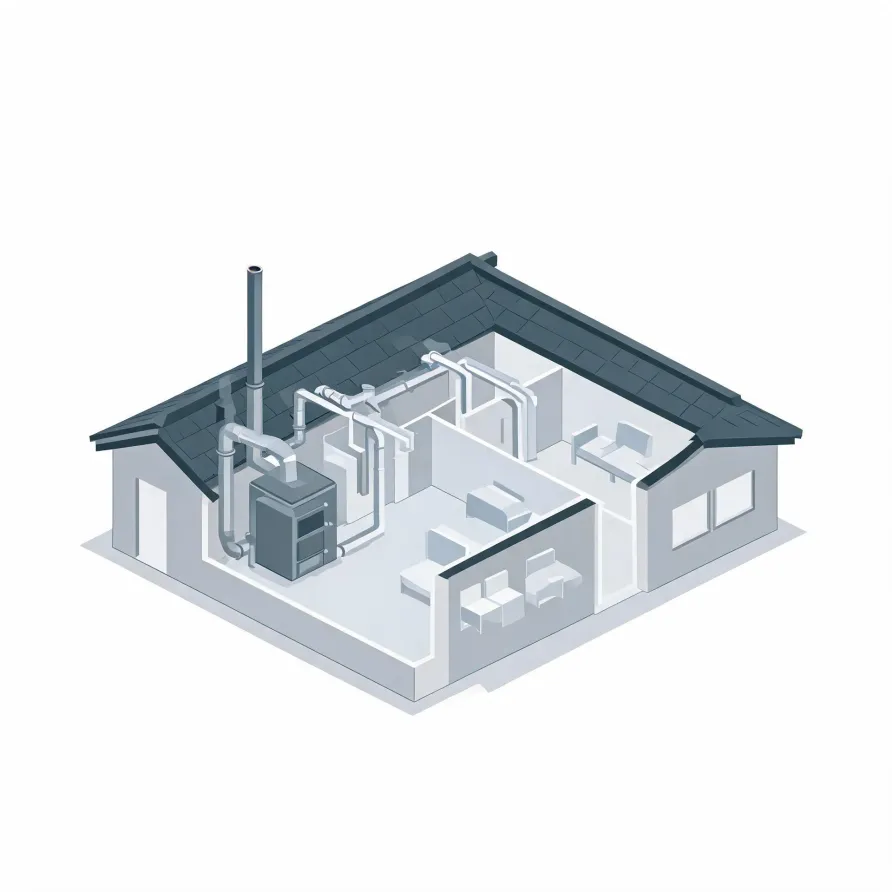
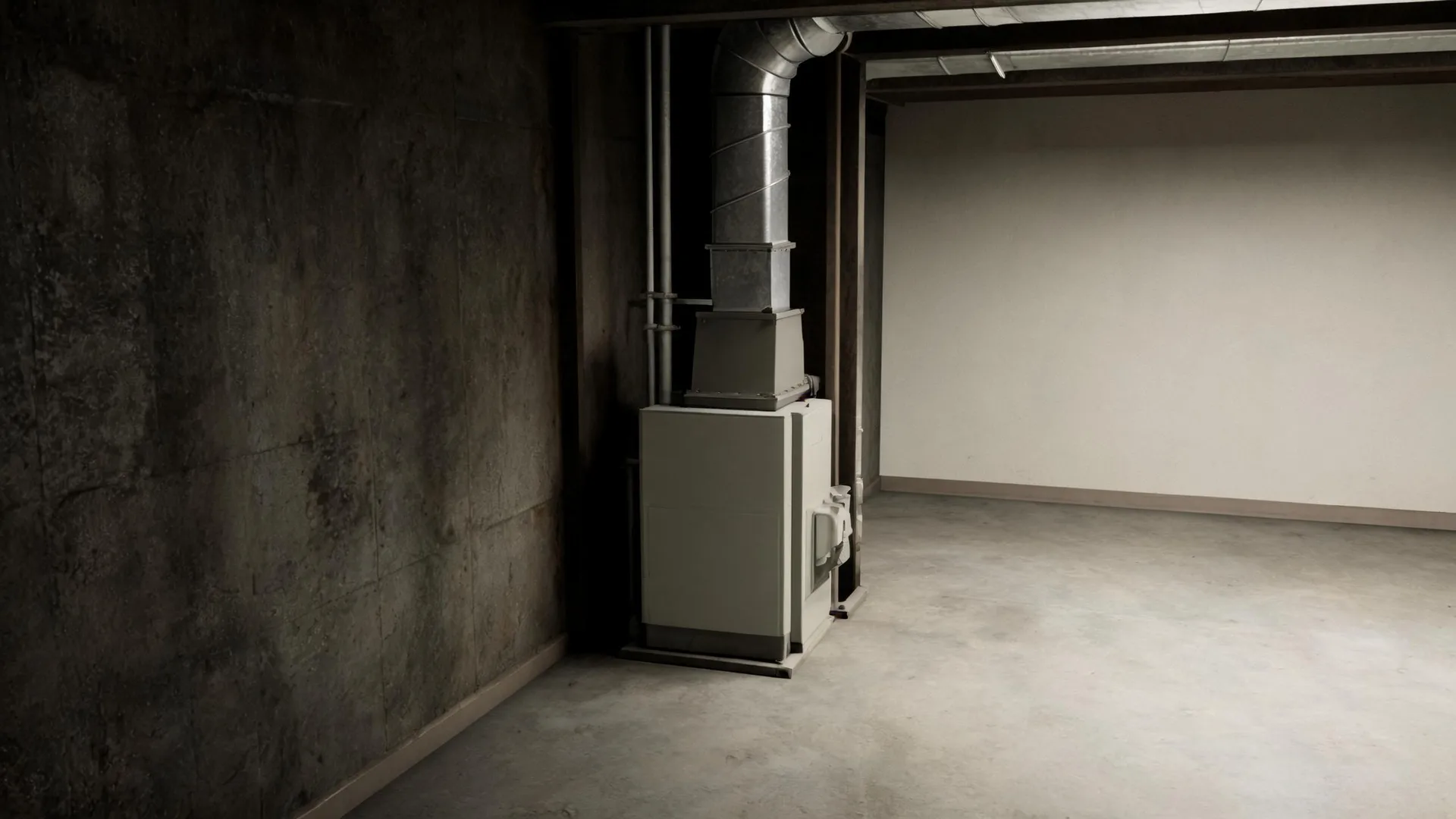
The furnace itself sits in a utility space, basement, or closet and is the piece a contractor goes to first. Inside it, the heat exchanger is the part most worth attention during a repair call: cracks or failures there affect both heat output and safety. The burners, which fire inside the exchanger, and the igniter, which lights them, are common sources of a furnace that won't start or runs unevenly.
The blower motor sits at the base of the unit and pushes conditioned air out through the supply side of the house. Alongside it, the control board reads signals from the thermostat and tells each component when to act. A contractor working a repair call will check the flue pipe where it exits the unit, since blockages or separation there affect combustion and venting.
The drawing shows the general layout of a furnace system, and a licensed contractor determines which components apply to the specific equipment and configuration in your home.
Find a contractor in Clinton CountyClinton County by the numbers
95 severe weather events were recorded in Clinton County, Missouri between 2015 and 2024.
NOAA National Centers for Environmental Information, Storm Events Database, bulk CSV export, events 2015-01-01 through 2024-12-31.Half the homes in Clinton County, Missouri were built in 1978 or earlier (2020-2024 ACS 5-year).
U.S. Census Bureau, 2020-2024 American Community Survey 5-Year EstimatesClinton County, Missouri holds 9,077 housing units (2020-2024 ACS 5-year).
U.S. Census Bureau, 2020-2024 American Community Survey 5-Year EstimatesOwners occupy 75.7% of the occupied homes in Clinton County, Missouri (2020-2024 ACS 5-year).
U.S. Census Bureau, 2020-2024 American Community Survey 5-Year EstimatesCodes & Standards Covering Furnace Repair in Clinton County, Missouri4 sourced rules & standards
What Happens When a Contractor Comes Out
Non-weatherized gas furnaces manufactured on or after November 19, 2015 must reach 80.0 percent AFUE.
Non-weatherized oil-fired furnaces manufactured on or after November 19, 2015 must reach 83.0 percent AFUE.
Mobile home gas furnaces manufactured on or after November 19, 2015 must reach 80.0 percent AFUE.
Non-weatherized gas furnaces manufactured on or after December 18, 2028 must reach 95.0 percent AFUE, up from the 80.0 percent minimum that applies to units manufactured before that date.
Severe Weather Events in Clinton County
Hard weather puts real hours on a furnace. Stress that builds up over time is what brings repair calls, and that pattern is specific to what this part of Missouri actually sees.
95 severe weather events, 2015–2024. Source: NOAA National Centers for Environmental Information, Storm Events Database.