Tell us about the job
Takes about a minute. No obligation.
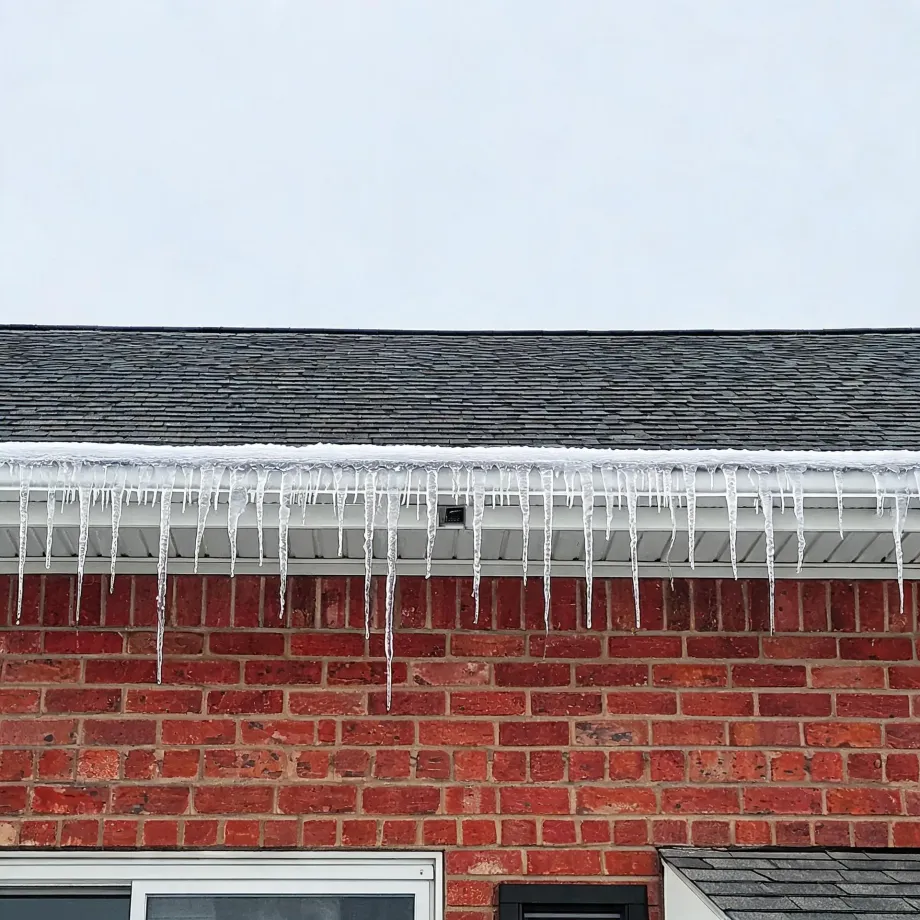
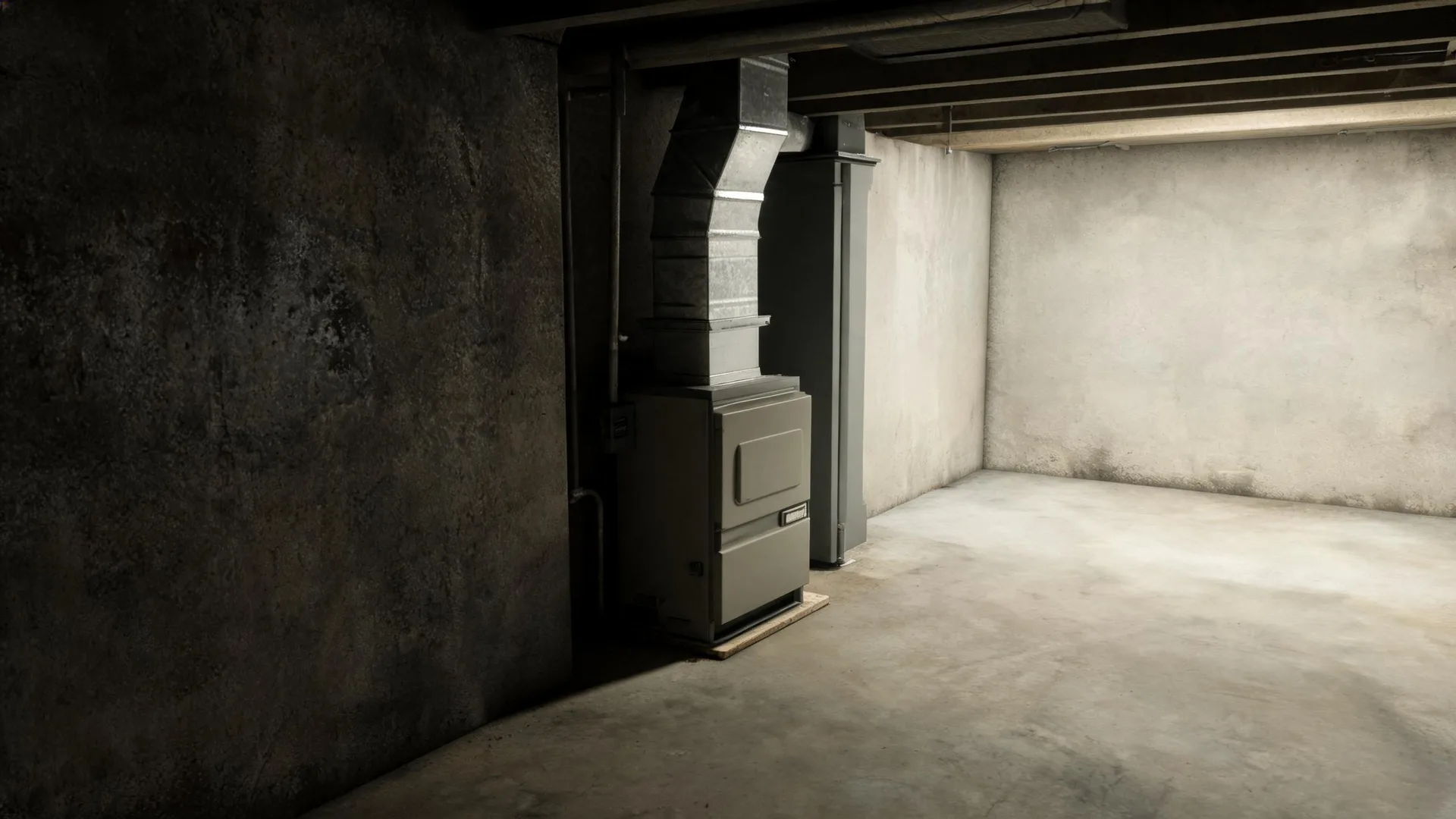
A furnace contractor in Clinton County has to get the load calculation right before anything else, because an undersized or poorly installed system does not get to hide its flaws during mild stretches. Homes in Clinton County, MO run heat about seven months a year, from October through April. The burner and heat exchanger cycle hard through that stretch, and the ignition system takes every start the thermostat calls for. A unit that was rushed into commission or specced to a generic rule of thumb shows cracks, fatigue, and airflow problems years ahead of a properly sized install.
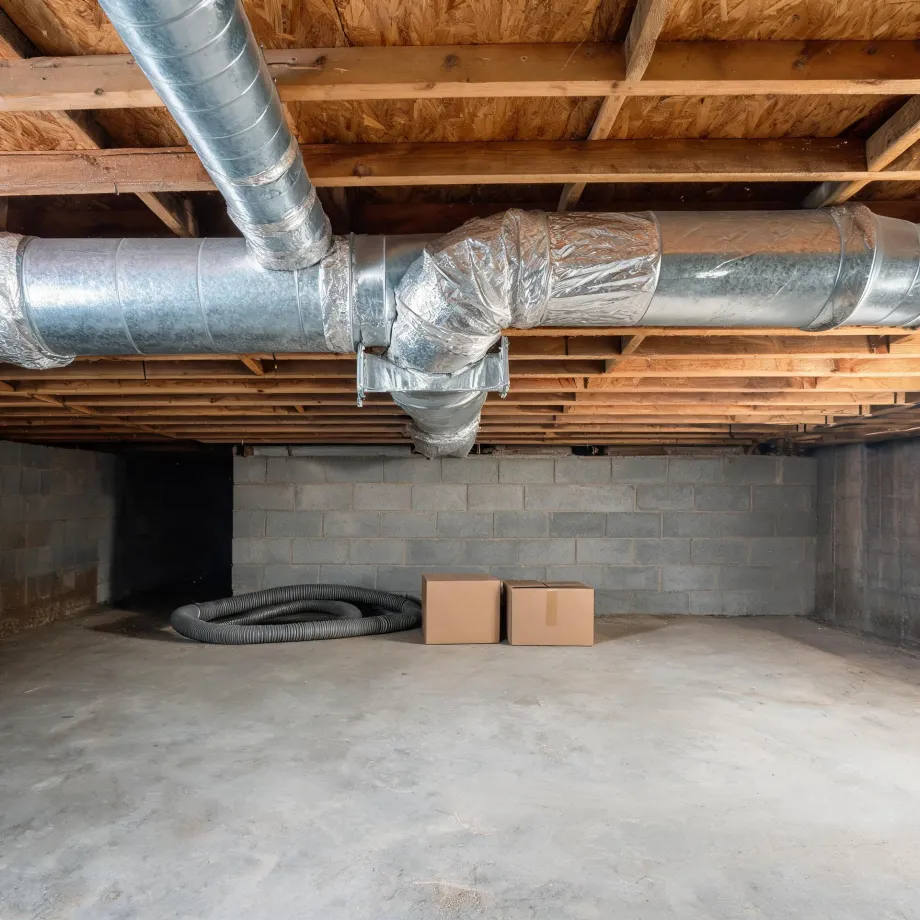
Ductwork in houses built for an earlier generation of heating equipment was sized to move air at volumes and pressures that modern furnaces do not match. Half the homes in Clinton County, Missouri were built in 1978 or earlier (2020-2024 ACS 5-year). That gap is where a furnace installation gets complicated: a contractor checking existing duct runs against a new unit's specifications may find the supply side undersized, the return air inadequate, or both. The electrical service gets the same look, since load requirements have shifted since many of these houses were wired. What the contractor finds in those two systems is what sets the scope of the job.
What Gets Installed With a New Furnace
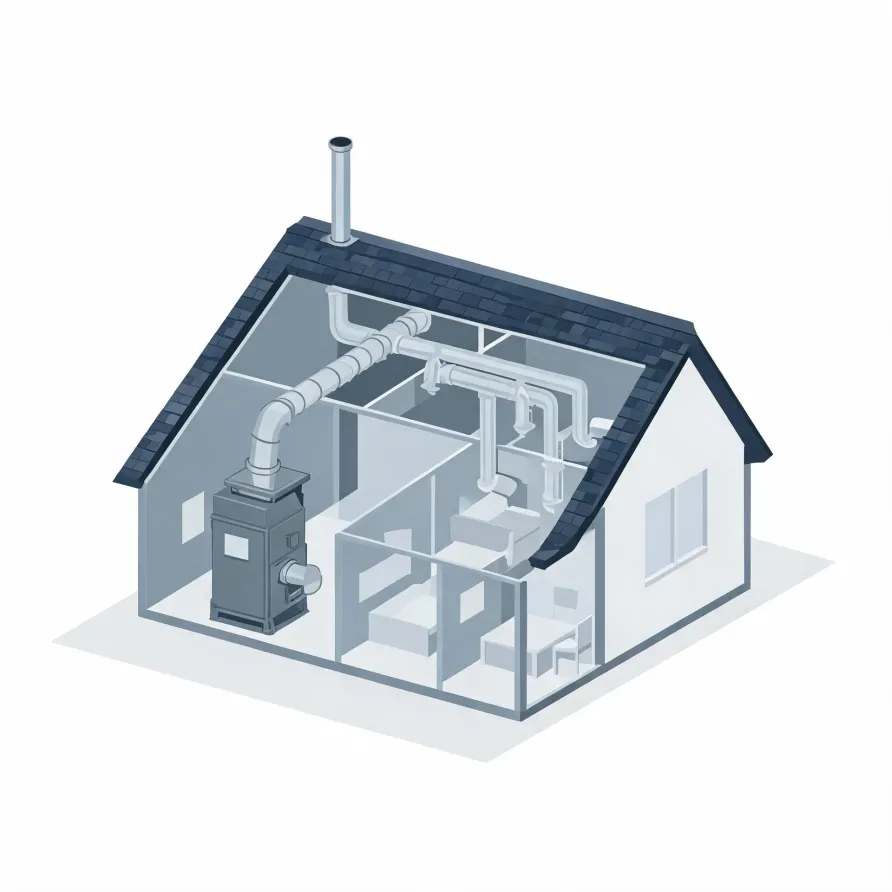
The furnace itself sits in the basement, utility room, or closet and is the unit a homeowner sees when they open that door. Inside the cabinet, the heat exchanger and burner assembly do the actual work of generating heat, while the blower motor pushes conditioned air into the supply side of the house.
The flue pipe runs from the furnace to an exterior wall or up through the roof, carrying combustion gases out of the living space. The thermostat mounts on an interior wall and serves as the control point where the homeowner sets temperature and the system receives its instructions.
The drawing shows a general layout of these components, and a licensed contractor determines exactly what applies to your house.
Get matched in Clinton CountyClinton County by the Numbers
95 severe weather events were recorded in Clinton County, Missouri between 2015 and 2024.
NOAA National Centers for Environmental Information, Storm Events Database, bulk CSV export, events 2015-01-01 through 2024-12-31.Half the homes in Clinton County, Missouri were built in 1978 or earlier (2020-2024 ACS 5-year).
U.S. Census Bureau, 2020-2024 American Community Survey 5-Year EstimatesClinton County, Missouri holds 9,077 housing units (2020-2024 ACS 5-year).
U.S. Census Bureau, 2020-2024 American Community Survey 5-Year EstimatesOwners occupy 75.7% of the occupied homes in Clinton County, Missouri (2020-2024 ACS 5-year).
U.S. Census Bureau, 2020-2024 American Community Survey 5-Year EstimatesFurnace Installation Rules & Codes for Clinton County, Missouri4 sourced rules and standards
What the Installation Looks Like
Non-weatherized gas furnaces manufactured on or after November 19, 2015 must reach 80.0 percent AFUE.
Non-weatherized oil-fired furnaces manufactured on or after November 19, 2015 must reach 83.0 percent AFUE.
Mobile home gas furnaces manufactured on or after November 19, 2015 must reach 80.0 percent AFUE.
Non-weatherized gas furnaces manufactured on or after December 18, 2028 must reach 95.0 percent AFUE, up from the 80.0 percent minimum that applies to units manufactured before that date.
Severe Weather Events in Clinton County
Weather extremes put a direct load on heating equipment, shortening cycles, stressing components, and pushing systems harder than mild climates require. What the climate does in Clinton County shapes what a furnace has to handle, and that makes equipment selection and installation a local decision.
95 severe weather events, 2015–2024. Source: NOAA National Centers for Environmental Information, Storm Events Database.