Tell us about the job
Takes about a minute. No obligation.
A furnace repair in Platte County starts with the parts that carry the actual load: the heat exchanger, the burner, and the ignition system. Homes in Platte County, MO run heat about seven months a year, from October through April. Across that heating season, those components cycle on and off hundreds of times, and the cracks, carbon deposits, and worn igniters a contractor finds are the physical record of that work. An undersized system or a poor installation shows up in those parts first, because there is little idle time to slow the wear. A contractor quoting a repair prices those components before looking anywhere else.
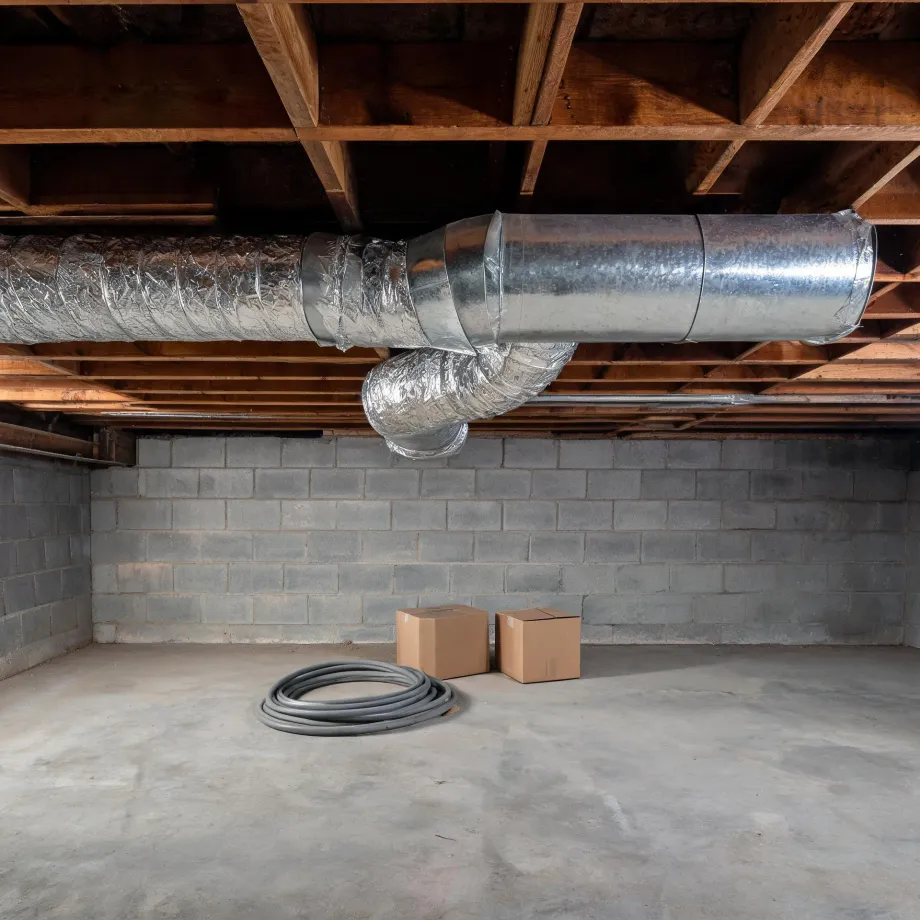
Furnaces running in stock this old have usually been through at least one ownership change and possibly one equipment swap, which means the unit a contractor opens does not always match what the permit or the label says. Half the homes in Platte County, Missouri were built in 1992 or earlier (2020-2024 ACS 5-year). A system installed into a house that age is often running on wiring and gas supply lines it inherited rather than ones sized for it, and the repair scope shifts once the contractor can see what the burner assembly and heat exchanger actually look like inside. Parts for furnaces of this generation are still manufactured, but a contractor here quotes the job after confirming availability, not before.
The Parts of a Furnace a Contractor Checks First
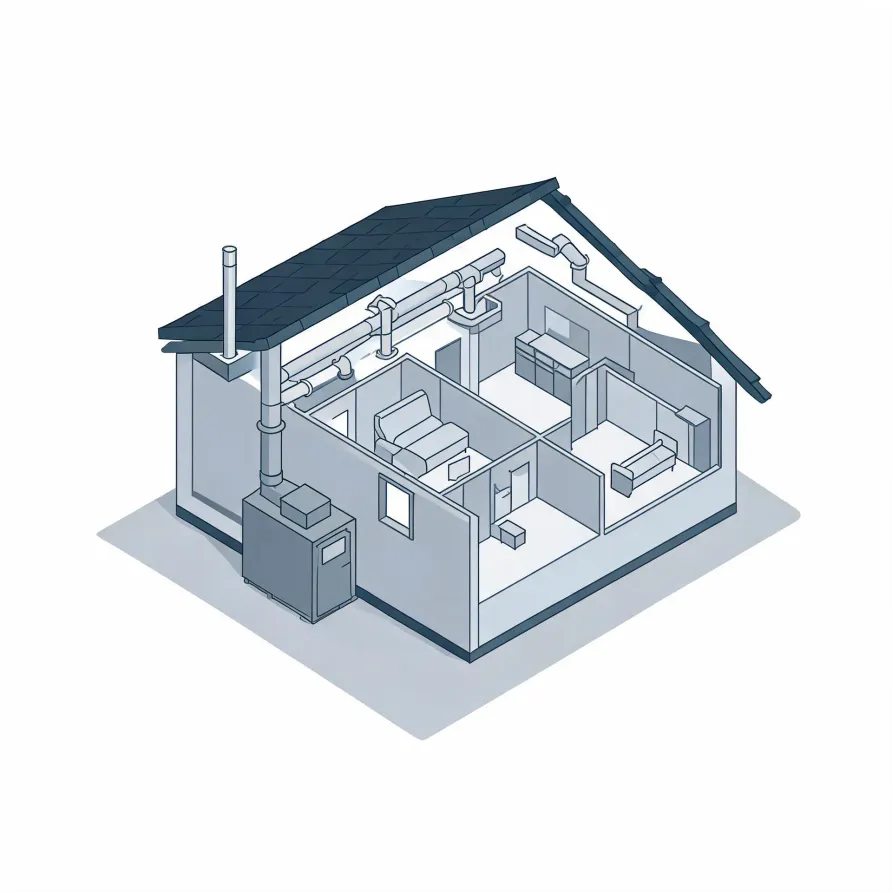
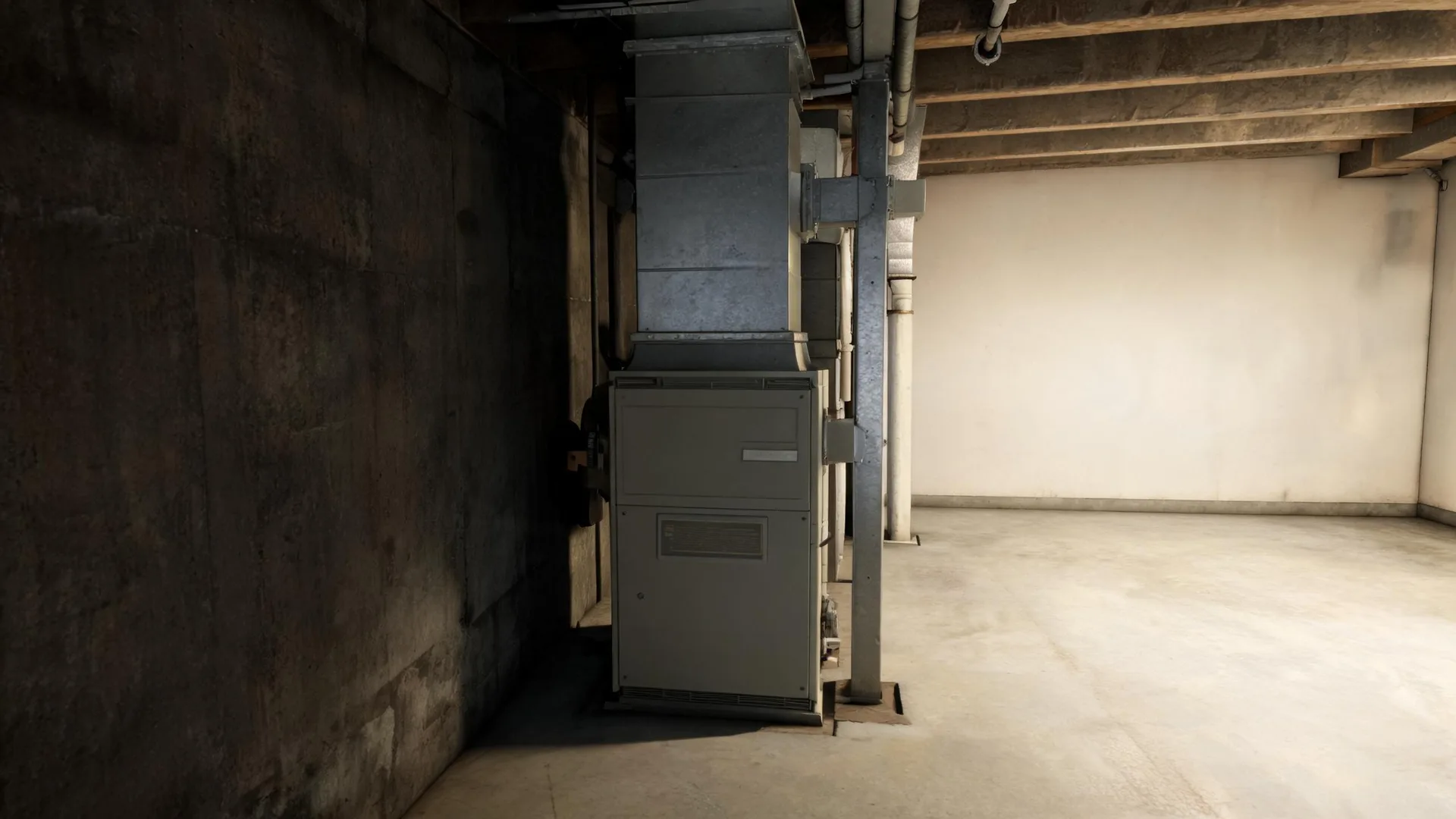
The furnace itself sits in the basement, utility room, or closet and is the heart of the system. Inside it, the heat exchanger is the piece a contractor looks at closely during a repair call. Cracks or failures there let combustion gases into the air supply, so it draws early attention. The burners, which ignite the fuel and produce the heat, are another common source of trouble when a furnace stops performing.
The blower motor sits inside the furnace cabinet and pushes conditioned air through the house. The flue or exhaust vent runs from the furnace to the outside and carries combustion gases out. The thermostat, mounted on a wall in the living space, sends the signal that starts and stops the whole sequence. Each of these pieces can be the one that has failed.
The drawing shows a typical furnace layout, and a licensed contractor determines what applies to your specific system and home.
Find a contractor in Platte CountyPlatte County, by the numbers
169 severe weather events were recorded in Platte County, Missouri between 2015 and 2024.
NOAA National Centers for Environmental Information, Storm Events Database, bulk CSV export, events 2015-01-01 through 2024-12-31.Half the homes in Platte County, Missouri were built in 1992 or earlier (2020-2024 ACS 5-year).
U.S. Census Bureau, 2020-2024 American Community Survey 5-Year EstimatesPlatte County, Missouri holds 46,606 housing units (2020-2024 ACS 5-year).
U.S. Census Bureau, 2020-2024 American Community Survey 5-Year EstimatesOwners occupy 67.4% of the occupied homes in Platte County, Missouri (2020-2024 ACS 5-year).
U.S. Census Bureau, 2020-2024 American Community Survey 5-Year EstimatesCodes & Standards Behind Furnace Repair in Platte County, Missouri4 sourced rules & standards
What Furnace Repair Looks Like in Platte County
Non-weatherized gas furnaces manufactured on or after November 19, 2015 must reach 80.0 percent AFUE.
Non-weatherized oil-fired furnaces manufactured on or after November 19, 2015 must reach 83.0 percent AFUE.
Mobile home gas furnaces manufactured on or after November 19, 2015 must reach 80.0 percent AFUE.
Non-weatherized gas furnaces manufactured on or after December 18, 2028 must reach 95.0 percent AFUE, up from the 80.0 percent minimum that applies to units manufactured before that date.
Severe Weather Events in Platte County
Weather puts load on heating equipment. Hard winters and volatile seasons accelerate wear on furnaces, and how much stress a system accumulates over its life depends largely on what the local climate asks of it.
169 severe weather events, 2015–2024. Source: NOAA National Centers for Environmental Information, Storm Events Database.