Tell us about the job
Takes about a minute. No obligation.
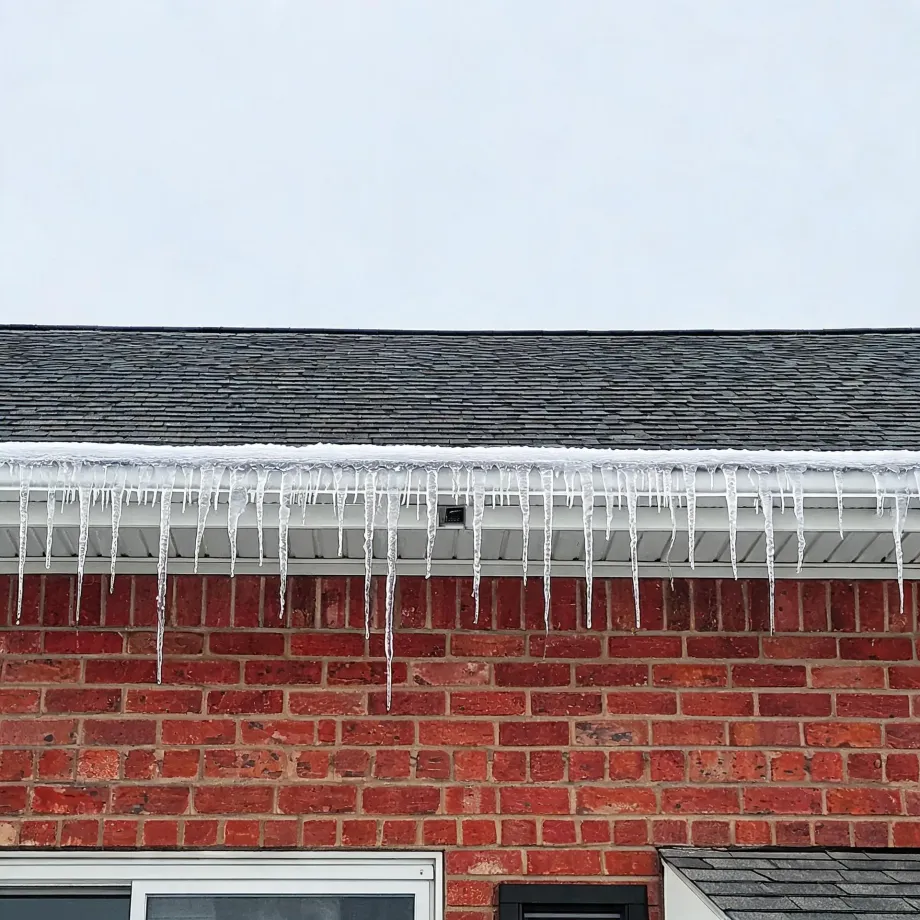
Furnace repair in Dallas County starts with what the equipment has already been through. Homes in Dallas County, MO run heat about seven months a year, from October through April. Burners and heat exchangers cycle on and off across all of those months, and that repeated thermal stress is where fatigue shows up first. A contractor checking a troubled furnace here goes straight to the ignition system and the heat exchanger cracks before pricing any other component, because that is where the accumulated load lands.
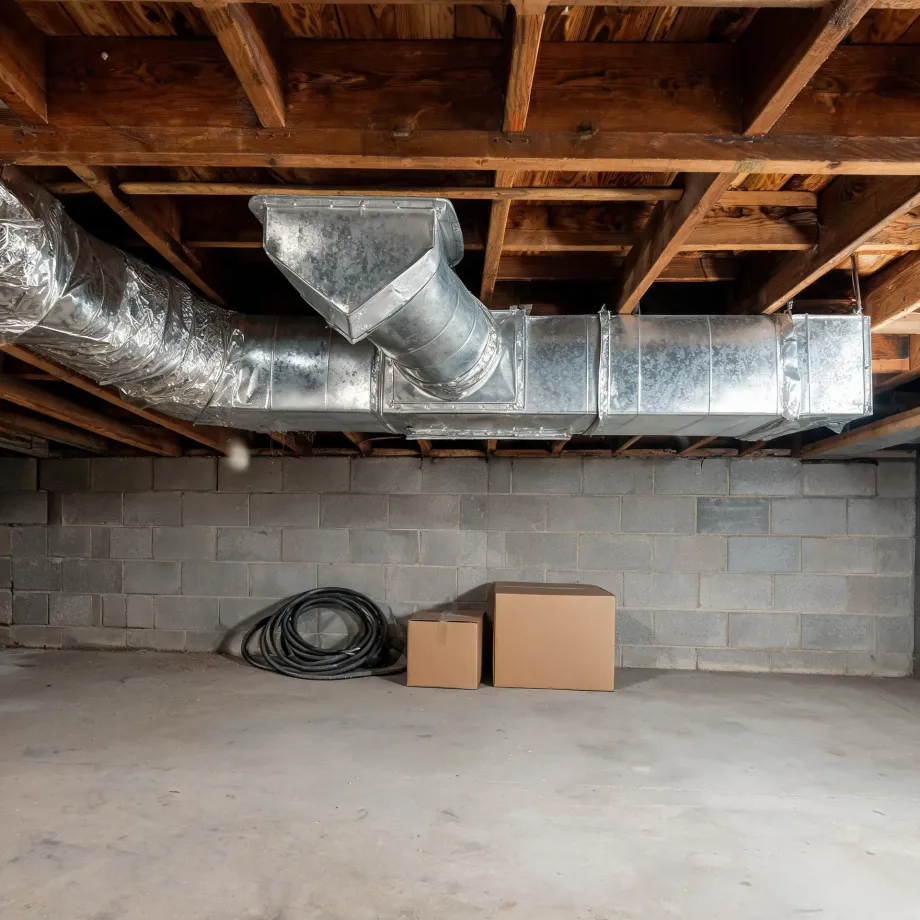
Furnace repair in a stock this old turns on what the opened heat exchanger and burner assembly actually show. Cracked exchangers, worn igniters, and deteriorated flue connections are the kind of findings that separate a straightforward part swap from a repair that takes longer and costs more. Half the homes in Dallas County, Missouri were built in 1981 or earlier (2020-2024 ACS 5-year). A house that has been heating and cooling through that many seasons leaves physical evidence inside the equipment, and a contractor opening a furnace here reads that evidence before pricing anything.
The Parts of a Furnace a Contractor Checks First
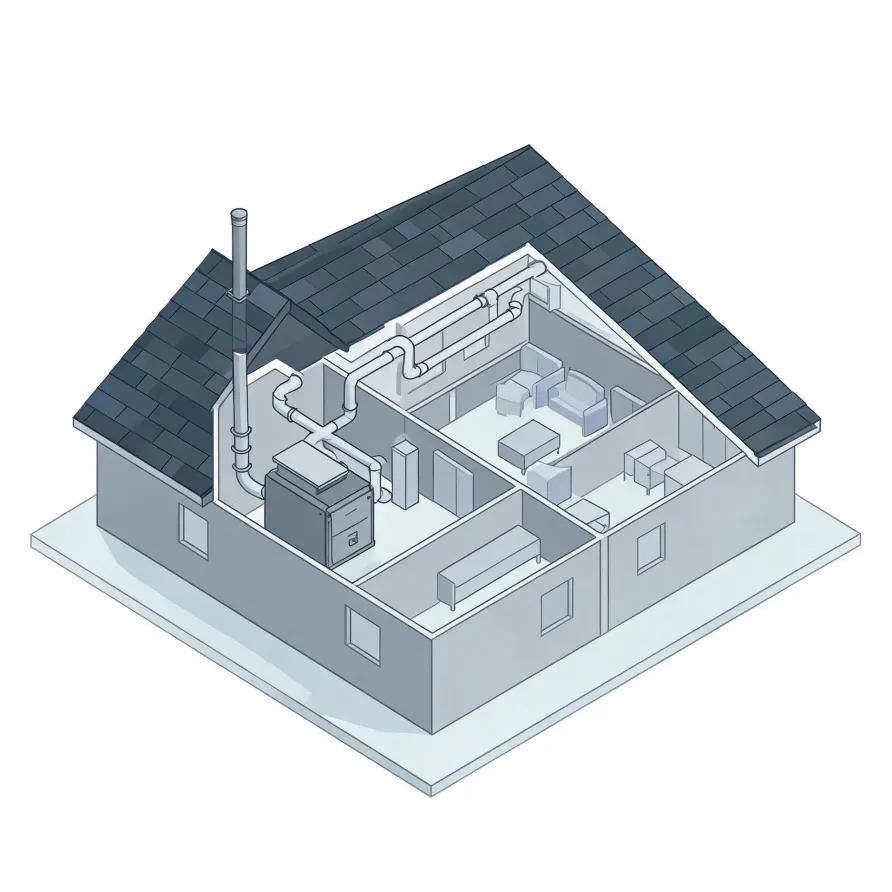
The heat exchanger sits at the core of the furnace cabinet in the basement or utility room, and it is where a contractor looks early when something is wrong. Cracks or stress in that metal show up as inconsistent heat or, in serious cases, combustion gases entering the living space. The burner assembly sits just below it, and a misfiring or dirty burner is one of the more common reasons a furnace starts poorly or shuts down before a cycle finishes.
The blower motor sits in the lower section of the cabinet and pushes conditioned air into the supply side of the house. When that motor or its capacitor fails, heat builds inside the unit and the system trips its high-limit switch. The flue and draft inducer, which exhaust combustion gases up through the wall or roof, get checked alongside the igniter and flame sensor, since a failed igniter or a coated sensor will prevent the burner from lighting at all.
The drawing shows the general layout of a furnace system, and a licensed contractor determines which components apply to the specific equipment and configuration in your home.
Get matched in Dallas CountyDallas County, Missouri, by the numbers
88 severe weather events were recorded in Dallas County, Missouri between 2015 and 2024.
NOAA National Centers for Environmental Information, Storm Events Database, bulk CSV export, events 2015-01-01 through 2024-12-31.Half the homes in Dallas County, Missouri were built in 1981 or earlier (2020-2024 ACS 5-year).
U.S. Census Bureau, 2020-2024 American Community Survey 5-Year EstimatesDallas County, Missouri holds 7,613 housing units (2020-2024 ACS 5-year).
U.S. Census Bureau, 2020-2024 American Community Survey 5-Year EstimatesOwners occupy 75.9% of the occupied homes in Dallas County, Missouri (2020-2024 ACS 5-year).
U.S. Census Bureau, 2020-2024 American Community Survey 5-Year EstimatesCodes & Standards Covering Furnace Repair in Dallas County, Missouri4 sourced rules & standards
What HVAC Repair Looks Like in Dallas County
Non-weatherized gas furnaces manufactured on or after November 19, 2015 must reach 80.0 percent AFUE.
Non-weatherized oil-fired furnaces manufactured on or after November 19, 2015 must reach 83.0 percent AFUE.
Mobile home gas furnaces manufactured on or after November 19, 2015 must reach 80.0 percent AFUE.
Non-weatherized gas furnaces manufactured on or after December 18, 2028 must reach 95.0 percent AFUE, up from the 80.0 percent minimum that applies to units manufactured before that date.
Severe Weather Events in Dallas County
Weather puts direct stress on heating equipment. Hard conditions force furnaces to run harder and fail sooner, and that pattern plays out differently from one county to the next.
88 severe weather events, 2015–2024. Source: NOAA National Centers for Environmental Information, Storm Events Database.