Tell us about the job
Takes about a minute. No obligation.
Getting the sizing right before a contractor touches the equipment is the decision that matters most for a furnace install in Cooper County. Homes in Cooper County, MO run heat about seven months a year, from October through April. A burner and heat exchanger that cycle through that many months accumulate wear on the ignition system and the heat exchanger joints at a rate a short-season install would not predict. A contractor who skips a proper load calculation and goes with a rule-of-thumb size leaves a system that runs harder than it should, and the heat exchanger pays for it first.
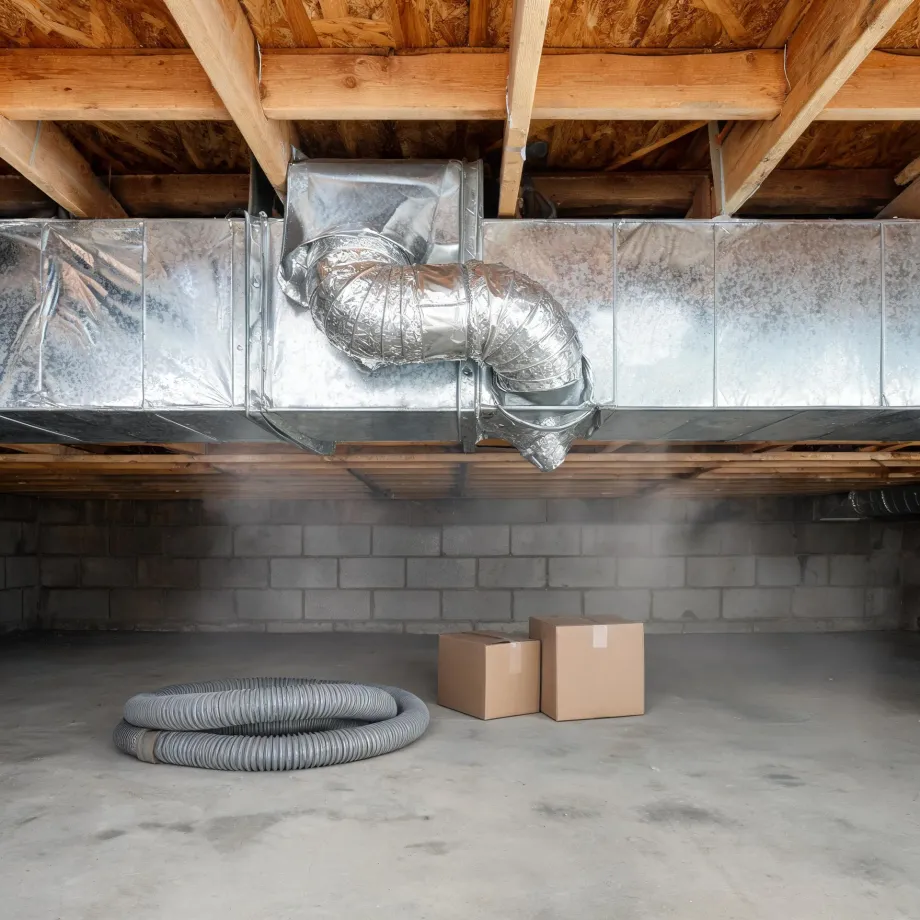
Ductwork laid down for a furnace that no longer exists is not the same as ductwork that will carry a new one. Half the homes in Cooper County, Missouri were built in 1974 or earlier (2020-2024 ACS 5-year). Runs sized for older equipment may move enough air in calm conditions and still starve a modern furnace under load, which a contractor finds out by measuring the system before the new unit goes in, not after. Electrical service runs the same way: what the panel was built to handle and what the new equipment draws are two different figures a contractor has to compare before the job is priced.
What Gets Installed With a New Furnace
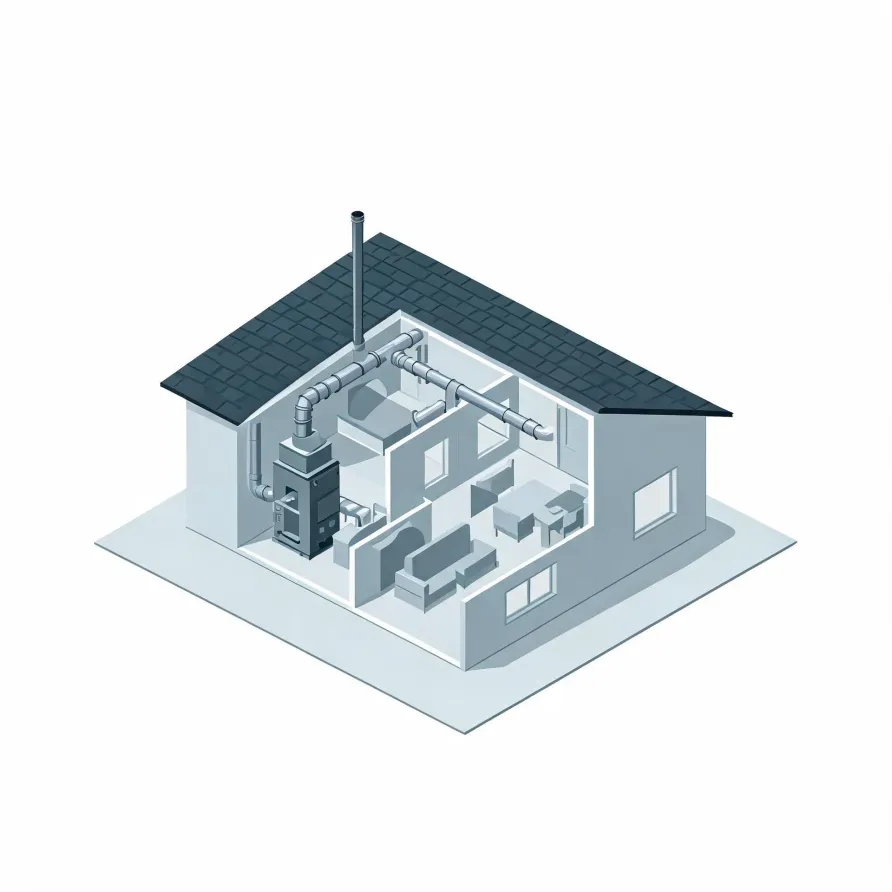
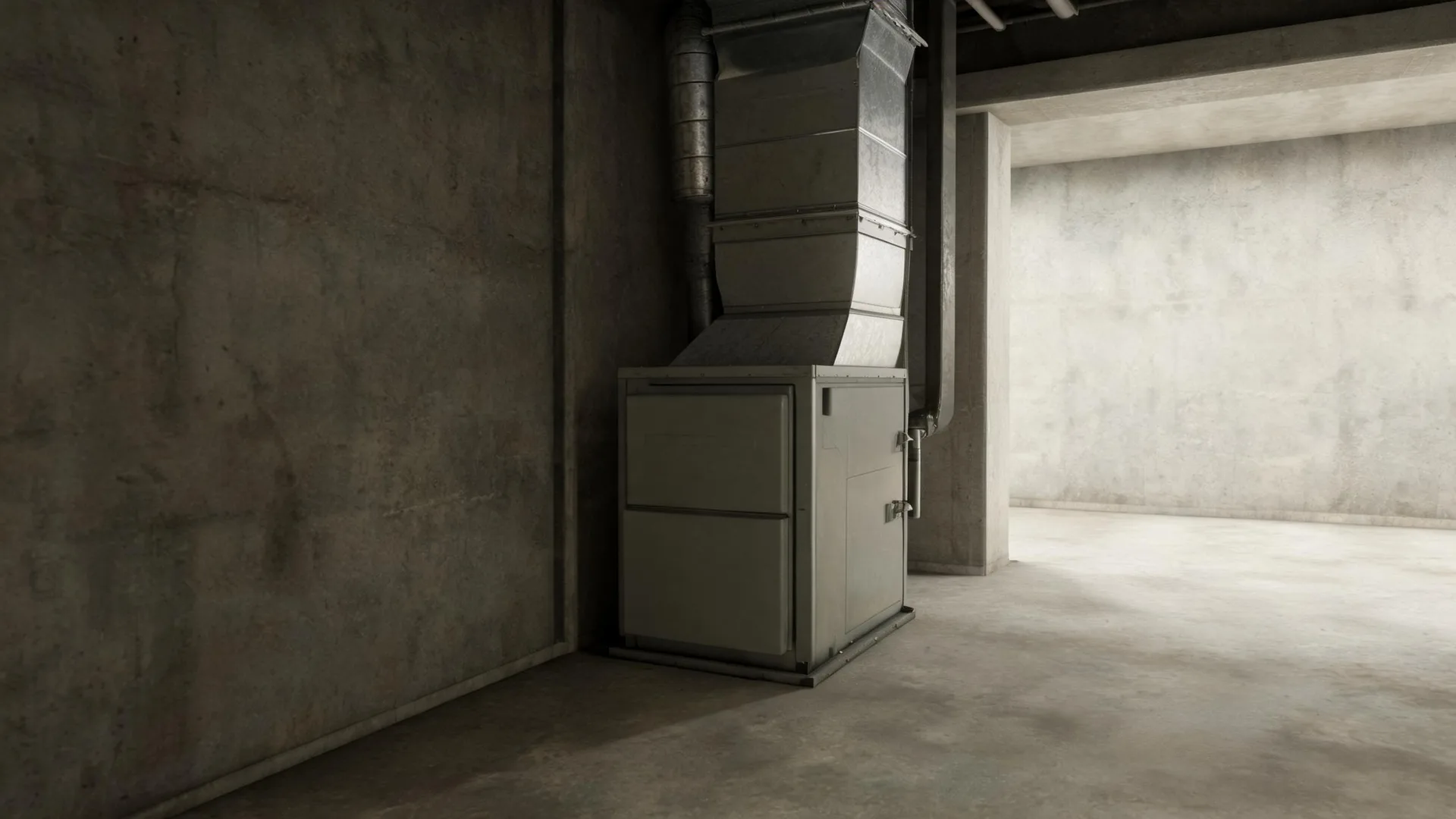
The furnace itself sits in a basement, utility room, or mechanical closet and is the unit that generates heat for the house. A burner assembly inside the cabinet burns fuel to produce heat, and a heat exchanger transfers that warmth to the air that gets pushed through the home. The flue pipe runs from the cabinet to an exterior wall or up through the roof, carrying combustion gases out of the house.
The blower fan sits inside the furnace cabinet and moves conditioned air out into the supply side of the home's duct system. A contractor also installs the gas line connection at the unit, the condensate drain line if the furnace is high-efficiency, and the thermostat or control wiring that tells the system when to fire.
The drawing shows a general layout of these components, and a licensed contractor determines exactly what applies to your house and its existing setup.
Get matched in Cooper CountyCooper County, by the numbers
42 severe weather events were recorded in Cooper County, Missouri between 2015 and 2024.
NOAA National Centers for Environmental Information, Storm Events Database, bulk CSV export, events 2015-01-01 through 2024-12-31.Half the homes in Cooper County, Missouri were built in 1974 or earlier (2020-2024 ACS 5-year).
U.S. Census Bureau, 2020-2024 American Community Survey 5-Year EstimatesCooper County, Missouri holds 7,300 housing units (2020-2024 ACS 5-year).
U.S. Census Bureau, 2020-2024 American Community Survey 5-Year EstimatesOwners occupy 75.7% of the occupied homes in Cooper County, Missouri (2020-2024 ACS 5-year).
U.S. Census Bureau, 2020-2024 American Community Survey 5-Year EstimatesFurnace Installation Rules for Cooper County, Missouri4 codes & standards
What the Installation Actually Looks Like
Non-weatherized gas furnaces manufactured on or after November 19, 2015 must reach 80.0 percent AFUE.
Non-weatherized oil-fired furnaces manufactured on or after November 19, 2015 must reach 83.0 percent AFUE.
Mobile home gas furnaces manufactured on or after November 19, 2015 must reach 80.0 percent AFUE.
Non-weatherized gas furnaces manufactured on or after December 18, 2028 must reach 95.0 percent AFUE, up from the 80.0 percent minimum that applies to units manufactured before that date.
Severe Weather Events in Cooper County
Weather puts a load on heating equipment. How hard a furnace has to work, and how often, is shaped by what the local climate actually does, which is why the record for Cooper County belongs on a page about furnace installation.
42 severe weather events, 2015–2024. Source: NOAA National Centers for Environmental Information, Storm Events Database.