Tell us about the job
Takes about a minute. No obligation.
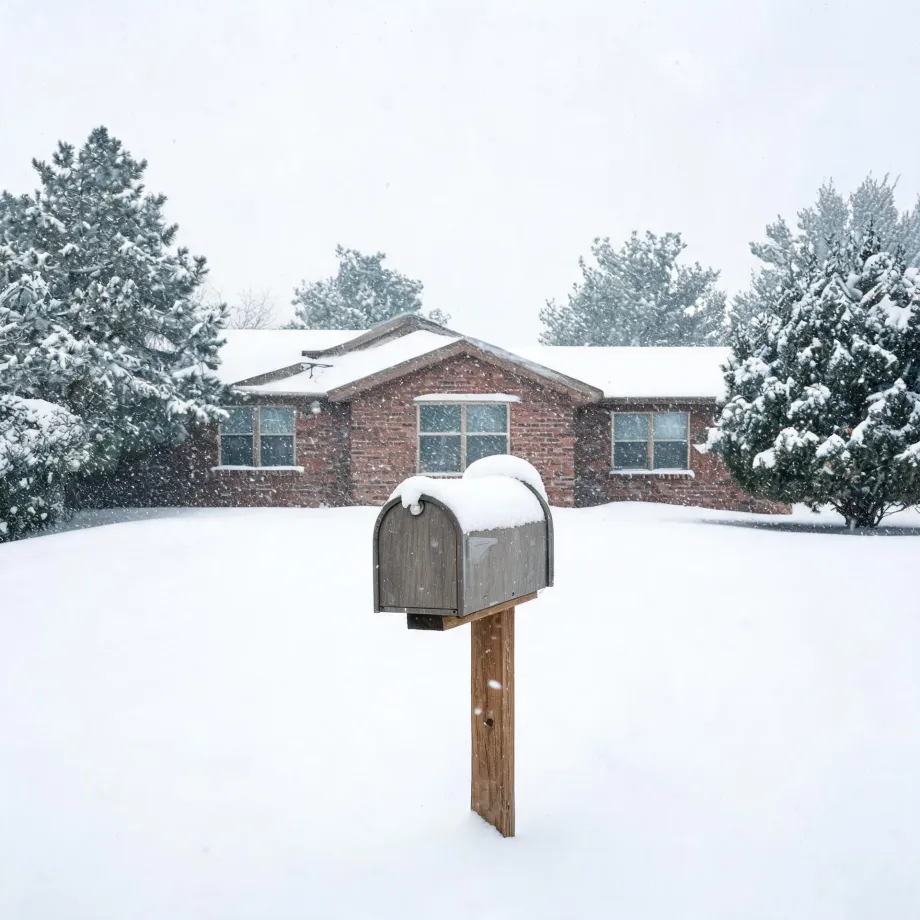
Sizing a furnace for this county is not a step a contractor rushes. Homes in Madison County, MO run heat about seven months a year, from October through April. A burner and ignition system that cycle through that kind of sustained demand accumulate wear at a pace that a loose or generic load calculation will underestimate. The contractor has to work out the actual heat loss of the house before settling on equipment, because an undersized unit runs longer cycles, and an oversized one short-cycles and stresses the heat exchanger differently. Either way, a poor install shows up sooner here than it would somewhere the furnace sits idle more of the year.
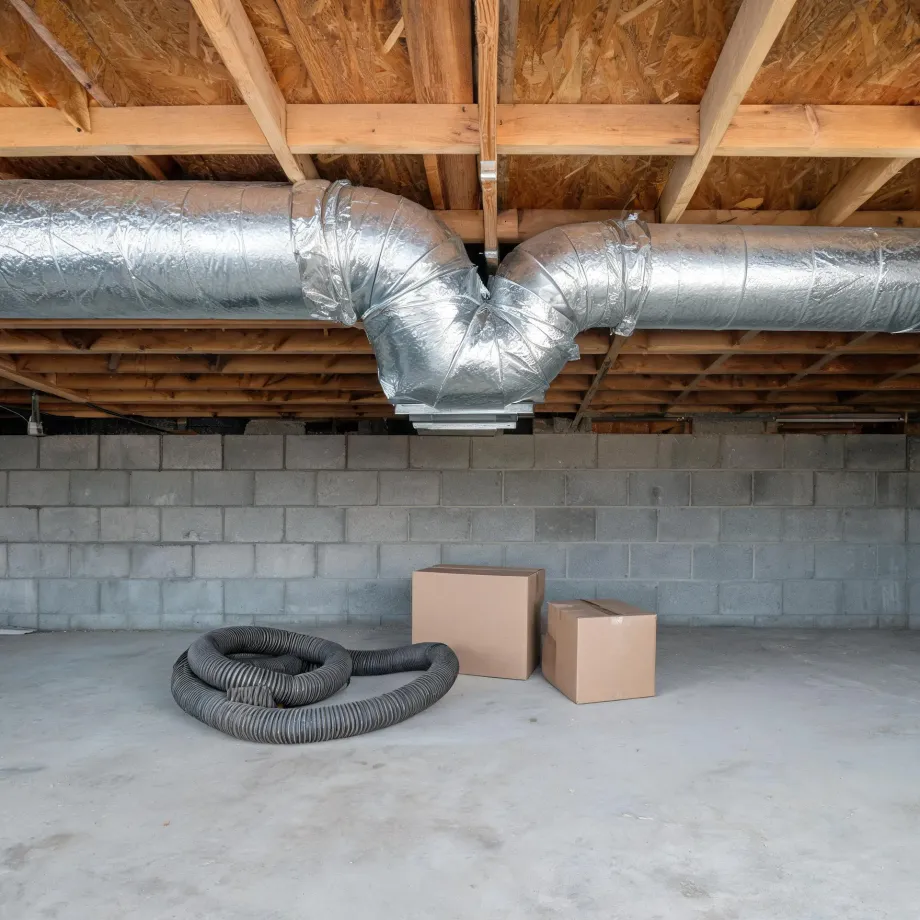
Ductwork laid out for a furnace that is no longer in the house shapes what a new installation actually requires. Half the homes in Madison County, Missouri were built in 1977 or earlier (2020-2024 ACS 5-year). That means a contractor working through a typical job here has to assess whether the existing duct runs can carry what a replacement unit moves, before the equipment itself is even chosen. Gaps in sizing or in duct condition send the scope in a different direction than a house where the infrastructure was built around something closer to current equipment. The ductwork is where the job gets decided.
What Gets Installed With a New Furnace
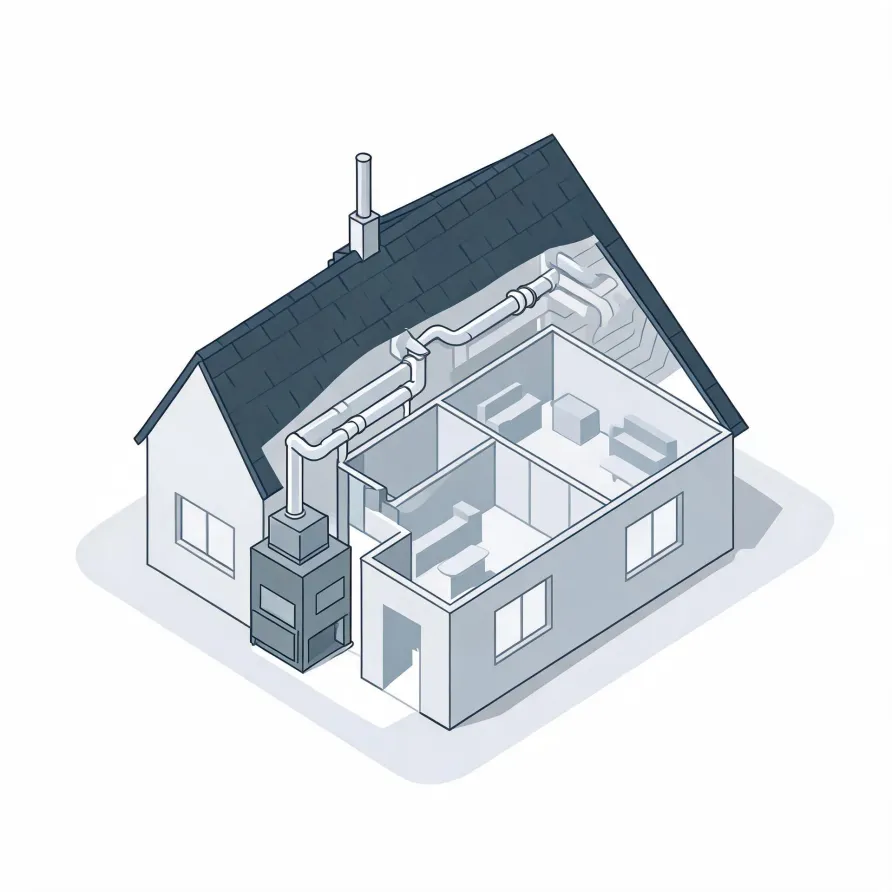
The furnace itself sits in the basement, utility room, or closet and is the unit that generates heat. A burner assembly inside it ignites the fuel, and a heat exchanger transfers that warmth to the air moving through the system. The blower motor, housed in the same cabinet, pushes that heated air out into the home.
The flue pipe runs from the furnace cabinet up and out of the house, carrying combustion exhaust safely away. Alongside it, the contractor installs a new thermostat on an interior wall, which is the control point that tells the furnace when to fire and when to stop.
The drawing shows the general layout of these components, and a licensed contractor determines exactly how each one fits the configuration of your house.
Get matched in Madison CountyMadison County, by the numbers
43 severe weather events were recorded in Madison County, Missouri between 2015 and 2024.
NOAA National Centers for Environmental Information, Storm Events Database, bulk CSV export, events 2015-01-01 through 2024-12-31.Half the homes in Madison County, Missouri were built in 1977 or earlier (2020-2024 ACS 5-year).
U.S. Census Bureau, 2020-2024 American Community Survey 5-Year EstimatesMadison County, Missouri holds 5,866 housing units (2020-2024 ACS 5-year).
U.S. Census Bureau, 2020-2024 American Community Survey 5-Year EstimatesOwners occupy 73.7% of the occupied homes in Madison County, Missouri (2020-2024 ACS 5-year).
U.S. Census Bureau, 2020-2024 American Community Survey 5-Year EstimatesFurnace Installation Rules & Codes for Madison County, Missouri4 sourced standards and regulations
What the Installation Looks Like
Non-weatherized gas furnaces manufactured on or after November 19, 2015 must reach 80.0 percent AFUE.
Non-weatherized oil-fired furnaces manufactured on or after November 19, 2015 must reach 83.0 percent AFUE.
Mobile home gas furnaces manufactured on or after November 19, 2015 must reach 80.0 percent AFUE.
Non-weatherized gas furnaces manufactured on or after December 18, 2028 must reach 95.0 percent AFUE, up from the 80.0 percent minimum that applies to units manufactured before that date.
Severe Weather History in Madison County
Heating equipment in Madison County works against whatever the climate throws at it, and storm load is part of that picture. A furnace sized and installed for local conditions handles those demands differently than one spec'd for milder ground.
43 severe weather events, 2015–2024. Source: NOAA National Centers for Environmental Information, Storm Events Database.