Tell us about the job
Takes about a minute. No obligation.
A contractor quoting a furnace repair in Marion County starts at the burner and ignition system. Homes in Marion County, MO run heat about seven months a year, from October through April. Cycling on and off across that kind of heating load wears the igniter, the flame sensor, and the heat exchanger at a rate that shows up clearly by the time a homeowner calls for service. Those parts fail before the blower motor, before the control board, and a contractor who skips straight to secondary components is working in the wrong order.
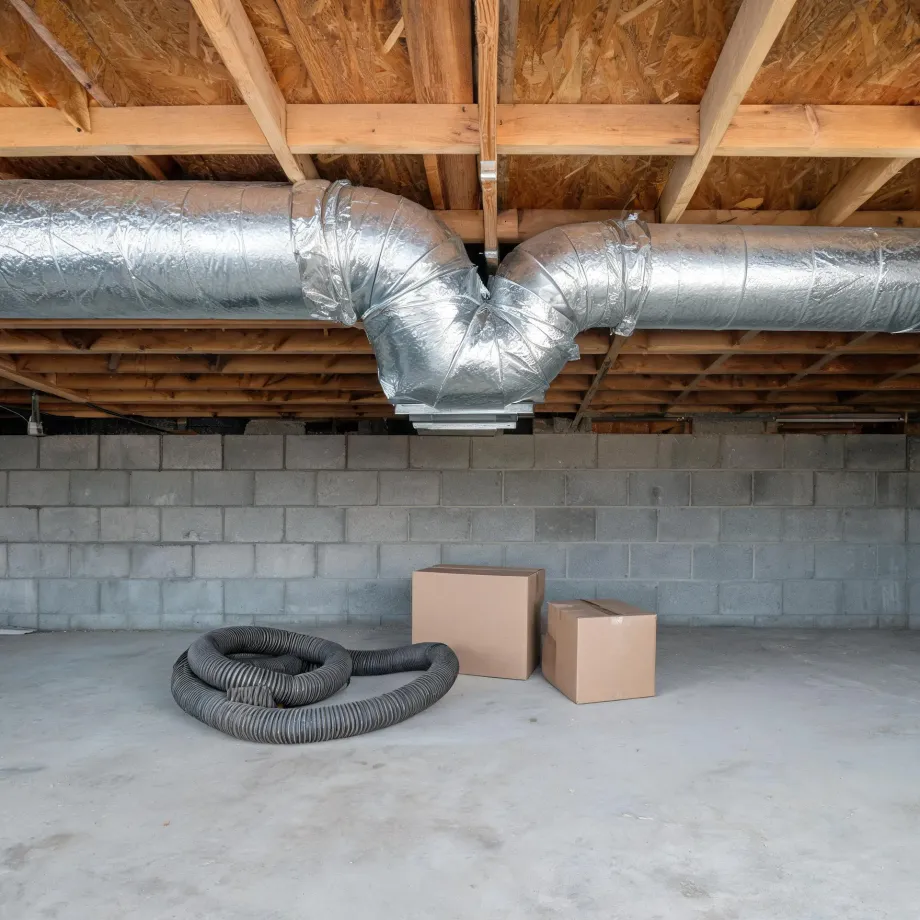
Ductwork in a house built for a mid-century furnace has been patched, re-routed, and adapted across multiple equipment generations, and by the time a contractor opens the current unit, the condition of the heat exchanger and burner assembly has been shaped by all of that history. Half the homes in Marion County, Missouri were built in 1971 or earlier (2020-2024 ACS 5-year). That means a repair quote in this county depends heavily on what the opened system actually contains: cracked heat exchangers, worn burner assemblies, and corroded flue connections are common findings in stock of this age, and each one changes the scope and the parts list. Replacement parts for a furnace running in a house this old are sometimes still made, and sometimes are not.
The Parts of a Furnace a Contractor Checks First
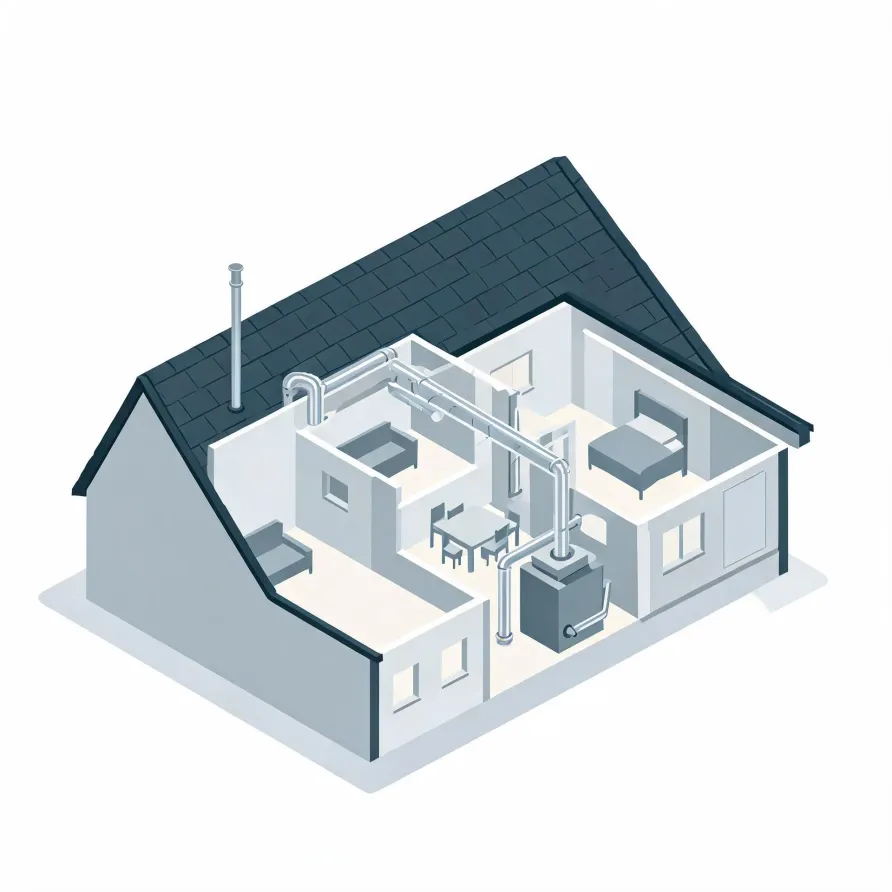
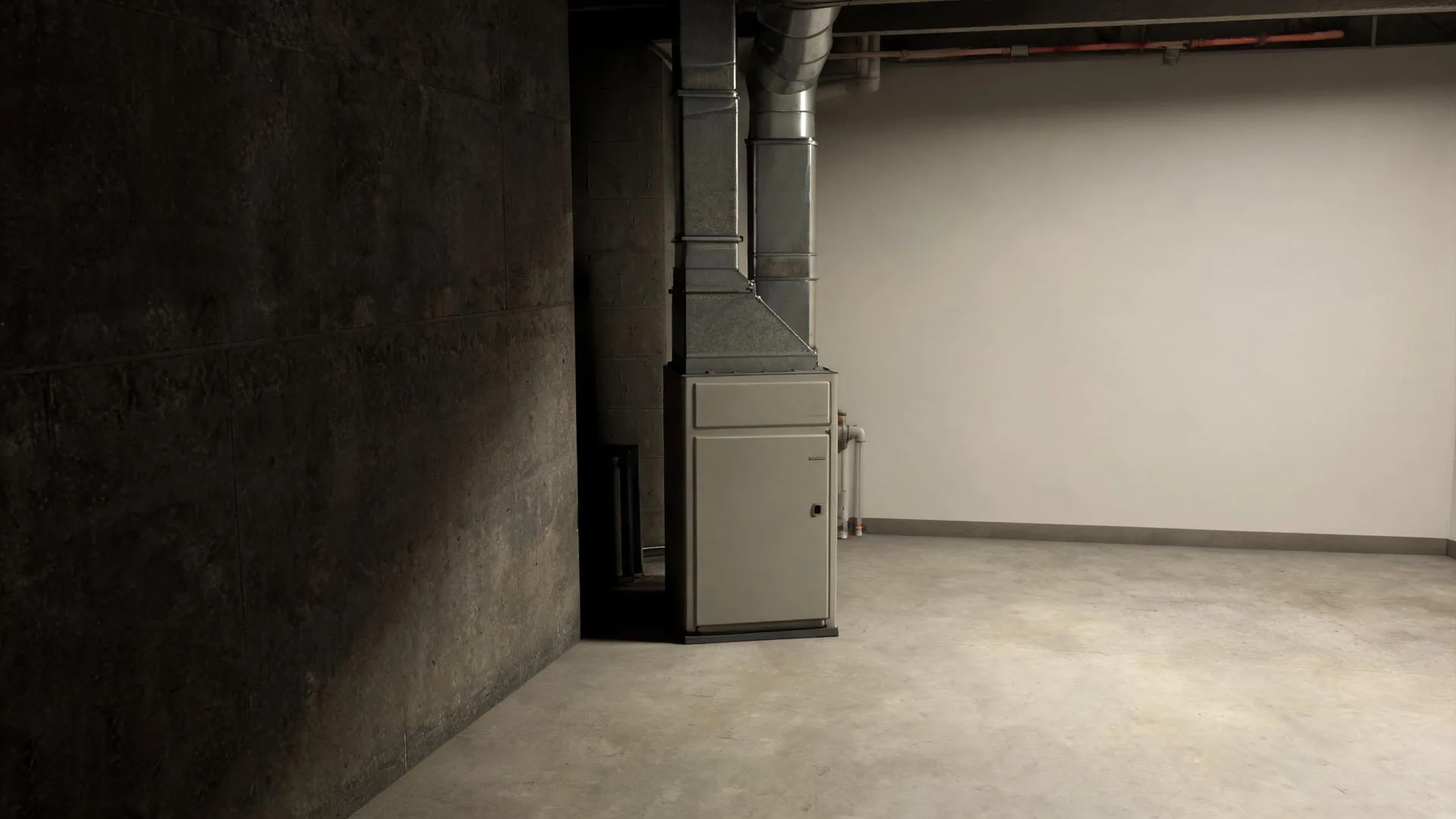
The furnace itself sits in the basement, utility closet, or mechanical room and is the piece a contractor goes to first. Inside it, the heat exchanger and burner assembly are the usual suspects when heat stops arriving or the system short-cycles. A cracked heat exchanger or a failed ignitor shows up here.
The blower motor pushes conditioned air out through the supply side of the system and pulls return air back in. Alongside it, the flue and venting components carry combustion gases out of the house, and the control board coordinates the whole sequence. Any of these can be the source when symptoms seem unrelated to heat output itself.
The drawing shows the general layout of a furnace system, and a licensed contractor determines which components apply to your specific home and situation.
Get matched in Marion CountyMarion County, Missouri, by the numbers
66 severe weather events were recorded in Marion County, Missouri between 2015 and 2024.
NOAA National Centers for Environmental Information, Storm Events Database, bulk CSV export, events 2015-01-01 through 2024-12-31.Half the homes in Marion County, Missouri were built in 1971 or earlier (2020-2024 ACS 5-year).
U.S. Census Bureau, 2020-2024 American Community Survey 5-Year EstimatesMarion County, Missouri holds 12,917 housing units (2020-2024 ACS 5-year).
U.S. Census Bureau, 2020-2024 American Community Survey 5-Year EstimatesOwners occupy 69.3% of the occupied homes in Marion County, Missouri (2020-2024 ACS 5-year).
U.S. Census Bureau, 2020-2024 American Community Survey 5-Year EstimatesCodes & Standards Covering Furnace Repair in Marion County, Missouri4 sourced rules & standards
What Furnace Repair Looks Like in Marion County
Non-weatherized gas furnaces manufactured on or after November 19, 2015 must reach 80.0 percent AFUE.
Non-weatherized oil-fired furnaces manufactured on or after November 19, 2015 must reach 83.0 percent AFUE.
Mobile home gas furnaces manufactured on or after November 19, 2015 must reach 80.0 percent AFUE.
Non-weatherized gas furnaces manufactured on or after December 18, 2028 must reach 95.0 percent AFUE, up from the 80.0 percent minimum that applies to units manufactured before that date.
Severe Weather Events in Marion County
Hard weather puts real strain on furnace systems: temperature swings, pressure changes, and power fluctuations all add up over time. How often that happens here shapes how hard local equipment works and how soon it needs attention.
66 severe weather events, 2015–2024. Source: NOAA National Centers for Environmental Information, Storm Events Database.