Tell us about the job
Takes about a minute. No obligation.
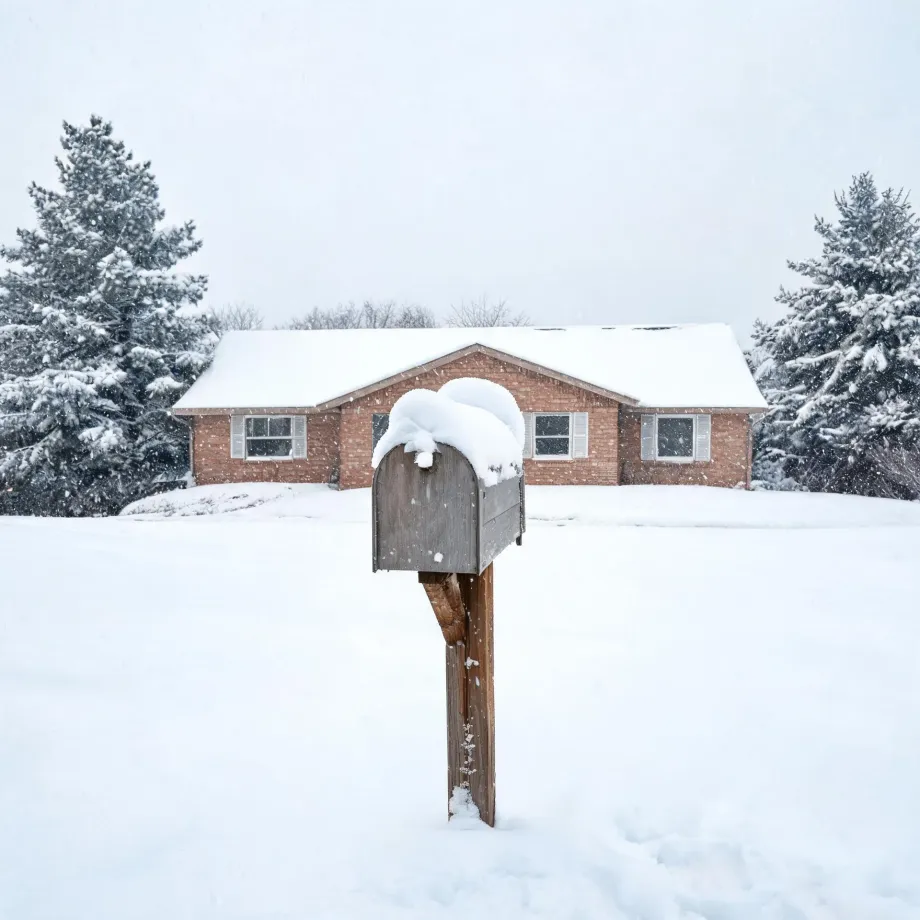
Homes in Dade County, MO run heat about seven months a year, from October through April. That load falls on the burner, the heat exchanger, and the ignition system, cycling through cold month after cold month until the warm half of the year gives the unit a rest. By the time a furnace shows a fault, those components have already accumulated the kind of stress that shows up as cracked exchangers, worn igniters, and burner assemblies that no longer fire cleanly. A contractor quoting a repair here starts with those parts, not because the symptom always points there, but because the season already has.
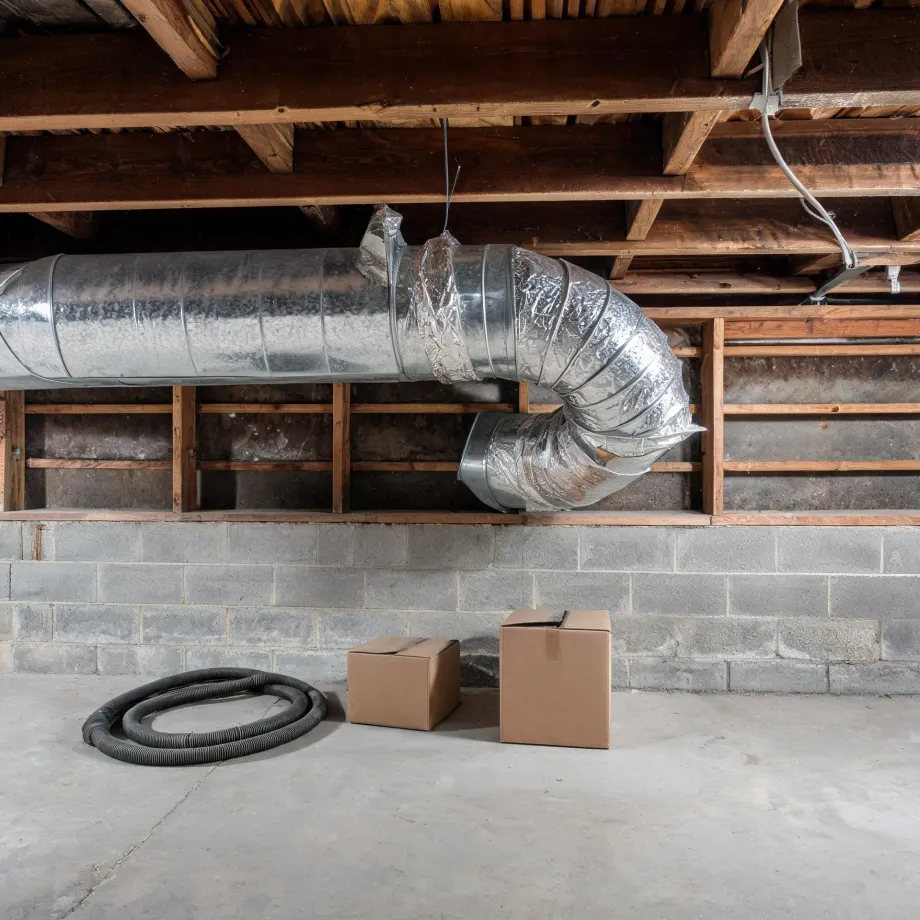
Ductwork in a house tells a contractor something about what it has already been through. Half the homes in Dade County, Missouri were built in 1972 or earlier (2020-2024 ACS 5-year). A furnace running in stock that old has often outlasted the supply chain built around it, and what a contractor finds once the cabinet is open decides whether the repair goes forward on standard parts or requires sourcing components that are no longer manufactured to original spec. A cracked heat exchanger or a corroded burner assembly is straightforward if the parts exist. When they do not, the job changes before the quote does.
The Parts of a Furnace a Contractor Checks First
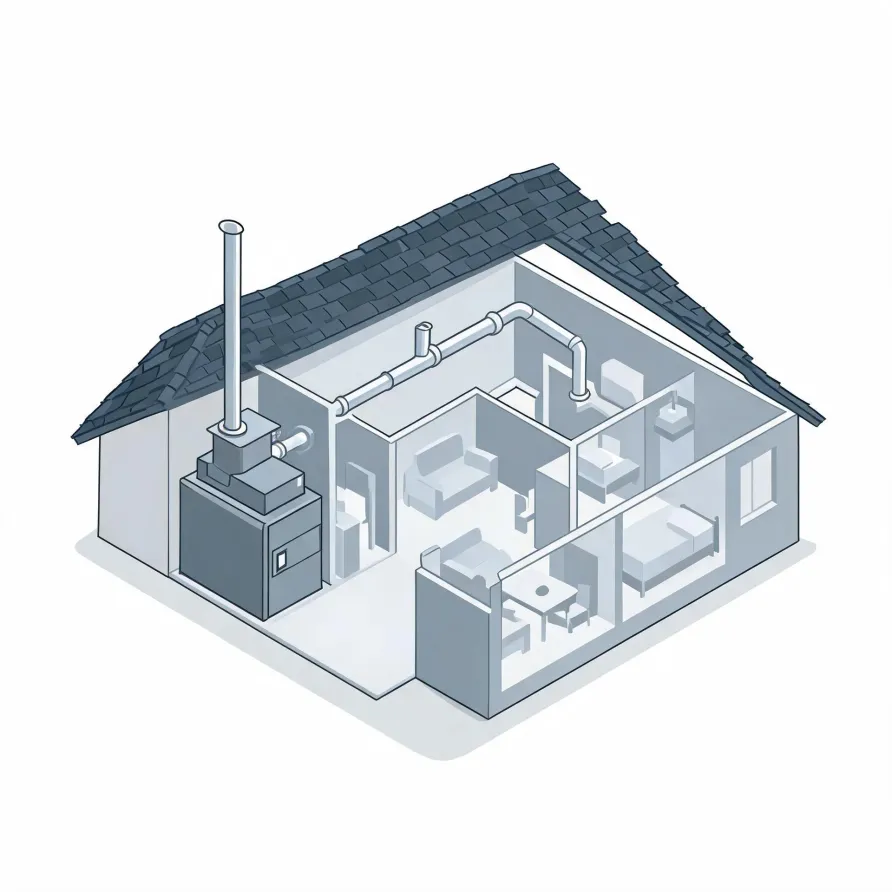
The furnace itself sits in a mechanical room, basement, or closet and is the unit that produces heat. Inside it, the heat exchanger is the part a contractor looks at closely during a repair call. Cracks or failures there affect both performance and safety. The burners, which sit just below or beside the heat exchanger, are another common source of trouble.
The blower motor sits inside the furnace cabinet and pushes conditioned air into the supply side of the duct system. The igniter and flame sensor work together near the burner assembly, and either one can cause the furnace to fail to start or to shut off before the house reaches temperature. The flue pipe runs from the top or back of the unit to the exterior and is part of what a contractor checks when a combustion problem is suspected.
The drawing shows a typical furnace layout, and a licensed contractor determines which components apply to the specific system in your home.
Get matched in Dade CountyDade County, by the numbers
83 severe weather events were recorded in Dade County, Missouri between 2015 and 2024.
NOAA National Centers for Environmental Information, Storm Events Database, bulk CSV export, events 2015-01-01 through 2024-12-31.Half the homes in Dade County, Missouri were built in 1972 or earlier (2020-2024 ACS 5-year).
U.S. Census Bureau, 2020-2024 American Community Survey 5-Year EstimatesDade County, Missouri holds 3,774 housing units (2020-2024 ACS 5-year).
U.S. Census Bureau, 2020-2024 American Community Survey 5-Year EstimatesOwners occupy 77.0% of the occupied homes in Dade County, Missouri (2020-2024 ACS 5-year).
U.S. Census Bureau, 2020-2024 American Community Survey 5-Year EstimatesFurnace Repair Rules and Codes for Dade County, Missouri4 sourced regulations and standards
What happens when a contractor comes out to your home
Non-weatherized gas furnaces manufactured on or after November 19, 2015 must reach 80.0 percent AFUE.
Non-weatherized oil-fired furnaces manufactured on or after November 19, 2015 must reach 83.0 percent AFUE.
Mobile home gas furnaces manufactured on or after November 19, 2015 must reach 80.0 percent AFUE.
Non-weatherized gas furnaces manufactured on or after December 18, 2028 must reach 95.0 percent AFUE, up from the 80.0 percent minimum that applies to units manufactured before that date.
Severe Weather Events in Dade County
Hard weather puts hours on a furnace fast, running it harder and longer than mild seasons ever would. Repair needs in Dade County track closely with what the weather asks of the equipment, which is why local contractors watch these patterns.
83 severe weather events, 2015–2024. Source: NOAA National Centers for Environmental Information, Storm Events Database.