Tell us about the job
Takes about a minute. No obligation.
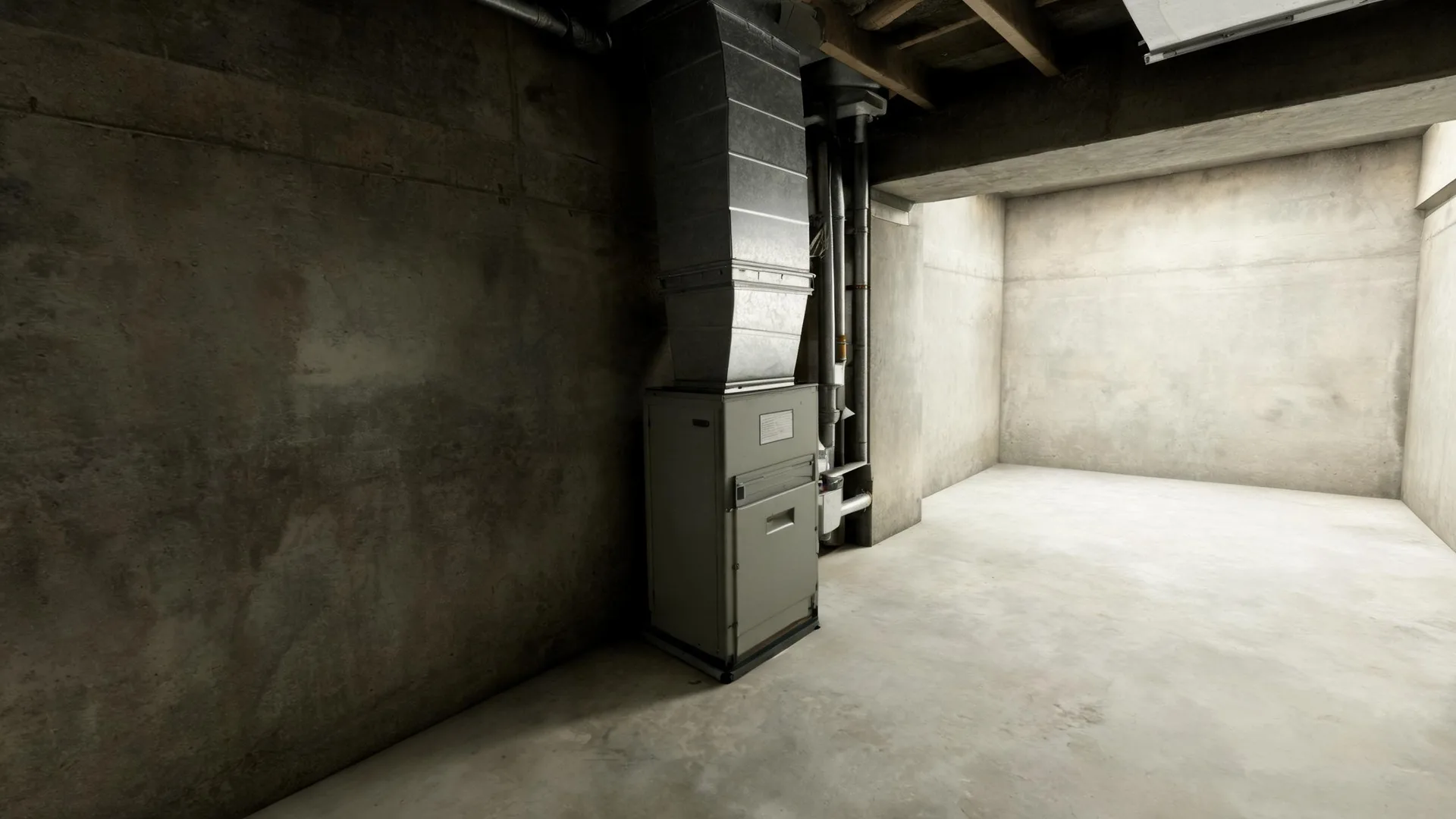
Sizing a furnace for a DeKalb County home starts with what the burner and heat exchanger will actually be asked to carry. Homes in DeKalb County, MO run heat about seven months a year, from October through April. That puts the ignition system, the heat exchanger, and the blower motor through a long working stretch every year, and parts sized too close to the minimum load accumulate wear faster than their rated life assumes. A contractor calculating the load here factors in that sustained demand before settling on equipment, because an undersized unit cycles harder and the evidence shows up in the heat exchanger long before the homeowner notices a comfort problem.
Existing ductwork is what a furnace installation turns on in a county where much of the housing was built around systems that have since been swapped out at least once. Half the homes in DeKalb County, Missouri were built in 1982 or earlier (2020-2024 ACS 5-year). Ducts laid out for older equipment follow paths and carry dimensions that may not move the air a current furnace demands, and a contractor has to assess that before any equipment decision makes sense. The electrical side gets checked the same way: service panels in houses of this vintage were sized for a different load, and a new furnace that draws more than the old one changes what the panel has to handle.
What Gets Installed With a New Furnace
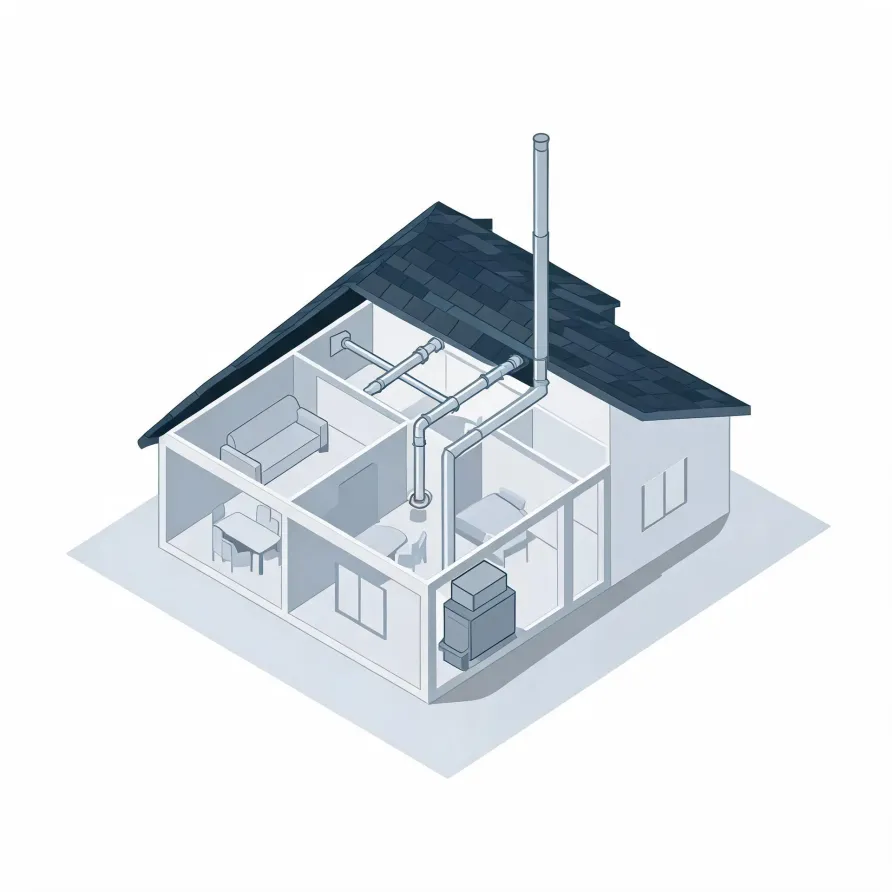
The furnace itself sits in a mechanical room, basement, or utility closet and is the central piece a contractor puts in. A flue pipe runs from the unit to an outside wall or up through the roof, carrying combustion gases out of the house. The gas line connects at the furnace cabinet to feed the burners.
The air handler components built into the furnace cabinet include the blower, the heat exchanger, and the filter housing, all of which a contractor fits and connects on site. A thermostat mounts on an interior wall and gives the homeowner control over the whole system. The condensate drain, where present, runs from the unit to a floor drain or utility sink nearby.
The drawing shows a typical layout, and a licensed contractor determines exactly what applies to your house and its existing setup.
Get matched in DeKalb CountyDeKalb County, by the numbers
45 severe weather events were recorded in DeKalb County, Missouri between 2015 and 2024.
NOAA National Centers for Environmental Information, Storm Events Database, bulk CSV export, events 2015-01-01 through 2024-12-31.Half the homes in DeKalb County, Missouri were built in 1982 or earlier (2020-2024 ACS 5-year).
U.S. Census Bureau, 2020-2024 American Community Survey 5-Year EstimatesDeKalb County, Missouri holds 4,270 housing units (2020-2024 ACS 5-year).
U.S. Census Bureau, 2020-2024 American Community Survey 5-Year EstimatesOwners occupy 71.1% of the occupied homes in DeKalb County, Missouri (2020-2024 ACS 5-year).
U.S. Census Bureau, 2020-2024 American Community Survey 5-Year EstimatesFurnace Installation Rules on the Books for DeKalb County, Missouri4 codes & standards
What the installation looks like in DeKalb County
Non-weatherized gas furnaces manufactured on or after November 19, 2015 must reach 80.0 percent AFUE.
Non-weatherized oil-fired furnaces manufactured on or after November 19, 2015 must reach 83.0 percent AFUE.
Mobile home gas furnaces manufactured on or after November 19, 2015 must reach 80.0 percent AFUE.
Non-weatherized gas furnaces manufactured on or after December 18, 2028 must reach 95.0 percent AFUE, up from the 80.0 percent minimum that applies to units manufactured before that date.
Severe Weather Events in DeKalb County
Weather puts real hours on heating equipment. A furnace that carries a county through hard winters and volatile shoulder seasons works differently than one in a mild climate, and what that workload looks like shapes the installation decisions a contractor makes here.
45 severe weather events, 2015–2024. Source: NOAA National Centers for Environmental Information, Storm Events Database.