Tell us about the job
Takes about a minute. No obligation.
A contractor quoting furnace installation in Boone County has to size the equipment against actual runtime, because the burner and heat exchanger will cycle hard from the first cold week in October and keep cycling into April. Homes in Boone County, MO run heat about seven months a year, from October through April. Undersizing a furnace here shortens the heat exchanger's working life, since it runs at or near capacity for months on end rather than occasionally. The ignition system takes the same repeated stress. An installer who treats sizing as a generic calculation, rather than one anchored to this county's season, puts a system in that the load will outpace.
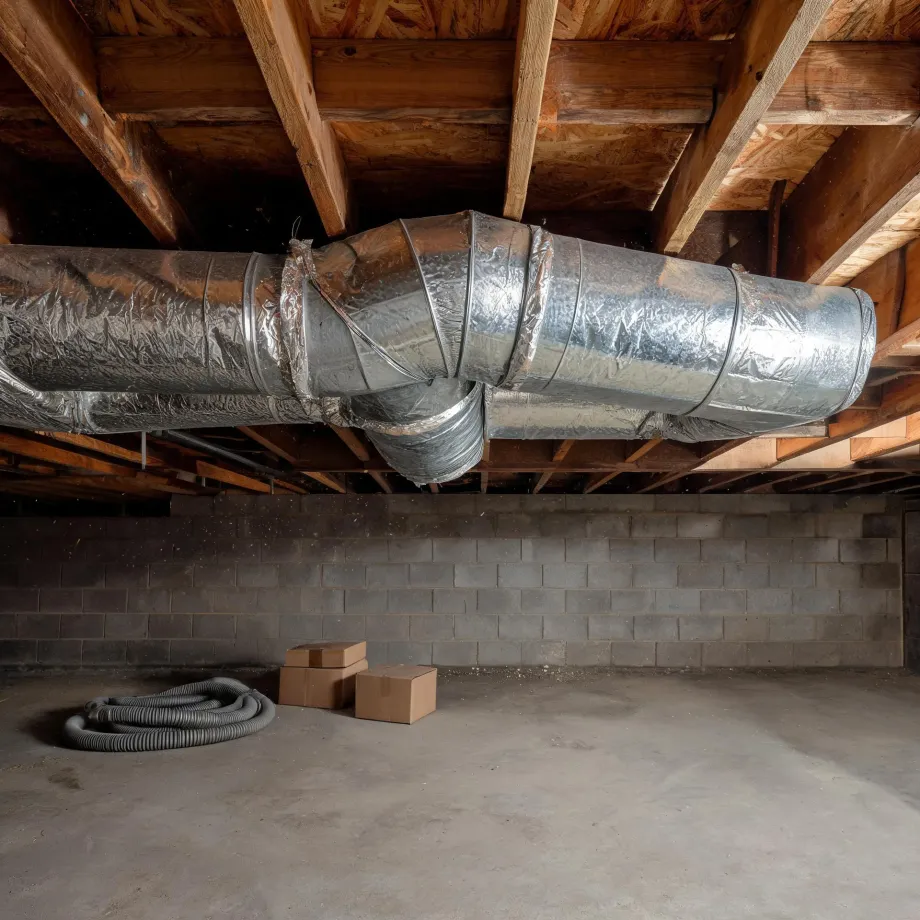
Ductwork laid down to serve a furnace that is no longer in the house carries assumptions about airflow, load, and routing that a new unit does not necessarily share. Half the homes in Boone County, Missouri were built in 1991 or earlier (2020-2024 ACS 5-year). A contractor installing a furnace today has to check whether those ducts can move the volume the new system requires, and whether the existing electrical service is wired for what a modern unit draws. If either falls short, that becomes part of the job before the new furnace is touched.
What Gets Installed With a New Furnace
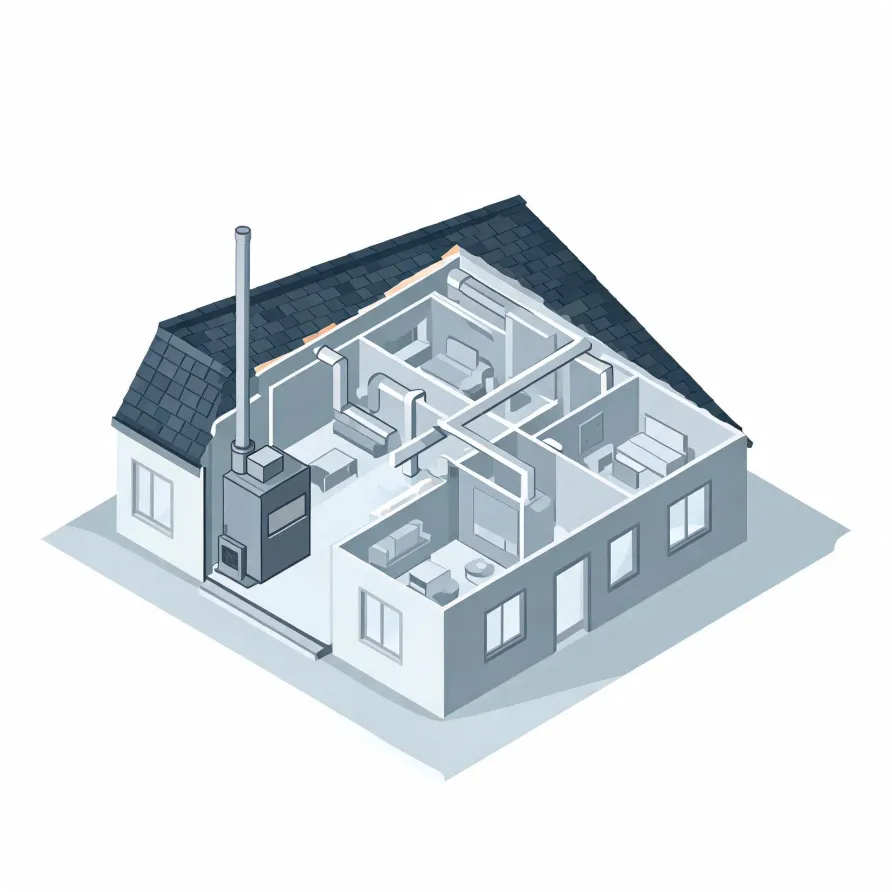
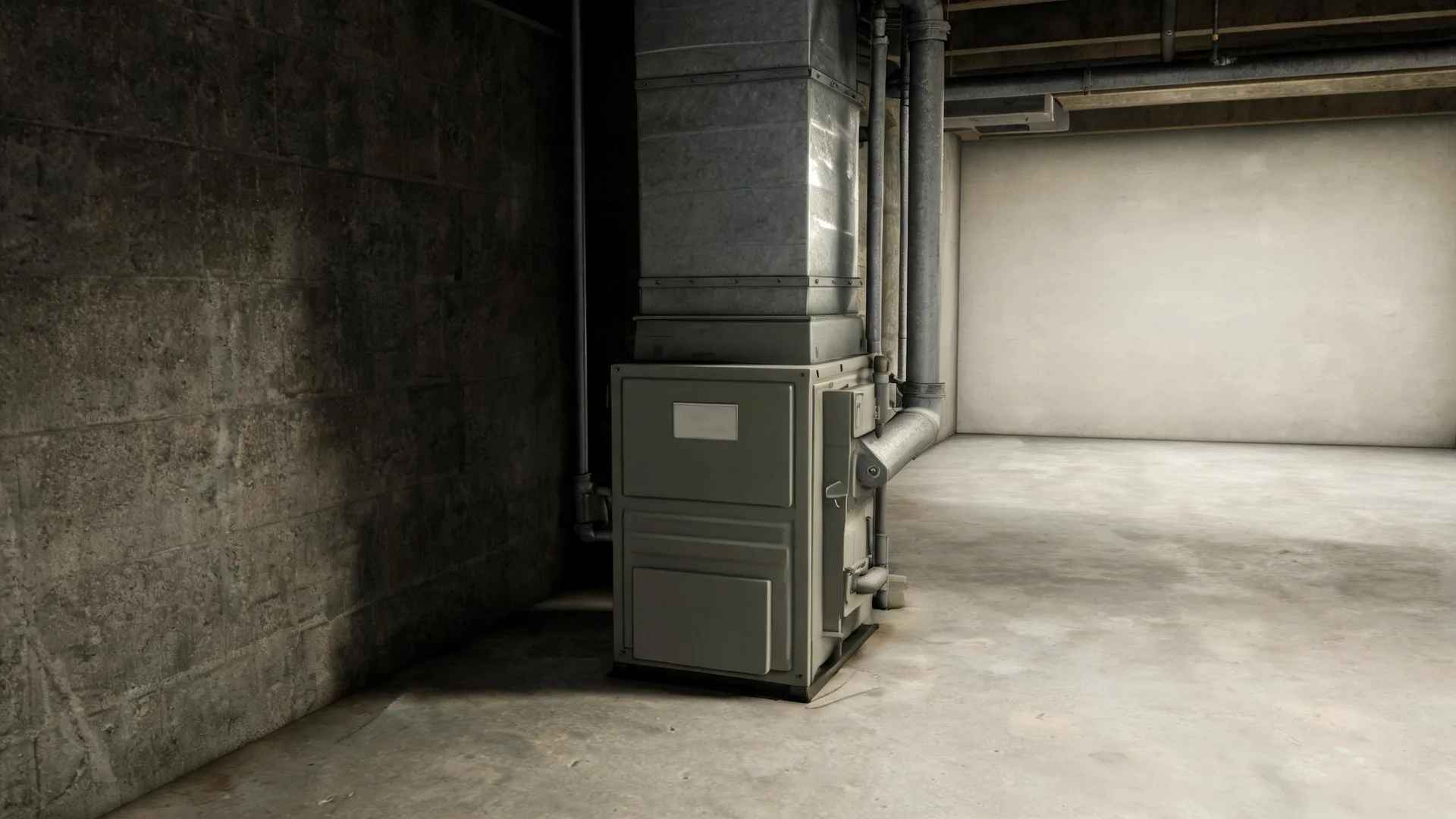
The furnace itself sits in a mechanical room, basement, or utility closet and is the unit that generates heat. A burner assembly inside it ignites the fuel, a heat exchanger transfers that heat to the air, and a blower motor pushes the warmed air out into the living space. That blower is what a homeowner hears when the system runs.
A flue pipe runs from the furnace to the outside of the house and carries combustion gases out. Alongside the furnace, a contractor installs a gas line connection, a dedicated thermostat, and the supply and return air plenums that bridge the furnace cabinet to the duct openings in the wall or ceiling.
The drawing shows a typical layout, and a licensed contractor determines exactly what the configuration looks like in your house.
Get matched in Boone CountyBoone County, by the numbers
84 severe weather events were recorded in Boone County, Missouri between 2015 and 2024.
NOAA National Centers for Environmental Information, Storm Events Database, bulk CSV export, events 2015-01-01 through 2024-12-31.Half the homes in Boone County, Missouri were built in 1991 or earlier (2020-2024 ACS 5-year).
U.S. Census Bureau, 2020-2024 American Community Survey 5-Year EstimatesBoone County, Missouri holds 81,675 housing units (2020-2024 ACS 5-year).
U.S. Census Bureau, 2020-2024 American Community Survey 5-Year EstimatesOwners occupy 57.7% of the occupied homes in Boone County, Missouri (2020-2024 ACS 5-year).
U.S. Census Bureau, 2020-2024 American Community Survey 5-Year EstimatesFurnace Installation Rules for Boone County, Missouri4 codes and standards
What happens on installation day
Non-weatherized gas furnaces manufactured on or after November 19, 2015 must reach 80.0 percent AFUE.
Non-weatherized oil-fired furnaces manufactured on or after November 19, 2015 must reach 83.0 percent AFUE.
Mobile home gas furnaces manufactured on or after November 19, 2015 must reach 80.0 percent AFUE.
Non-weatherized gas furnaces manufactured on or after December 18, 2028 must reach 95.0 percent AFUE, up from the 80.0 percent minimum that applies to units manufactured before that date.
Severe Weather Events in Boone County
Weather puts a direct load on heating equipment. How hard a furnace has to work, and how often, is a local fact shaped by what this county actually sees.
84 severe weather events, 2015–2024. Source: NOAA National Centers for Environmental Information, Storm Events Database.