Tell us about the job
Takes about a minute. No obligation.
Sizing a furnace for this county means accounting for what the burner, heat exchanger, and ignition system are genuinely asked to do. Homes in Callaway County, MO run heat about seven months a year, from October through April. The heat exchanger expands and contracts with every cycle across those months, and a unit that is undersized runs longer cycles to hold temperature, which loads those components harder than the manufacturer's wear estimates assume. A contractor quoting a replacement here has to work out the right output for the house before anything else, because an undersized install does not coast through a season like this one without showing it.
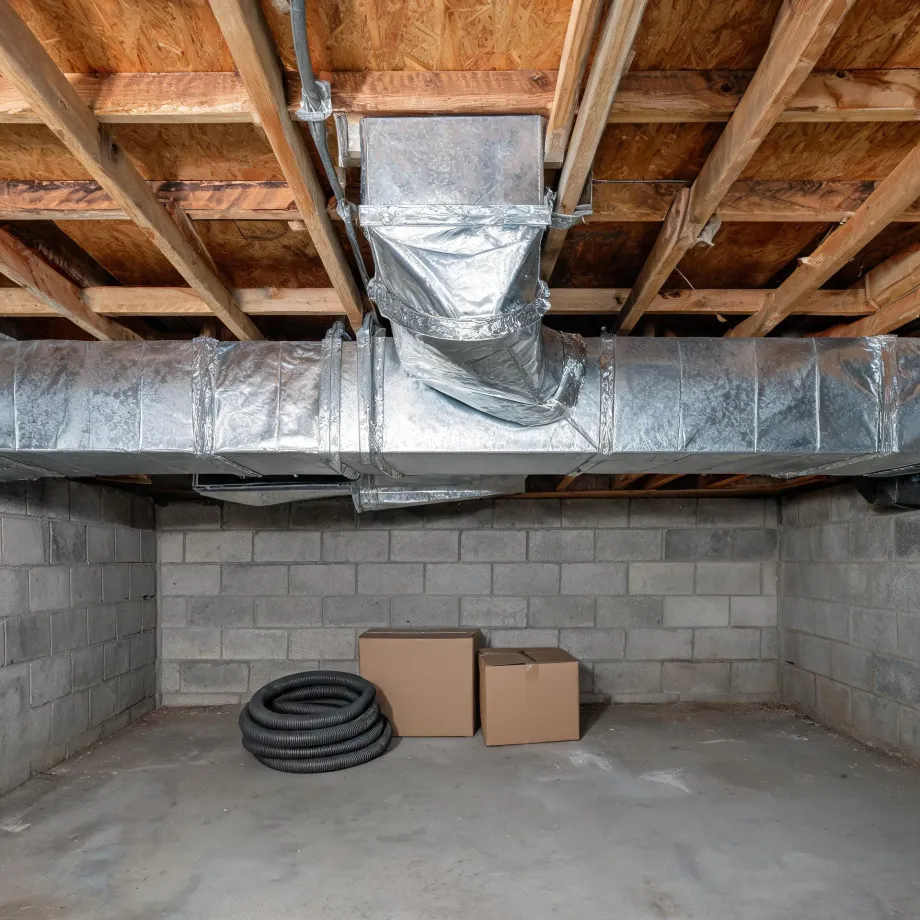
Ductwork sized for an older system does not automatically carry what a new furnace pushes through it. Half the homes in Callaway County, Missouri were built in 1987 or earlier (2020-2024 ACS 5-year). A contractor installing a furnace in stock like this measures the existing trunk lines and checks the electrical service before anything else, because both were built around load assumptions that have since changed. If the ducts restrict airflow, the new unit short-cycles and the efficiency ratings on its label never materialize in the house. The electrical is the same story: a panel sized for a smaller draw may need an upgrade before the new furnace can run at all.
What Gets Installed With a New Furnace
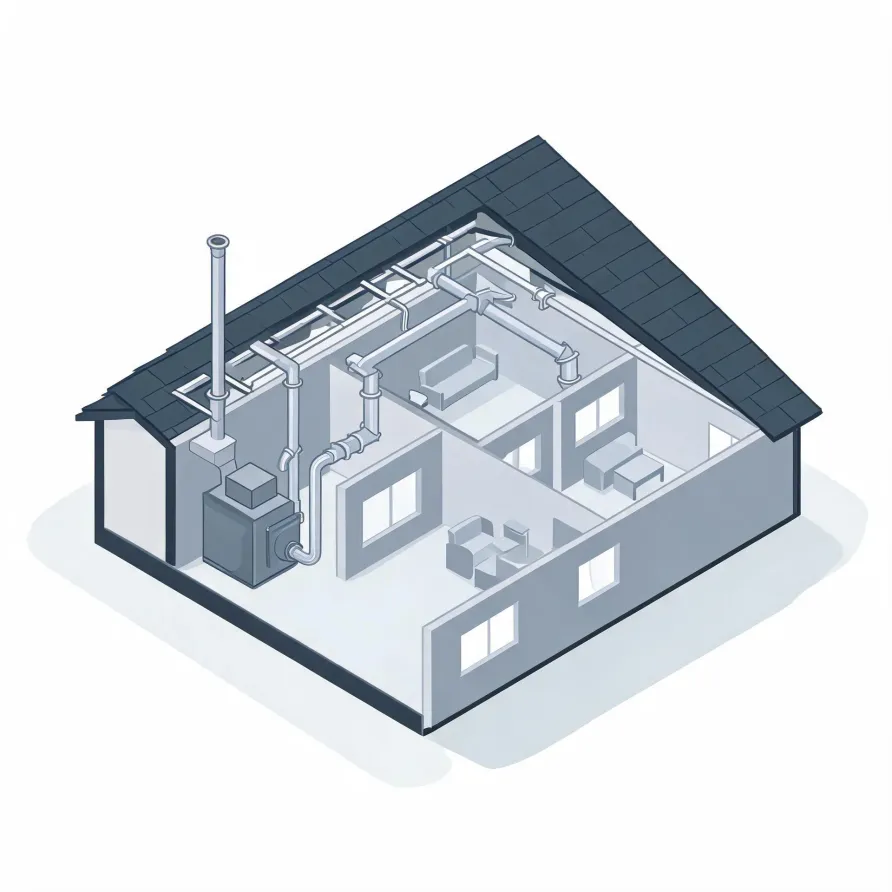
The furnace itself sits inside the house, most often in a basement, utility room, or closet. It holds the heat exchanger, the burners, and the blower in one cabinet. That cabinet is the piece a homeowner is buying, and it is where the heating work happens.
A flue pipe runs from the furnace cabinet to an exterior wall or up through the roof, carrying combustion gases out of the house. The thermostat mounts on an interior wall and tells the furnace when to fire. A new installation also includes a filter housing where the return air enters the cabinet before it reaches the burners.
The drawing shows a general layout of these components, and a licensed contractor determines exactly what applies to this house.
Get matched in Callaway CountyCallaway County, by the numbers
79 severe weather events were recorded in Callaway County, Missouri between 2015 and 2024.
NOAA National Centers for Environmental Information, Storm Events Database, bulk CSV export, events 2015-01-01 through 2024-12-31.Half the homes in Callaway County, Missouri were built in 1987 or earlier (2020-2024 ACS 5-year).
U.S. Census Bureau, 2020-2024 American Community Survey 5-Year EstimatesCallaway County, Missouri holds 18,645 housing units (2020-2024 ACS 5-year).
U.S. Census Bureau, 2020-2024 American Community Survey 5-Year EstimatesOwners occupy 75.5% of the occupied homes in Callaway County, Missouri (2020-2024 ACS 5-year).
U.S. Census Bureau, 2020-2024 American Community Survey 5-Year EstimatesFurnace Installation Rules That Apply in Callaway County, Missouri4 codes, standards, and licensing rules
What the installation looks like from your end
Non-weatherized gas furnaces manufactured on or after November 19, 2015 must reach 80.0 percent AFUE.
Non-weatherized oil-fired furnaces manufactured on or after November 19, 2015 must reach 83.0 percent AFUE.
Mobile home gas furnaces manufactured on or after November 19, 2015 must reach 80.0 percent AFUE.
Non-weatherized gas furnaces manufactured on or after December 18, 2028 must reach 95.0 percent AFUE, up from the 80.0 percent minimum that applies to units manufactured before that date.
Severe Weather Events in Callaway County
Weather patterns in Callaway County put real demands on heating equipment, from hard freezes that test a furnace's output to sudden swings that shorten the life of components. A furnace sized and installed for local conditions handles that load better than one spec'd for somewhere else.
79 severe weather events, 2015–2024. Source: NOAA National Centers for Environmental Information, Storm Events Database.