
Check it yourself first
Replace thermostat batteries, reset the breaker, and check that the furnace switch near the unit is on. Some furnaces restart on their own once power is restored.
Send the request today and let a furnace pro reach out to you.
Let a pro reach outA furnace that won't turn on usually comes down to one of a few things. The thermostat might not be calling for heat, or its batteries are dead. Power to the furnace could be cut at a breaker or a switch near the unit itself. Gas furnaces also have a pilot light or an igniter, and if that's out or worn, the burners never light even though the blower seems fine. Many furnaces here are electric, so a tripped breaker or a bad heating element is often the cause rather than a gas or pilot problem. Winters in Arnold get cold enough that a furnace sitting dead for even a day is more than an inconvenience. Some of these causes are a quick reset. Others mean a part has failed and needs a trained eye to replace safely, since furnaces involve both electrical power and, in some homes, gas lines.

Winter nights average 25°F
Winter nights here average 25°F, so a furnace that won't start leaves a house losing heat fast, not slowly.
Heat runs October through April
Heat runs October through April here, about seven months, which is a long stretch for a broken furnace to sit unused.
57.5% of homes heat with electricity
57.5% of homes in Jefferson County heat with electricity, so an electric furnace problem is the most common reason yours won't start.
NOAA nClimDiv 1991-2020 · ACS 2020-2024
A gas furnace does not just light. It works through a sequence, and each step has to pass before the next one happens. The thermostat calls for heat, and the inducer motor kicks on first to pull air through the heat exchanger and vent. A pressure switch has to confirm that draft is moving before the furnace will go any further. Once that's confirmed, the igniter starts heating, either a hot surface igniter that glows or, on older units, a spark. When the igniter is ready, the gas valve opens and the burners should light. The flame sensor then has a few seconds to detect that flame. If it doesn't, the control board shuts the gas valve again, even if you saw a flame for a moment. This is why a furnace can click, attempt to light, and then go quiet. It's not failing randomly. It's stopping at whichever step didn't check out. A cracked igniter stops things before gas ever flows. A dirty flame sensor can't detect a flame that's actually there, so the valve closes anyway. And limit switches, which watch for restricted airflow through the ducts, will block ignition from starting at all if they sense a problem, whether or not the actual issue is airflow. Knowing which step failed is most of the diagnosis. The symptoms look similar from the living room. They are not the same repair.

Replace thermostat batteries, reset the breaker, and check that the furnace switch near the unit is on. Some furnaces restart on their own once power is restored.
Skip calling around Jefferson County and explaining the problem twice. Send the details once and let a licensed contractor take it from there.
Describe what your furnace is doing once, in one form.
No fee to send it, and nothing to sign.
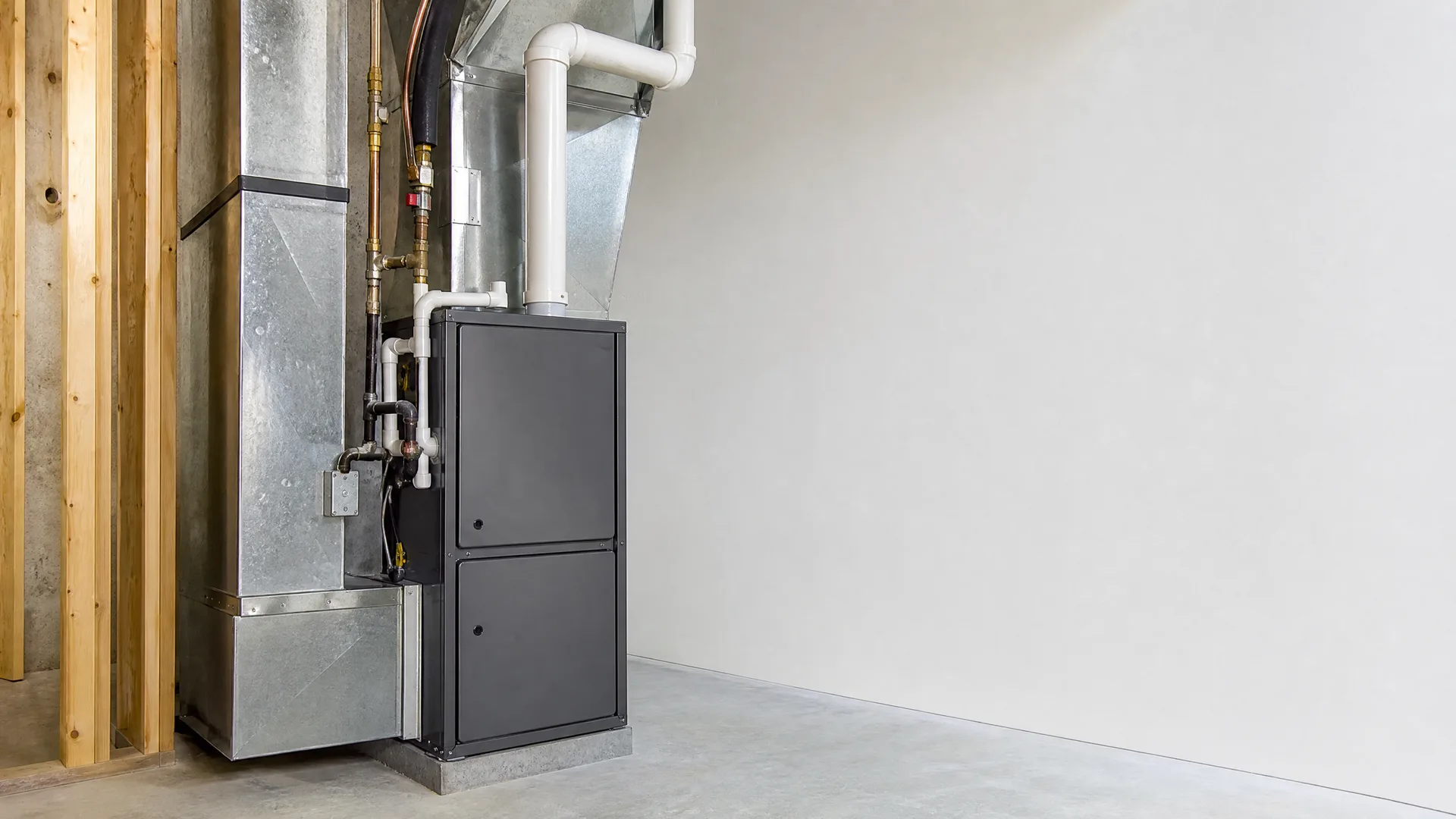
Arnold homes lose heat fast once a furnace stops firing. At 25°F outside, indoor temperature starts falling within the hour, and pipes along outside walls or in a crawlspace are the first to feel it. A furnace that stays off overnight in January is a different problem than one that stays off in April, and Jefferson County winters mean the cold months are the stretch where this matters most.
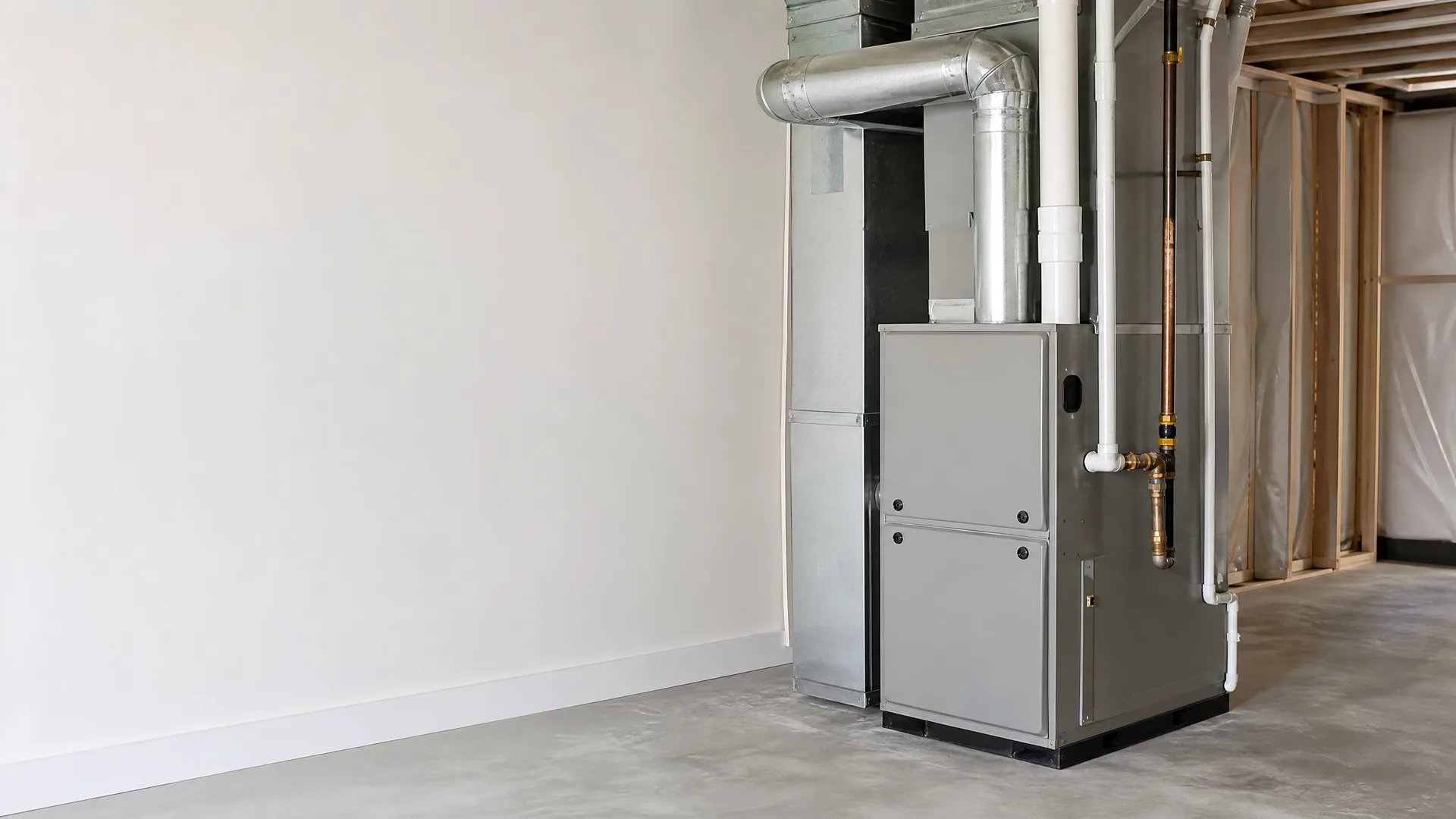
The flame sensor is a thin rod that sits in the burner flame and proves to the control board that gas is actually burning. Dust and carbon build up on it over time, and once the coating is thick enough, the board reads no flame even when there is one. The furnace shuts the gas valve as a safety step. Cleaning the rod restores the signal, but a cracked sensor has to be replaced.
You hear the furnace try, a click or a few clicks in a row, then nothing. No flame, no warm air, just quiet after that. It sounds like it's close to working, which is why it's confusing when it just stops there instead of lighting.
That clicking is the igniter trying to light the burners, or the gas valve opening and closing as the system tries and gives up. A hot surface igniter that's cracked or weak can click without ever getting hot enough to light the gas. A dirty flame sensor causes the opposite problem, the burners light for a second then the furnace shuts them back off because the sensor can't confirm the flame. Either way the furnace is running through its sequence correctly and stopping itself on purpose, since it's built to shut off rather than keep dumping gas into the firebox with no flame. That's a safety feature working as designed, not a random failure.
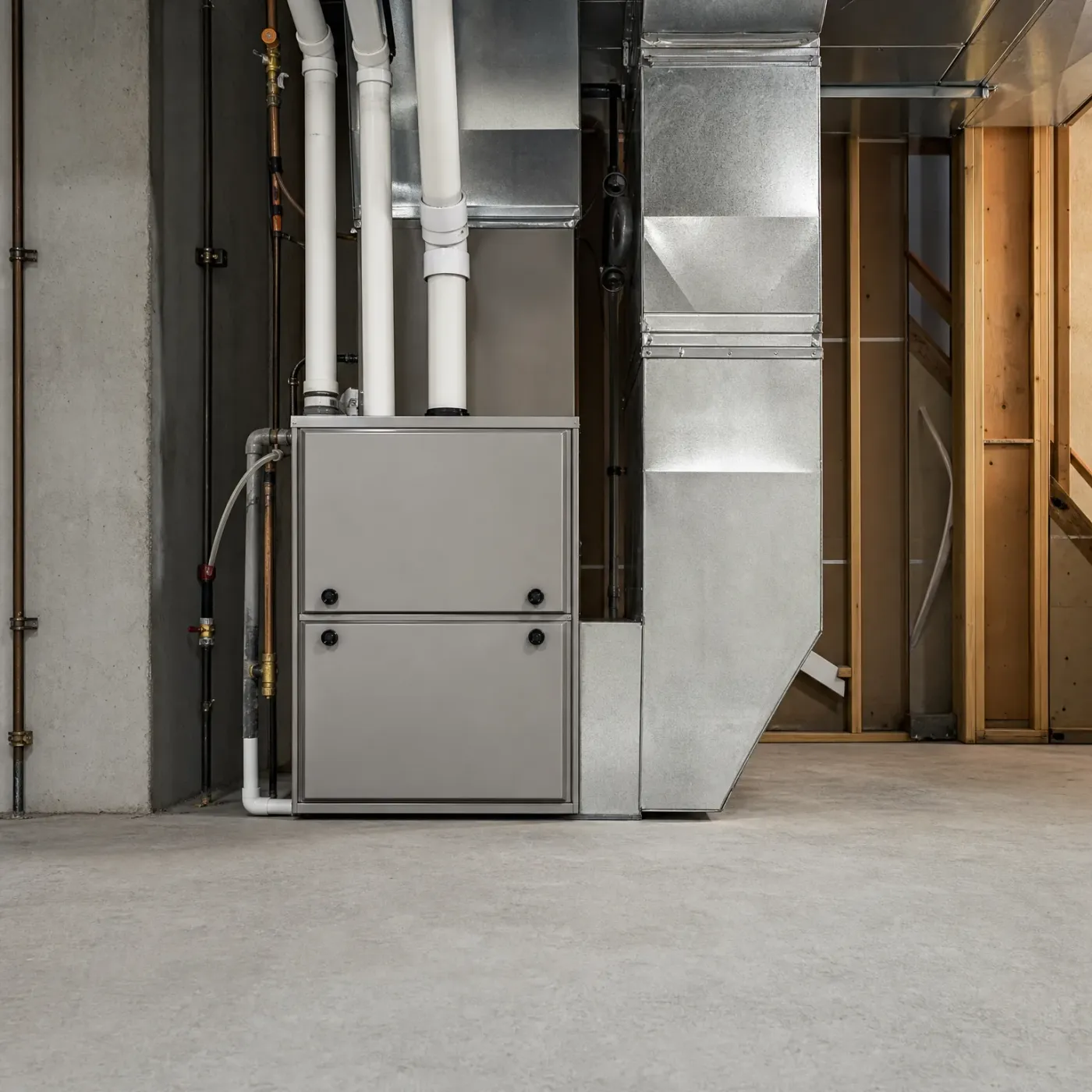
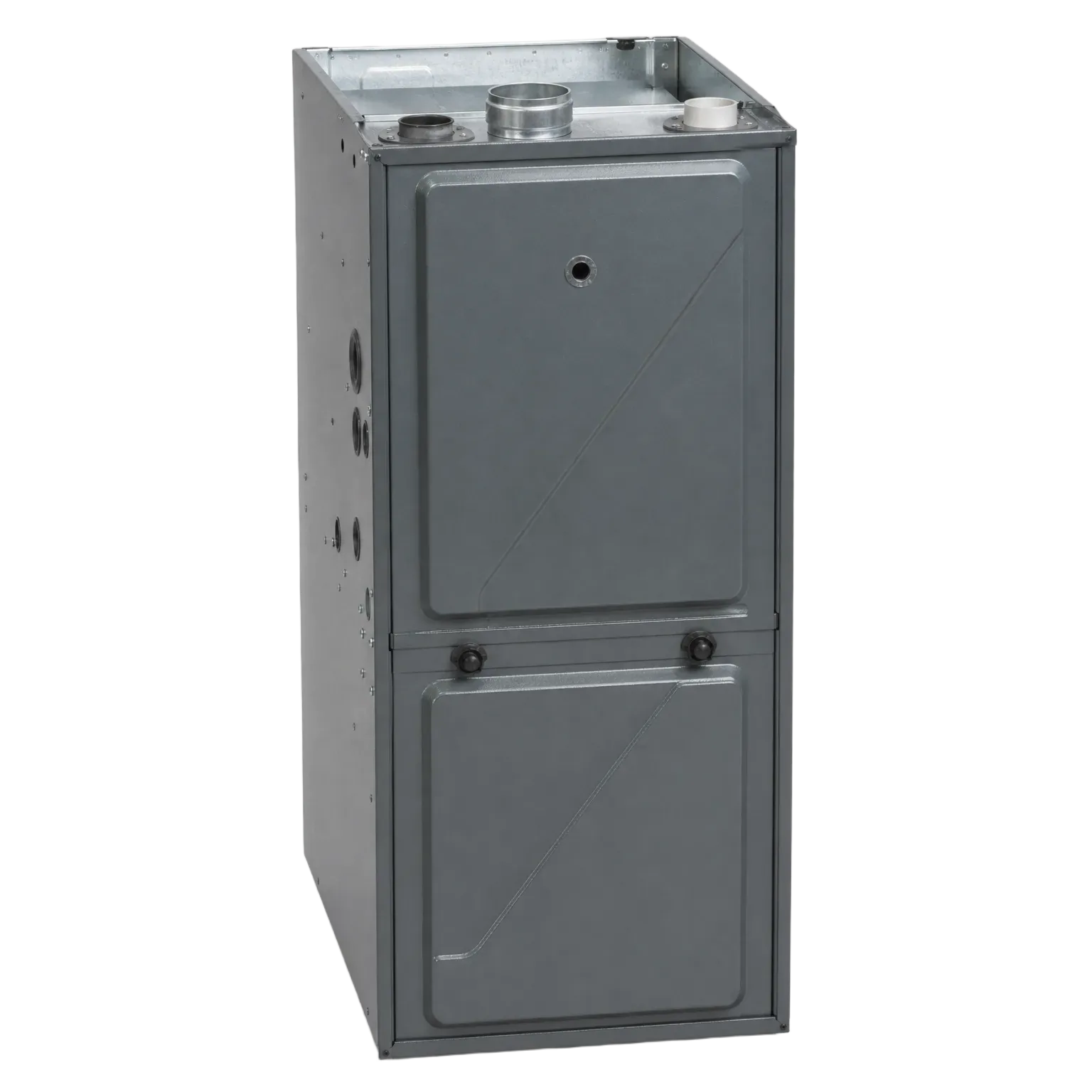
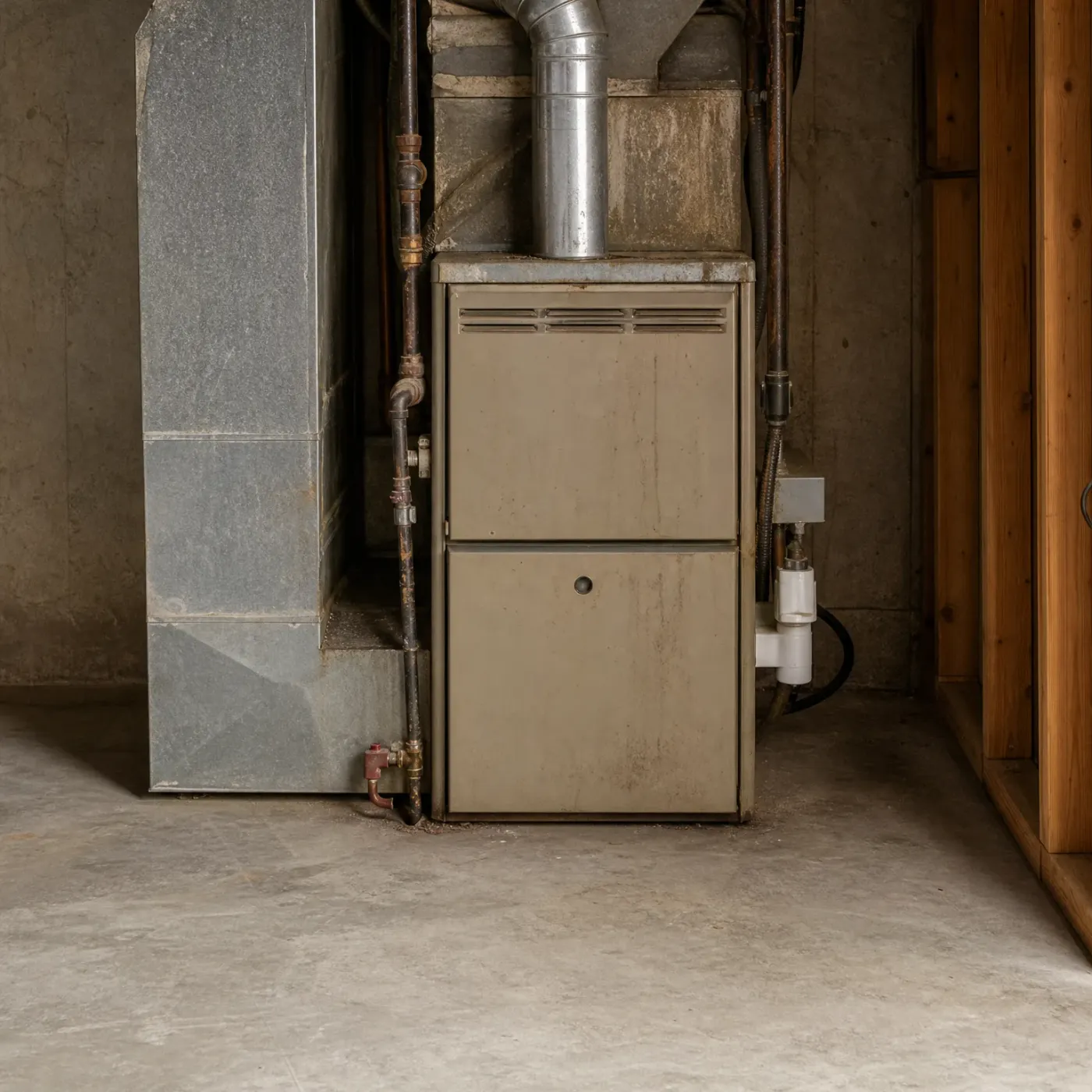
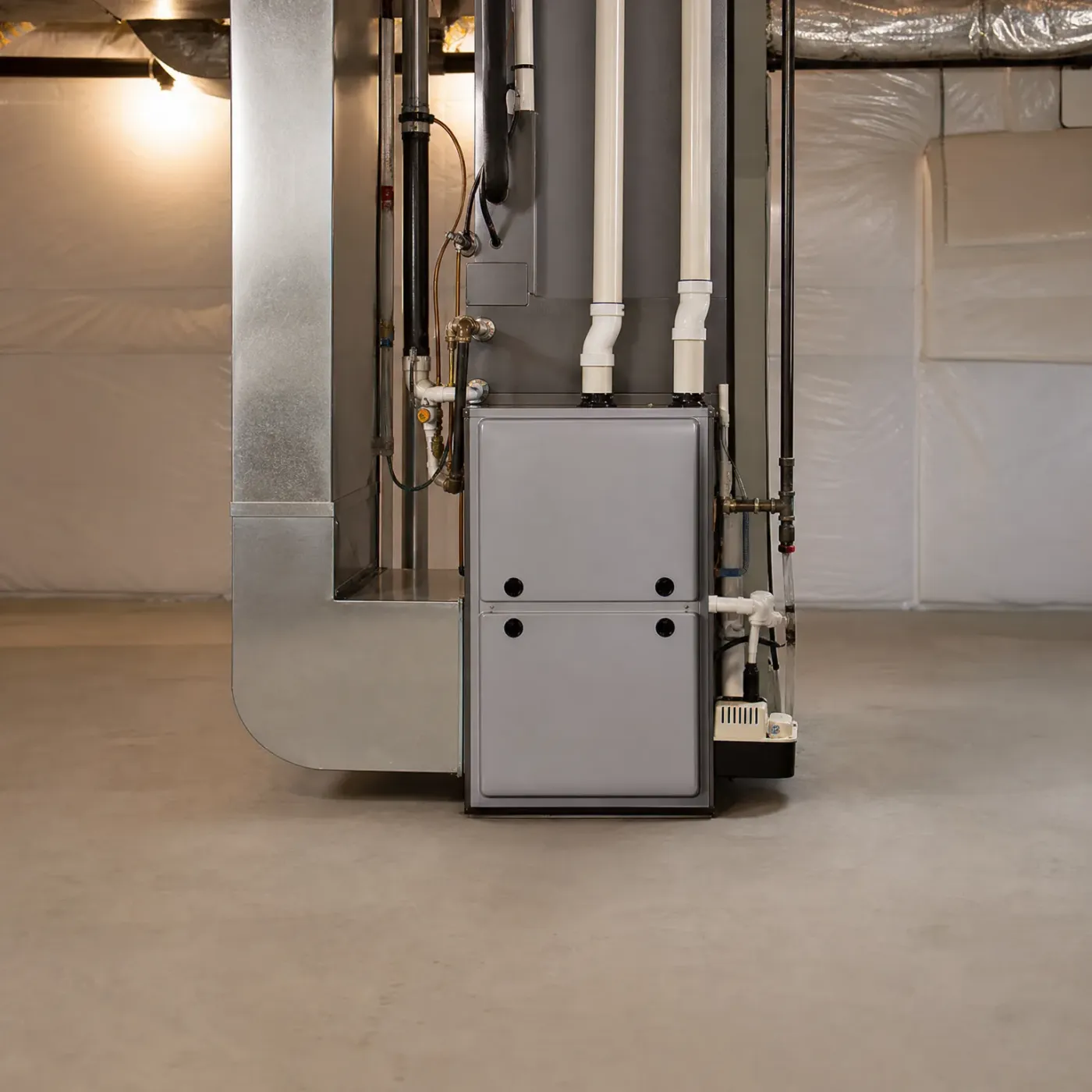
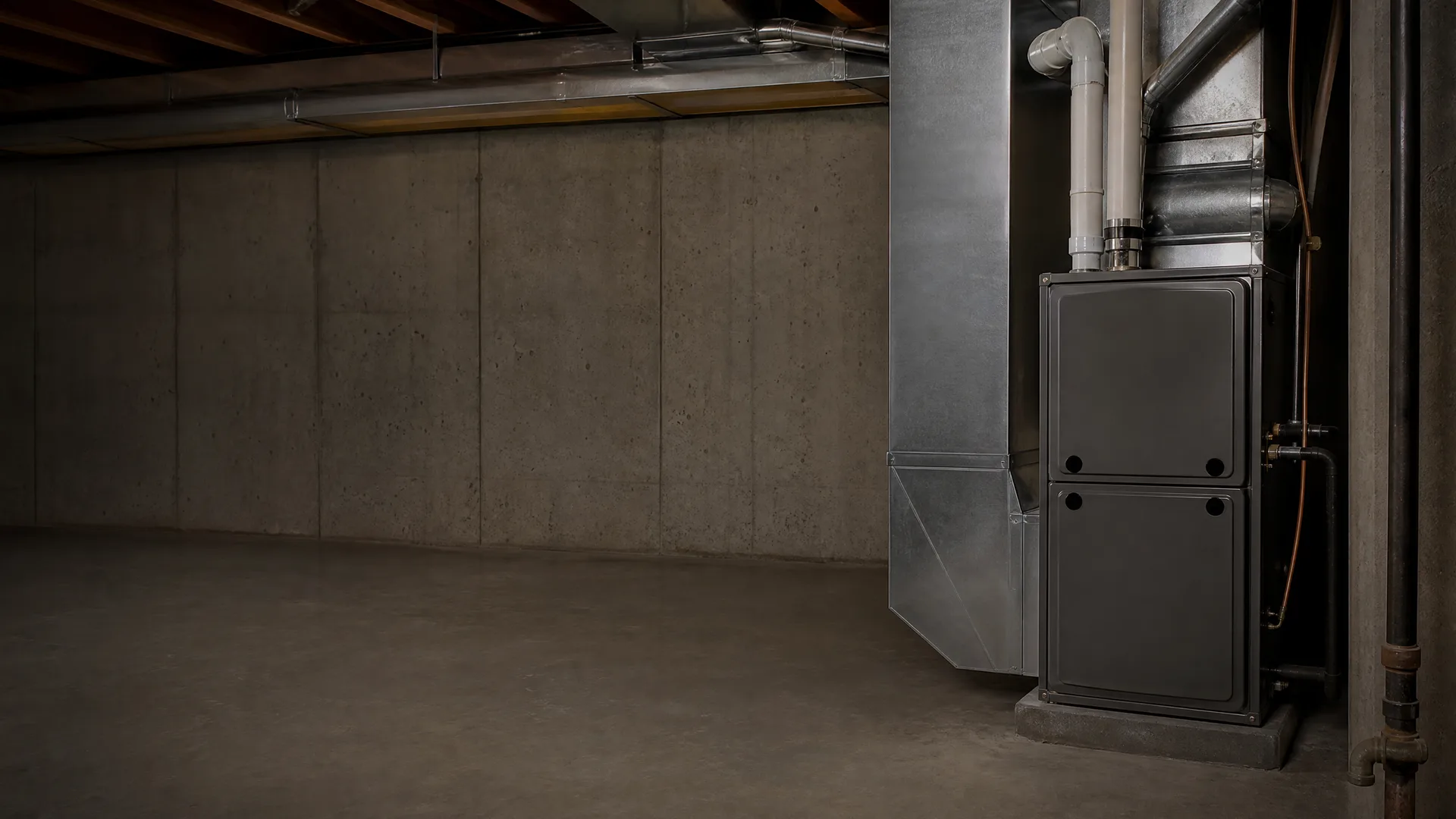
This is what the furnace looks like doing its job. Air moves up through the sheet-metal ductwork, the condensate line drains off to the side, and the gas line sits quiet and steady along the wall. Nothing about it needs your attention.
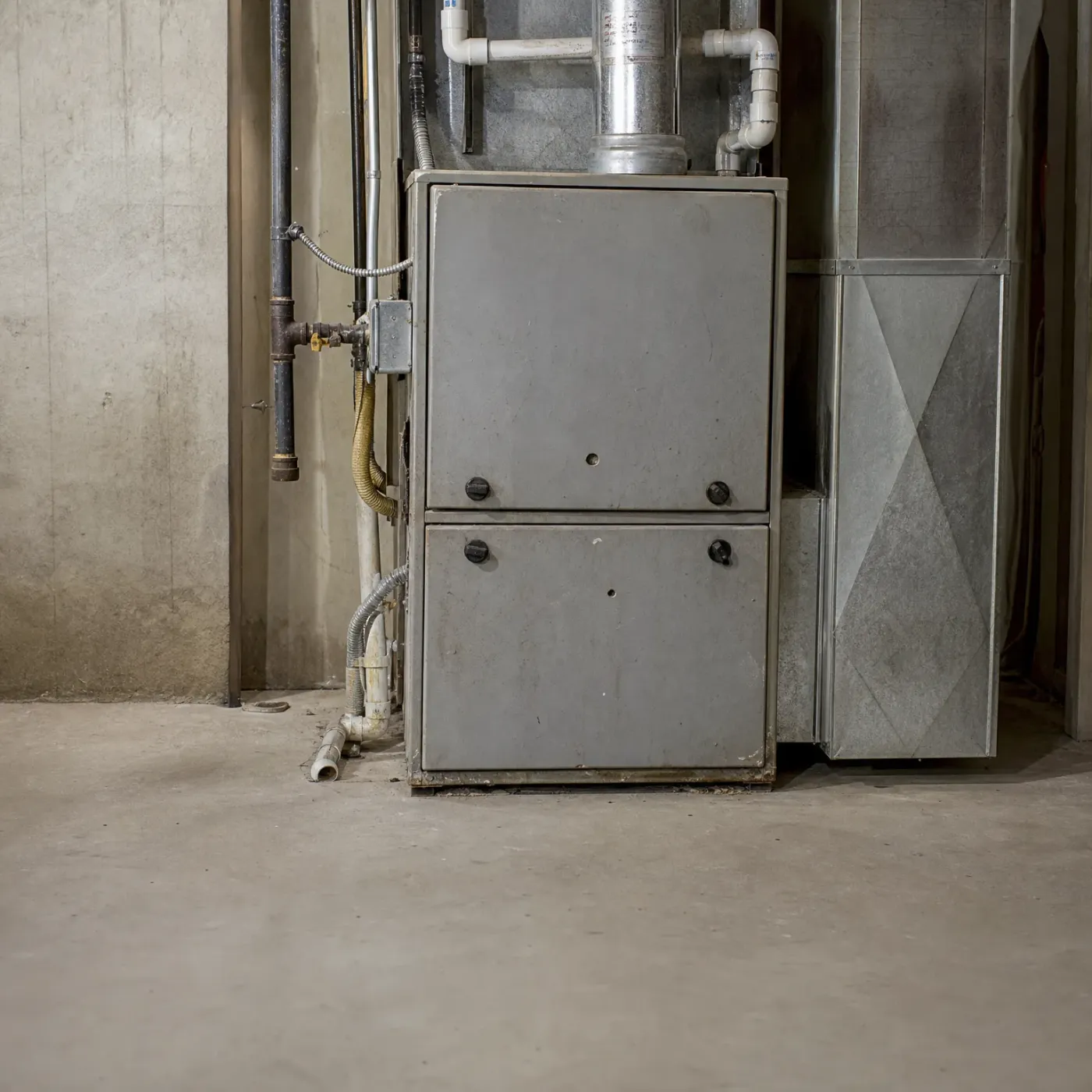
Same furnace, same basement, but it's not firing. The panels are still latched, the gas line still runs to it, and nothing inside is making heat. From the outside it looks almost the same as the first picture. That's the problem with diagnosing it yourself.
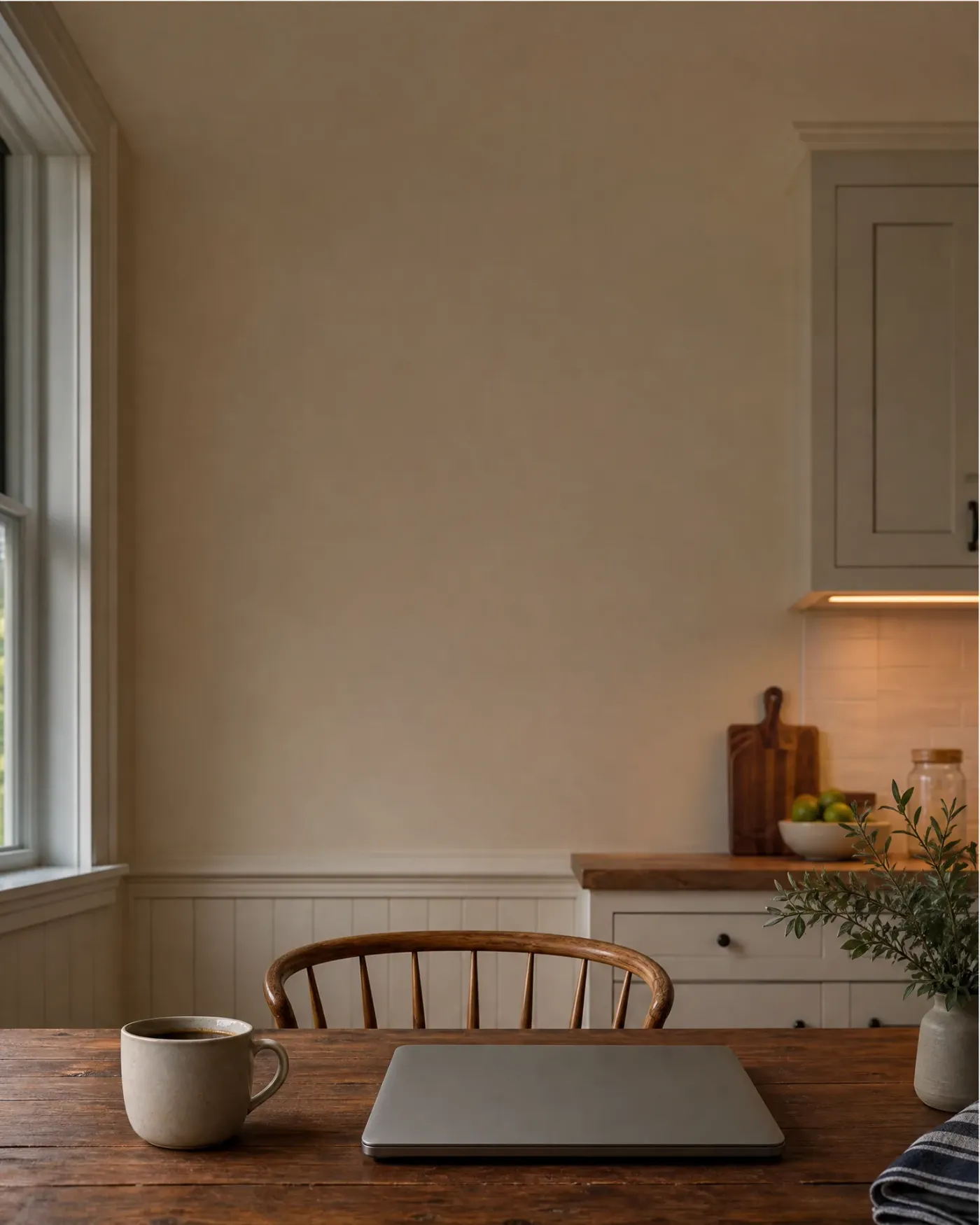
A dead thermostat, a tripped breaker, a switch bumped off, a pilot that went out, a flame sensor too dirty to confirm a burn. One of these is why your furnace is sitting quiet right now instead of running. None of it is a mystery once someone with the right meter is standing in front of the unit.
You don't have to find that person tonight. Skip the calls around Jefferson County, skip explaining the click-click-nothing sound three different times to three different companies, skip sorting through quotes to guess who's actually any good. Send the form and a licensed contractor takes it from there. Your part was figuring out something is wrong. The rest isn't yours to carry.

Skip calling shops to ask who repairs furnaces in Jefferson County.