Tell us about the job
Takes about a minute. No obligation.
The burner and ignition system in a Grundy County furnace cycle repeatedly across a long heating season, and the parts that fire and cut out on every call for heat are the ones that show wear first. Homes in Grundy County, MO run heat about seven months a year, from October through April. A contractor quoting a repair here checks the heat exchanger for cracks and the igniter for degradation before pricing anything else, because those are the components the season loads hardest. Ductwork and the blower motor follow, since they run every cycle too.
Furnace repair here tends to surface problems that have nothing to do with what failed first. Half the homes in Grundy County, Missouri were built in 1963 or earlier (2020-2024 ACS 5-year). A house that old was set up around equipment that is long gone, and what a contractor opens varies from what the exterior or the thermostat suggested. Heat exchangers crack in ways that reflect how a system has been running against a duct layout it never quite fit. Flue connections, limit switches, draft inducers: what needs replacing often does so in sequence, one part stressing the next, and whether the right replacement part is still manufactured decides how the repair goes from there.
The Parts of a Furnace a Contractor Checks First
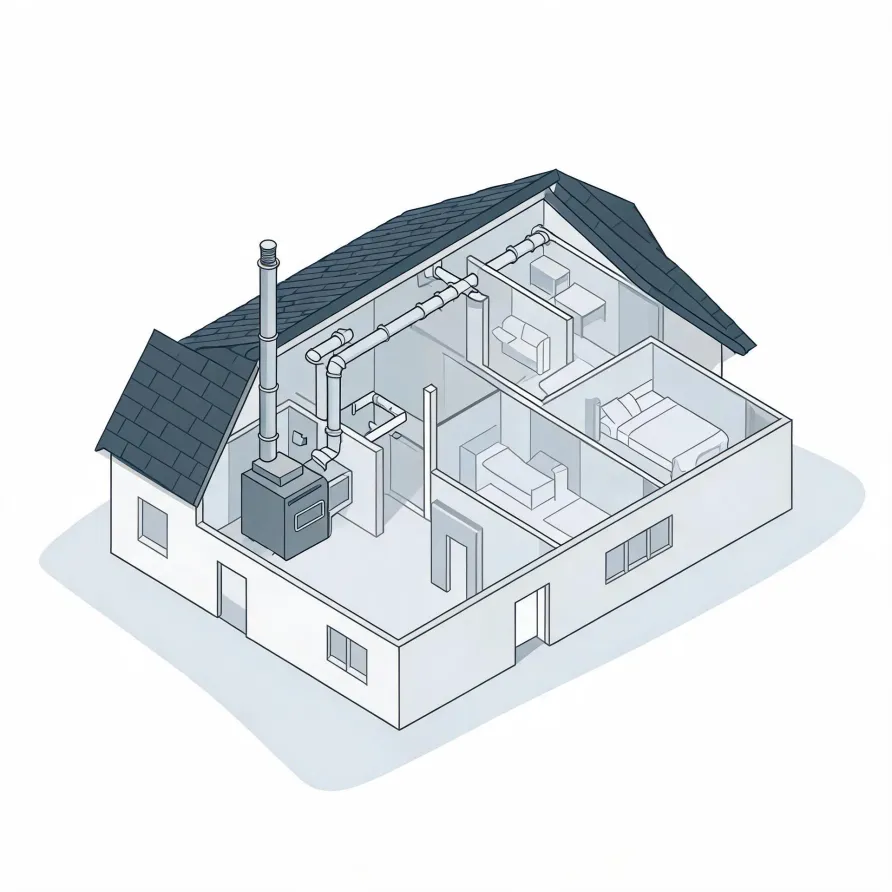
The furnace itself sits in a basement, utility room, or closet and is the piece a contractor goes to first. Inside it, the heat exchanger is the part that transfers heat to your air, and a crack or failure there is one of the more serious findings a repair visit turns up. The burners, which sit just below the heat exchanger, are another early stop: dirty or damaged burners show up as uneven heat, a rough startup, or a flame that behaves wrong.
The blower motor sits at the base of the furnace cabinet and pushes conditioned air into the duct system. Near it, the inducer motor and the flue pipe carry combustion gases out of the house, and a problem with either one often triggers a safety lockout before the furnace will run. The control board, tucked inside the cabinet, reads every sensor and switch and tells the whole system when to fire and when to stop.
The drawing shows a typical furnace layout, and a licensed contractor determines which components apply to your specific system and situation.
Find a contractor in Grundy CountyGrundy County, by the numbers
99 severe weather events were recorded in Grundy County, Missouri between 2015 and 2024.
NOAA National Centers for Environmental Information, Storm Events Database, bulk CSV export, events 2015-01-01 through 2024-12-31.Half the homes in Grundy County, Missouri were built in 1963 or earlier (2020-2024 ACS 5-year).
U.S. Census Bureau, 2020-2024 American Community Survey 5-Year EstimatesGrundy County, Missouri holds 4,834 housing units (2020-2024 ACS 5-year).
U.S. Census Bureau, 2020-2024 American Community Survey 5-Year EstimatesOwners occupy 69.7% of the occupied homes in Grundy County, Missouri (2020-2024 ACS 5-year).
U.S. Census Bureau, 2020-2024 American Community Survey 5-Year EstimatesCodes & Standards Behind Furnace Repair in Grundy County, Missouri4 sourced rules and standards
What Furnace Repair Looks Like in Grundy County
Non-weatherized gas furnaces manufactured on or after November 19, 2015 must reach 80.0 percent AFUE.
Non-weatherized oil-fired furnaces manufactured on or after November 19, 2015 must reach 83.0 percent AFUE.
Mobile home gas furnaces manufactured on or after November 19, 2015 must reach 80.0 percent AFUE.
Non-weatherized gas furnaces manufactured on or after December 18, 2028 must reach 95.0 percent AFUE, up from the 80.0 percent minimum that applies to units manufactured before that date.
Weather Stress on HVAC Equipment in Grundy County
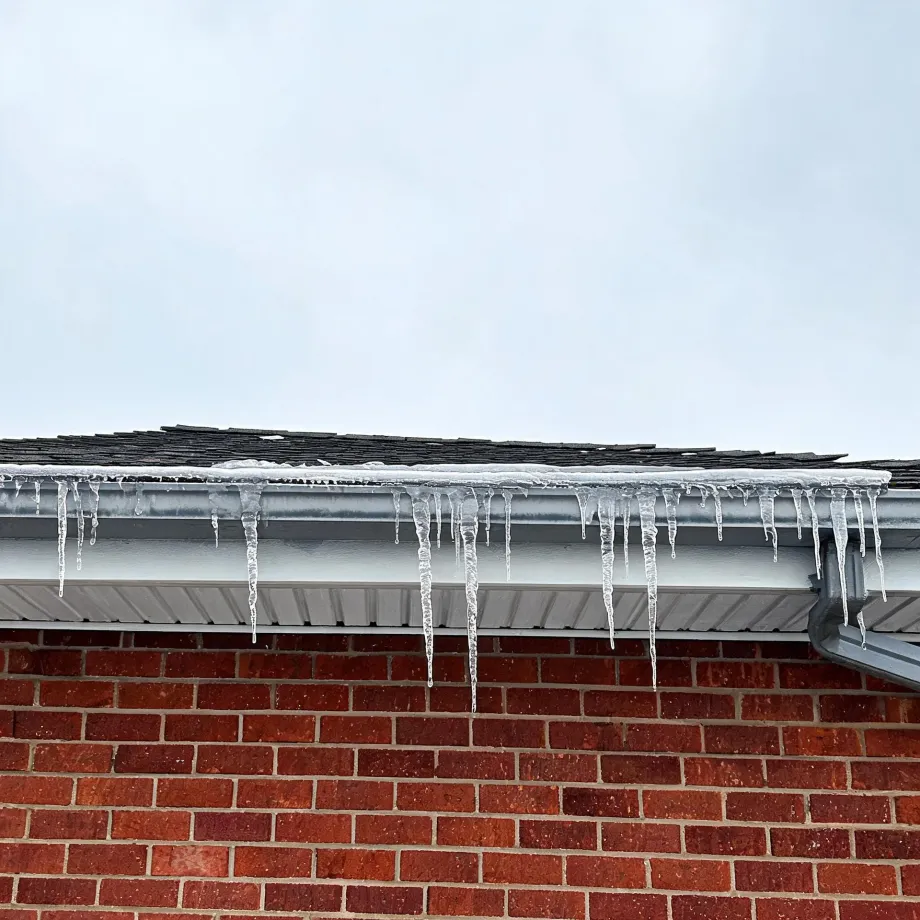
Hard weather puts real load on furnaces: cold snaps force longer run cycles, and storm-driven power events wear on components that would otherwise last. How much strain a furnace absorbs over its life is a local question, shaped by what the sky does in this specific county.
99 severe weather events, 2015–2024. Source: NOAA National Centers for Environmental Information, Storm Events Database.