Tell us about the job
Takes about a minute. No obligation.
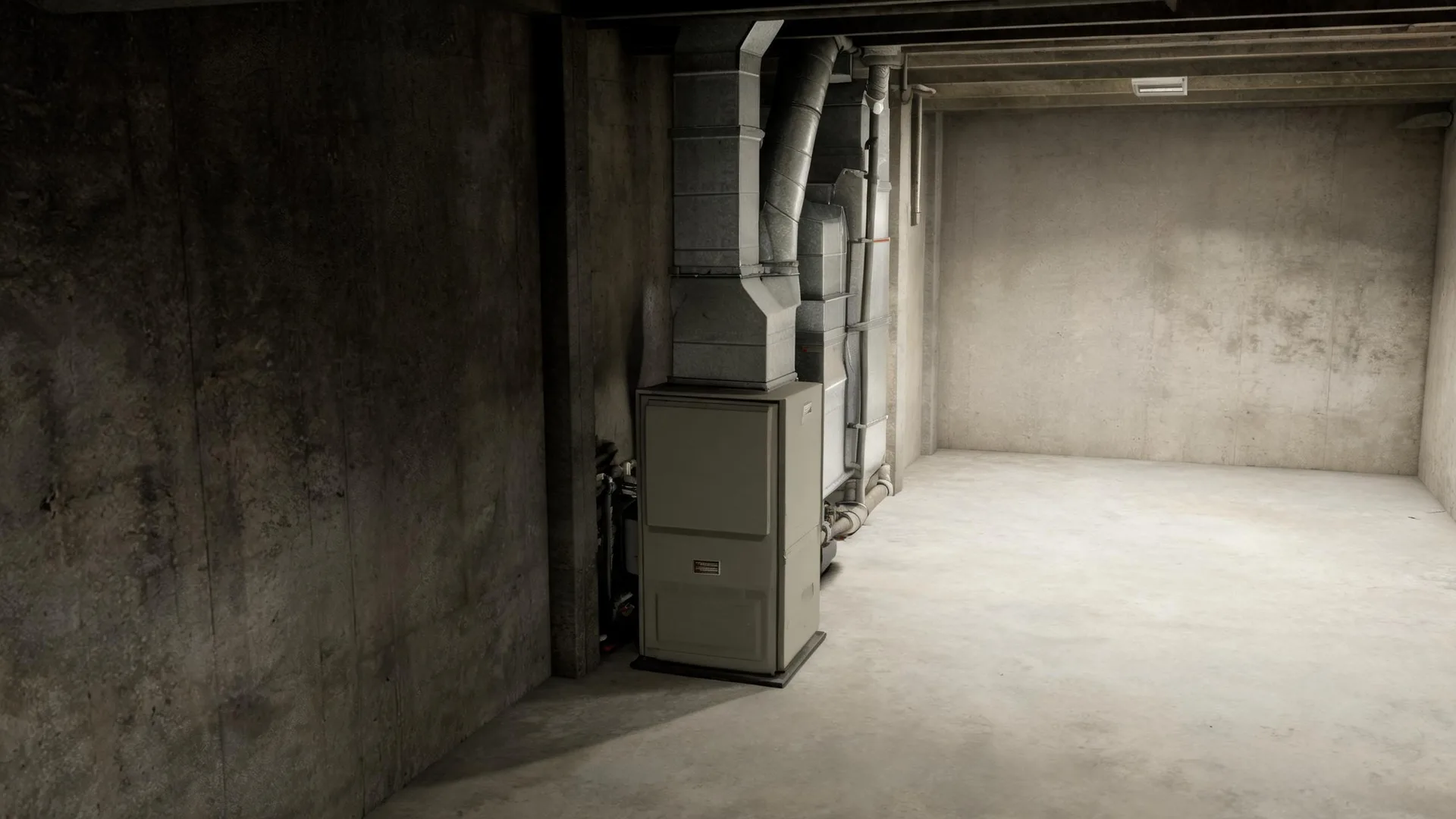
A furnace repair quote in Dunklin County starts with what the burner and heat exchanger have already been through. Homes in Dunklin County, MO run heat about seven months a year, from October through April. That kind of cycling loads the ignition system hard: repeated starts across a long heating season crack heat exchangers, pit burner ports, and wear igniter elements down to failure. A contractor working a furnace here checks those components before pricing anything else, because a heat exchanger with stress fractures changes the scope of the job entirely.
Furnace stock running in houses this old has typically been swapped or patched more than once, and what a contractor opens is rarely what the original builder planned for. Half the homes in Dunklin County, Missouri were built in 1972 or earlier (2020-2024 ACS 5-year). That history matters at the parts stage: a system cycling through its second or third iteration in a house of this vintage may carry components that are discontinued or available only through specialty suppliers, and that is what shapes the repair scope and the bill. The ductwork and wiring in these houses were adapted to fit whatever came next; the constraint the contractor hits is inside the unit itself.
The Parts of a Furnace a Contractor Checks First
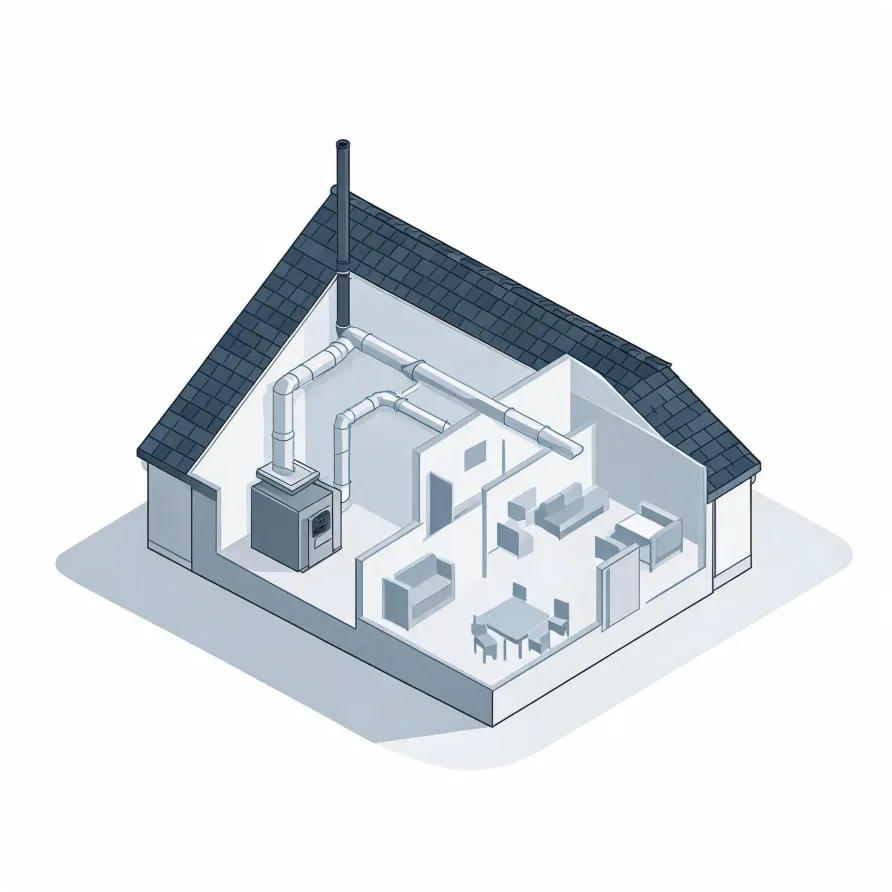
The furnace itself sits in a utility room, basement, or closet and is the piece a contractor goes to first. Inside it, the heat exchanger is the part most worth knowing about: cracks there let combustion gases into the living space, so a contractor inspects it closely. The burners, which sit just below it, are checked for uneven flame or buildup that disrupts ignition.
The blower motor pushes conditioned air into the supply side of the duct system and sits at the base of the furnace cabinet. Alongside it, the inducer motor, the pressure switches, and the control board all get checked when the complaint points to the furnace starting and stopping, failing to start, or running without producing heat.
The drawing shows a general layout of how these parts relate to one another, and a licensed contractor determines what applies to the specific system in your home.
Find a contractor in Dunklin CountyDunklin County, by the numbers
111 severe weather events were recorded in Dunklin County, Missouri between 2015 and 2024.
NOAA National Centers for Environmental Information, Storm Events Database, bulk CSV export, events 2015-01-01 through 2024-12-31.Half the homes in Dunklin County, Missouri were built in 1972 or earlier (2020-2024 ACS 5-year).
U.S. Census Bureau, 2020-2024 American Community Survey 5-Year EstimatesDunklin County, Missouri holds 13,447 housing units (2020-2024 ACS 5-year).
U.S. Census Bureau, 2020-2024 American Community Survey 5-Year EstimatesOwners occupy 62.3% of the occupied homes in Dunklin County, Missouri (2020-2024 ACS 5-year).
U.S. Census Bureau, 2020-2024 American Community Survey 5-Year EstimatesFurnace Repair Rules on the Books for Dunklin County, Missouri4 codes, standards & laws
What happens when the contractor arrives
Non-weatherized gas furnaces manufactured on or after November 19, 2015 must reach 80.0 percent AFUE.
Non-weatherized oil-fired furnaces manufactured on or after November 19, 2015 must reach 83.0 percent AFUE.
Mobile home gas furnaces manufactured on or after November 19, 2015 must reach 80.0 percent AFUE.
Non-weatherized gas furnaces manufactured on or after December 18, 2028 must reach 95.0 percent AFUE, up from the 80.0 percent minimum that applies to units manufactured before that date.
Severe Weather Events in Dunklin County
Extreme weather puts real load on furnace systems, accelerating wear and driving repair needs that would not appear under mild conditions. How often that pressure arrives in Dunklin County is a local fact, and it shapes what furnace service here actually looks like.
111 severe weather events, 2015–2024. Source: NOAA National Centers for Environmental Information, Storm Events Database.