Two sources, one symptom
Water pooling under the furnace usually traces back to one of two spots: the condensate drain system or the flue venting. Narrowing it down tells the contractor where to look first.
Water under your furnace almost always comes from the condensate line or the flue, not from a leak in the furnace itself. If you have a high-efficiency furnace, it produces condensation as a normal part of burning gas, and that water drains out through a PVC line to a floor drain or a condensate pump. That line clogs with algae and dirt over time, or the pump fails, and the water backs up and spills out near the unit. On an older, standard-efficiency furnace, water pooling nearby is more often the flue pipe draining condensation it was never built to handle, which points to a venting problem rather than the furnace. Either way, a furnace that keeps running while wet can rust out its heat exchanger or trip a safety switch and shut down, which matters with cold winters here in Platte County. Water near the furnace is worth sorting out before it either damages the unit or leaves you without heat on a cold night.
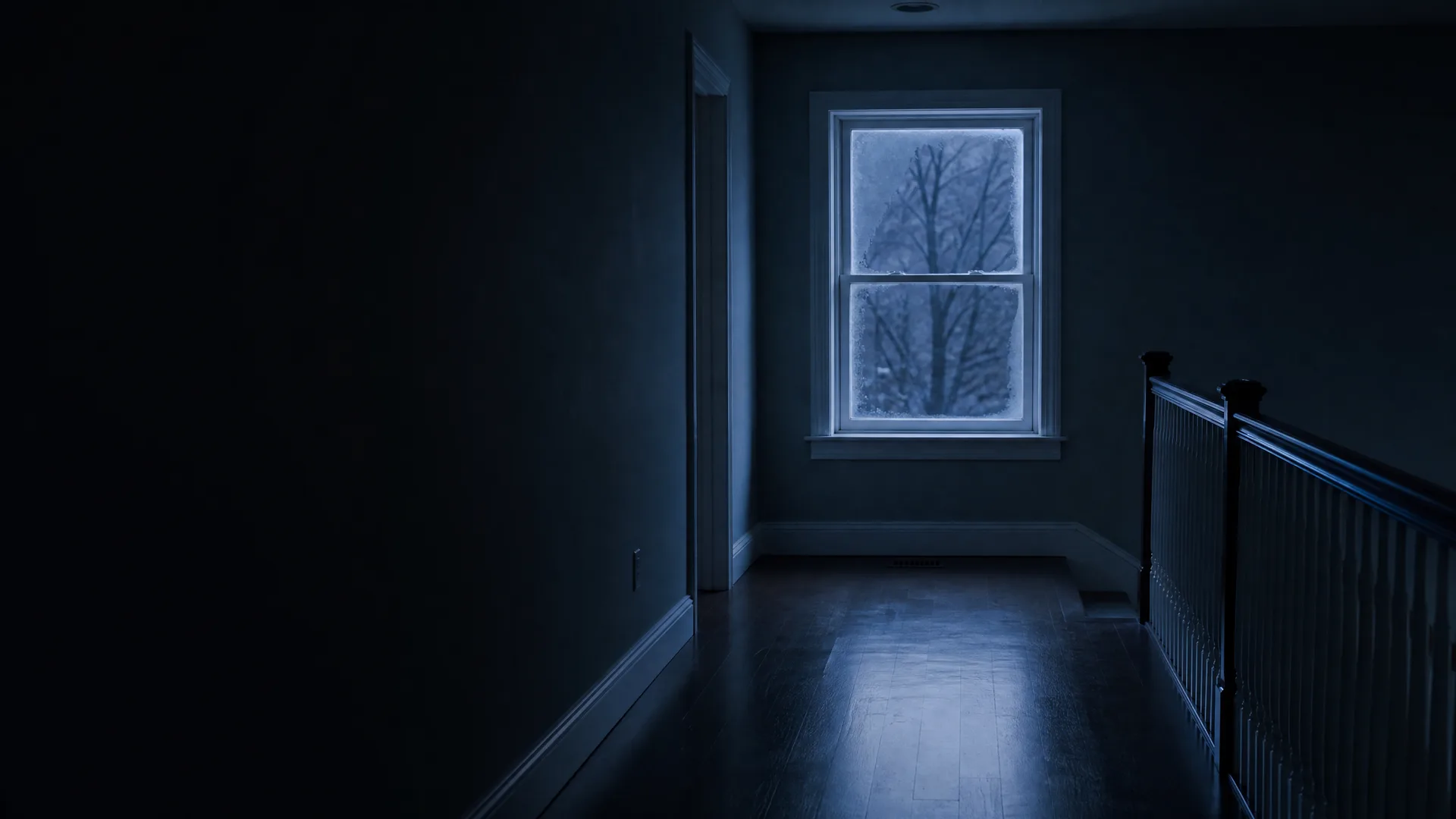
You wake up a little after 2 because the house feels colder than it should. The hallway upstairs is dark, that dim blue kind of dark, and when you step out of bed your feet find the vent and there's nothing coming out of it. No hum from downstairs either. You check the thermostat and it's dropped. Outside the window, frost has worked its way across the glass, and Platte County in January doesn't forgive a furnace that quits. You go down to look at the unit and there, on the floor in front of it, is a small spread of water, enough to notice, enough to make you stop and think about what to do before the house gets any colder.
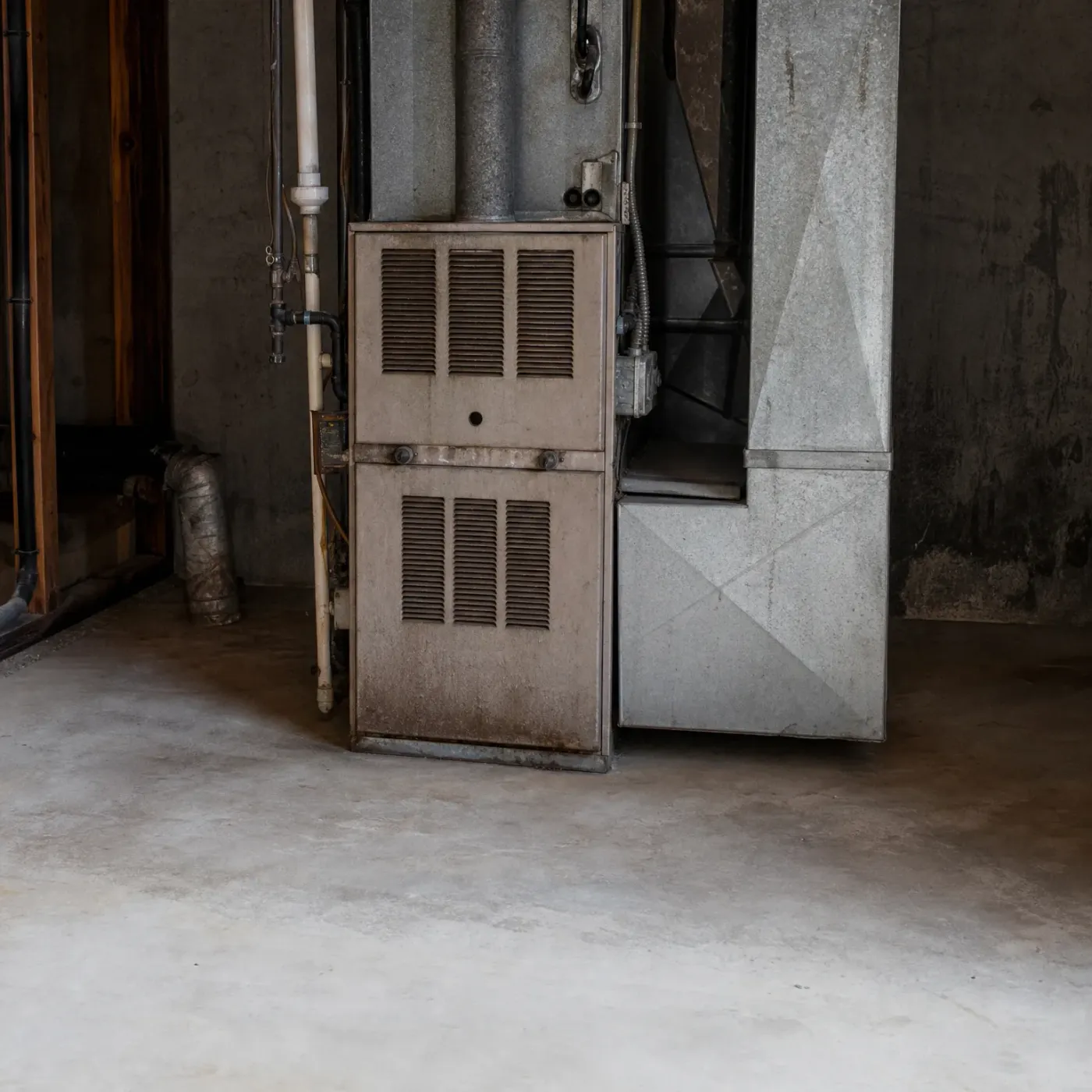
The trap under a high-efficiency furnace is built to hold a little water on purpose, the same way the one under your sink does, and it only becomes a problem once sludge builds up and blocks it. Once that happens, water has nowhere to go but back into the cabinet, which is why most furnaces have a float switch that cuts power the moment it senses water where it shouldn't be. Some leaks never touch the trap at all. The inducer motor is what pulls exhaust through the heat exchanger, and if that exchanger has cracked, water can end up condensing inside the furnace instead of venting out, often pooling near the back where the secondary exchanger sits. The PVC pipe that vents a high-efficiency furnace matters too. If it sags or slopes wrong, the pressure inside can actually pull water backward toward the unit. And if the furnace shares a space with ductwork running through someplace unconditioned, what looks like a furnace leak in summer might just be duct sweat finding its way to the floor.




Water pooling under the furnace usually traces back to one of two spots: the condensate drain system or the flue venting. Narrowing it down tells the contractor where to look first.
Many furnaces have a float switch that cuts power the moment condensate backs up. If yours stopped heating and you see water, that switch may be doing its job.
Winter nights average 22°F
Overnight lows here average 22°F through December, January and February, so your furnace fires often and for long stretches, and every cycle sends more water down that drain line.
Heat runs October through April
Heat runs here from October through April, about seven months. That's seven months of condensate moving through the trap and line, and seven months a clog can take hold.
58.1% of homes heat with gas
58.1% of homes in Platte County heat with gas, so a high-efficiency gas furnace making water as it runs is normal here, not a sign something's wrong with yours.
NOAA nClimDiv 1991-2020 · ACS 2020-2024
If the puddle appears as soon as the furnace fires and the furnace keeps running fine, the condensate line is doing its job but losing some water along the way. A loose trap fitting, a cracked elbow or a tilted drain hose can let water drip out before it reaches the floor drain. The furnace itself usually isn't hurt yet. It's worth checking now, because that drip finds the gas valve or the circuit board eventually, and a small leak now is a lot less trouble than a furnace that won't start on a January morning.
If the water showed up and then the furnace quit, a float switch likely did exactly what it's supposed to do. That switch sits in the condensate line and cuts power to the furnace when water backs up instead of draining, so the furnace doesn't flood itself trying to run. It means the line or the trap is clogged somewhere between the furnace and the drain. The furnace won't restart until that blockage clears, so this is the version where you're also dealing with no heat, not just a mess on the floor.
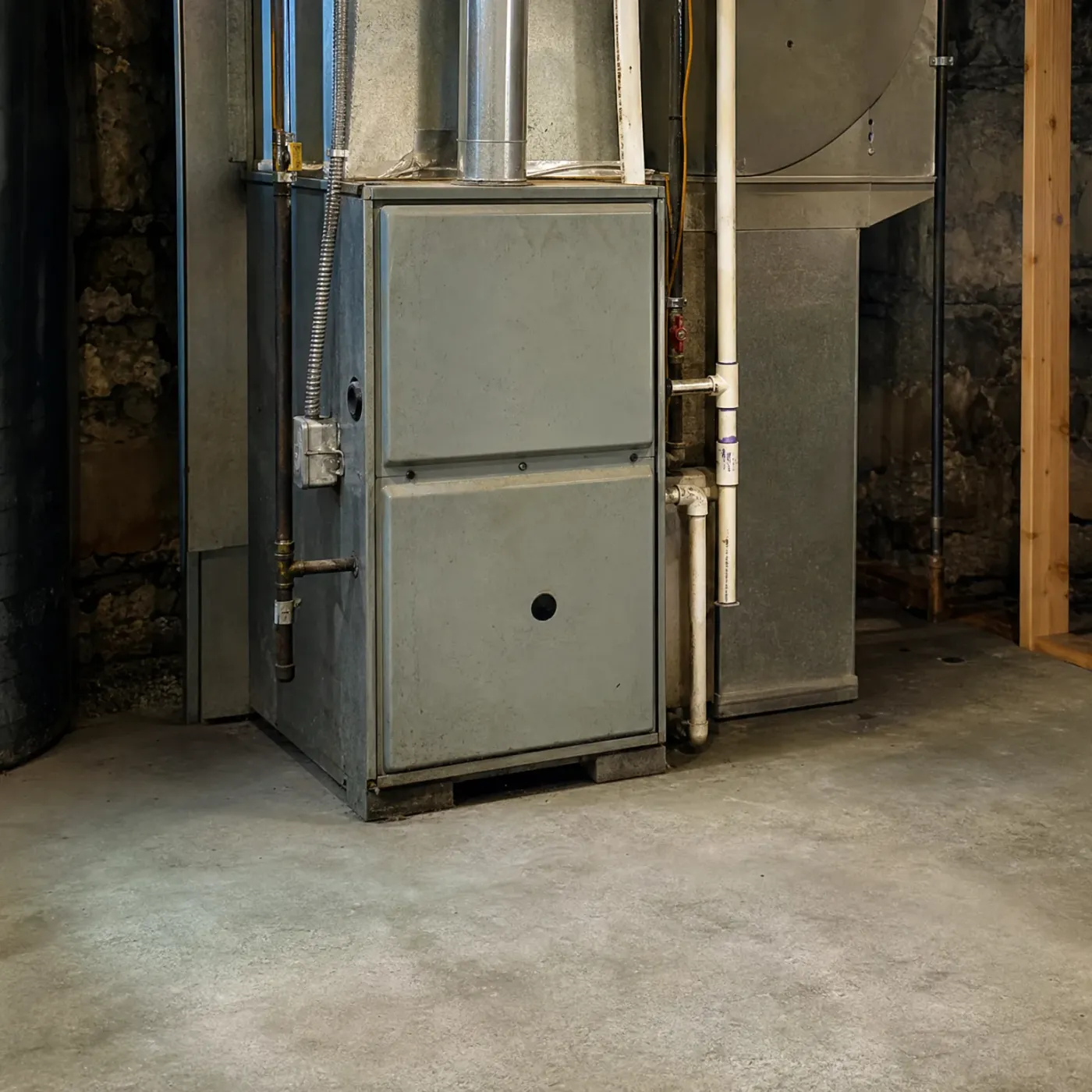
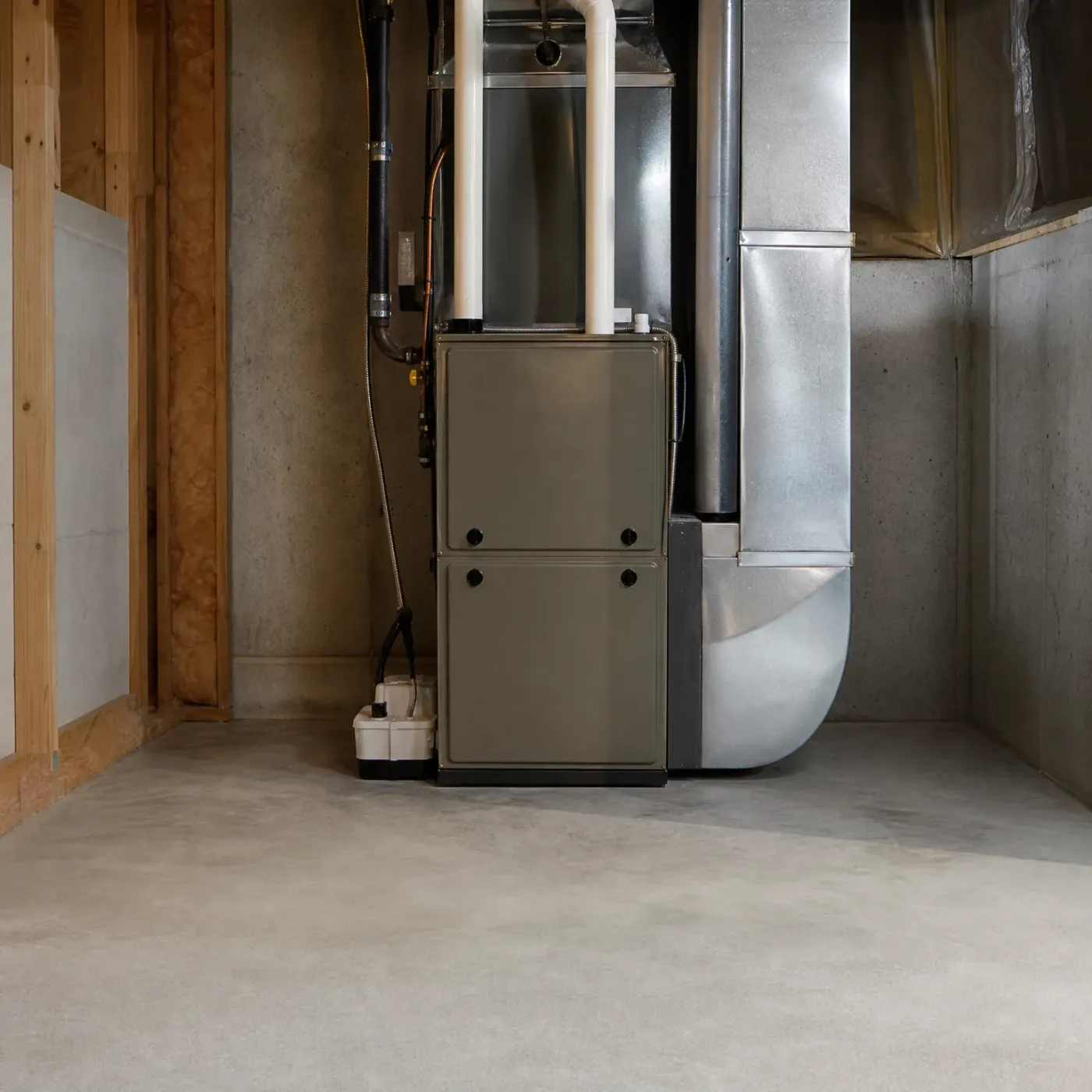
A furnace that leaks water and shuts itself off isn't something to leave until next week. In a Platte County winter, with overnight lows in the 20s through December, January and February, a furnace that won't stay running means a house that loses heat fast. The water tells you where to look, but clearing a clogged trap, resealing a cracked elbow or checking a flue for backdraft is work for someone who does it on furnaces like yours every winter, not a guess from the hardware store aisle. Send the request through and it goes to one local contractor, not a handful of companies competing for your callback, someone who already knows what tends to fail on a high-efficiency furnace after a few thousand cycles of this kind of cold. That's one less thing to track down at 2 in the morning with cold feet on the floor. Your furnace stays down until the drain or the flue gets fixed. Getting it looked at sooner means fewer nights wondering if the heat will hold until morning.
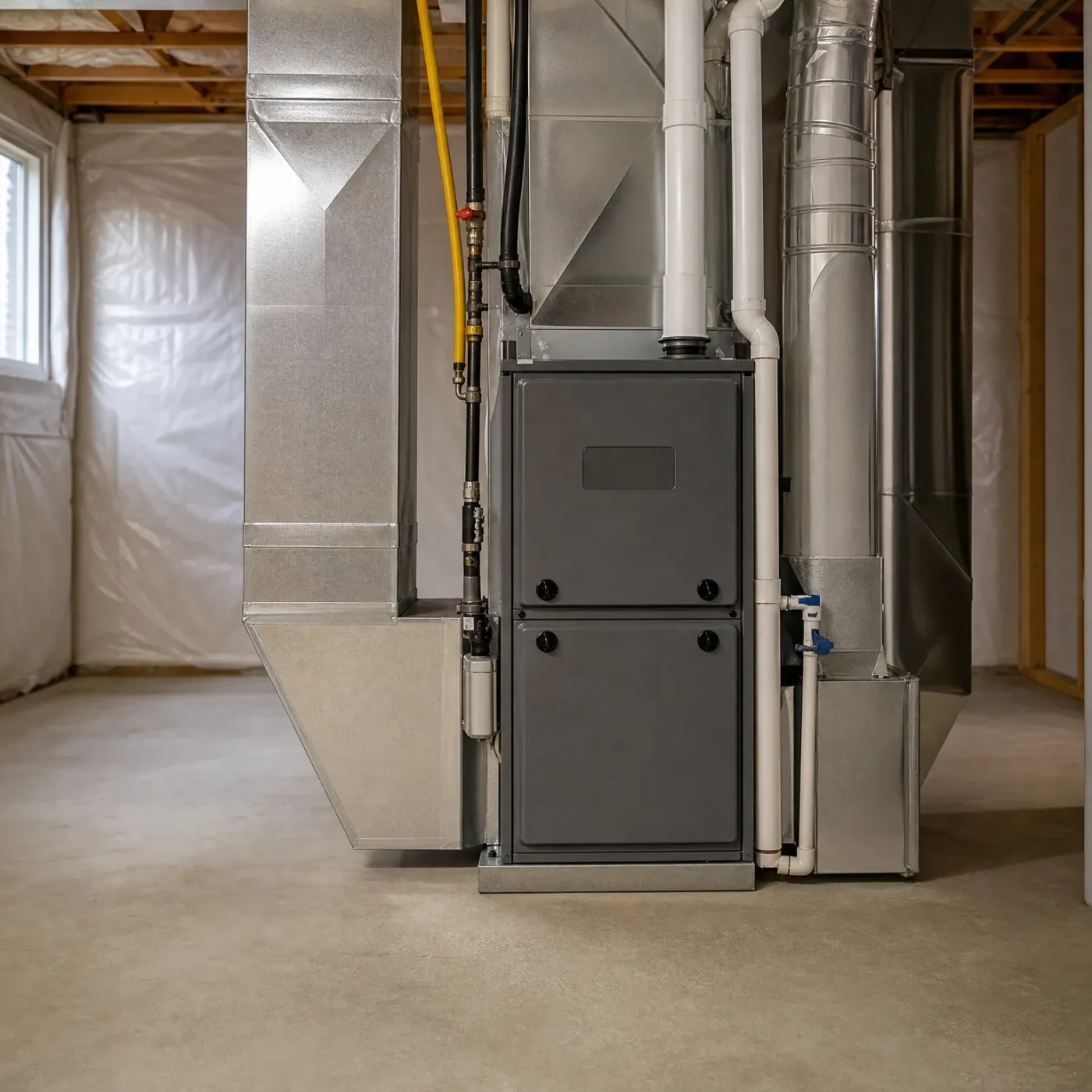
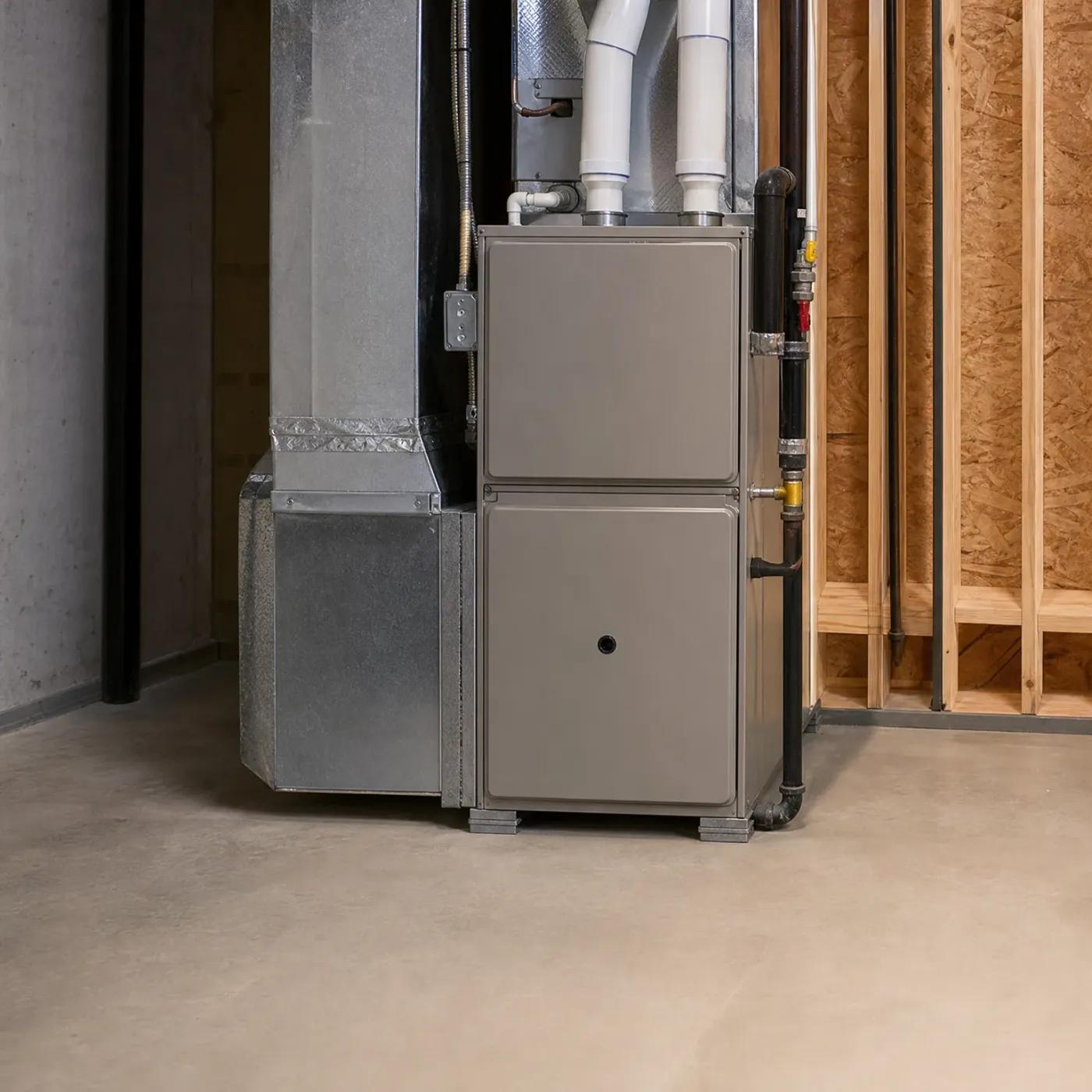
The white PVC pipe running from this furnace carries condensate out to a drain, a little at a time, every time the burner fires. No water ever touches that concrete floor.
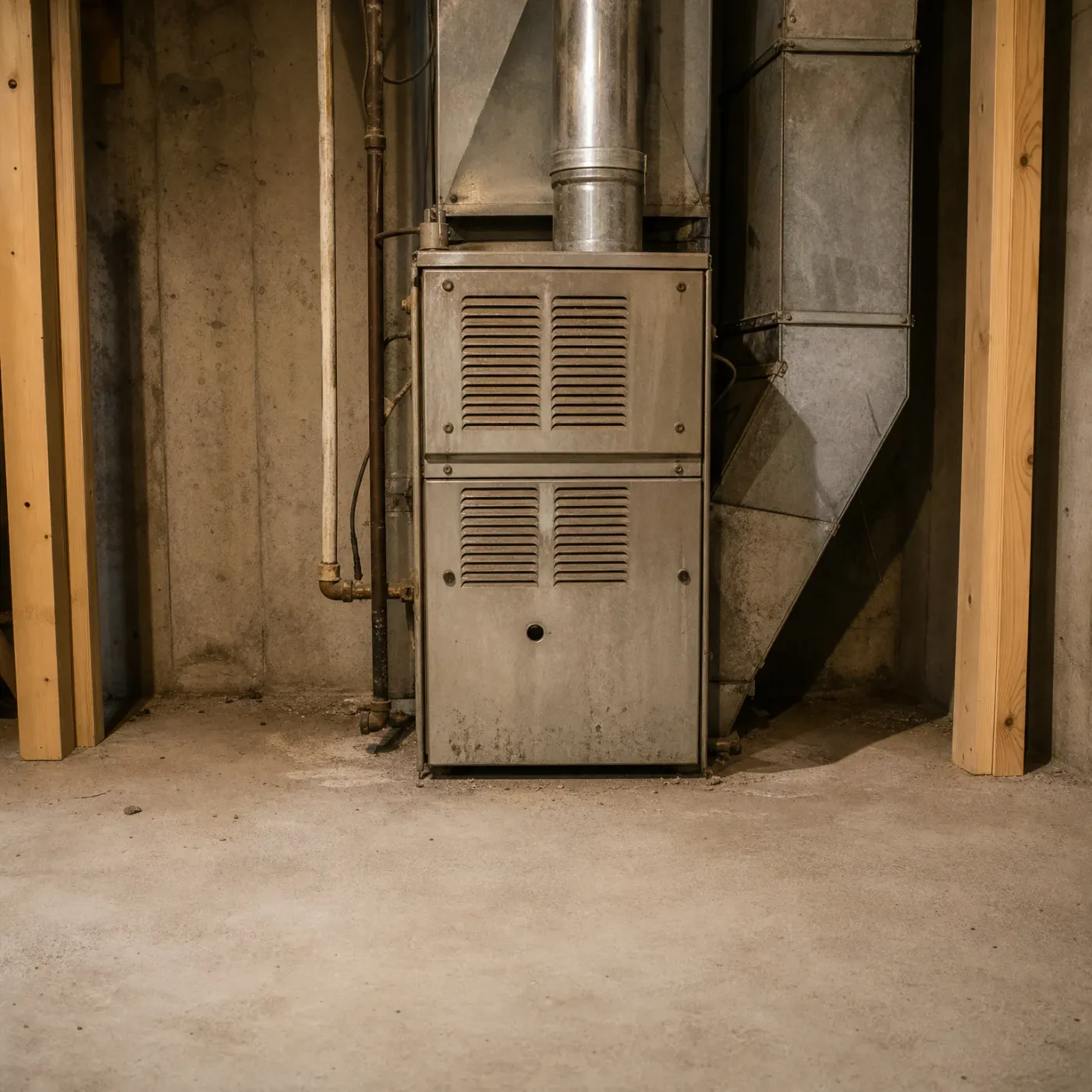
A furnace built before high-efficiency models has no condensate to drain, so it has no PVC pipe to clog. Water on the floor here points somewhere else, most often the flue or the cabinet itself.
You might have caught it already, a damp patch on the floor near the cabinet, or a musty smell when you walk past that part of the basement. Sometimes it's a drip you can actually hear, water hitting concrete every few seconds while the furnace runs. Sometimes the furnace has already shut itself off and the house is just quieter than it should be. Left alone, that water doesn't stay put. It can soak into the subfloor, rust the cabinet from the inside, or short out the control board the furnace needs to run at all, and none of that gets cheaper to fix the longer it sits.
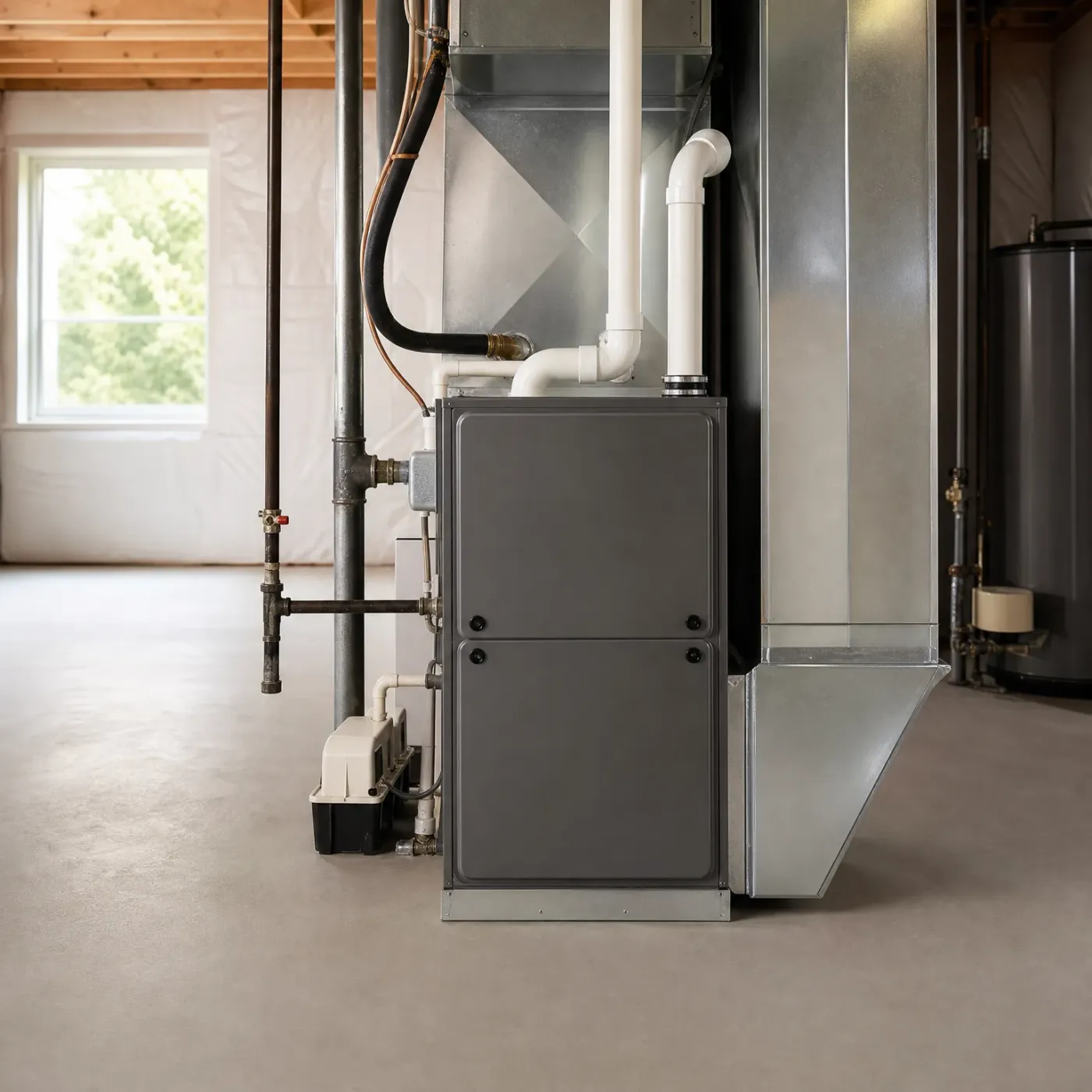
This is what it looks like when the drain system is doing its job. The PVC pipe carries condensate away from the cabinet to a drain, and the condensate pump moves it along if the line can't run there by gravity. The floor underneath stays dry no matter how long the furnace runs.
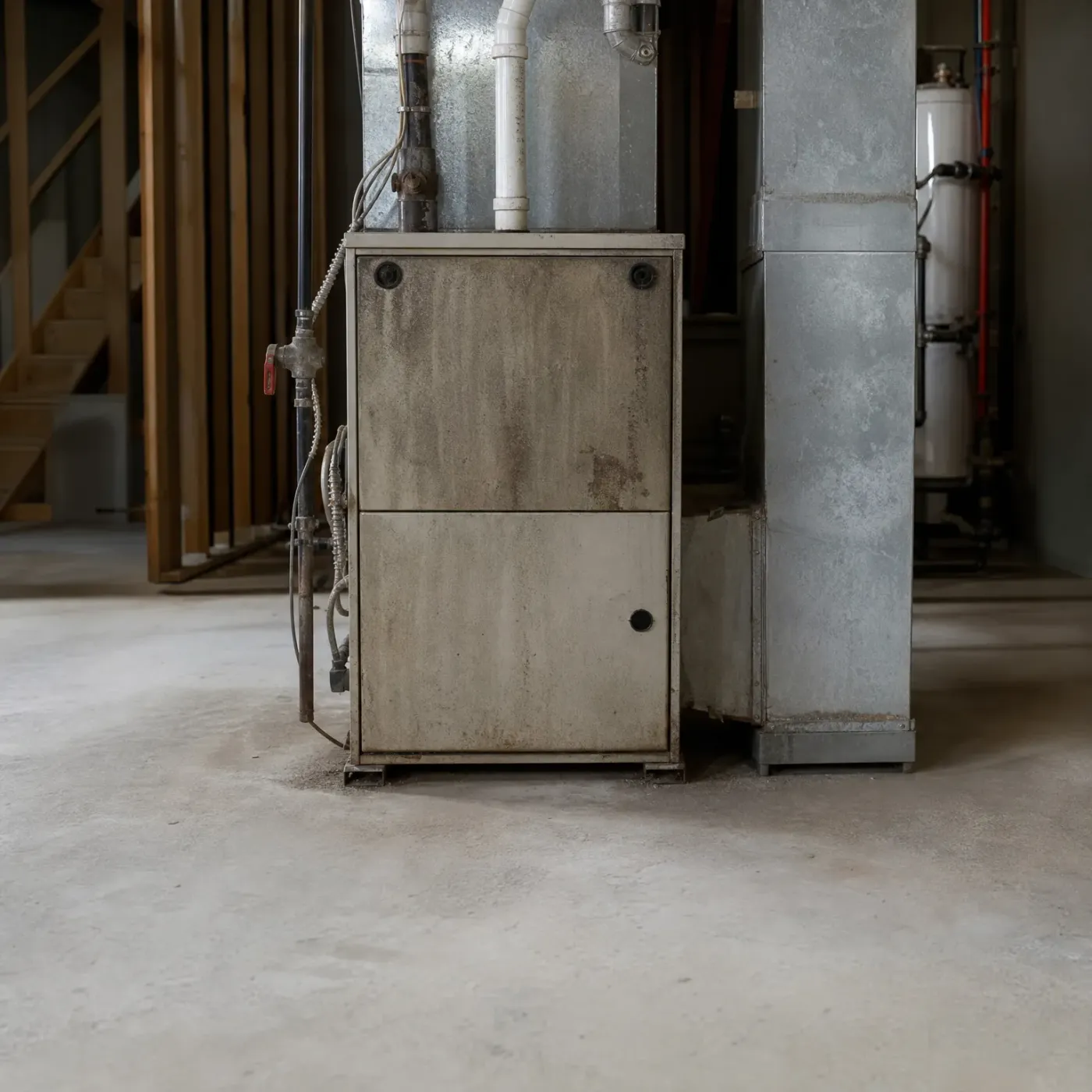
Dust built up like this often means the furnace has been running a long time, and the trap or line has had years to collect sludge. Once that passage narrows, water backs up and looks for another way out, down the cabinet and onto the concrete below.
At 22°F overnight, your furnace isn't cycling off much between December and February. It's running close to nonstop, so even a small drip at the drain trap turns into a steady puddle instead of a one-time spot on the floor.
NOAA nClimDiv 1991-2020
A puddle by the furnace almost always means the condensate drain or the flue, not a hole in the cabinet somewhere. If the furnace has shut itself off, that's a safety switch doing its job, not the furnace failing on you. Once the trap is clear or a fitting is resealed, the furnace goes back to draining the way it was built to, a little water at a time, every time it fires.
Platte County winters don't give a furnace much of a break. With overnight lows in the 20s through December, January and February, the burner runs long stretches most nights, and a drip that would be nothing in October turns into a steady puddle by morning. That's worth knowing before you decide how urgent this is.
A contractor who works on furnaces through a winter like this one has opened up this same trap and this same drain line more times than they can count, and usually knows within a few minutes which of the handful of usual problems it is. Sending a request through this page puts it in front of one local contractor, not a handful of companies calling you back at once. You get one call to manage, from someone who already knows what a Platte County winter does to a condensate line.
The water on your floor is information, not damage. It's telling you the drain system needs attention, and that's a fixable thing. What happens next is just getting someone in front of it who's seen it before.

No fee to send it, and nothing to sign.
A furnace that keeps shutting off from a clogged drain won't fix itself, and each restart is one more cold stretch in a house already losing heat on a December night. Getting someone local out to clear it now is faster than waiting to see if it clears on its own.