




Profile view of a bearded man wearing a dark baseball cap and a dark gray T-shirt against a plain off-white background.

Furnace leaking water in Florissant, MO

Step 1 of 3: Equipment

Water leaking from your furnace usually means condensation isn't draining the way it should, or a part is cracked and letting water through. If you have a high-efficiency furnace, it produces condensation as it runs, and that water travels through a drain line to leave the house. A clog, a crack in that line, or a failed condensate pump will send the water back out instead, often pooling near the unit. If your furnace is the older style without a condensate line, water showing up around it can mean a cracked heat exchanger or a problem with the humidifier attached to it, not the furnace drainage itself. Either way, the water is a sign something inside needs a look before it damages the furnace itself or the floor underneath it. Shutting the furnace off until it is checked keeps the damage from spreading while you figure out what repair it needs.

A woman in a cream sweater with her hair in a bun laughs while seated at a stone counter holding a glass of red wine, in a dimly lit interior with a sofa, houseplants and a large window at night.
A woman with long dark hair in a cream knit sweater laughs while looking off to the side, seated in front of a dimly lit kitchen with an island, stools, open shelving and a potted plant, with a glass of red wine in the foreground.
A smiling woman with long dark wavy hair in a light knit sweater sits at a marble counter with a glass of red wine, with a dimly lit living room and kitchen in the background.
A smiling woman with long wavy brown hair in a beige sweater sits at a white marble counter with a glass of red wine, with a living room, dining table and kitchen cabinets behind her.

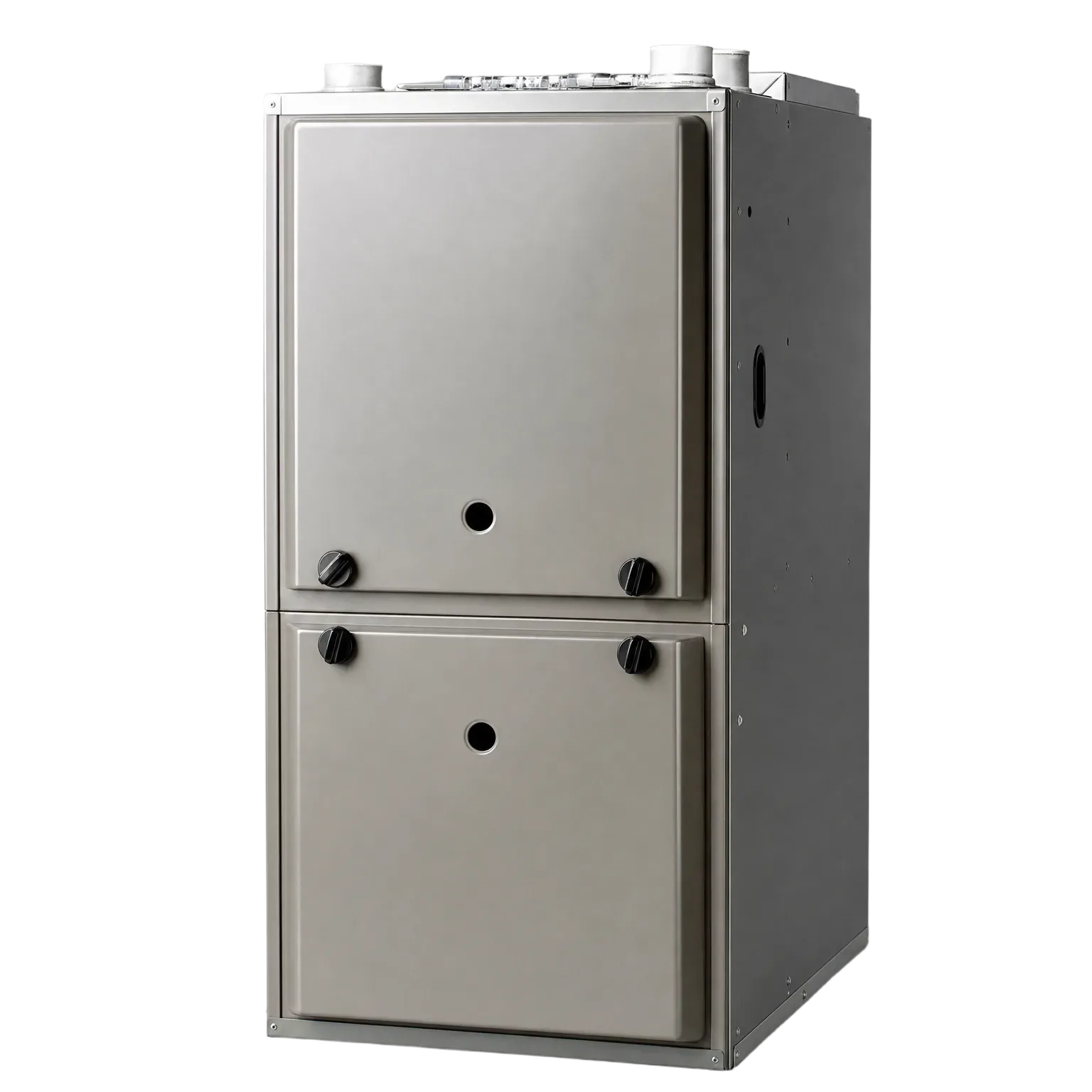
A high-efficiency furnace makes condensation on purpose. The exhaust is cool enough to run through PVC instead of metal, and cooling it that far is what pulls water out of it. That water forms mostly in the secondary heat exchanger, then runs downhill through a drain line to a trap before it leaves the house. If the trap or the line past it clogs with sludge, the water has nowhere to go but back up and out through the cabinet. When the furnace sits below the drain it needs, a condensate pump moves the water instead of gravity, and a stuck float switch or a dead motor on that pump means water just collects. Some systems route the air conditioner's coil through the same drain line, so water at the furnace in warm weather can be coming from the coil, not the furnace itself. An older standard furnace has none of this. If yours is one of those and it's leaking, look at a cracked heat exchanger or a blocked flue instead.

Where the water actually comes from

  • A high-efficiency furnace vents through PVC pipe because the exhaust is cool enough not to melt plastic, and that cooled exhaust is what condenses into water in the first place.
  • The condensate runs downhill through a drain line to a trap, and if that trap or the line past it clogs with sludge, the water backs up and finds its way out through the cabinet.
  • A condensate pump sits below the furnace when gravity alone can't carry the water to a drain, and if the pump's float switch sticks or the motor fails, water collects instead of leaving.
  • An older, standard furnace has no condensate line at all, so water coming from one of those usually means a cracked heat exchanger or a clogged flue letting flue gas moisture pool inside.
  • The secondary heat exchanger in a high-efficiency unit pulls the last bit of heat out of the exhaust and is where most of the condensate forms before it ever reaches the drain.
  • Some furnaces share a drain line with the air conditioner's evaporator coil, so water showing up at the furnace during a warm stretch can actually be coming from that coil upstream.
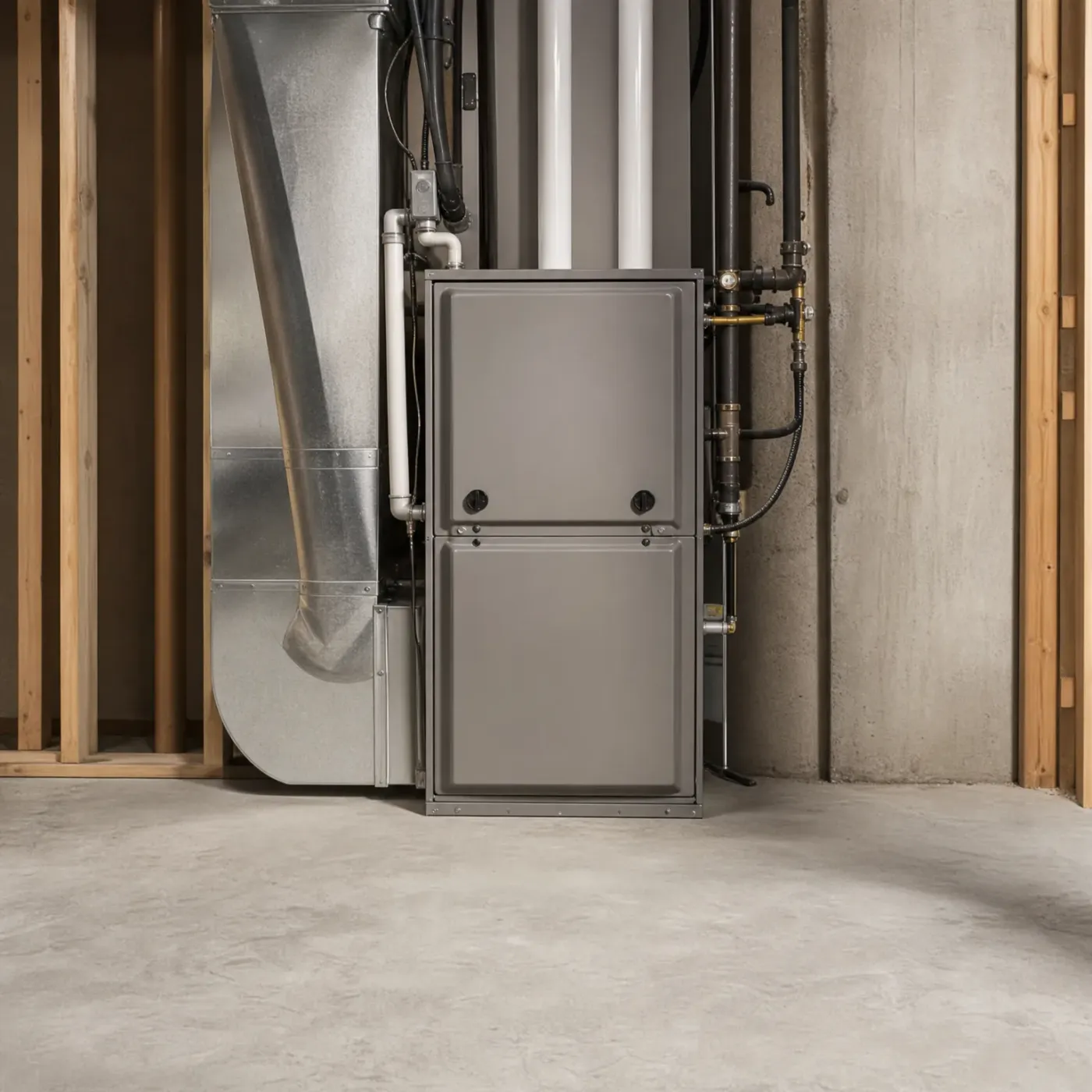
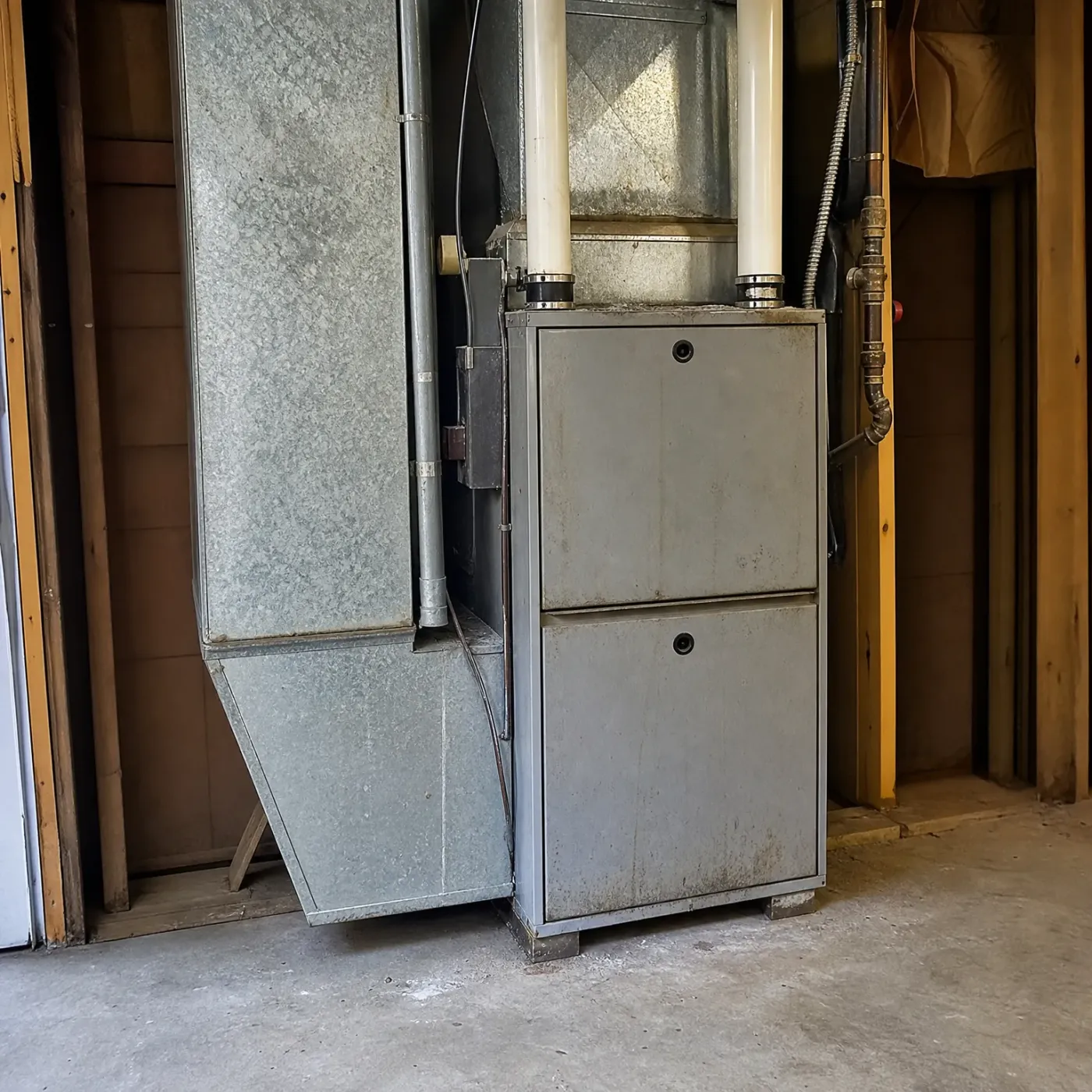
A gray furnace cabinet in a basement with sheet-metal ductwork, white PVC vent pipes, and black gas piping against a concrete wall and wood-framed partition on a bare concrete floor.
A furnace venting through metal flue pipe only burns gas for heat, so no condensate forms and the drain line stays dry.
A gray metal furnace with two white PVC vent pipes stands on a concrete floor beside galvanized sheet-metal ductwork in a basement or utility space with wood framing.
Rust on the cabinet near the PVC pipes points to water sitting where it shouldn't, often from a clogged drain or a cracked trap.
  1. The furnace burns gas and cools the exhaust down through a secondary heat exchanger.

  2. Cooled exhaust turns to water vapor and condenses inside the heat exchanger.

  3. Condensate drips down into the drain trap below the furnace.

  4. Water flows from the trap through the drain line toward a floor drain or pump.

Clog or Broken Part

Clogged drain or trap

  • Algae and sediment build up inside the condensate line over time and narrow the path water has to travel.
  • A clogged line backs water up into the trap, then into the furnace cabinet, usually slow and steady rather than all at once.
  • Clearing the line and flushing the trap often stops the leak without opening up the heat exchanger.
  • If the clog sits further down the line, water may show up near the floor drain instead of at the furnace itself.
  • A furnace that's tilted or settled slightly can leave the drain line without enough slope to drain on its own.

Cracked part or failed pump

  • A cracked heat exchanger lets water (and sometimes exhaust) escape where it shouldn't, and it isn't something to patch.
  • A condensate pump that's failed or jammed stops moving water out of the furnace entirely, so it collects and overflows.
  • Rust on the cabinet or around the PVC fittings often means water has been sitting there for a while, not just today.
  • A cracked trap lets condensate leak out before it ever reaches the drain line, pooling right under the furnace.
  • These failures usually call for a part replacement, and a contractor needs to see the furnace running to find which one.
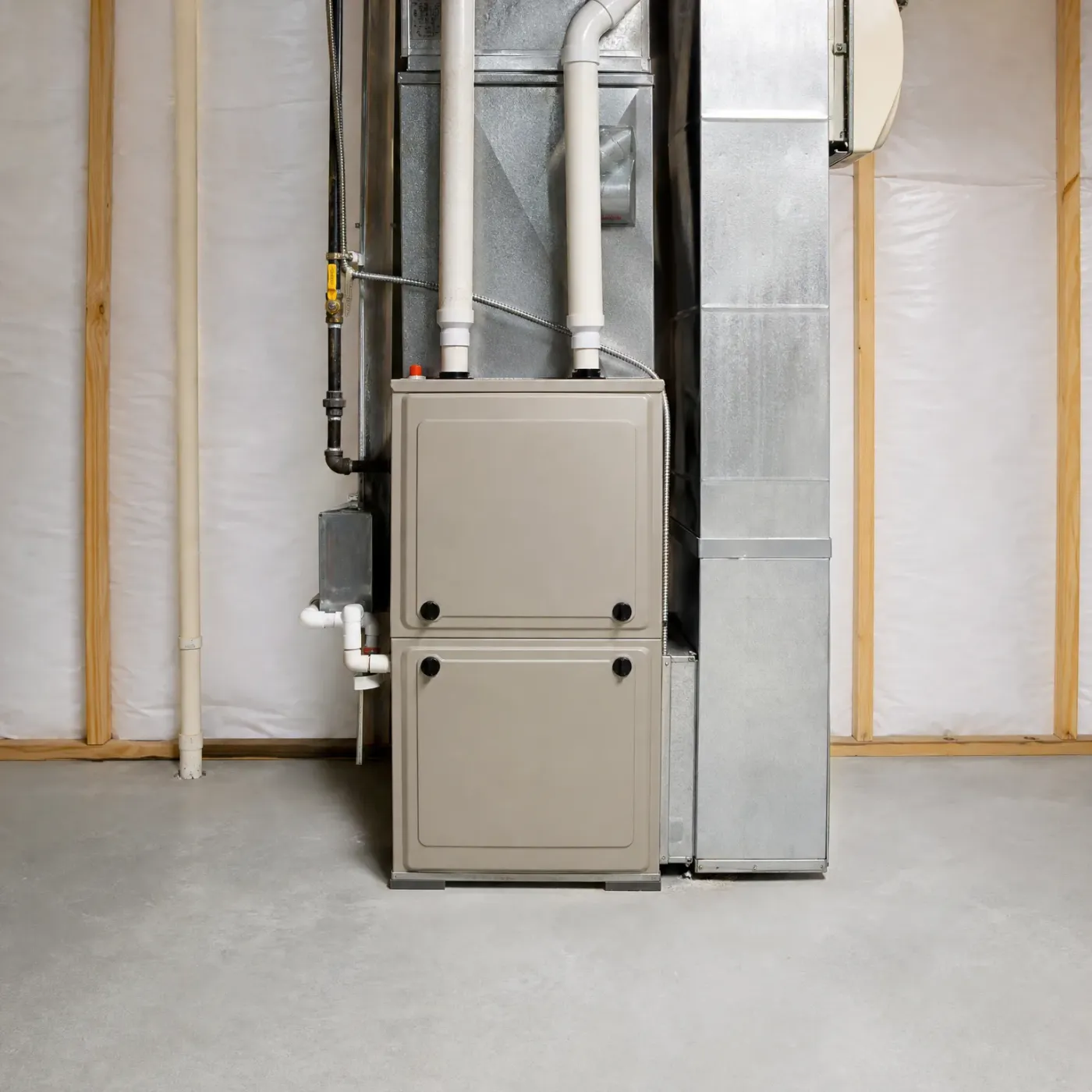
A beige high-efficiency furnace stands on a concrete basement floor beside sheet-metal ductwork, with white PVC vent pipes and a gas line running along an insulated wood-framed wall.

Running normally

This is what a high-efficiency furnace looks like when the drain system is doing its job. The PVC pipes carry exhaust out, and condensate moves down through its own line without ever touching the cabinet. No rust, no standing water, no puddle on the floor.
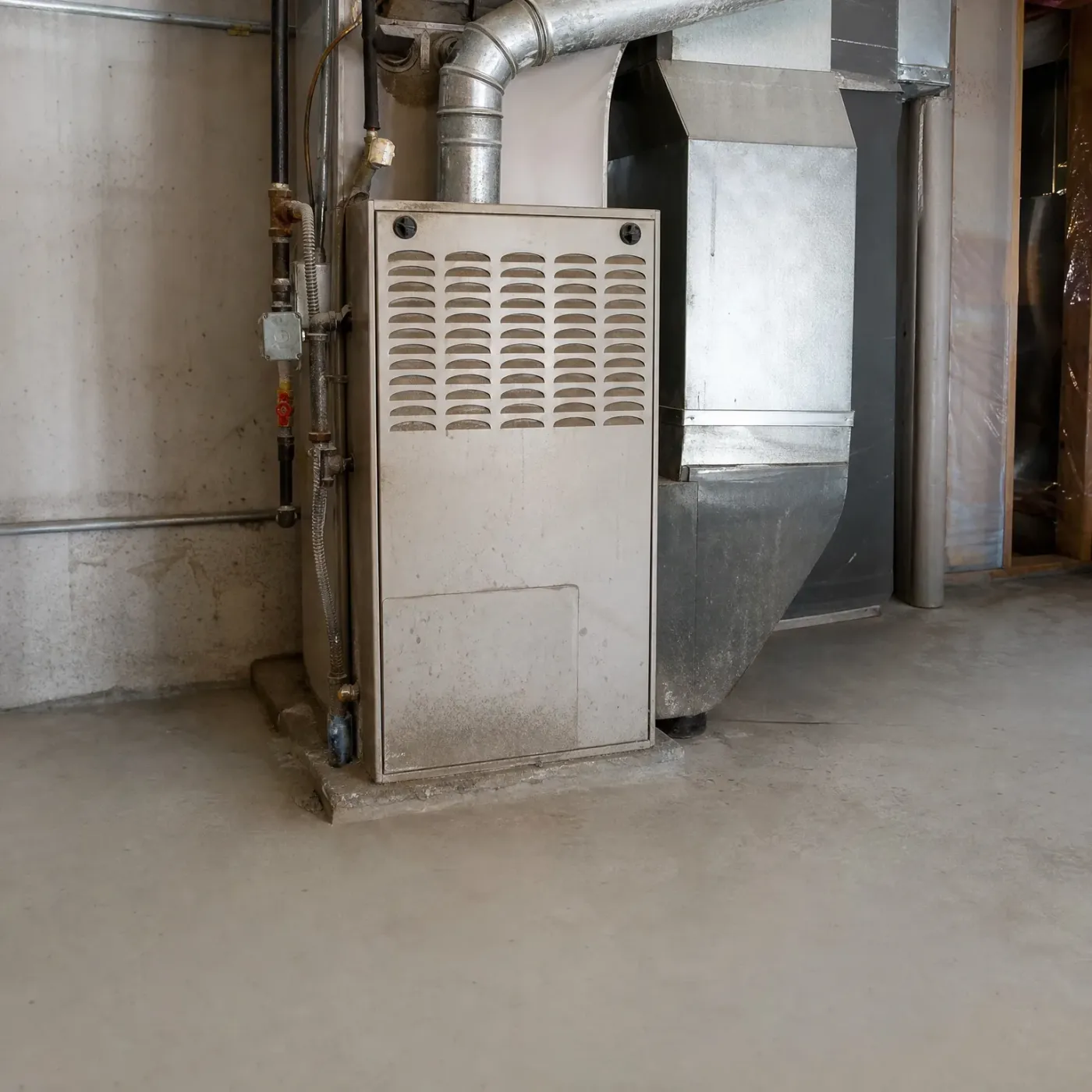
An older metal furnace with a louvered front panel stands against a concrete basement wall, connected to sheet-metal ductwork and a flue pipe, with copper and steel pipes running alongside.

Water getting through

Dust and age aside, a furnace like this one can still leak if the drain line or trap behind it is blocked. Water backs up instead of draining out, and it finds its way into the cabinet. Left alone, it sits against metal that was never meant to stay wet.

What are you noticing around your furnace right now

Look for water pooled on the floor near the cabinet, or a damp patch on the carpet or concrete that keeps coming back after you dry it up. You might hear a gurgle from the drain line when the furnace cycles, or notice the furnace shutting off on its own before the house reaches temperature. Check the cabinet itself for rust starting along the bottom edge or around the PVC pipe fittings. A musty smell near the furnace closet usually means water has been sitting there a while. Left alone, standing water rusts the cabinet through and can damage the floor or whatever's stored nearby, and a furnace that keeps shutting itself off won't keep up once Missouri cold settles in for good.

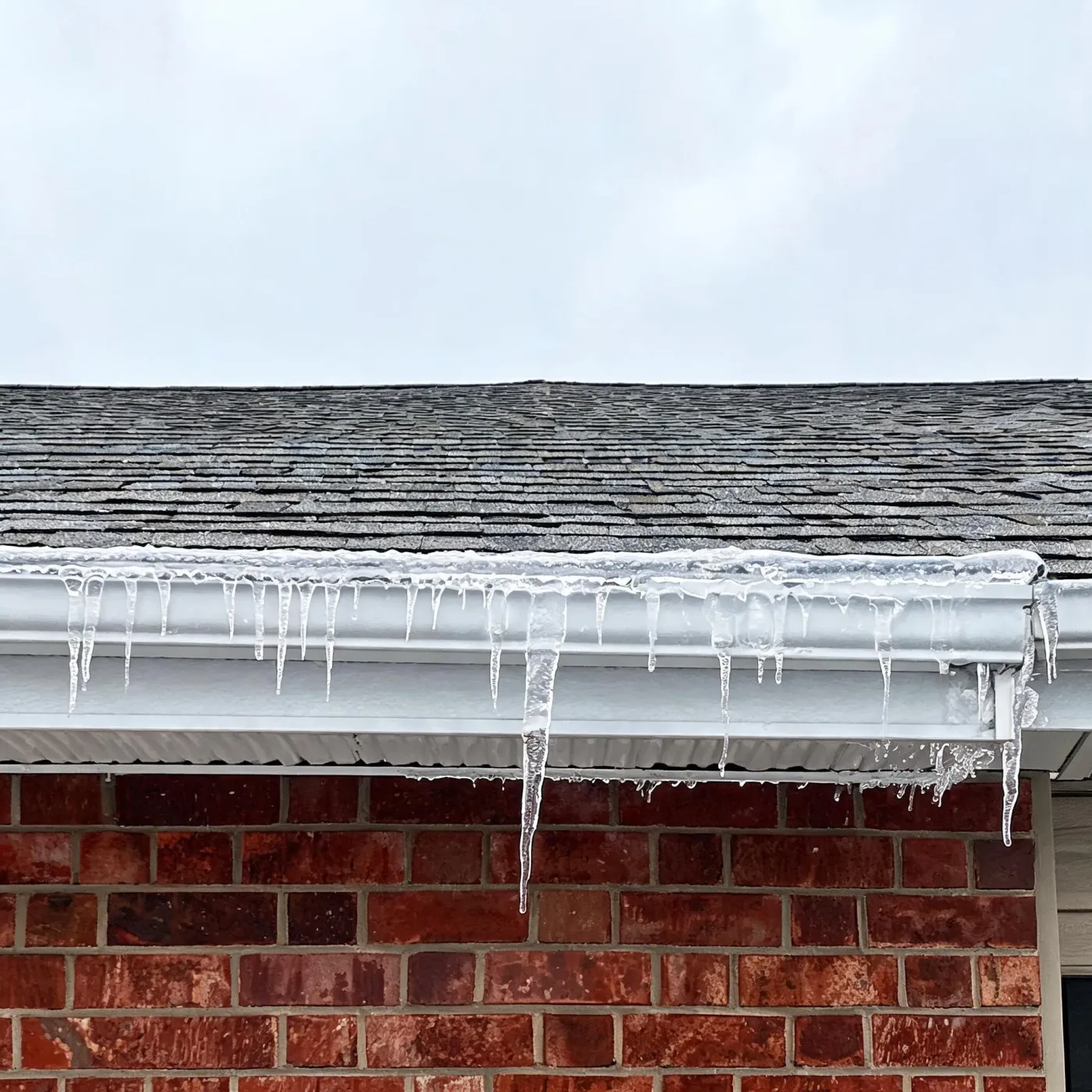
Icicles hanging from a white gutter and soffit below an asphalt-shingle roof on a red brick house, against an overcast sky.

Winter nights around Florissant average 26°F across December, January and February, according to St. Louis County weather records. That kind of cold keeps a high-efficiency furnace running long stretches at a time, which means more exhaust cooling into condensate and more water moving through that drain line night after night. A trap or line that's already partly clogged has less chance to clear itself between cycles, so a slow drip can turn into a steady puddle by morning. If you're seeing water by the cabinet on the coldest nights, that's worth checking rather than waiting out. Finding someone to look at it doesn't have to mean calling around or repeating the same description to three different companies. A contractor who knows these furnaces can take it from here.

NOAA nClimDiv 1991-2020

Matched to your furnace job

Answer a few questions instead of calling shop after shop.

Sending the form costs nothing.

What the condensate pump does

Furnaces installed below the drain line's natural slope use a condensate pump to push water out instead of letting gravity carry it. The pump sits in a small reservoir near the furnace and switches on once water inside reaches a certain level. A float switch rides on top of that water, and its job is to shut the furnace off if the pump fails or the water has nowhere to go. When that switch trips, you will not see a flood. You will see a furnace that will not run, with water sitting in the reservoir that the pump should have cleared.

Why a clean trap still fails

A condensate trap can look clear and still hold the furnace back if it was never filled with water after a repair or a filter change. The trap works by holding a small amount of water that blocks furnace exhaust from being pulled backward through the drain line. An empty trap lets that exhaust escape where the drain line connects, and it carries moisture with it. You might see dampness right at that joint instead of a pool under the cabinet. It looks like a leak, and the fix is the same first step either way: find where the water is actually getting out.

Why does this happen so often in Florissant winters

  • Winter nights average 26°F

    Winter nights average 26°F here, according to St. Louis County weather records. At that temperature your furnace cycles on and off for hours at a stretch, and every cycle sends more exhaust through the drain line.

  • Heat runs October through April

    Heat runs October through April in St. Louis County. That's seven months of condensate moving through the same trap and line, seven months for algae or a crack to turn into a puddle on the floor.

  • 74.6% of homes heat with gas

    74.6% of homes in St. Louis County heat with gas, per Census data. Most of those are high-efficiency furnaces with a condensate line, which means this leak is common, not a sign your furnace is unusual.

NOAA nClimDiv 1991-2020 · ACS 2020-2024

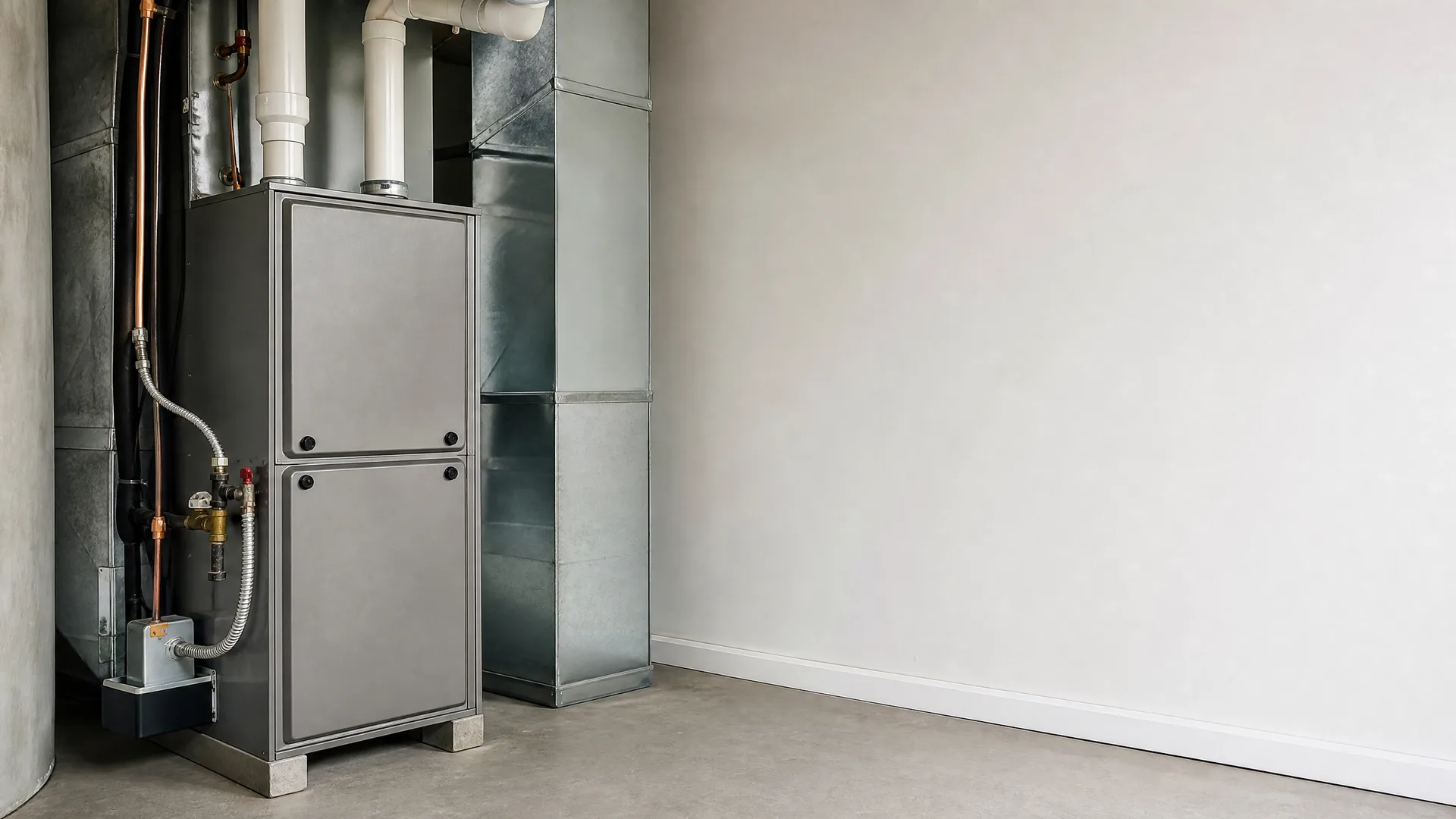
A gray high-efficiency furnace with white PVC vent pipes, copper and flexible piping, and galvanized sheet-metal ductwork stands against a wall in a room with a bare concrete floor and plain light-colored wall.

Catching it early

A furnace caught leaking in its first day or two usually means a small puddle under the cabinet and nothing more. The drain line or trap gets cleared, maybe the pump gets checked, and the furnace goes back to running dry. The cabinet metal hasn't had time to rust through, and nothing downstream of the furnace has gotten wet enough to cause its own problems. This is the easier case to deal with, and the one that costs you the least in time spent mopping up water night after night.

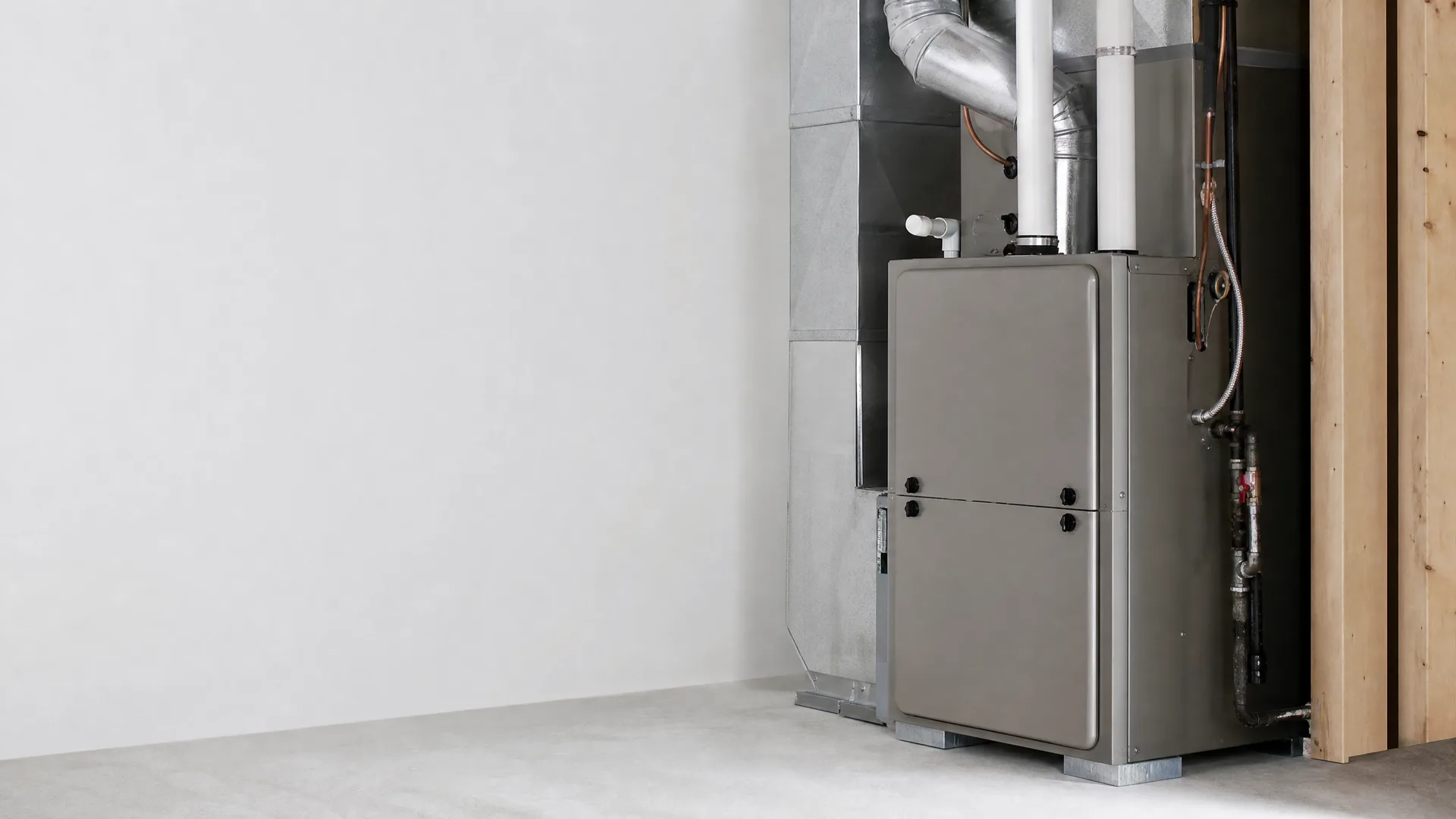
A gray residential furnace with attached sheet-metal ductwork, white PVC vent pipes and copper lines stands against a plain white wall on a concrete floor, beside exposed wooden framing.

Letting it run on

A furnace left leaking for weeks is a different situation. Water that keeps finding the same spot on the floor works its way into subfloor or carpet padding, and it doesn't dry out between furnace cycles the way a fresh spill would. Rust spreads across the cabinet bottom and can reach the burner compartment or the circuit board underneath it. By the time you call someone, the job may no longer be just the drain line. It can mean replacing parts the water damaged on its way to where you found it.

A woman stands in the open black front door of a white-sided house with a dark shingled roof while a man in a navy jacket approaches along the walkway, with lantern wall lights, a potted shrub, and flowering garden beds nearby.

Water under the furnace has a reason, and it's fixable

A leaking furnace almost always comes down to the same thing: condensate that isn't draining the way it's supposed to, or a cracked part letting it escape. A clogged trap, a tired pump, a split line. Nothing about it is mysterious once someone's looked at it, and nothing about it fixes itself while your furnace keeps cycling through cold nights.

You don't have to figure out which of these it is before you get help. Skip the part where you search for who works on furnaces around Florissant, call a few, explain the puddle under your cabinet to each one, then sit with quotes trying to compare them. Answer a few questions about what you're seeing and a contractor who handles this in your area will reach out to you directly, ready to look at your specific furnace and tell you what's actually going on with it.

A speckled beige ceramic vase holding thin dried branches sits on a round wooden table near a window with sheer curtains, with a dark upholstered chair and draped blanket blurred in the background.
A bearded man in a dark navy sweater over a collared shirt smiles and looks off to the side while seated at a dinner table with a glass of red wine, a lit candle, and a plate of food in the foreground of a dimly lit room.
A woman in a dark gray sweater reclines on a couch with her eyes closed and a knit blanket over her lap, an open book resting face-down in front of her, with a lit table lamp and shelving blurred in the background.

A furnace pro near you

A furnace leaking water almost always traces back to a clogged drain line, a bad trap, or a pump that stopped switching on, and a contractor who works on furnaces in Florissant winters can find which one it is. That saves you from pulling apart the cabinet yourself, calling around for someone who answers in cold weather, and explaining the same puddle story to three different companies. Submit your information and a contractor who serves Florissant will reach out to look at your furnace and the water around it.

Answer a few questions

Describe your furnace job once, to one pro.

You're not committing to anything by asking.