Tell us about the job
Takes about a minute. No obligation.
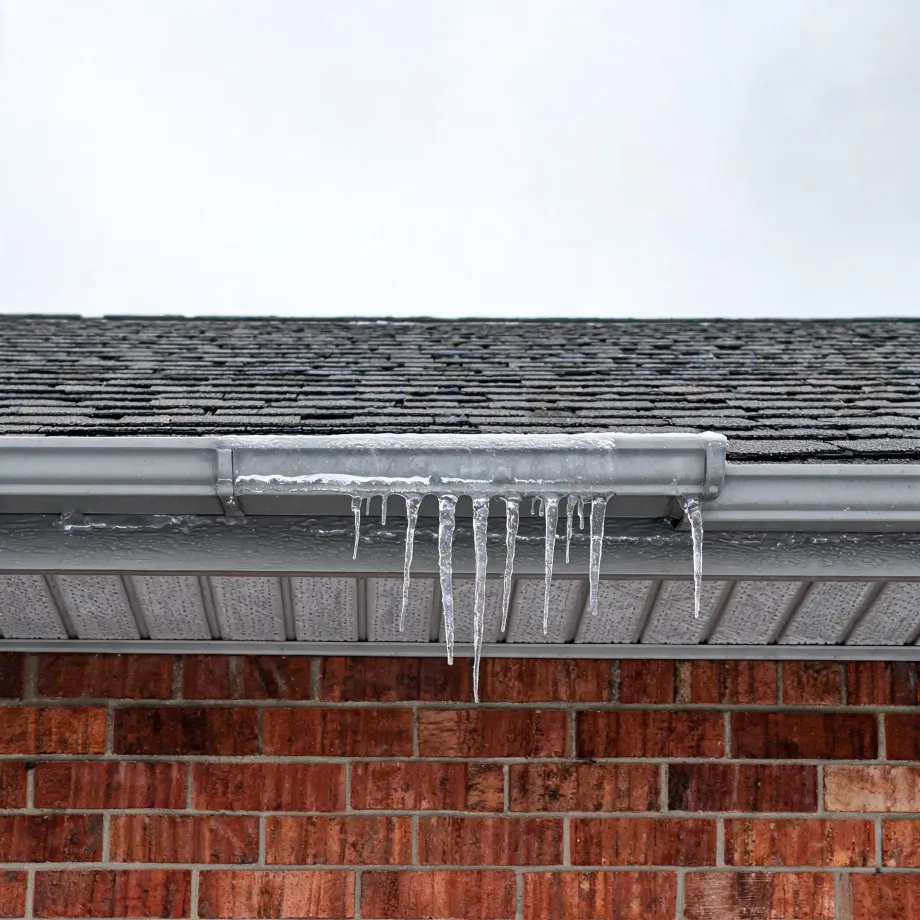
Sizing a furnace for this house is where a contractor has to get it right before anything else. Homes in Johnson County, MO run heat about seven months a year, from October through April. A furnace that is undersized for the load will short-cycle, and short-cycling through a heating season this long puts the heat exchanger and ignition system through more stress than the manufacturer's wear estimates assume. The contractor's load calculation has to account for the actual square footage, insulation, and window area of this house, because a number pulled from a neighboring job or a rule of thumb will produce the same error in the same direction every winter.
Ductwork sized for an older, lower-output furnace is what a contractor runs into in a significant share of Johnson County homes. Half the homes in Johnson County, Missouri were built in 1990 or earlier (2020-2024 ACS 5-year). That generation of residential duct systems was laid out around equipment with different airflow demands than what gets installed today, and a new furnace that pushes harder against undersized returns or tight trunk lines will underperform no matter how well the unit itself is matched to the house. The electrical side is usually simpler. The ductwork is where the quote can change.
What Gets Installed With a New Furnace
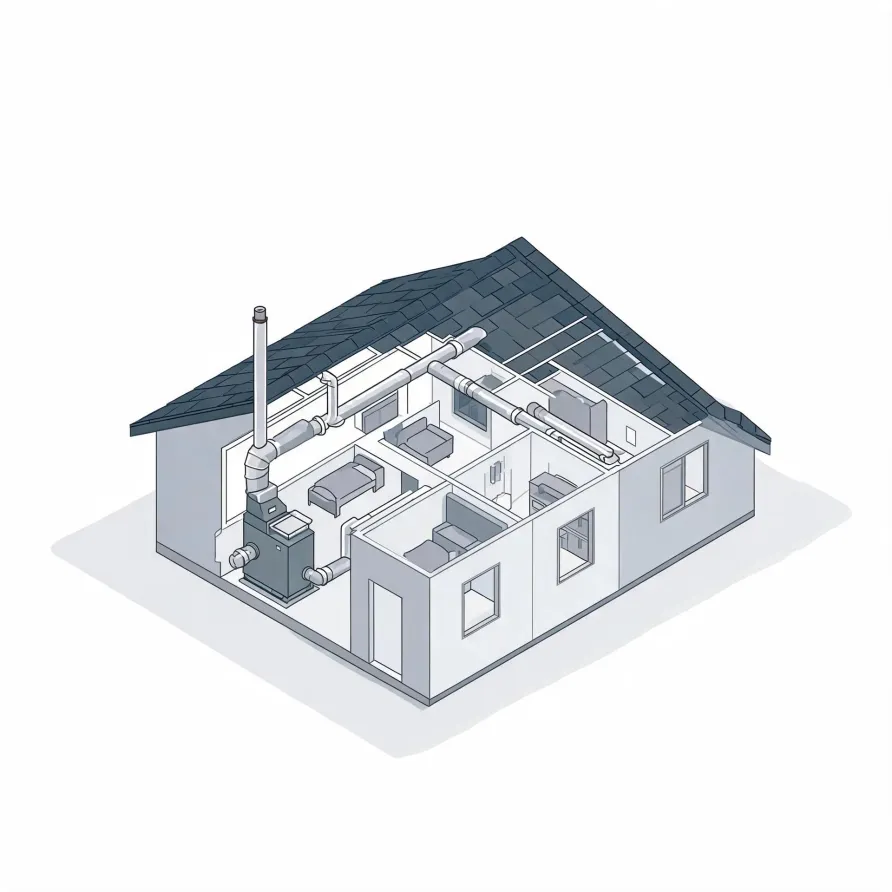
The furnace itself sits in a utility room, basement, or closet and is the unit a homeowner sees first. Inside the cabinet, a heat exchanger and a blower work together: the exchanger warms the air, and the blower pushes that air out into the house. A gas valve and a burner assembly mount inside as well, feeding the heat exchanger.
The flue pipe runs from the furnace cabinet up and out of the house, carrying combustion gases away. Alongside the furnace, a thermostat mounts on an interior wall and serves as the control point for the whole system. A filter housing sits at the air-return opening, and a condensate drain line runs from high-efficiency units to a floor drain.
The drawing shows a general layout of these components, and a licensed contractor determines what applies to the configuration of your specific house.
Get matched in Johnson CountyJohnson County, Missouri, by the numbers
148 severe weather events were recorded in Johnson County, Missouri between 2015 and 2024.
NOAA National Centers for Environmental Information, Storm Events Database, bulk CSV export, events 2015-01-01 through 2024-12-31.Half the homes in Johnson County, Missouri were built in 1990 or earlier (2020-2024 ACS 5-year).
U.S. Census Bureau, 2020-2024 American Community Survey 5-Year EstimatesJohnson County, Missouri holds 22,731 housing units (2020-2024 ACS 5-year).
U.S. Census Bureau, 2020-2024 American Community Survey 5-Year EstimatesOwners occupy 63.5% of the occupied homes in Johnson County, Missouri (2020-2024 ACS 5-year).
U.S. Census Bureau, 2020-2024 American Community Survey 5-Year EstimatesFurnace Installation Rules on the Books for Johnson County, Missouri4 codes, standards, and statutes
What HVAC Installation Looks Like in Johnson County
Non-weatherized gas furnaces manufactured on or after November 19, 2015 must reach 80.0 percent AFUE.
Non-weatherized oil-fired furnaces manufactured on or after November 19, 2015 must reach 83.0 percent AFUE.
Mobile home gas furnaces manufactured on or after November 19, 2015 must reach 80.0 percent AFUE.
Non-weatherized gas furnaces manufactured on or after December 18, 2028 must reach 95.0 percent AFUE, up from the 80.0 percent minimum that applies to units manufactured before that date.
Severe Weather Events in Johnson County
Weather shapes how hard a furnace has to work and how often. What happens in this county over the years is a real input to sizing, equipment selection, and installation decisions.
148 severe weather events, 2015–2024. Source: NOAA National Centers for Environmental Information, Storm Events Database.