Tell us about the job
Takes about a minute. No obligation.
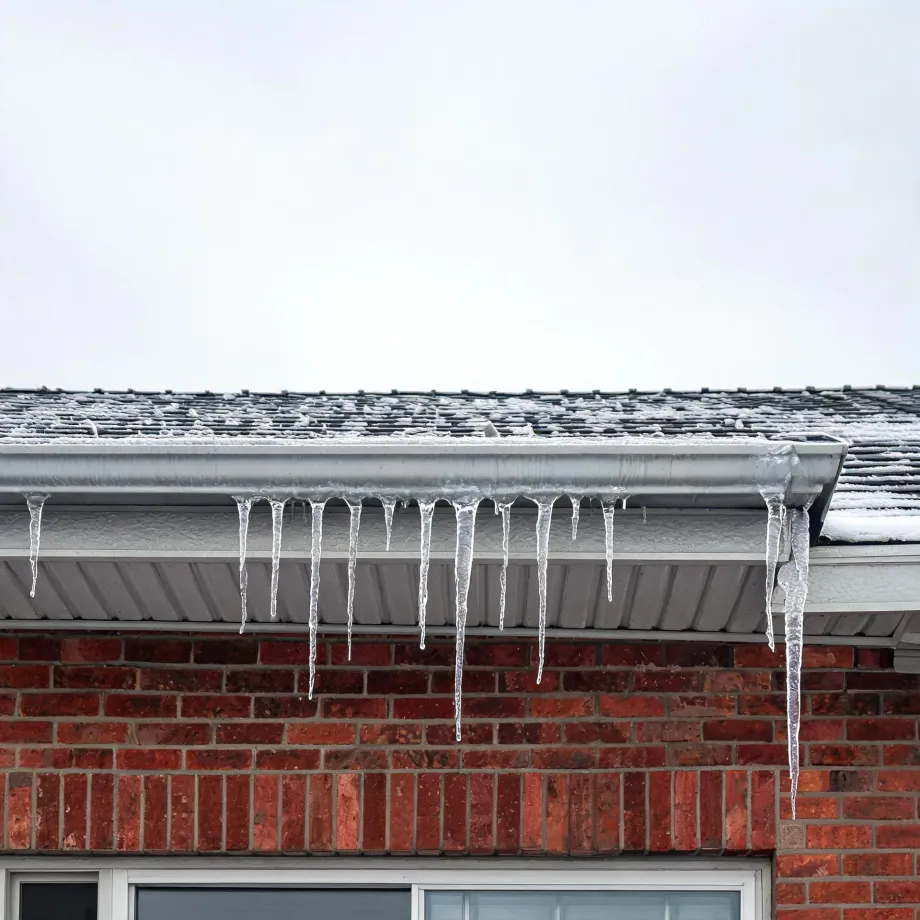
Sizing a furnace for this area starts with understanding exactly how much the equipment is asked to do. Homes in Oregon County, MO run heat about seven months a year, from October through April. A burner and heat exchanger cycling through that kind of sustained demand accumulate wear on the parts that fire and reset every time the thermostat calls for heat. An undersized unit runs longer per cycle, and an install with duct losses compounds that. A contractor quoting a replacement here runs a load calculation before settling on equipment, because a furnace that is even slightly short on capacity earns its failures the hard way.
Ductwork laid out for an older heating system carries assumptions about airflow and routing that a new furnace does not automatically inherit. Half the homes in Oregon County, Missouri were built in 1978 or earlier (2020-2024 ACS 5-year). A contractor pricing a furnace installation here has to open registers, check trunk dimensions, and confirm the existing runs can move the air a modern unit needs before the equipment itself gets specified. If the ductwork falls short, the job expands before the furnace is even ordered. The electrical service gets the same look, since a new unit's draw has to match what the panel can deliver.
What Gets Installed With a New Furnace
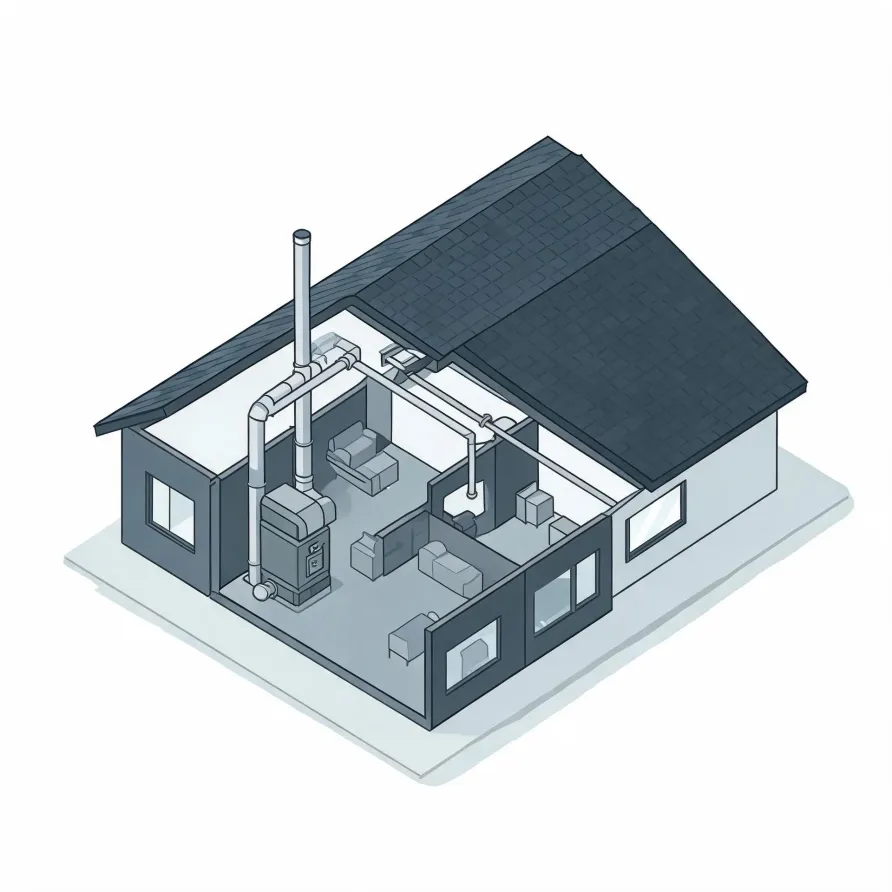
The furnace itself sits in a utility space, basement, or closet at the center of the system. Inside the cabinet, a burner assembly produces heat, and a heat exchanger transfers that heat to the air moving through. A blower motor then pushes the conditioned air out into the supply side of the house.
The flue pipe runs from the furnace to an exterior wall or up through the roof, carrying combustion gases out of the living space. A thermostat mounts on an interior wall and serves as the control point, telling the furnace when to fire and when to stop.
The drawing shows a representative layout, and a licensed contractor determines what applies to the specifics of your home.
Get matched in Oregon CountyOregon County, Missouri, by the numbers
65 severe weather events were recorded in Oregon County, Missouri between 2015 and 2024.
NOAA National Centers for Environmental Information, Storm Events Database, bulk CSV export, events 2015-01-01 through 2024-12-31.Half the homes in Oregon County, Missouri were built in 1978 or earlier (2020-2024 ACS 5-year).
U.S. Census Bureau, 2020-2024 American Community Survey 5-Year EstimatesOregon County, Missouri holds 4,321 housing units (2020-2024 ACS 5-year).
U.S. Census Bureau, 2020-2024 American Community Survey 5-Year EstimatesOwners occupy 74.9% of the occupied homes in Oregon County, Missouri (2020-2024 ACS 5-year).
U.S. Census Bureau, 2020-2024 American Community Survey 5-Year EstimatesFurnace Installation Rules on the Books for Oregon County, Missouri4 codes, standards & laws
What the installation actually looks like
Non-weatherized gas furnaces manufactured on or after November 19, 2015 must reach 80.0 percent AFUE.
Non-weatherized oil-fired furnaces manufactured on or after November 19, 2015 must reach 83.0 percent AFUE.
Mobile home gas furnaces manufactured on or after November 19, 2015 must reach 80.0 percent AFUE.
Non-weatherized gas furnaces manufactured on or after December 18, 2028 must reach 95.0 percent AFUE, up from the 80.0 percent minimum that applies to units manufactured before that date.
Severe Weather Events in Oregon County
Weather in Oregon County puts real demands on heating equipment, from hard winters that run furnaces long and often to summer conditions that stress the whole system. How much a furnace is asked to do depends on where it sits, and that makes equipment sizing and installation quality a local decision.
65 severe weather events, 2015–2024. Source: NOAA National Centers for Environmental Information, Storm Events Database.