Tell us about the job
Takes about a minute. No obligation.
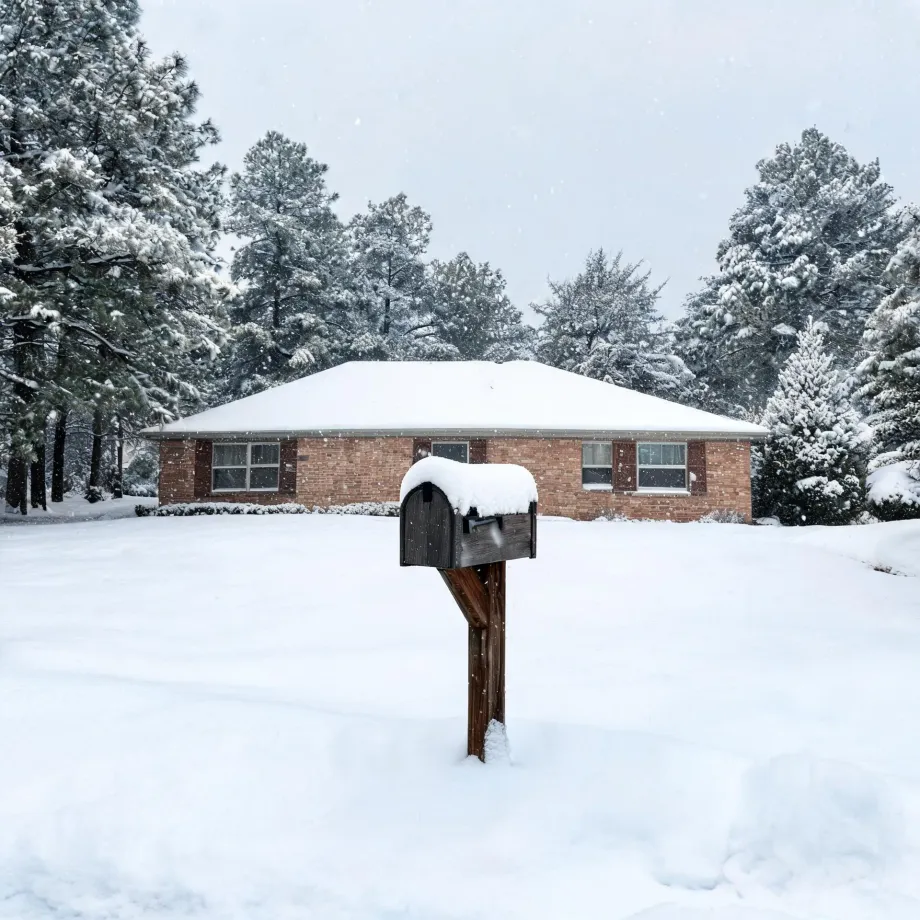
Sizing a furnace for this house is not a task a contractor can do from catalog defaults. Homes in Mercer County, MO run heat about eight months a year, from October through May. The burner and heat exchanger in a unit that runs through that stretch of calendar accumulate cycling stress that a marginal install hides until the system starts failing at the coldest point of the year. A contractor quoting new equipment here has to run a full load calculation against the actual envelope of the house, because undersizing shows up in premature heat exchanger fatigue rather than in comfort complaints a homeowner can easily name.
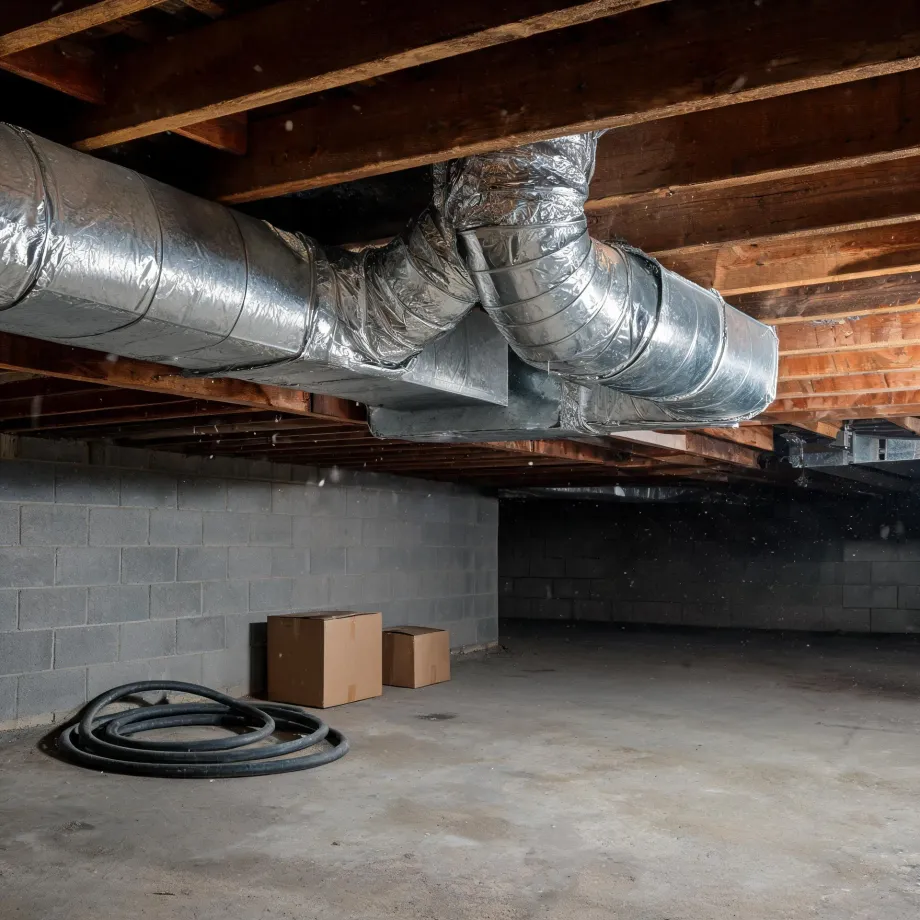
Ductwork laid out for an earlier generation of heating equipment carries different assumptions about airflow, routing, and load than a new furnace requires. Half the homes in Mercer County, Missouri were built in 1970 or earlier (2020-2024 ACS 5-year). A contractor installing a furnace in stock like this has to measure what the existing trunk lines and runs will actually carry, because the original layout may not move enough air for a modern system or may route it in ways that leave rooms starved. The electrical side matters too, since service panels in houses of this vintage were sized for what existed then. The ductwork assessment is what determines whether the installation is straightforward or whether portions need to be rerouted before the new unit goes in.
What Gets Installed With a New Furnace
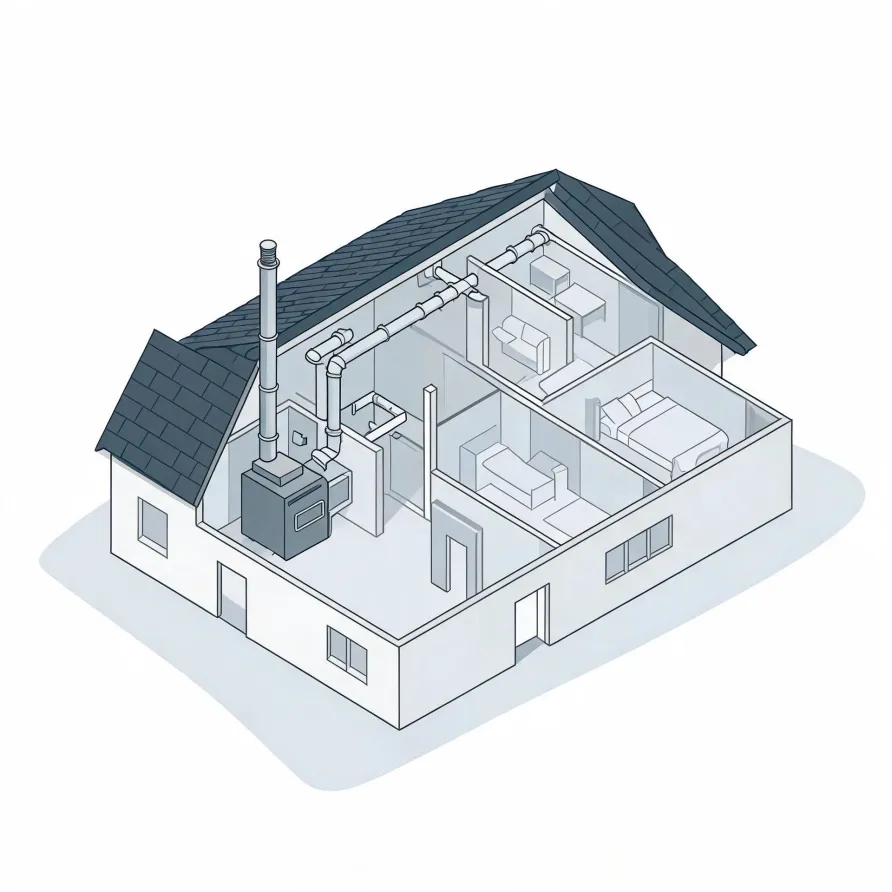
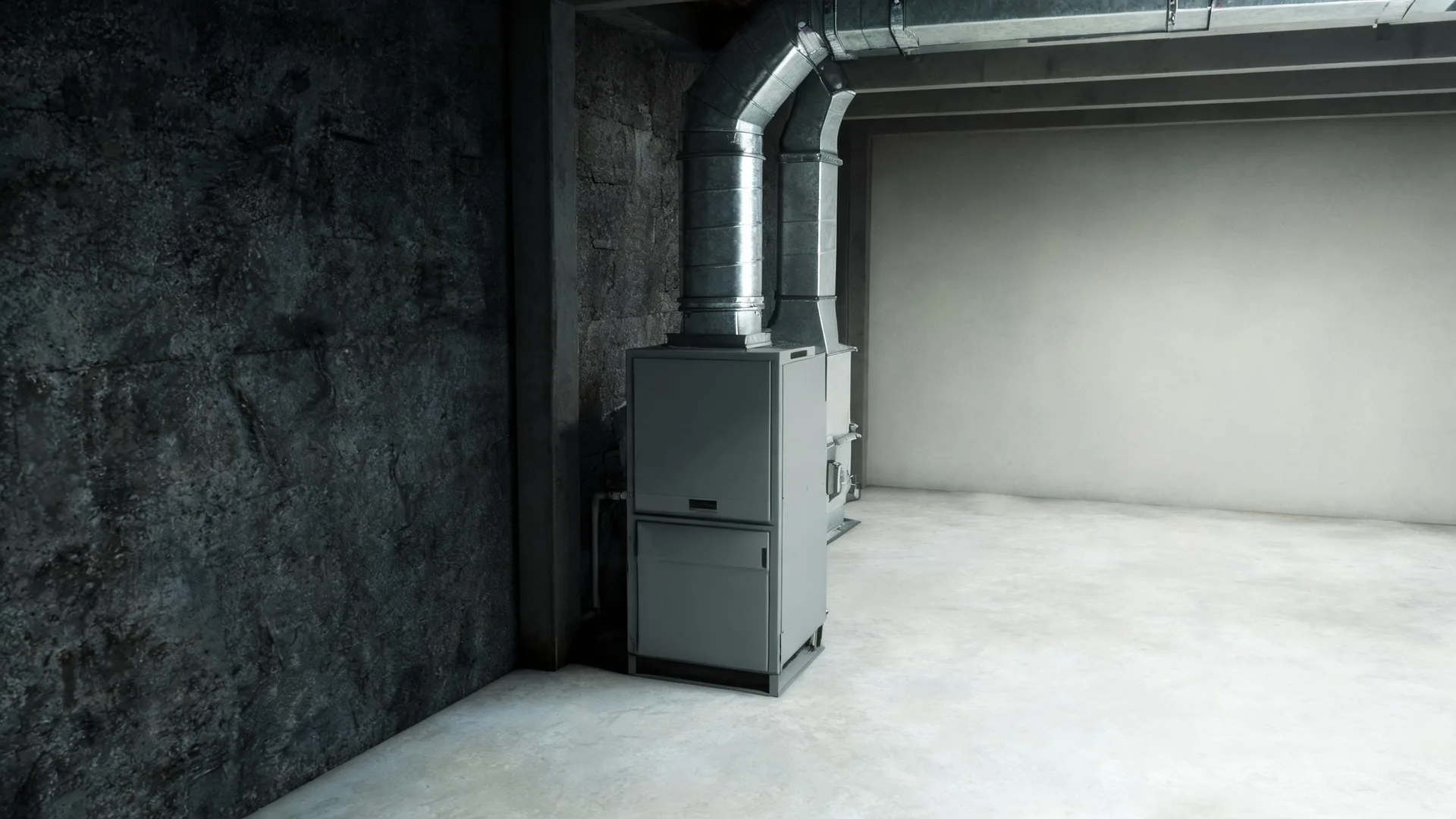
The furnace itself sits in the basement, utility room, or closet and is the piece that produces heat. A heat exchanger inside the cabinet transfers warmth to the air that moves through the house. The blower motor, housed in the same cabinet, pushes that air out.
The flue pipe runs from the furnace to an exterior wall or up through the roof, carrying combustion gases out of the house. The thermostat mounts on an interior wall and is the control point a homeowner touches directly. A filter housing, positioned at the air intake, holds the filter that protects the internal components from dust.
The drawing shows a typical layout, and a licensed contractor determines exactly what applies to this house and its existing setup.
Get matched in Mercer CountyMercer County, by the numbers
53 severe weather events were recorded in Mercer County, Missouri between 2015 and 2024.
NOAA National Centers for Environmental Information, Storm Events Database, bulk CSV export, events 2015-01-01 through 2024-12-31.Half the homes in Mercer County, Missouri were built in 1970 or earlier (2020-2024 ACS 5-year).
U.S. Census Bureau, 2020-2024 American Community Survey 5-Year EstimatesMercer County, Missouri holds 1,902 housing units (2020-2024 ACS 5-year).
U.S. Census Bureau, 2020-2024 American Community Survey 5-Year EstimatesOwners occupy 81.0% of the occupied homes in Mercer County, Missouri (2020-2024 ACS 5-year).
U.S. Census Bureau, 2020-2024 American Community Survey 5-Year EstimatesFurnace Installation Rules for Mercer County, Missouri4 sourced codes and standards
What happens when the contractor arrives
Non-weatherized gas furnaces manufactured on or after November 19, 2015 must reach 80.0 percent AFUE.
Non-weatherized oil-fired furnaces manufactured on or after November 19, 2015 must reach 83.0 percent AFUE.
Mobile home gas furnaces manufactured on or after November 19, 2015 must reach 80.0 percent AFUE.
Non-weatherized gas furnaces manufactured on or after December 18, 2028 must reach 95.0 percent AFUE, up from the 80.0 percent minimum that applies to units manufactured before that date.
Severe Weather Events in Mercer County
Weather in Mercer County puts real hours on heating equipment. A furnace that carries a hard winter works differently from one that sits through a mild one, and that difference shapes what a contractor installs and how they size it.
53 severe weather events, 2015–2024. Source: NOAA National Centers for Environmental Information, Storm Events Database.