Tell us about the job
Takes about a minute. No obligation.
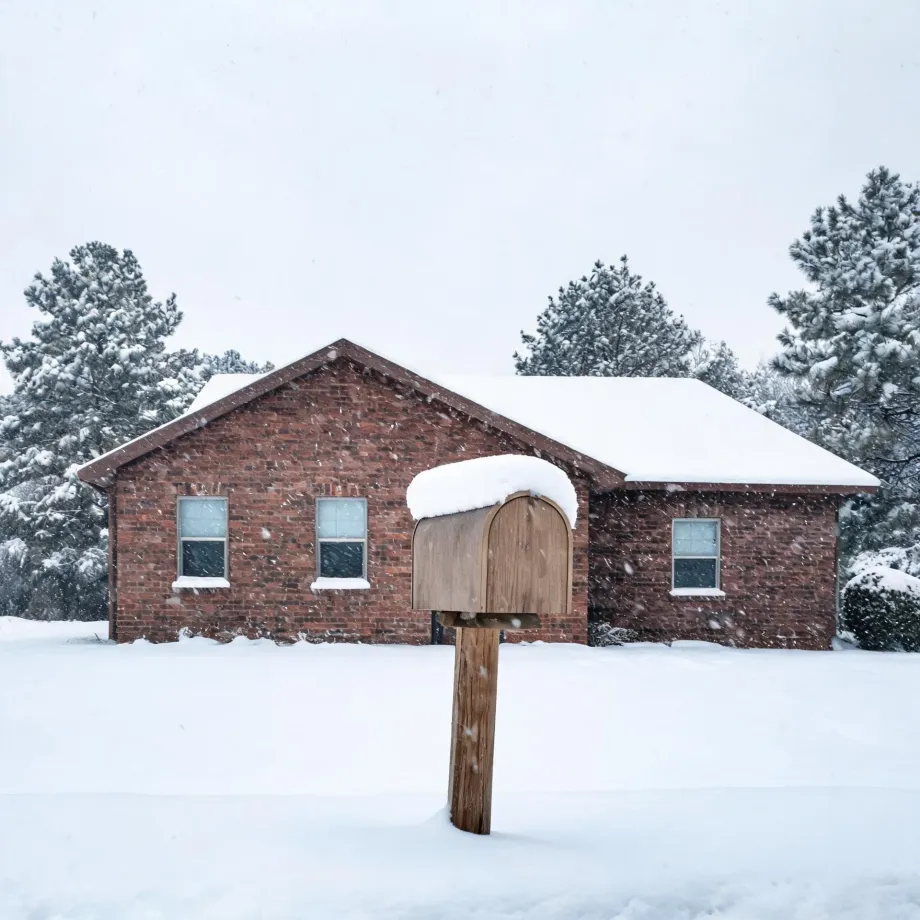
A contractor quoting furnace installation in Scotland County has to size the unit to a real seasonal load, not a ballpark. Homes in Scotland County, MO run heat about eight months a year, from October through May. The burner, heat exchanger, and ignition system carry that load every year, and a unit that is undersized runs longer cycles to meet setpoint, stressing those parts on every call for heat. Sloppy duct work compounds it: a furnace that cannot move air efficiently works the heat exchanger harder than the rating assumes. An installer who skips the load calculation hands the homeowner a system that wears ahead of schedule.
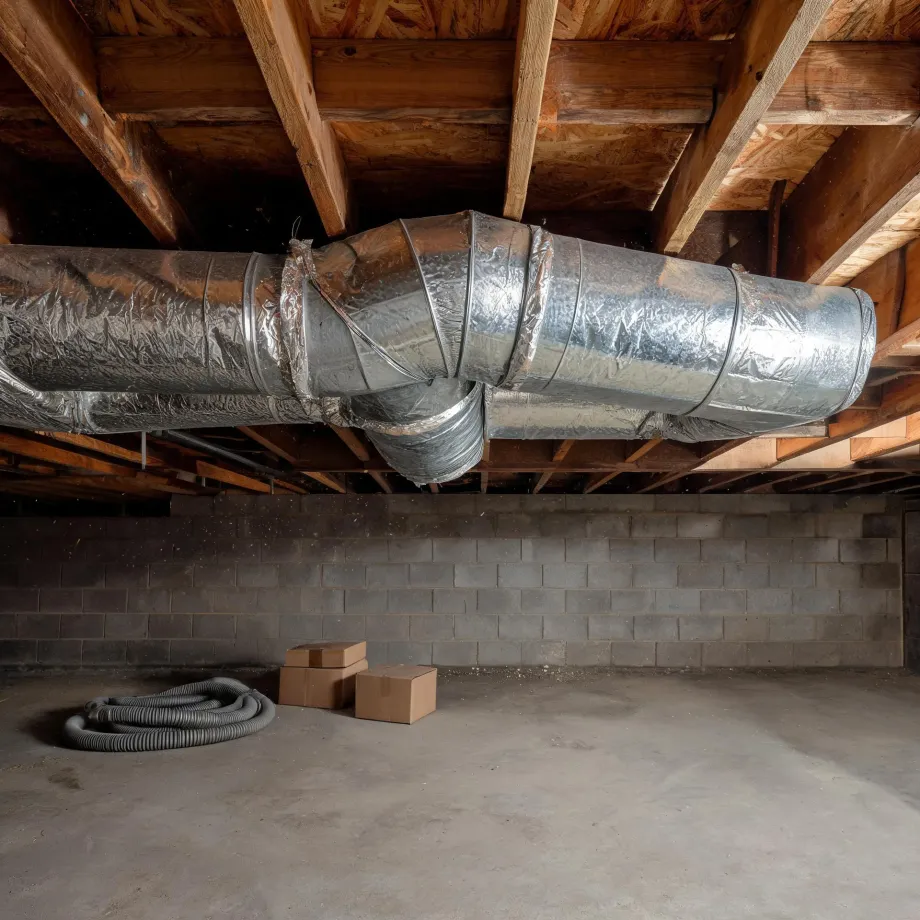
Ductwork in a house carries whatever the original builder put in, and in Scotland County that means a contractor sizing a new furnace has to judge whether what is already in the walls will move air for a unit built to current output ratings. Half the homes in Scotland County, Missouri were built in 1971 or earlier (2020-2024 ACS 5-year). Stock that old was ducted for equipment with different delivery requirements, and a new furnace pushed through runs designed for a lighter load either underperforms or forces a duct retrofit that reshapes the whole job. The electrical side follows the same logic. What a contractor quotes up front depends on what they find behind the registers and at the panel, not on the model they are installing.
What Gets Installed With a New Furnace
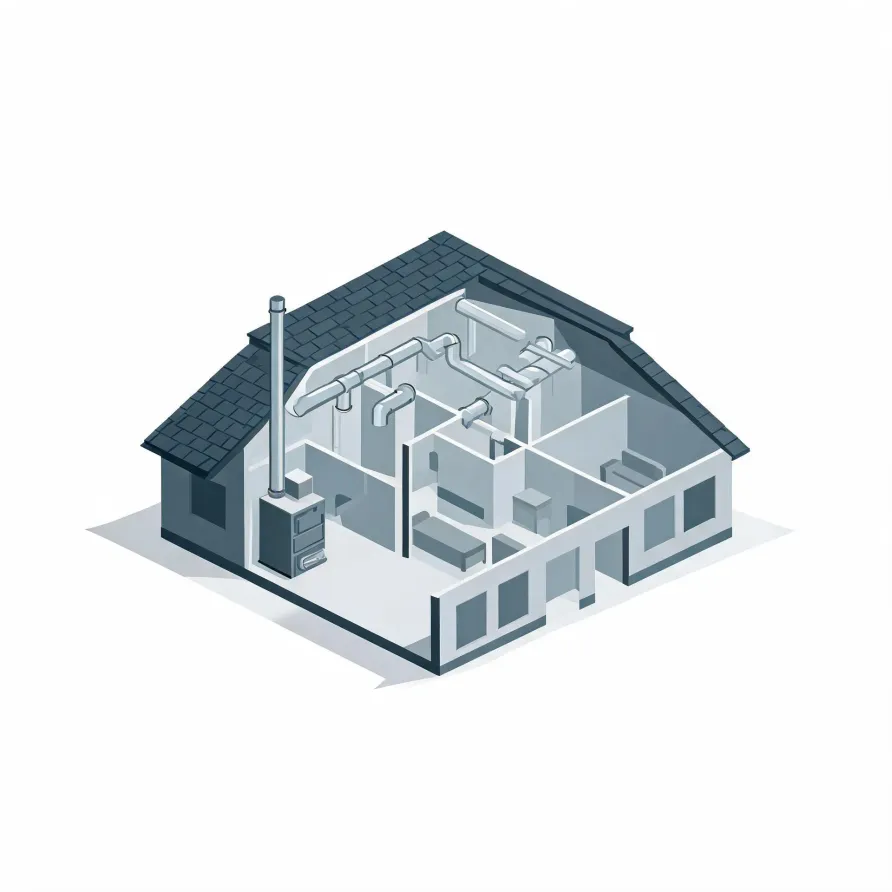
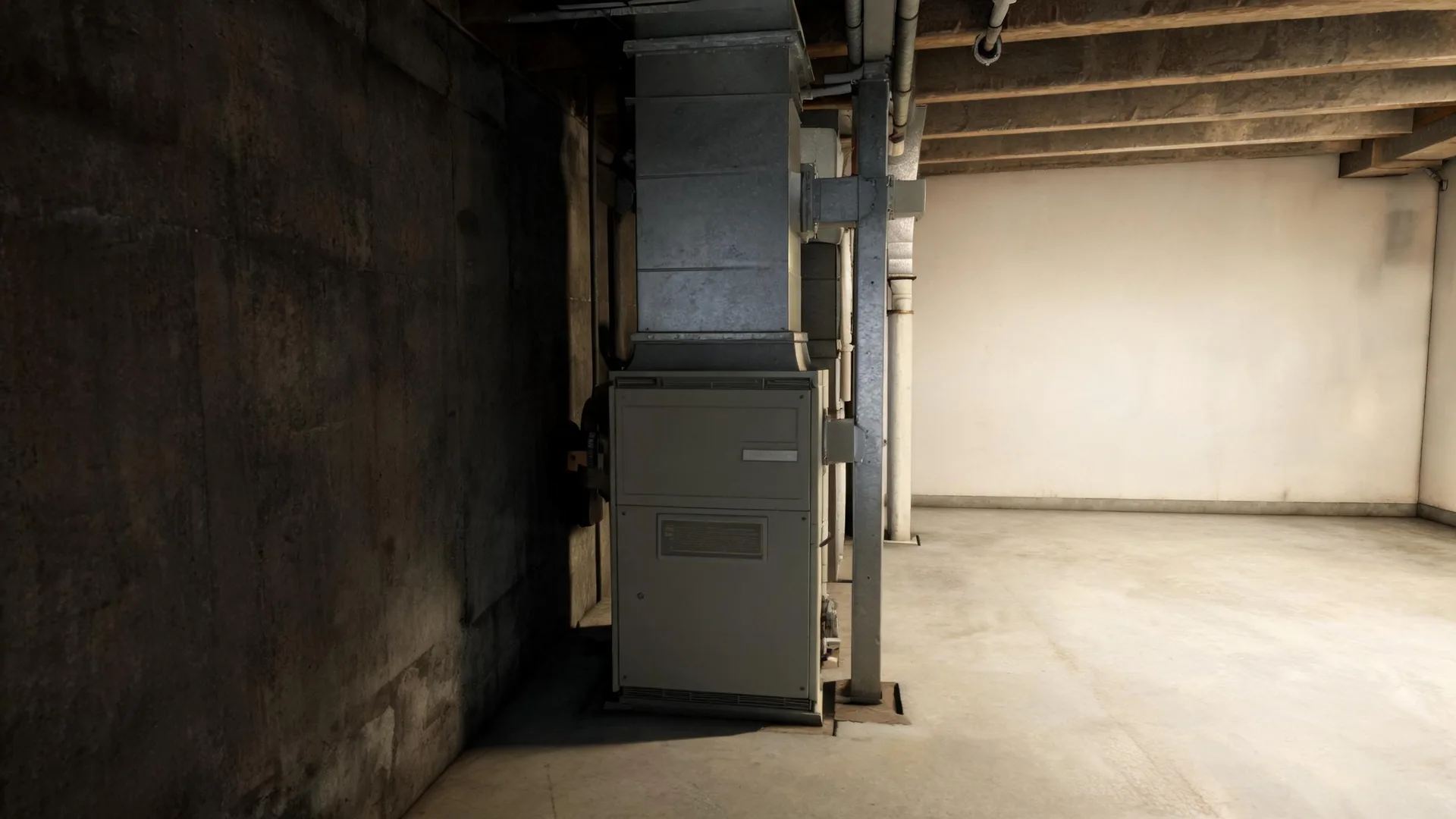
The furnace itself sits in the basement, utility room, or crawlspace and is the piece that generates heat. A burner assembly inside the cabinet burns fuel to produce that heat, and a heat exchanger transfers it to the air that moves through your home. The blower motor, housed in the lower section of the same cabinet, pushes that warmed air out.
The flue pipe runs from the top or back of the furnace to an exterior wall or up through the roof, carrying combustion gases out of the house. A gas valve and control board sit inside the cabinet as well, with the valve regulating fuel flow and the board managing the whole sequence of operation. A new thermostat is often part of the installation and mounts on an interior wall.
The drawing shows a typical layout, and a licensed contractor determines what fits the configuration of your specific home.
Get matched in Scotland CountyScotland County by the numbers
86 severe weather events were recorded in Scotland County, Missouri between 2015 and 2024.
NOAA National Centers for Environmental Information, Storm Events Database, bulk CSV export, events 2015-01-01 through 2024-12-31.Half the homes in Scotland County, Missouri were built in 1971 or earlier (2020-2024 ACS 5-year).
U.S. Census Bureau, 2020-2024 American Community Survey 5-Year EstimatesScotland County, Missouri holds 2,201 housing units (2020-2024 ACS 5-year).
U.S. Census Bureau, 2020-2024 American Community Survey 5-Year EstimatesOwners occupy 82.4% of the occupied homes in Scotland County, Missouri (2020-2024 ACS 5-year).
U.S. Census Bureau, 2020-2024 American Community Survey 5-Year EstimatesFurnace Installation Rules for Scotland County, Missouri4 codes, standards, and laws
What the Installation Work Looks Like
Non-weatherized gas furnaces manufactured on or after November 19, 2015 must reach 80.0 percent AFUE.
Non-weatherized oil-fired furnaces manufactured on or after November 19, 2015 must reach 83.0 percent AFUE.
Mobile home gas furnaces manufactured on or after November 19, 2015 must reach 80.0 percent AFUE.
Non-weatherized gas furnaces manufactured on or after December 18, 2028 must reach 95.0 percent AFUE, up from the 80.0 percent minimum that applies to units manufactured before that date.
Severe Weather Events in Scotland County
Scotland County's weather puts real demand on heating equipment over time. How often extreme conditions hit a county shapes what a furnace needs to handle, which is why local installation decisions are not the same from one part of Missouri to the next.
86 severe weather events, 2015–2024. Source: NOAA National Centers for Environmental Information, Storm Events Database.