Tell us about the job
Takes about a minute. No obligation.
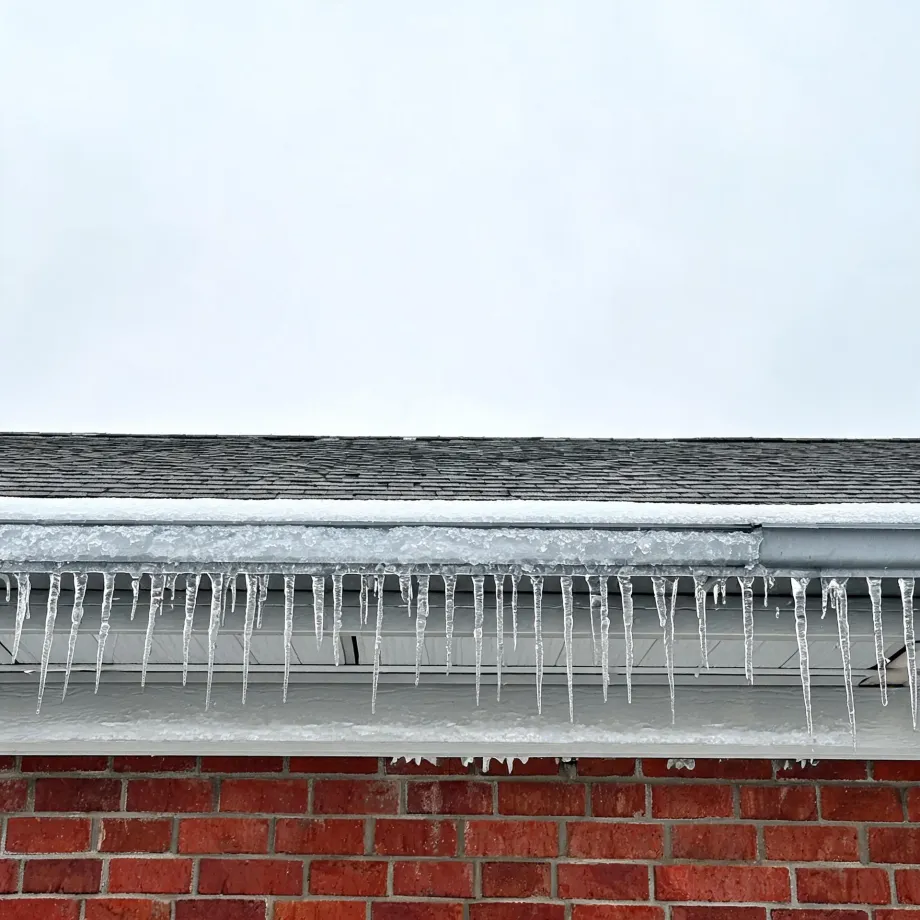
A furnace installed in Barton County is asked to carry a real load. Homes in Barton County, MO run heat about seven months a year, from October through April. The burner and heat exchanger cycle through that entire run, and an undersized unit or a poorly sealed duct system cannot hide its shortcomings when the equipment barely gets a rest. A contractor sizing a replacement here has to get the load calculation right from the start, because a furnace that leaves capacity on the table will show stress on the ignition system and heat exchanger sooner than one that fits the house.
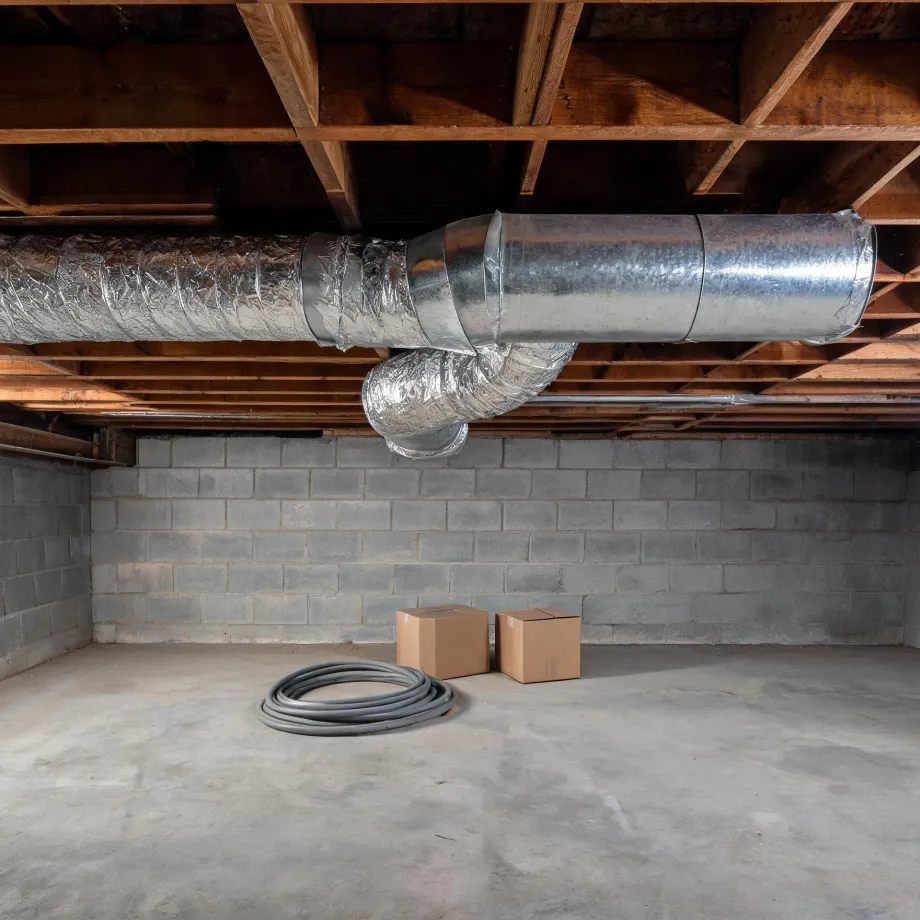
Existing ductwork is where a furnace installation in Barton County gets decided, not at the equipment selection stage. Half the homes in Barton County, Missouri were built in 1974 or earlier (2020-2024 ACS 5-year). Ductwork put in alongside the original heating system was sized for what ran then, and a new furnace draws and distributes air differently. A contractor pricing a job here measures and pressure-checks the existing runs before quoting, because undersized or poorly routed duct will undercut any new unit regardless of its rated output. The electrical service gets the same look, since older panels were not built to accommodate modern furnace controls and variable-speed components.
What Gets Installed With a New Furnace
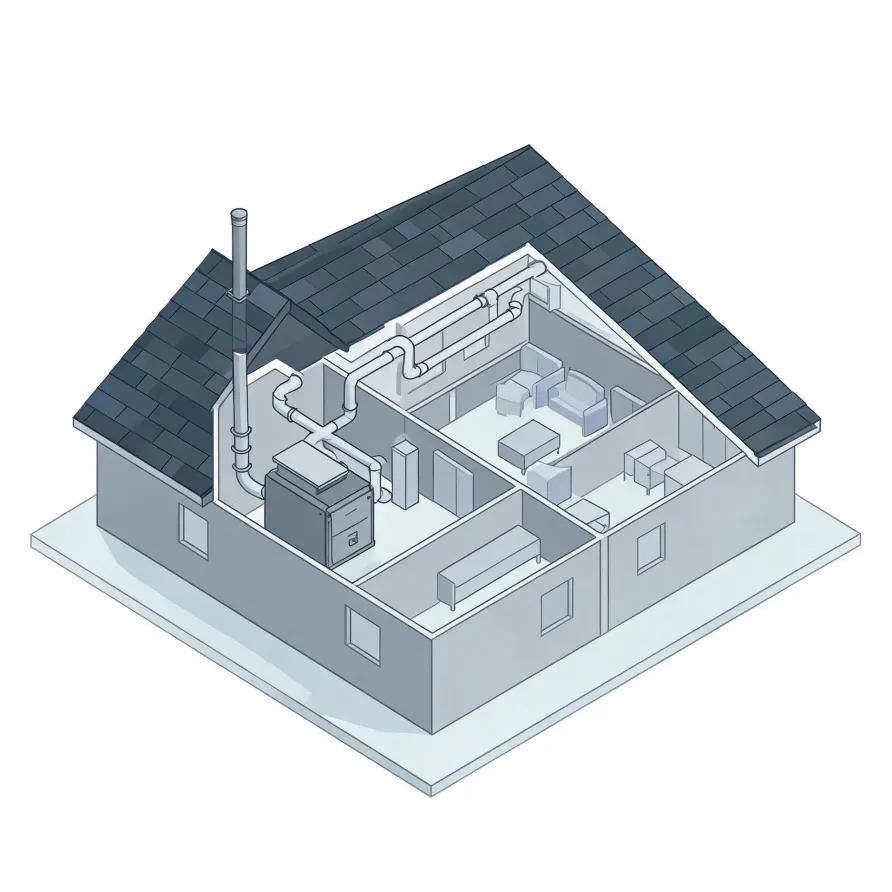
The furnace itself sits in the basement, utility room, or a dedicated mechanical closet, and it is the unit that generates heat for the whole house. A contractor mounts it on a level surface with clearance on all sides. The flue pipe runs from the furnace to an exterior wall or up through the roof, carrying combustion exhaust out of the living space.
The air handler or blower compartment is built into the furnace cabinet and pushes conditioned air into the supply side of the duct system. The thermostat mounts on an interior wall and is the control point for the whole system. A contractor also connects a gas line to the furnace's valve and runs the low-voltage wiring between the furnace and the thermostat.
The drawing shows a general layout of these components, and a licensed contractor determines exactly how each one is positioned and connected in your home.
Get matched in Barton CountyBarton County, by the numbers
98 severe weather events were recorded in Barton County, Missouri between 2015 and 2024.
NOAA National Centers for Environmental Information, Storm Events Database, bulk CSV export, events 2015-01-01 through 2024-12-31.Half the homes in Barton County, Missouri were built in 1974 or earlier (2020-2024 ACS 5-year).
U.S. Census Bureau, 2020-2024 American Community Survey 5-Year EstimatesBarton County, Missouri holds 5,285 housing units (2020-2024 ACS 5-year).
U.S. Census Bureau, 2020-2024 American Community Survey 5-Year EstimatesOwners occupy 68.1% of the occupied homes in Barton County, Missouri (2020-2024 ACS 5-year).
U.S. Census Bureau, 2020-2024 American Community Survey 5-Year EstimatesCodes & Standards Governing Furnace Installation in Barton County, Missouri4 sourced rules and standards
What the Installation Looks Like
Non-weatherized gas furnaces manufactured on or after November 19, 2015 must reach 80.0 percent AFUE.
Non-weatherized oil-fired furnaces manufactured on or after November 19, 2015 must reach 83.0 percent AFUE.
Mobile home gas furnaces manufactured on or after November 19, 2015 must reach 80.0 percent AFUE.
Non-weatherized gas furnaces manufactured on or after December 18, 2028 must reach 95.0 percent AFUE, up from the 80.0 percent minimum that applies to units manufactured before that date.
Severe Weather Events in Barton County
Weather puts a measurable load on heating equipment, and that load varies by location. What Barton County sees over any given stretch of years shapes what a furnace here is asked to do and how a contractor sizes and installs it.
98 severe weather events, 2015–2024. Source: NOAA National Centers for Environmental Information, Storm Events Database.