Why your house is dry with the heat on in Missouri
A local pro who services furnaces gets in touch about the tune-up.
Your furnace doesn't add moisture to the air. It burns gas, heats the air, and sends it through the ducts, and that's all it does. The dryness you're feeling has more to do with cold outside air than anything the furnace is doing wrong.
Cold air can't hold much moisture. When it gets pulled into your house and heated up, its relative humidity drops, sometimes hard. That's true whether your furnace is new or twenty years old. A Missouri winter with nights in the teens or twenties will leave the air inside feeling dry no matter how well the system runs.
What maintenance can do is make sure the furnace itself isn't making things worse. A dirty blower or a clogged filter can push the system to run longer than it needs to, cycling the same dry air through your house more often. A technician who services furnaces in your area through the winter knows what tends to go wrong in homes running gas heat here, and can check whether your system is working harder than it should.
This is where a local contractor matters. Someone who works on furnaces around Missouri all season has likely seen the same issue in other houses nearby, in homes with similar ductwork and similar winters. That's different from a general call center matching you with whoever's free. You'd be connected with one licensed contractor, not several competing for the job, so you're not stuck fielding multiple calls for a question that really just needs one good answer.
If the dryness is bothering you enough to want a second opinion, or you just want someone to look at whether your furnace is running the way it should, that's a reasonable thing to have checked. The button below starts that process, matching you with a contractor who handles this kind of work in your area.
Why is my house so dry when the heat is on?
Your heat has been running for weeks and the air in your house feels dry enough to crack your skin and build up static when you walk across the carpet. It seems like the furnace is pulling moisture out of the air, and you want to know if that's actually what's happening or if something is wrong with the system.
Cold winter air holds very little moisture to begin with
Outdoor air in Missouri in January is cold, and cold air can't hold much water vapor. Once your furnace heats that air and pushes it through your ducts, the relative humidity in your house drops even though the actual amount of moisture hasn't changed. Warm air just has more room to hold what little is there, so it reads as drier. This happens in every home that heats with gas, not just yours. Homes here feel it more because the heat runs for months at a stretch, from the first cold snap through early spring, and that long stretch of running time is what makes the dryness noticeable instead of a one or two day thing.
A licensed local pro takes the request for your furnace tune-up.
Sending the form costs nothing.
Why cold air holds less moisture
Air holds less moisture the colder it gets. Outside air in January might only hold a fraction of the moisture that same air could hold once it's heated to 70 degrees inside your house. Your furnace heats that air but adds nothing to it, so the relative humidity drops even though the actual amount of water in the air hasn't changed. Every time outside air leaks in through a door, a window, or a gap somewhere in the house, it gets heated and the cycle repeats. The drier the air outside, the drier your house gets once the furnace brings it up to room temperature.
What a tighter system changes
A furnace that's cycling properly and a duct system without leaks won't fix dry air on their own, since neither one adds moisture. But a technician checking your system during a seasonal visit can spot duct leaks pulling in extra unconditioned air, a blower running longer than it should, or a filter restricting airflow in ways that make the furnace work harder than necessary. None of that puts moisture back in the air, but it keeps the furnace from making a dry house drier than it has to be. A local contractor who services furnaces all winter in Missouri knows which of these show up most in homes here.
Leave it dry all winter
Plenty of people do nothing and just live with it. You run lotion and lip balm through January and February, maybe add a humidifier in the bedroom, and accept the static shocks as part of a Missouri winter. The furnace keeps working fine either way. Dry air doesn't damage the furnace itself, so skipping a fix costs you comfort, not equipment. If the dryness is mild and you'd rather not add a system to maintain, this is the simpler path. It just means living with it until the weather turns and outside air starts holding moisture again.
Have the furnace checked
A furnace that's drifted out of tune can make the dryness worse than it needs to be, and a contractor who services furnaces all winter in your area can tell you whether yours is running the way it should. They'll check the system end to end and let you know if a whole-house humidifier makes sense for your setup, since that's the real fix for dry air, not the furnace itself. With gas heat common here and power cheap, running a humidifier alongside your furnace usually isn't a big addition to the bill.
Winter nights average 25°F statewide
A 25°F night means that outside air holds almost no moisture at all. Once your furnace heats it to 70 inside, it can hold even less of what little it had, so the air drying out your skin and throwing static across the room is normal for a Missouri winter, not a sign anything's wrong with the furnace.
NOAA nClimDiv 1991-2020 county normals weighted by homes
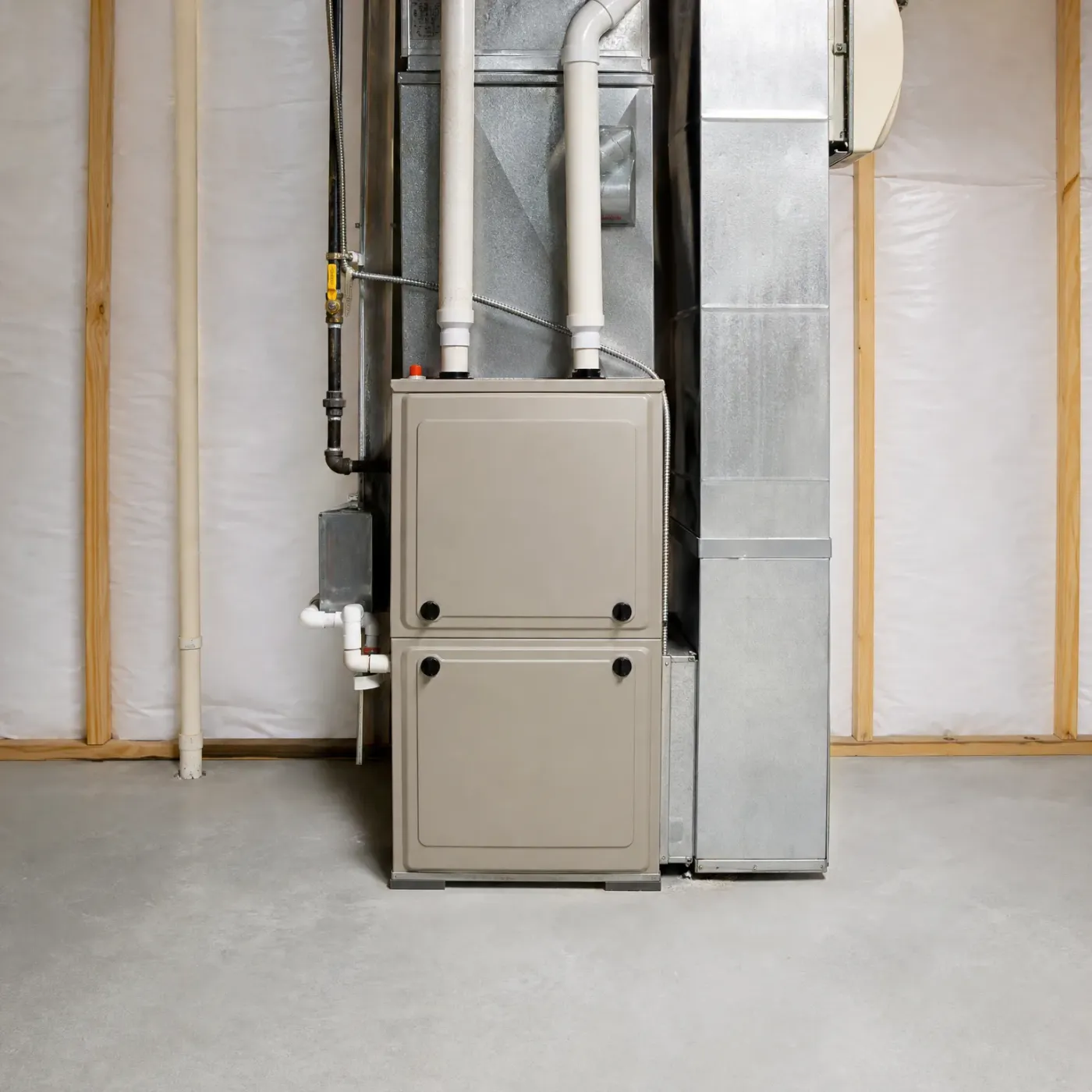
Furnace running clean
This is what a furnace looks like doing its job. Flue pipes vented, gas line secure, nothing straining. It's pulling air in, heating it, pushing it back through the ducts, winter after winter without adding or removing moisture from your house.
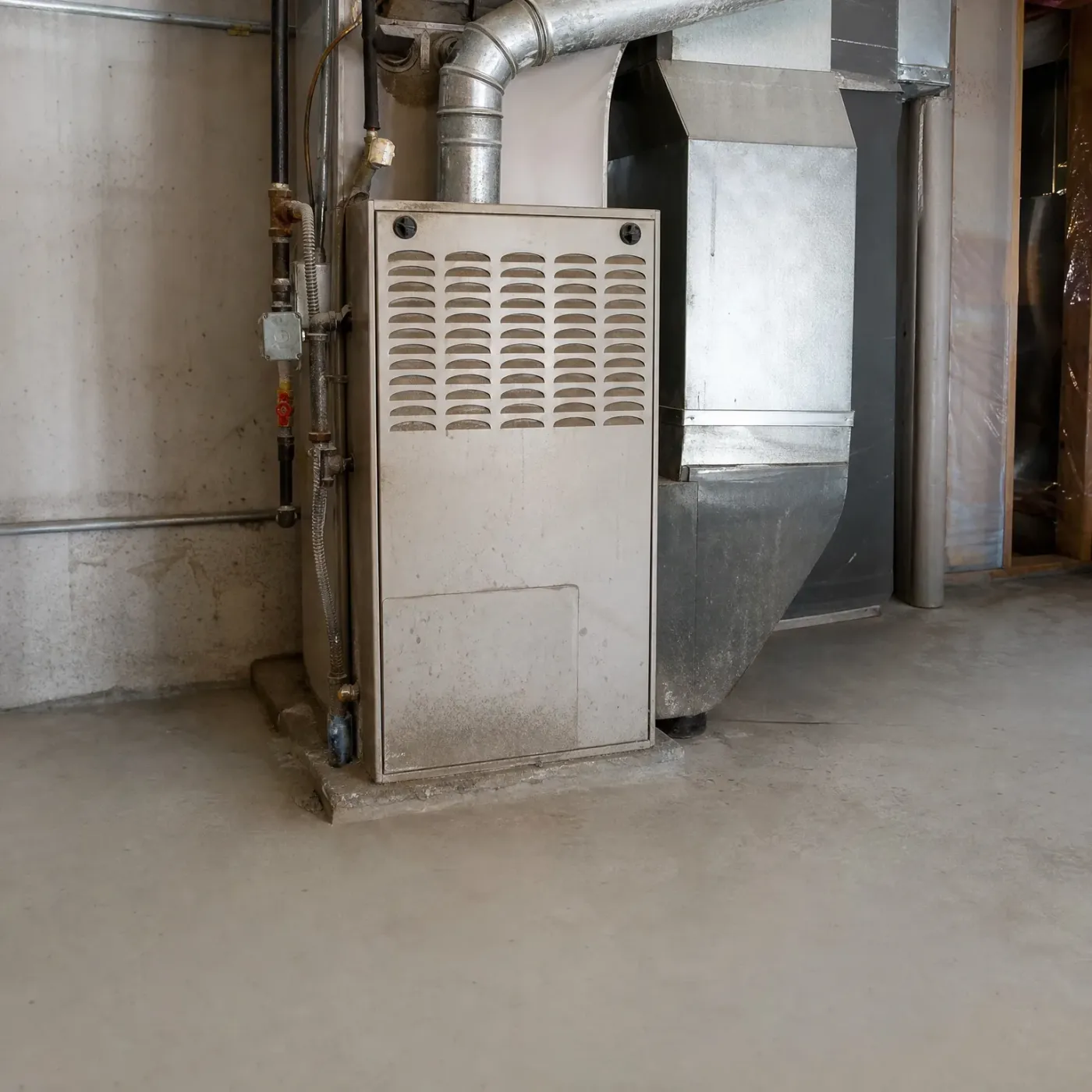
Furnace left unchecked
Dust on the cabinet, a unit nobody's looked at in years. It still runs and still dries the air the same as any furnace does. But a furnace that's never been serviced is more likely to have a cracked heat exchanger or a clogged filter choking its airflow.
The dry air in your house this winter is outside air that got cold, then got heated, nothing more. Your furnace isn't broken and it isn't the cause. What's worth a look is whether it's running the way it should while it does the only job it has, moving heated air through your ducts for months at a stretch. A furnace that's overdue for a look can run harder than it needs to, or push air unevenly through the house, and a local contractor who services furnaces all winter in Missouri knows what tends to go wrong on a system that's been running since the first cold snap. You'd be matched with one contractor, someone who works on this equipment every season here, not a handful of companies competing for your call. The air will still be dry. That part isn't fixable. But you'll know the furnace itself is pulling its weight, and that's the part worth checking before spring.
Get the right pro for your furnace
Your request goes to one pro, not a list of companies.