





Profile view of a bearded man wearing a dark green baseball cap and a dark gray T-shirt against a plain light background.

Why your furnace filter gets dirty fast in Missouri

Step 1 of 3: Equipment

A furnace filter clogs fast in Missouri because the system runs harder than you'd think. Gas furnaces push a lot of air across that filter, and here it's working two ways: pulling in dust and pet hair all winter, then straining through the sticky, humid air that summer leaves behind in the ductwork even after the AC takes over. A one-inch filter gets buried in weeks, not months, once the system is cycling daily through a Missouri winter. A dirty filter chokes airflow, and the furnace has to run longer to push heat through it, which strains the blower motor and can crack the heat exchanger over time. If you're changing a filter monthly and it's still gray and matted before the month is out, that's not a sign to buy a thicker one and ignore it. It's a sign worth having someone look at what else is pulling dust through your system, like a leaky duct joint or a return that's undersized for the furnace you have.

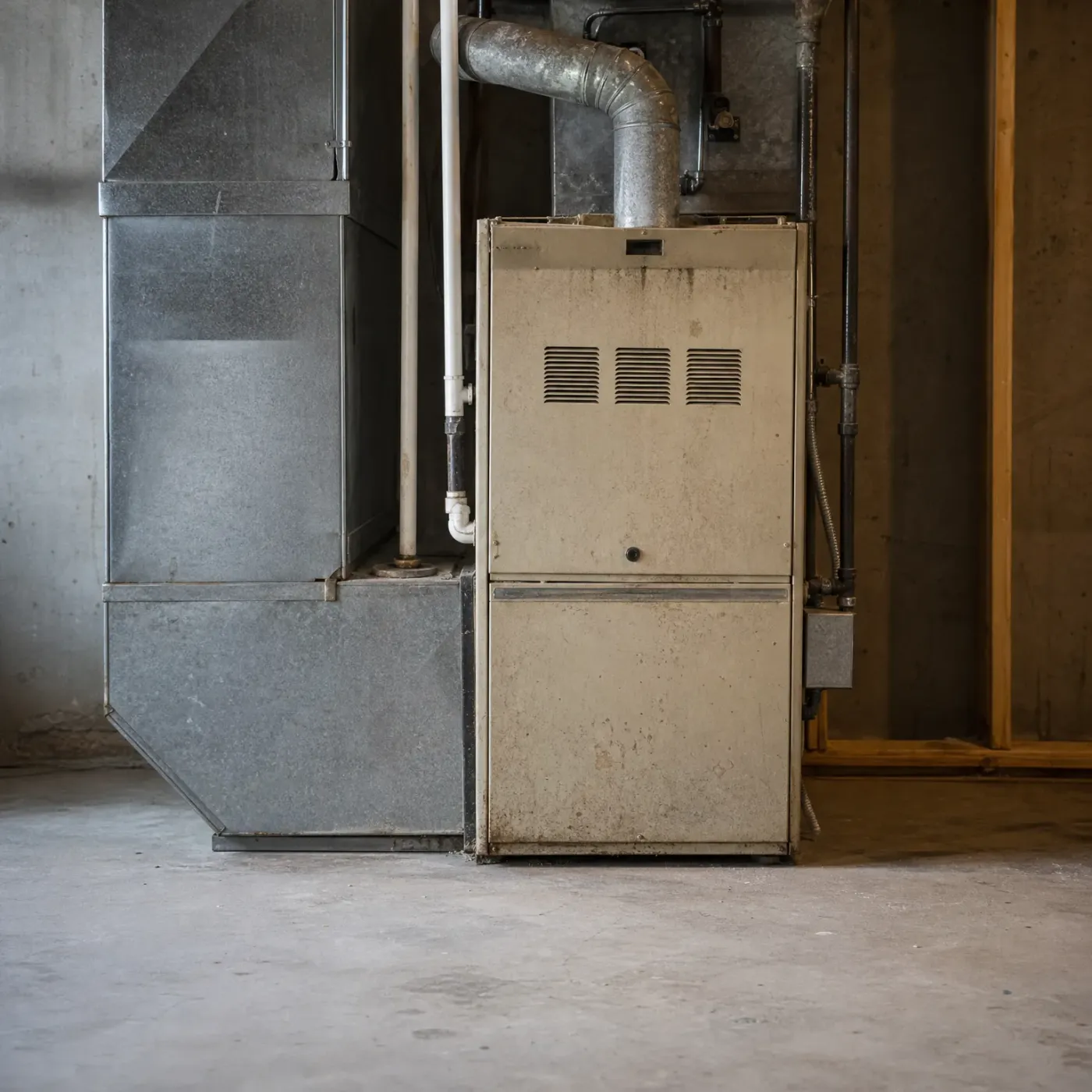
An older beige furnace with a louvered vent panel stands on a concrete basement floor beside galvanized sheet-metal ductwork, a metal flue pipe and vertical pipes along a concrete wall.
Before you get your furnace maintenance
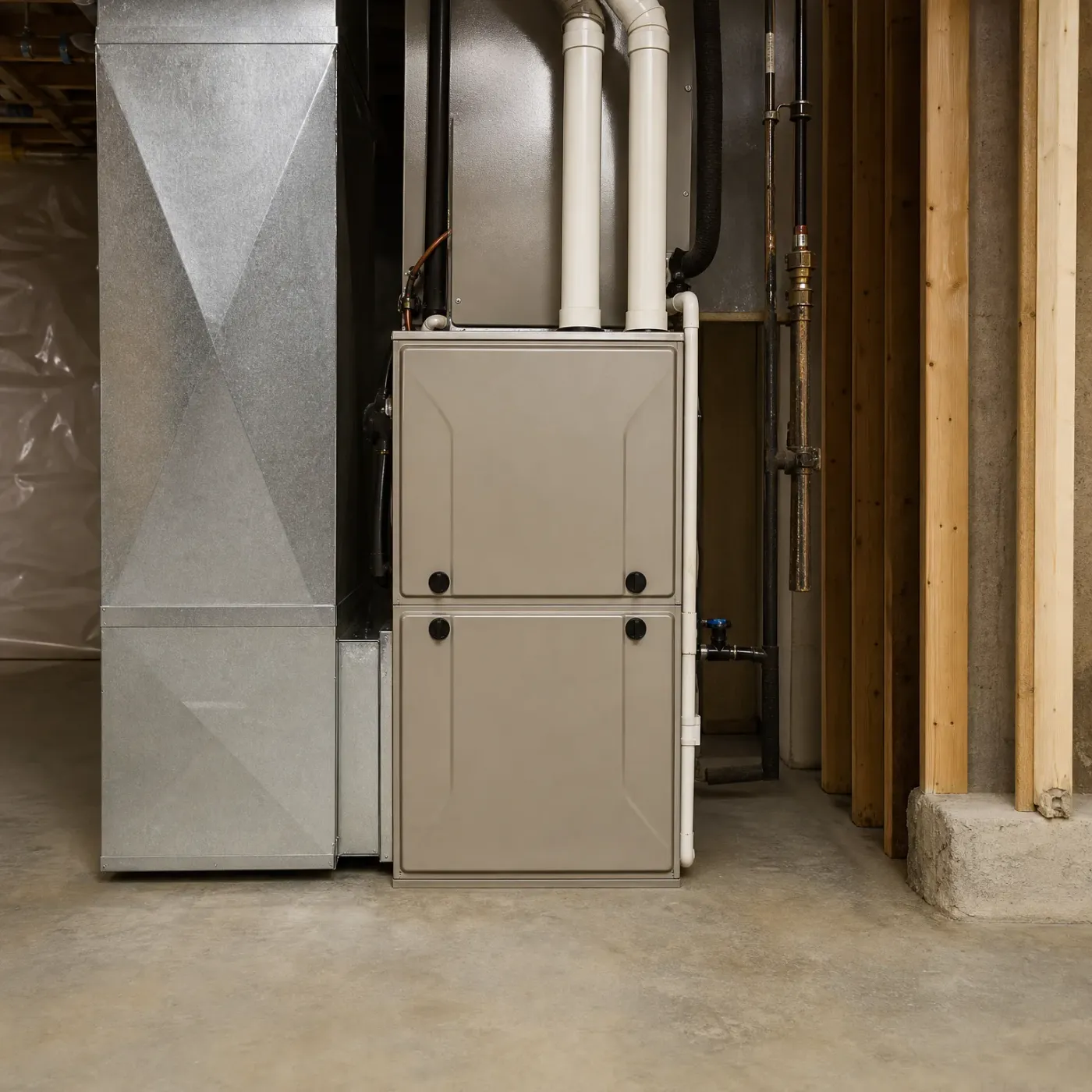
A beige high-efficiency furnace with white PVC vent pipes stands beside galvanized sheet-metal ductwork in a basement with a concrete floor, exposed wood studs, and metal piping along the wall.
After you get your furnace maintenance

A gas furnace cycles on and off many times a day once it's cold, and every cycle means the blower is pulling return air across the filter again. That filter is built to stop dust and pet hair on its way in, and the spots where the blower runs longest build up the fastest. Summer works against the filter too. Humid air leaves a film of moisture on dust before it ever reaches the filter, and that film makes the dust stick instead of passing through. So the filter can start winter already loaded from August and September, with less room left to catch what the blower pulls in from October on. A clogged filter forces the blower to pull harder for the same airflow, and that strain reaches the heat exchanger and the igniter over a season. Where the return vent sits matters too. One pulling air from an open hallway stays cleaner longer than one sitting near carpet, pet bedding or a laundry area.

How your filter actually clogs

  • Your furnace's blower pulls return air across the filter every time it runs, and a gas furnace cycles on and off dozens of times a day in cold weather.
  • The filter catches dust, pet hair and lint on the entering side, and that layer builds up fastest where the blower runs longest.
  • Humid summer air leaves a film of moisture on dust particles, and that film makes them stick to the filter fibers instead of passing through.
  • A filter that starts the winter already coated from summer humidity has less room left to catch what the blower pulls in from October on.
  • The blower has to work harder to pull air through a clogged filter, and that strain shows up on the furnace's heat exchanger and igniter over time.
  • A return vent near carpet, pet bedding or a laundry area feeds the filter more material than a return pulling air from an open hallway.
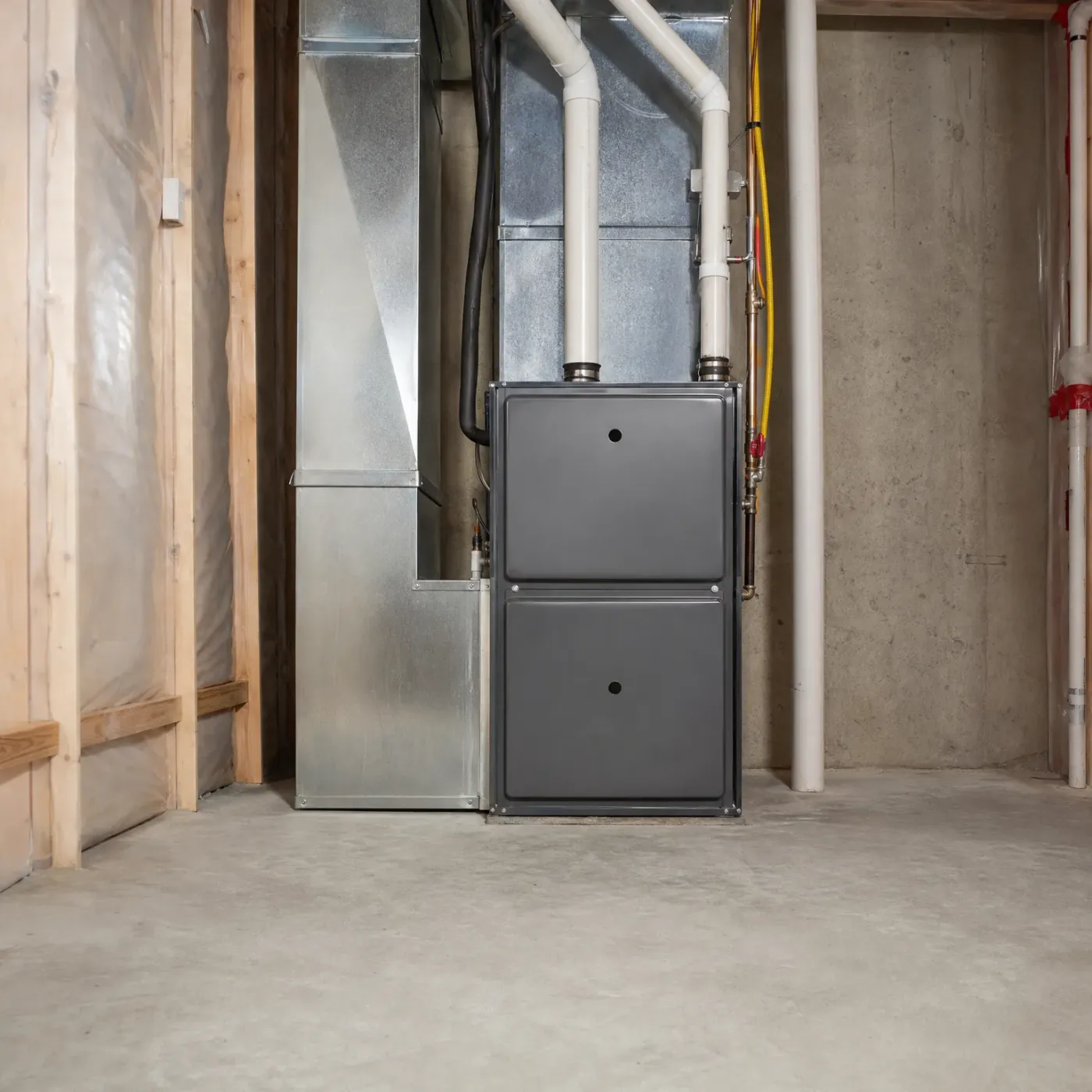
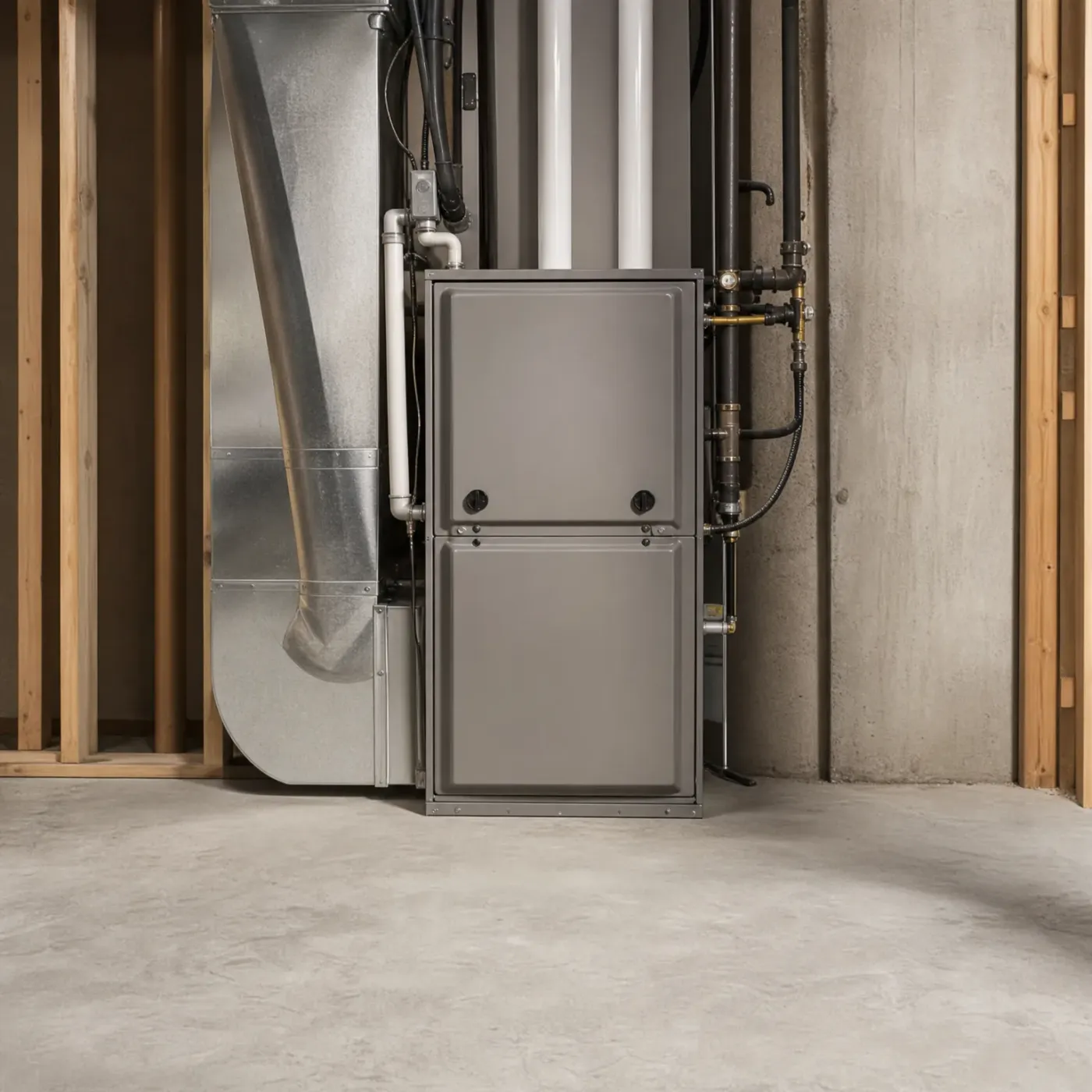
A gray high-efficiency furnace with two PVC vent pipes stands in an unfinished basement beside sheet-metal ductwork, a framed and plastic-covered wall, and a bare concrete wall with vertical pipes.
A clean filter lets the furnace pull air through without strain, so the blower runs the way it was built to.
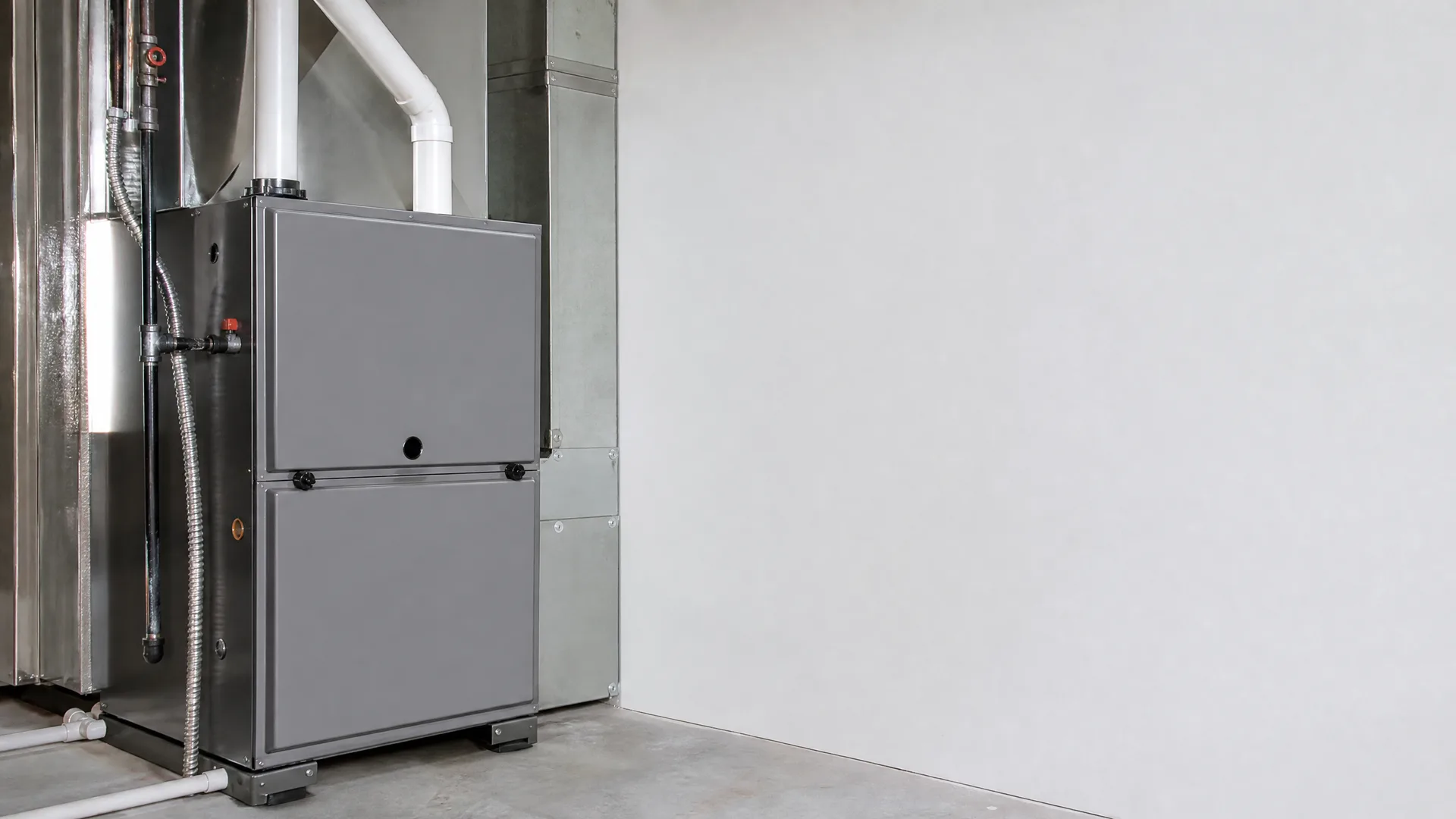
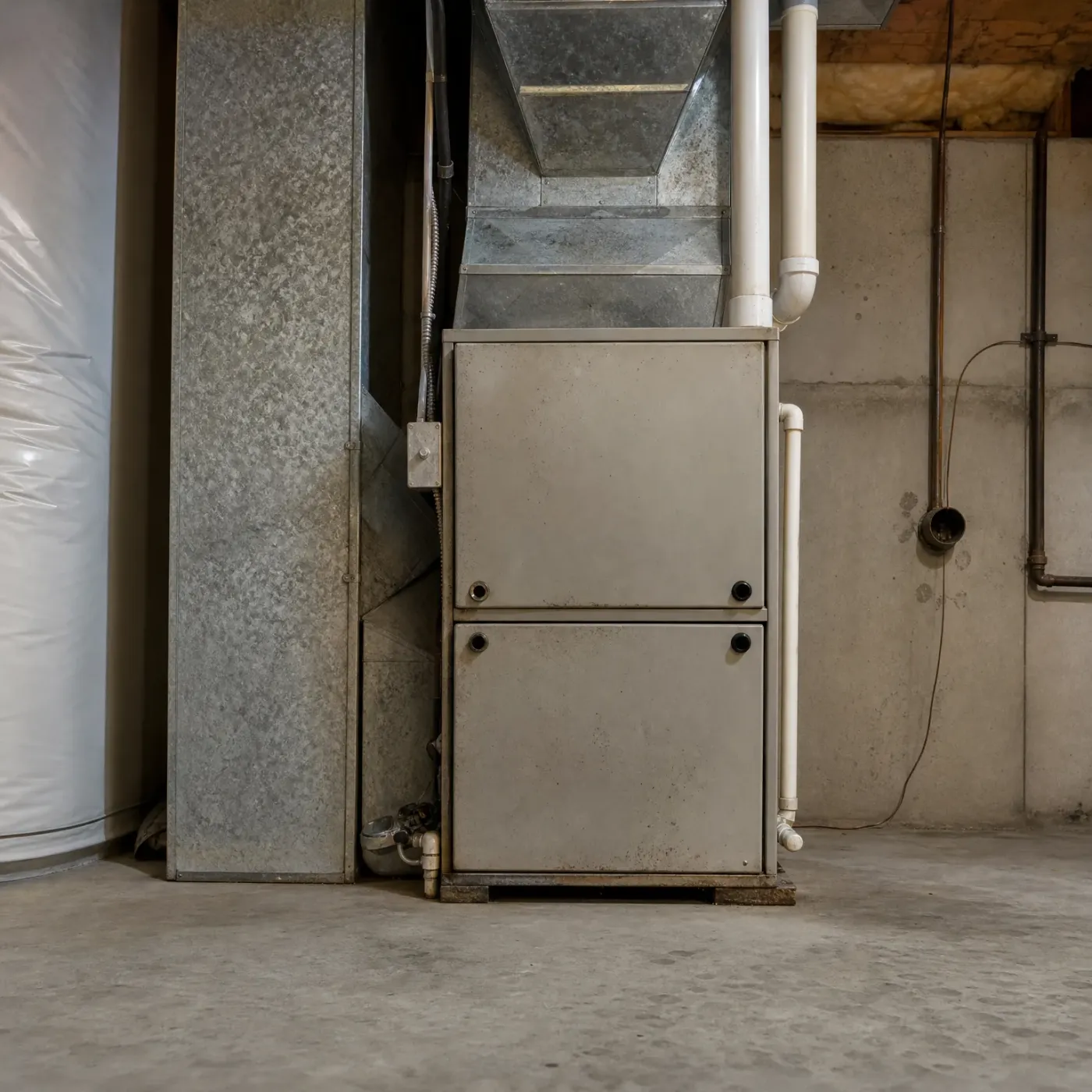
A gray furnace cabinet in a basement, connected to galvanized sheet-metal ductwork and white PVC pipes, against a concrete wall with exposed metal piping and insulation overhead.
A clogged filter chokes airflow, and the furnace on the pallet works against that restriction every time it cycles on.
A smiling woman with dark shoulder-length hair in a cream V-neck sweater sits at a marble counter with a glass of red wine, with a kitchen and softly lit living room behind her.
A woman in a dark green sweater laughs while seated at a marble kitchen island with a glass of red wine, with open shelving, cabinets and a living room visible behind her.
A woman with long dark hair in a cream knit sweater laughs while looking off to the side, seated at a counter with a glass of red wine, in a dimly lit living room with a sofa, lamp, framed pictures and houseplant behind her.
A smiling woman with long dark hair in a beige sweater sits at a marble kitchen counter with a glass of red wine, with a dimly lit living room behind her.
A closed dark laptop and a ceramic mug of coffee on a wooden dining table, with wooden chairs, a dark kitchen cabinet with cutting boards and a potted plant, and a leafy plant by a window in the background.

What a clogged filter costs you at home

You'll notice it first in the rooms farthest from the furnace. They run colder than the rest of the house, because a choked filter can't move enough air to reach them. The blower runs longer to make up for it, and in a house that heats with gas all winter, that longer runtime is what shows up on the bill even with power priced the way it is here. Some homeowners also notice a burning dust smell when the furnace first kicks on for the season, which is the heat exchanger working harder than it should against that restriction.

Left alone, it's the furnace itself that takes the wear, cycling against resistance it wasn't built to push through. Finding someone to look at it is usually the part that stalls people out: searching for a contractor, calling around for someone who'll answer, explaining the same symptoms twice before anyone shows up. A local contractor who services furnaces all winter in Missouri has usually already seen your exact symptom and knows what to check first.

A gray upholstered sofa with a matching cushion sits beside a potted plant and a wooden table holding a small green plant in a stone pot, near a curtained window.
A gray furnace cabinet in a basement with sheet-metal ductwork, white PVC vent pipes, and black gas piping against a concrete wall and wood-framed partition on a bare concrete floor.

A furnace moving air the way it should

This is a furnace with a clean filter behind it. Return air comes in through the big sheet-metal duct, crosses the filter, and the blower pushes it right back out with no fight. The gas lines and venting sit there doing their job, nothing straining.
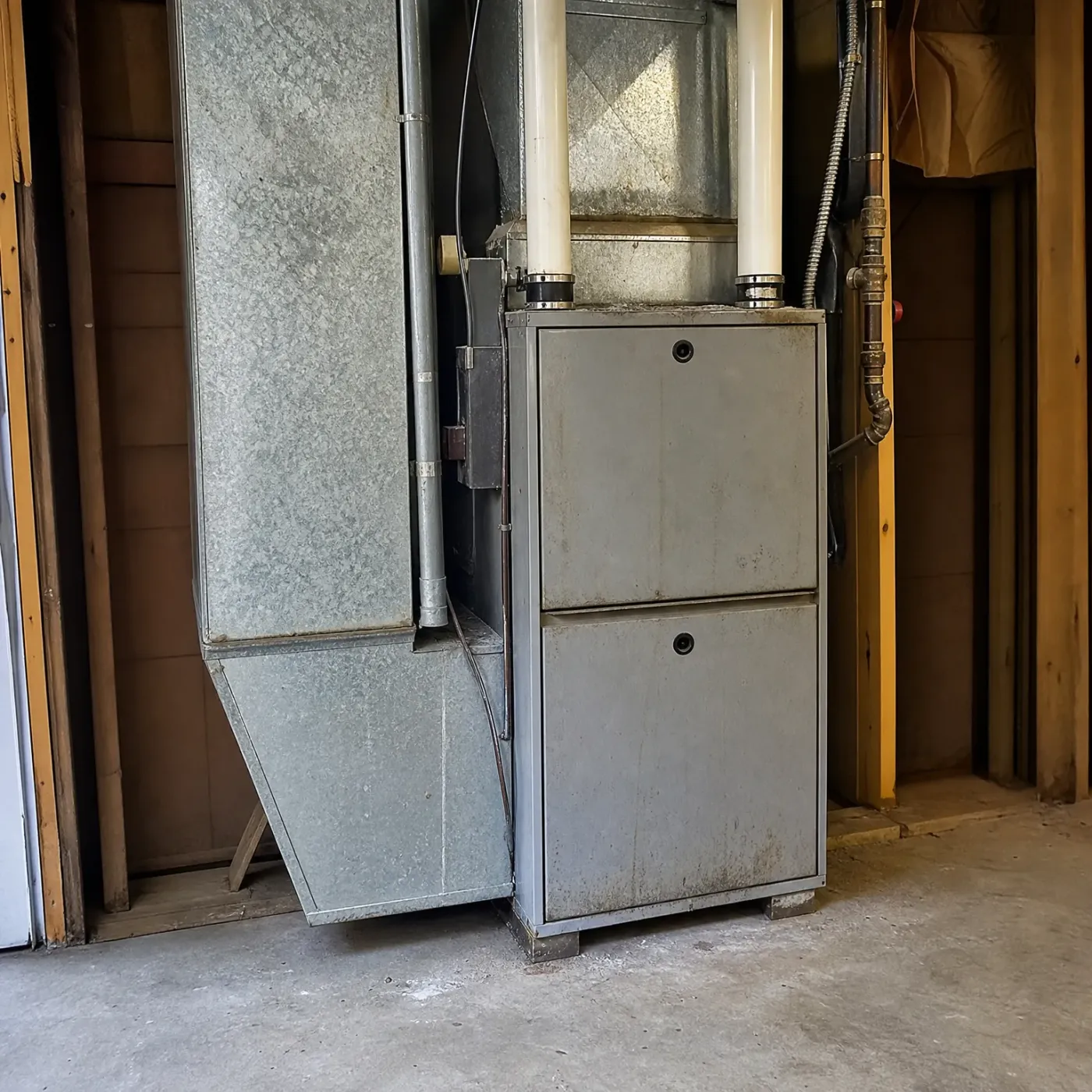

A gray metal furnace with two white PVC vent pipes stands on a concrete floor beside galvanized sheet-metal ductwork in a basement or utility space with wood framing.

A furnace that's been working against itself

Surface rust like this shows up on a furnace that's run hard for a long time. A clogged filter forces the blower to pull harder on every cycle, and heat builds up around the cabinet instead of moving into the ducts. That wear adds up over winters, not days.

How often should I actually check my furnace filter in Missouri?

You've heard the thirty, sixty, ninety day rule, but that's a national number and it doesn't know what your furnace is actually doing. You want a schedule that fits a Missouri winter, where the furnace is cycling on and off all day long and the summer before it left the house sticky and humid. Checking on a fixed calendar date doesn't tell you whether the filter is actually dirty yet.

Check it monthly from October through February, then pull it and look

Pull the filter and hold it up to a light. If you can't see light coming through it clearly, it's done, no matter what the calendar says. A furnace running through a Missouri winter cycles on and off far more than the thirty-day guideline assumes, and if a window unit or the AC left dust and humidity behind over the summer, the first filter of the season can load up faster than the ones after it. Checking monthly gets you eyes on it often enough to catch that. Once you've done this a season or two, you'll know whether your house tends to need a look every three weeks or every six.

  1. Return air carries dust and humidity straight into the filter face.

  2. Fibers trap particles while air keeps pushing through the mesh.

  3. Humid air makes trapped dust cling instead of falling free.

  4. Buildup narrows the gaps the air has left to pass through.

A smiling bearded man in a navy crewneck sweater sits at a dinner table with a glass of red wine, plates and glasses in the foreground, in a dimly lit room with a lamp and framed picture behind him.
A woman in a dark gray sweater reclines on a light sofa with eyes closed and a slight smile, under a textured gray blanket with an open book resting on her lap, with a lit table lamp and plant in the background.

Skip the search

A licensed local pro takes the request for your furnace tune-up.

Asking costs nothing, and the choice to hire stays yours.

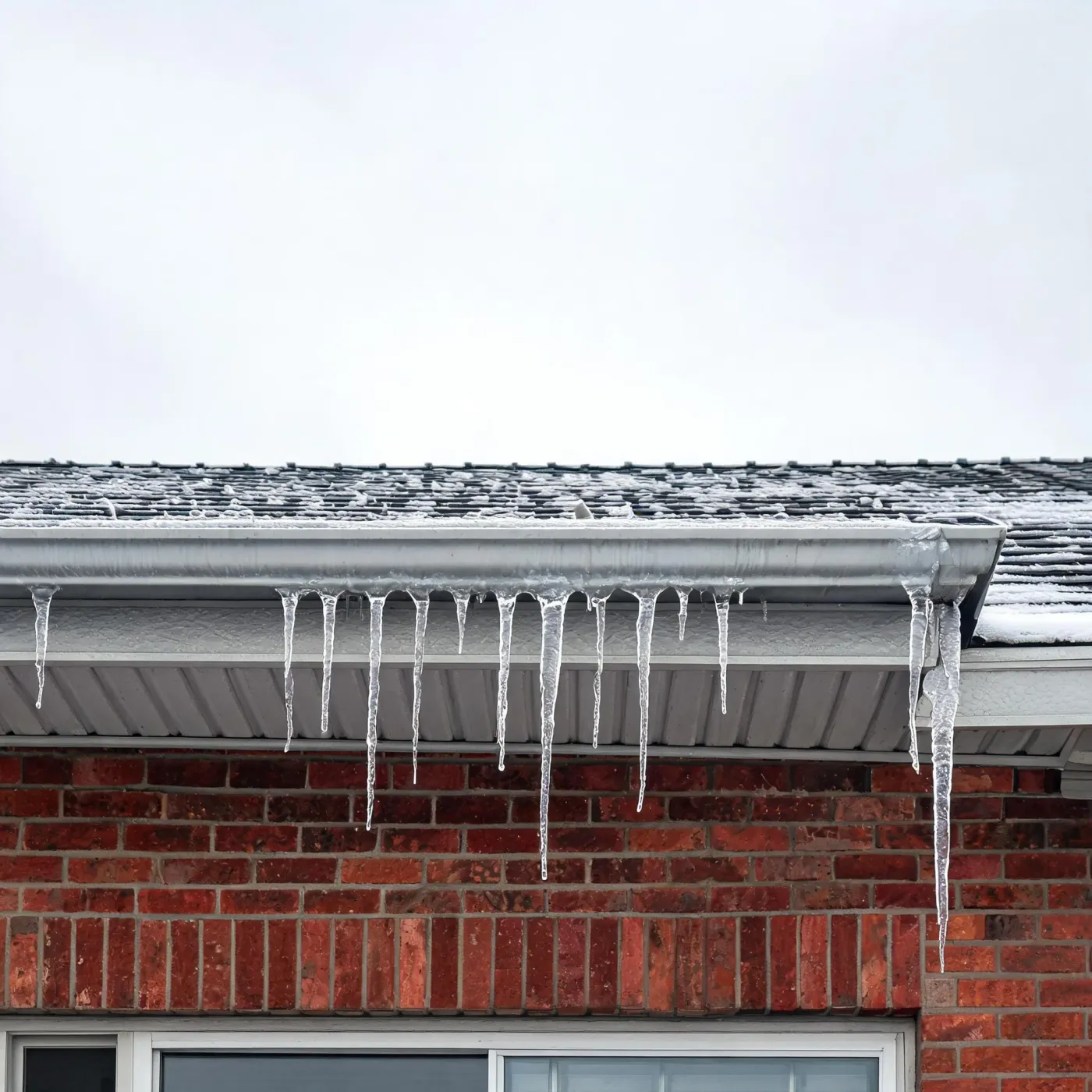
Icicles hang from a metal gutter along the eave of a red brick house with a snow-dusted shingle roof under an overcast white sky.

Winter nights average 25°F across Missouri, according to NOAA climate data. That's cold enough that your furnace is cycling on through most of the night, not just running a stretch in the early morning and shutting off. Each cycle pulls return air across the filter, and more cycles means more passes before you'd think to check it. A filter that looked fine on a 40°F night can be noticeably grayer a week later once nights settle into the mid-20s. It's worth a look after the first hard cold snap, not just on a set date on the calendar.

NOAA nClimDiv 1991-2020 county normals weighted by homes

Skip It or Get It Checked

Skip the filter check

  • Dust and pet hair keep building on the filter face until airflow drops low enough that the blower strains on every cycle.
  • Rooms farthest from the furnace stay colder than the rest of the house because the choked filter can't push enough air that far.
  • The blower runs longer trying to make up for the lost airflow, so it logs more hours than it was built to log.
  • A furnace working against a clogged filter puts more wear on the parts that move air, not less, the longer it goes unchecked.
  • You won't see any of this happening behind the filter slot, so the first sign is usually a cold room or a furnace that runs longer than it used to.

Get it serviced

  • A technician who works on furnaces all winter in Missouri checks the filter against what your system has actually been doing, not a generic schedule.
  • One licensed, local contractor handles the visit, so you're not fielding calls from several companies trying to win the job.
  • You skip calling around, explaining the same problem twice, and sorting through quotes that are hard to compare.
  • Someone who services this equipment every season knows which parts tend to fail first when a filter has been restricting airflow.
  • A technician can check the blower and the filter together, instead of you guessing which one is causing the cold room or the long runtime.
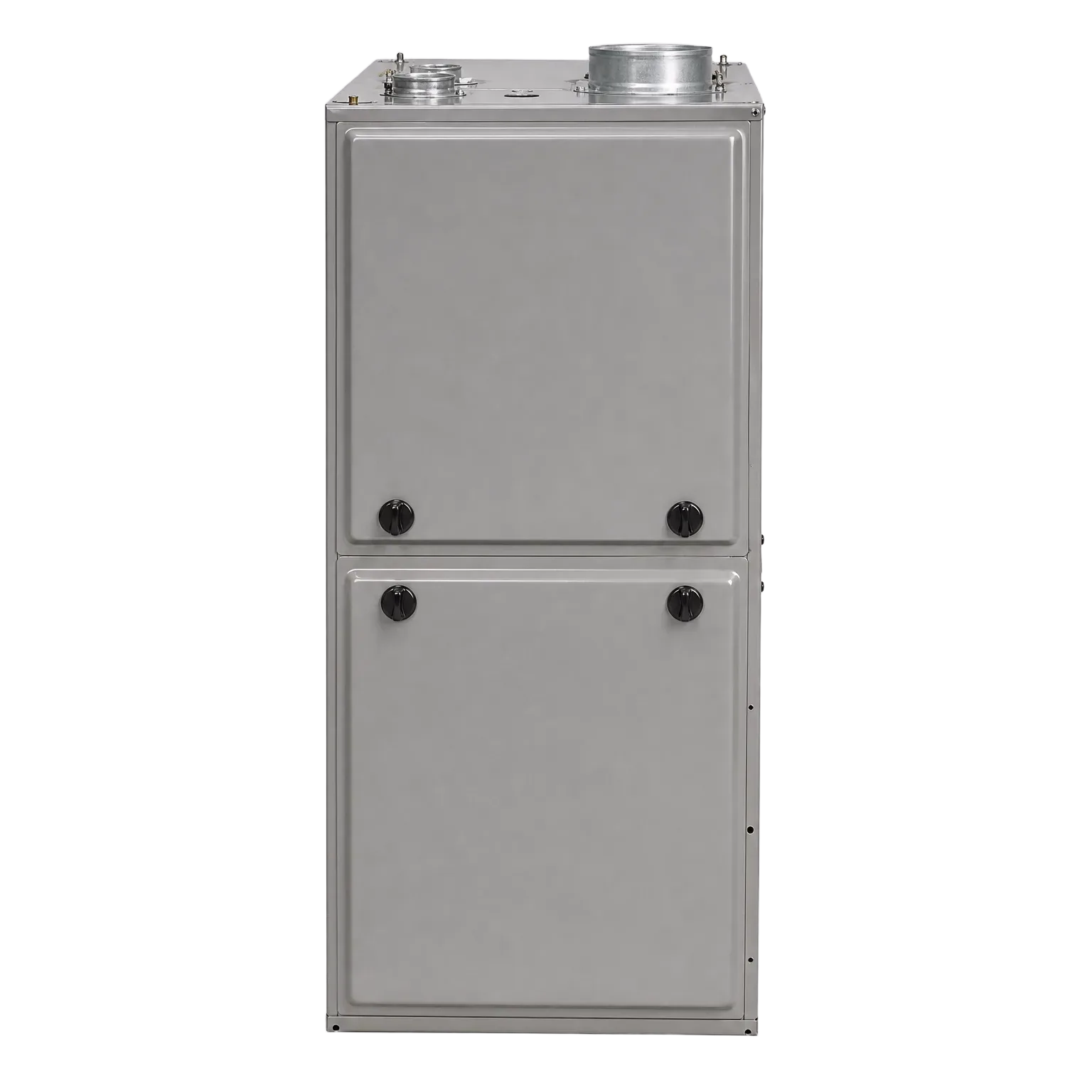
A gray high-efficiency furnace with two access panels stands in a bare basement corner, connected to sheet-metal ductwork, white PVC vent pipes, and flexible gas and electrical lines.

Why summer humidity matters here

Missouri summers get sticky, and that moisture doesn't disappear when the furnace starts up in fall. It's been settling into the dust already sitting on your filter for months. Wet dust mats together instead of falling loose, so it clings to the fibers and narrows the gaps air needs to pass through. By the time you're running heat through December, that filter is already carrying a denser load than a filter in a dry climate would.

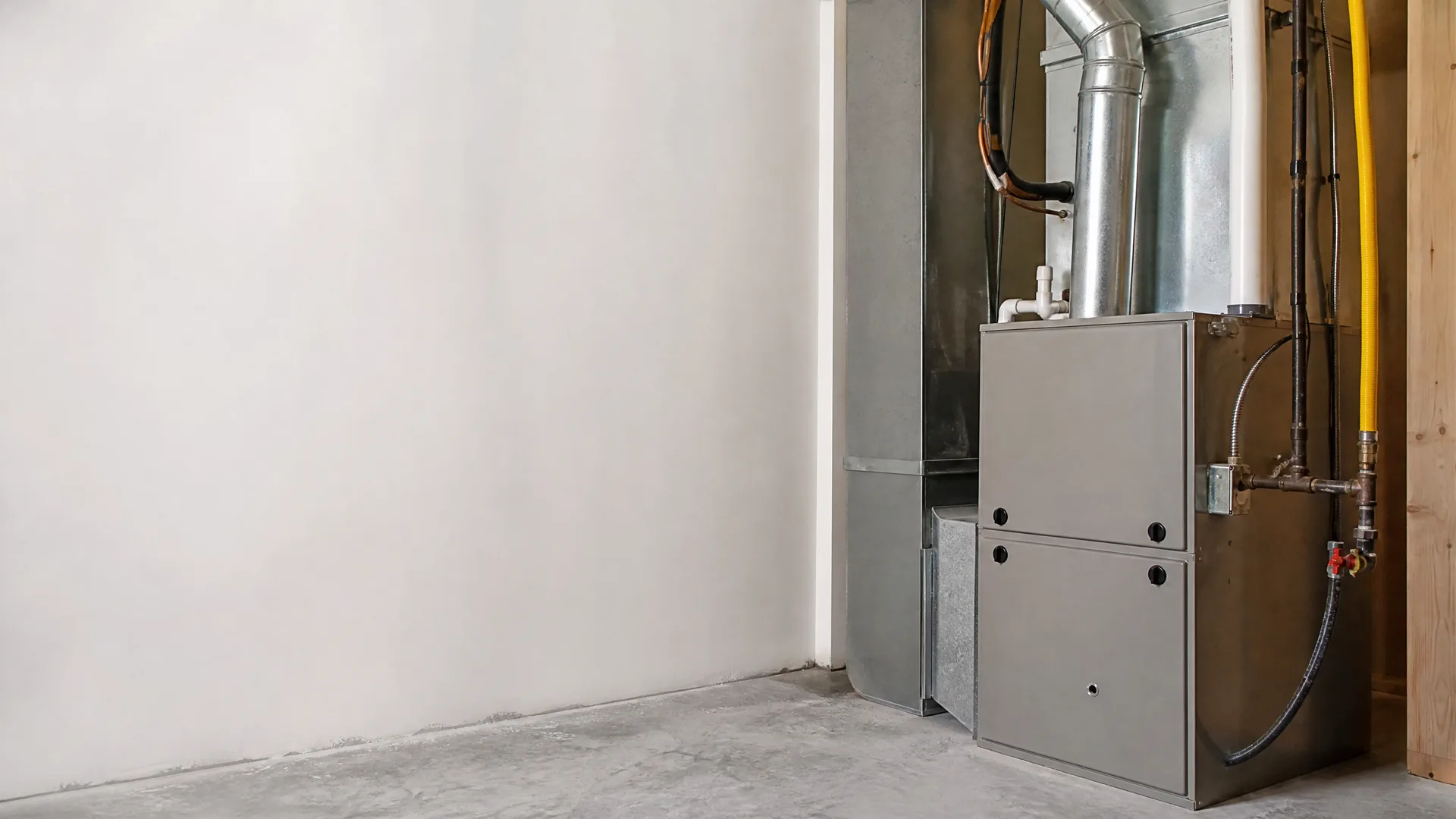
A gas furnace with metal ductwork, copper and yellow gas piping stands against a wall in an empty room with a bare concrete floor.

What a gas furnace demands of it

A gas furnace needs steady airflow to run safely, not just efficiently. The blower is sized to pull a set volume of air across the filter on every cycle, and it doesn't adjust downward when the filter gets tight. It just works harder to force the same amount through. Over weeks of cold weather, that strain adds up, and it's the same filter dealing with both the dust load and the resistance it's creating against itself.

Winter nights average 25°F statewide

At 25°F overnight, your furnace isn't cycling off for long stretches. It's firing again and again through the night to hold the house steady, and every cycle pulls more air, and more dust, across that filter.

NOAA nClimDiv 1991-2020 county normals weighted by homes

Where this leaves you

  • A dirty filter in a Missouri furnace comes down to how hard the blower works through a cold winter and a humid summer carryover.
  • Checking the filter on a schedule that fits your actual furnace use matters more than following a generic thirty or ninety day rule.
  • A local contractor who services furnaces all season knows which filter types and sizes clog fastest in this climate.
  • Working with one licensed contractor means a single visit and a straight answer, instead of sorting through several companies for the same job.
  • Someone who sees Missouri furnaces every winter can spot a restricted filter and a strained blower before they turn into a bigger repair.
  • Keeping the filter clean protects the parts that cost more to fix, since the blower and heat exchanger both depend on steady airflow.

A furnace filter in Missouri gets dirty fast because the blower is working through a long cold winter and starting that work with a summer's worth of humidity already stuck to the dust. That's the whole answer. The fix isn't complicated, but it depends on someone actually looking at the filter on a schedule built around your furnace, not a number off a package. A contractor who services furnaces all winter in this area has seen what happens when that gets skipped. They know which filter sizes clog first, what a strained blower sounds like before it fails, and how a restricted filter starts costing you through the heat exchanger long before the furnace stops working outright. That's the kind of thing you learn from doing this every season in houses like yours, not from a general checklist. When you request help through this page, it goes to one licensed contractor local to Missouri. You're not fielding calls from five companies trying to win the job, and you're not re-explaining your furnace and your filter situation from scratch each time. You get one visit, one person who already knows what Missouri winters do to a furnace, and a straight read on whether what you're dealing with is a filter problem or something further along. The airflow question is simple enough. Getting a straight answer about your own furnace is the part worth handing off.

A covered porch with a wood front door with six upper glass panes, a lantern wall sconce, tapered column on a stone base, potted ferns and flowers, a woven doormat, and wide steps leading to a paver walkway bordered by shrubs and white hydrangeas.
A beige upholstered sofa with a cream cushion and chunky knit throw sits beside a white-framed window, with a leafy potted plant in a stone vase against a tan wall.
Sunlit corner of a room with a linen curtain beside a window, built-in shelves holding ceramic vases, wooden bowls, a potted green plant, stacked books and a woven basket, above a textured rug.
A dark wood three-drawer dresser against a pale wall holds a tall ceramic vase with leafy branches, stacked books and a shallow bowl, with a framed print above, a woven basket on the wood floor at left, and an upholstered sofa with a green pillow in the foreground.
A cream upholstered sofa with a textured ivory cushion and a rust-colored cushion sits beside a window with sheer linen curtains, with a potted leafy plant behind it and a wooden bowl on a wood table in the foreground.

Explain it one time

Your request stays with one local pro.

Fill out one form

No fee to send it, and nothing to sign.