How to restart a furnace after a Missouri power outage
Once you send the form, finding a pro is off your list.
The power comes back on and the furnace doesn't. In a Missouri winter that's not a small thing. Most homes here run on gas, and gas furnaces need an electric spark or a hot surface igniter to get going again. A dead thermostat display, a blower that won't kick on, a flame that lights and then quits. All of these are common after an outage, and most of them aren't the furnace itself failing. Something in the restart sequence got interrupted and needs to be reset in the right order.
You can usually try that yourself first, and the steps for doing it are below. But if you've gone through them and the furnace still isn't running, the next step is finding someone who can look at it. That's usually where the real time goes. Calling a few companies, waiting for someone to pick up, explaining the same thing three times, then trying to figure out if the quote you got back is fair or if you should wait for another one. In a house with no heat, none of that is what you want to be doing.
Send the form on this page and that part stops being yours to manage. You're not the one tracking down a contractor who's free, or deciding which of three estimates makes sense, or repeating what happened to a fourth person on the phone. Once it's sent, someone else is doing that legwork.
That doesn't mean the furnace gets fixed in an afternoon. It means you stop spending your afternoon on the part that isn't fixing anything, the searching and comparing and re-explaining. Read through the restart steps below. If they get your furnace running, good. If they don't, the button is there.
Most of the time a furnace will restart on its own once power returns. Go to the thermostat first. If the screen is blank, check your breaker panel for a tripped switch, since the furnace usually shares a circuit with the thermostat and blower. Flip it back and give the system a minute. If the thermostat is lit but the furnace stays quiet, check the switch that looks like a light switch near the furnace itself, often at the top of the basement stairs or right by the unit. That's the furnace's power switch, and a power outage can leave it bumped off. If both of those look fine and you still have no heat, the outage likely tripped the limit switch or interrupted the igniter's cycle, and the furnace needs a reset at the unit or a look from someone who can tell what shut it down.
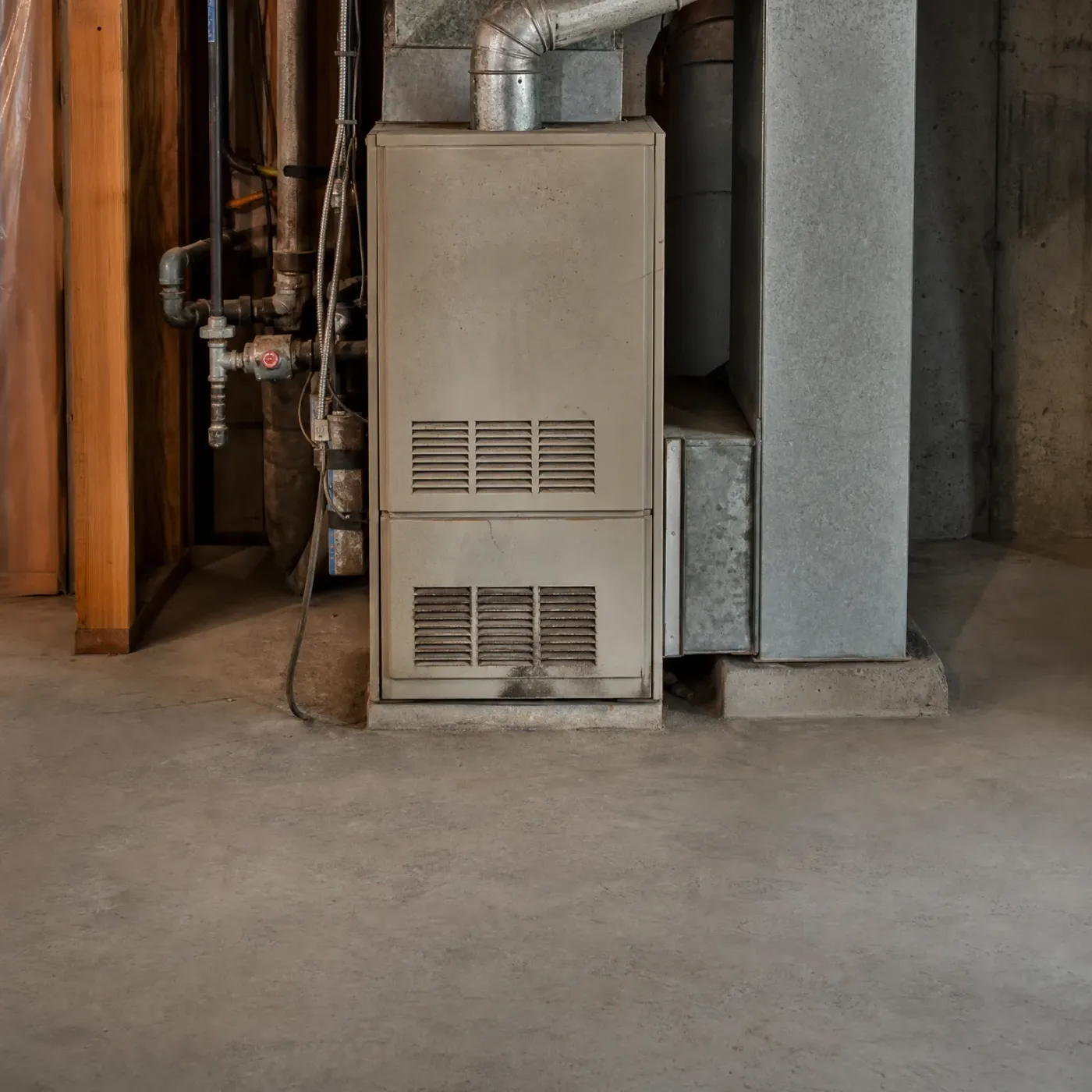
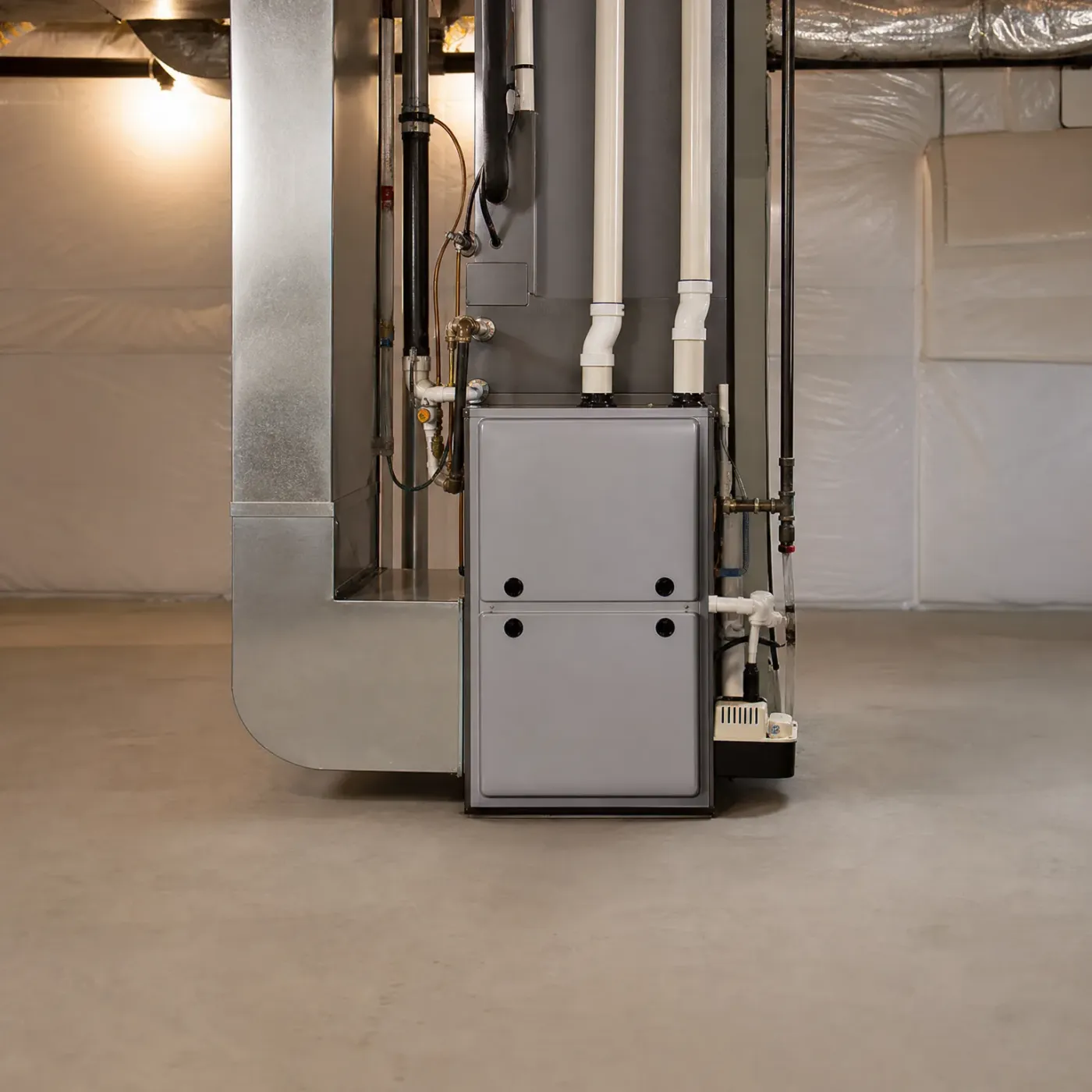
Furnace comes back up clean: blower kicks on, burners light, flue pipes draw normally, and the thermostat holds the temperature you set.
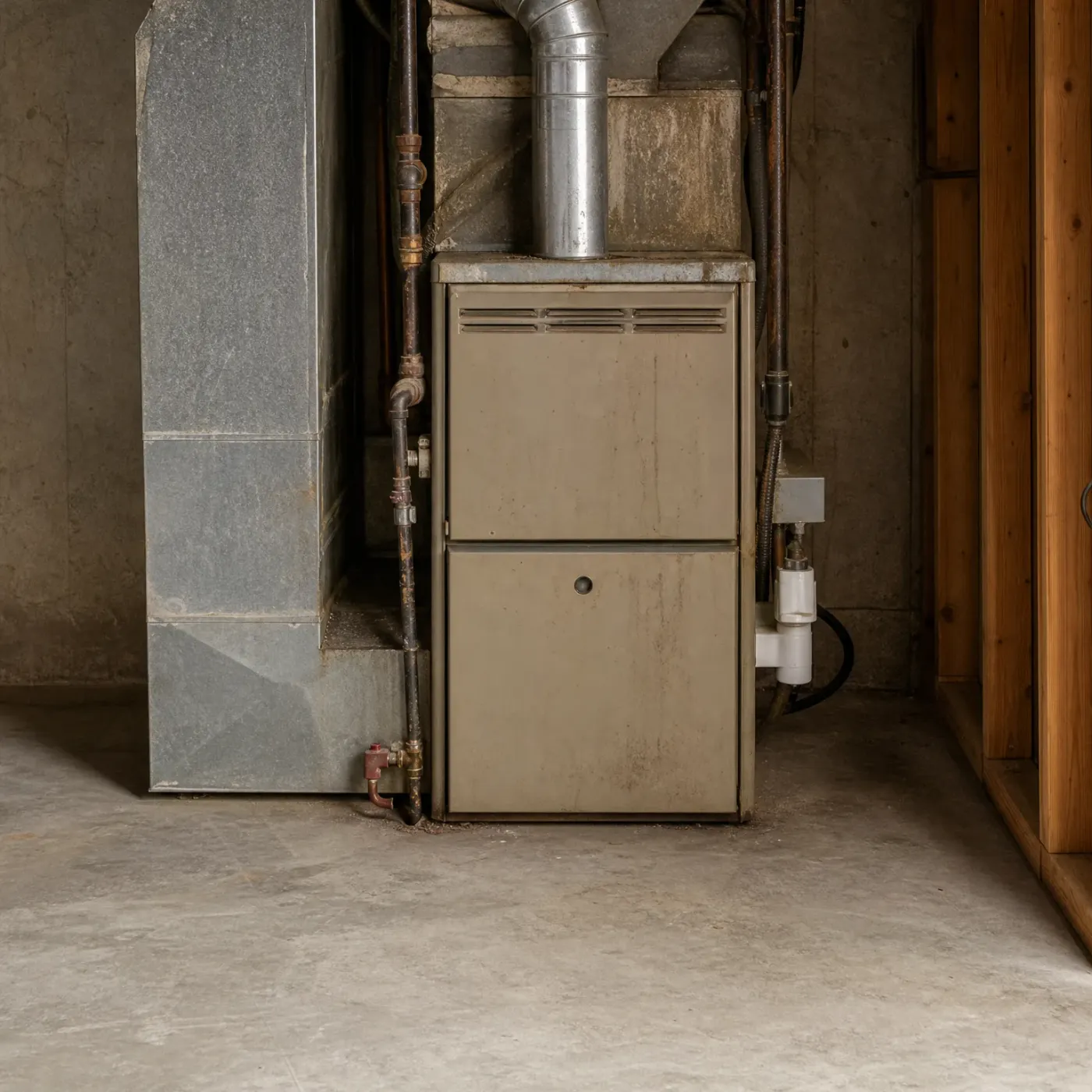
Furnace stays quiet or short cycles after the outage: no ignition, no airflow, or it shuts off again within a minute or two.
Reset It Yourself or Call It In
Try this yourself
Set the thermostat a few degrees above room temperature and listen for the blower within a minute or two.
Check the furnace switch, the one that looks like a light switch near the unit, since it can get bumped off during an outage.
Look at the condensate line if your furnace is a high-efficiency model, since a frozen or blocked line can stop it from firing after a cold outage.
Reset the breaker once, not repeatedly, since a breaker that trips again points to a short rather than a simple reset.
Check the furnace filter if you're already at the unit, since a clogged one can keep a furnace from running even after power is restored.
Call for repair
The igniter glows or clicks but the burners never catch, which usually means the igniter itself failed during the power cycle.
The breaker trips again as soon as you reset it, which points to a short somewhere in the furnace's wiring.
The blower runs but no heat follows, which can mean the gas valve didn't reopen or the control board didn't send it the signal.
You smell gas near the furnace at any point, which means the furnace stays off and a contractor handles it, not a breaker reset.
The thermostat display stays blank even after you confirm the breaker is set and the furnace switch is on.
Skipping the search for a contractor who's available now, the calls to compare who can come out, and explaining the outage story more than once.
Running the way it should
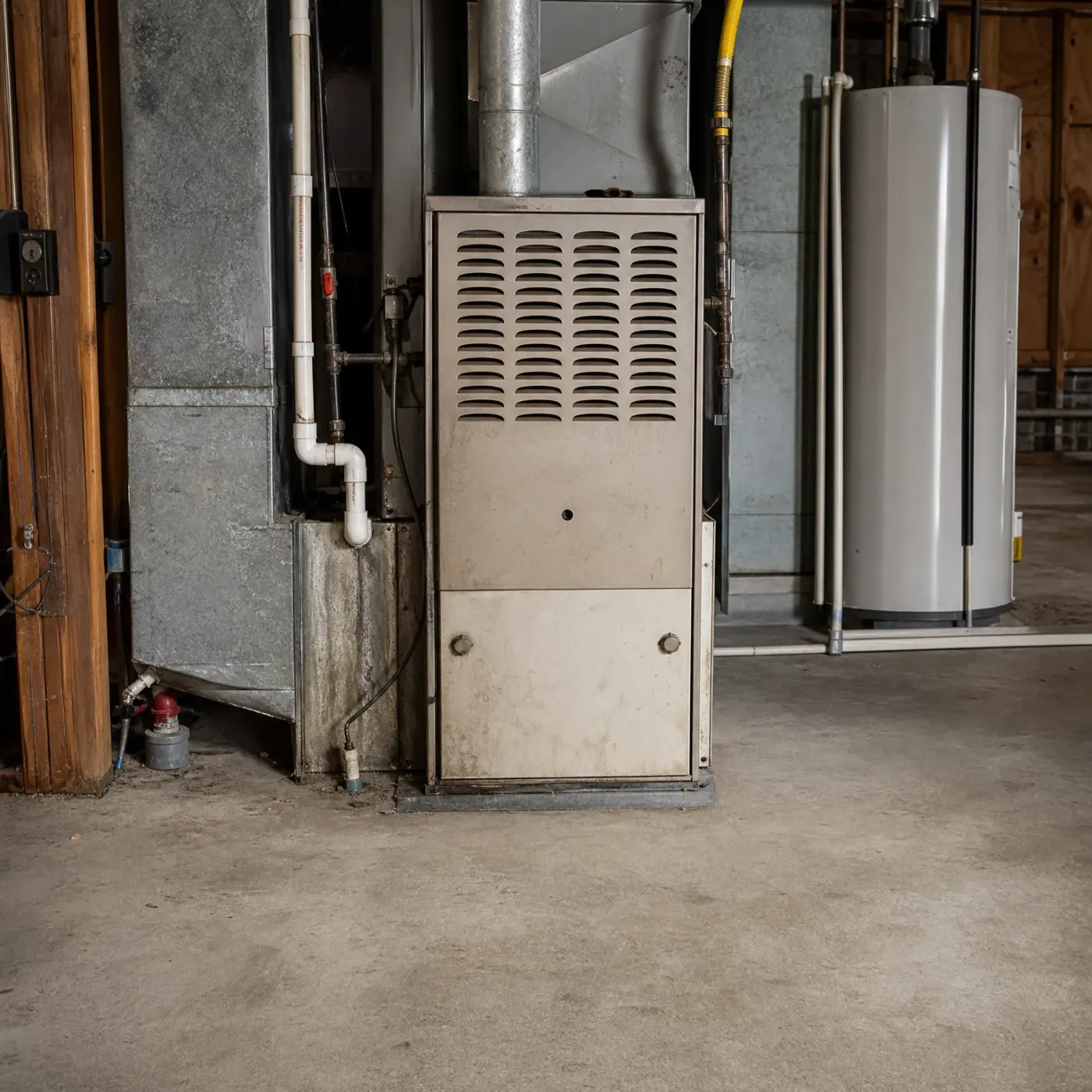
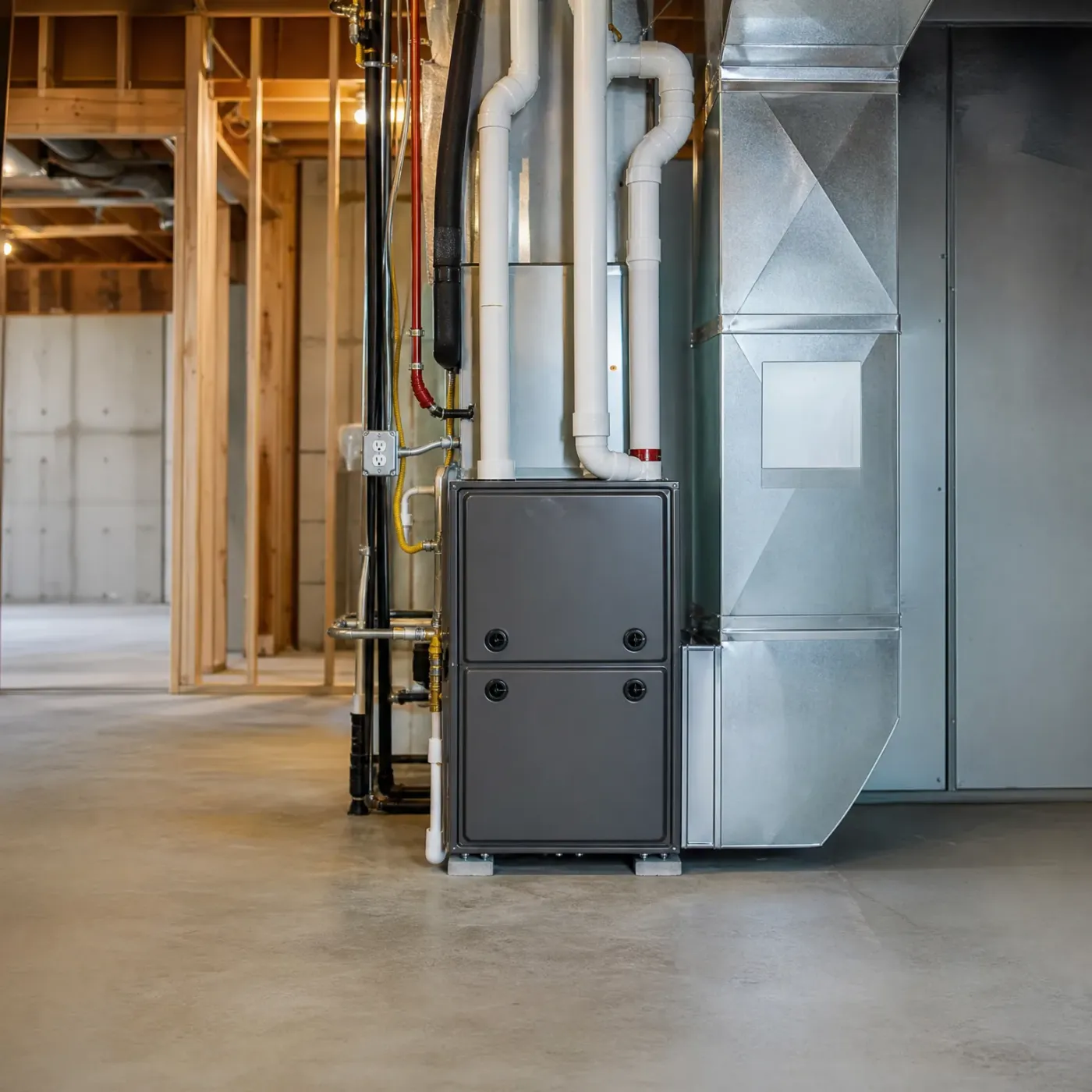
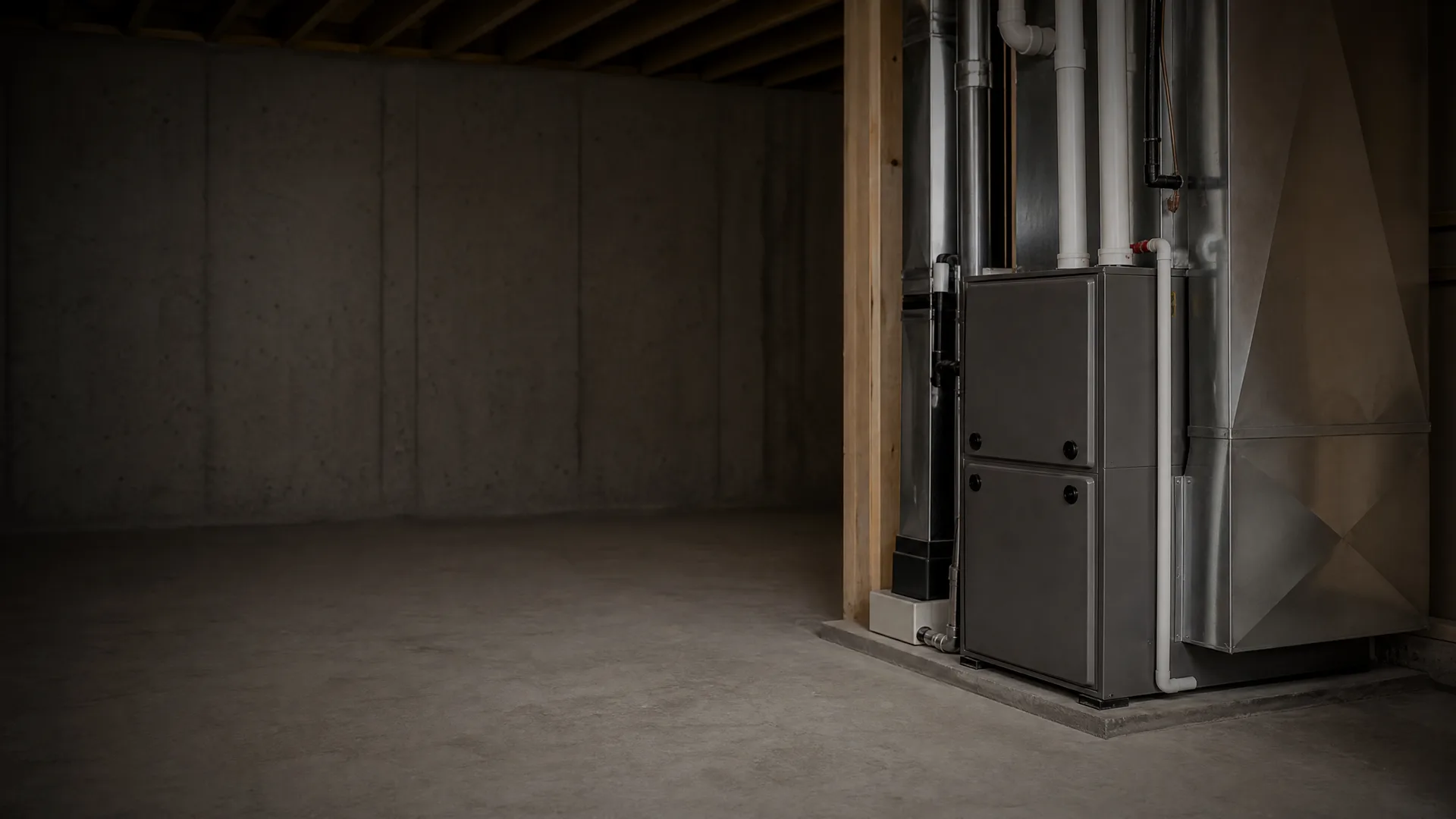
This is what a normal restart looks like. The furnace sits quiet in the basement, flue pipes clear, burners lit, air moving through the ductwork. No odd smell, no clicking, just the blower doing its job and the house climbing back to the temperature you set.
Something didn't catch
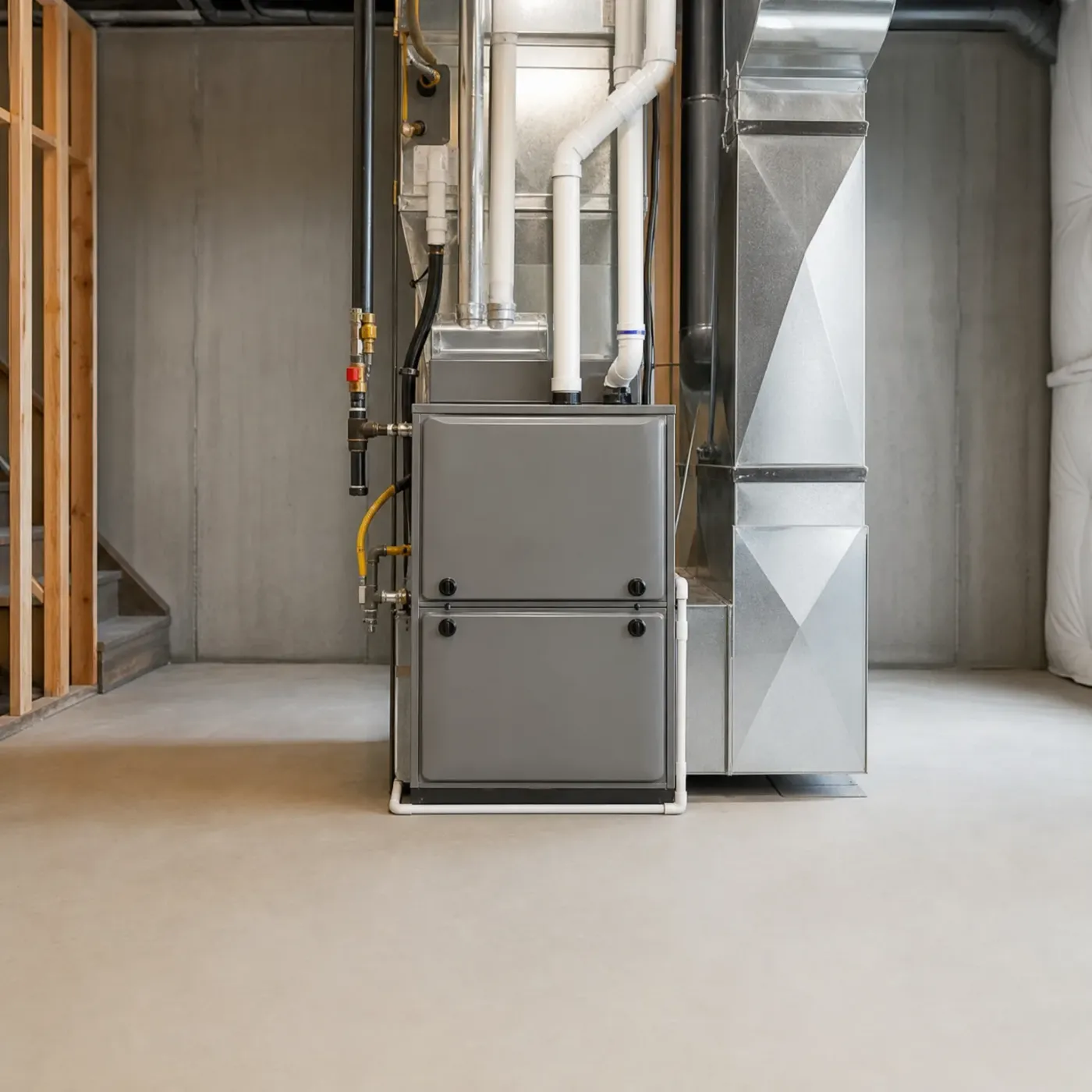
Same furnace, same basement, but the burners won't fire or the blower cuts out again a minute later. A power outage can knock out an igniter or leave a pressure switch stuck, and a furnace that won't hold a flame needs a look before you run it again.
If you've gone through the thermostat, the breaker, and the furnace switch and the thing still won't fire, you're not going to solve it by waiting it out. A furnace that won't restart after an outage usually comes down to the igniter, the flame sensor, or the control board, and none of those are a fix you do from the basement stairs. Missouri winters don't leave much room for a furnace to sit dead for days while you call around, explain the problem to one company, get put on a list, then start over with the next. Send the request here and that part is done. You won't be the one tracking down who's free, repeating the story of what you checked and what you heard, or weighing bids against each other. One contractor gets your information and takes it from there, and the house gets heat back without you spending the week managing it yourself.
1
Power returns and the control board runs a self-check first.
2
The inducer motor spins up to clear the flue of air.
3
A pressure switch confirms draft before anything can ignite.
4
The igniter heats up or sparks to light the burners.
Why won't my furnace light even though the inducer motor is running?
You can hear the inducer motor spin up, so you know power's getting to the furnace and the board is calling for heat. But the burners never catch, and after a minute or so the whole thing shuts down and the motor stops too. That's different from a furnace that's completely dead, and it usually points to one specific part rather than a wiring problem.
The pressure switch isn't closing, or the igniter isn't lighting the gas
A running inducer motor means the board got that far in the sequence, but something after it is stopping the process. Usually it's the pressure switch. The inducer has to pull enough vacuum to flip that switch before the board will let gas valve and igniter do anything, and if the switch doesn't close, the board waits, then locks out and tries again. If the switch does close, the next suspect is the igniter itself, either a hot surface igniter that's cracked or weak, or a spark igniter that isn't producing a spark strong enough to catch the gas. Either way, the motor running tells you the problem is downstream of it, not the motor itself.
Before you get your furnace repairAfter you get your furnace repair
Winter nights average 25°F statewide
Twenty-five degrees is cold enough that a furnace sitting dark for even an hour after an outage starts to show in the house, especially overnight. If yours doesn't fire back up on its own, that's the gap you're working against until it's running again.
NOAA nClimDiv 1991-2020 county normals weighted by homes
If it's still not running, that's your answer
Most furnaces come back on their own once the power's back. If yours didn't after checking the thermostat, the breaker, and the switch on the unit, the outage exposed a part that was already close to failing. That's worth knowing, because it means the outage didn't break your furnace. It just showed you the weak spot.
Finding a contractor on your own means sorting through reviews, calling around to see who even picks up, and explaining the same thing about the inducer motor or the igniter to each one. Send the form and that part's done. You won't be the one tracking down who's available in Missouri this week, or repeating yourself to a third company because the first two never called back. You'll just be waiting on the house to warm back up.