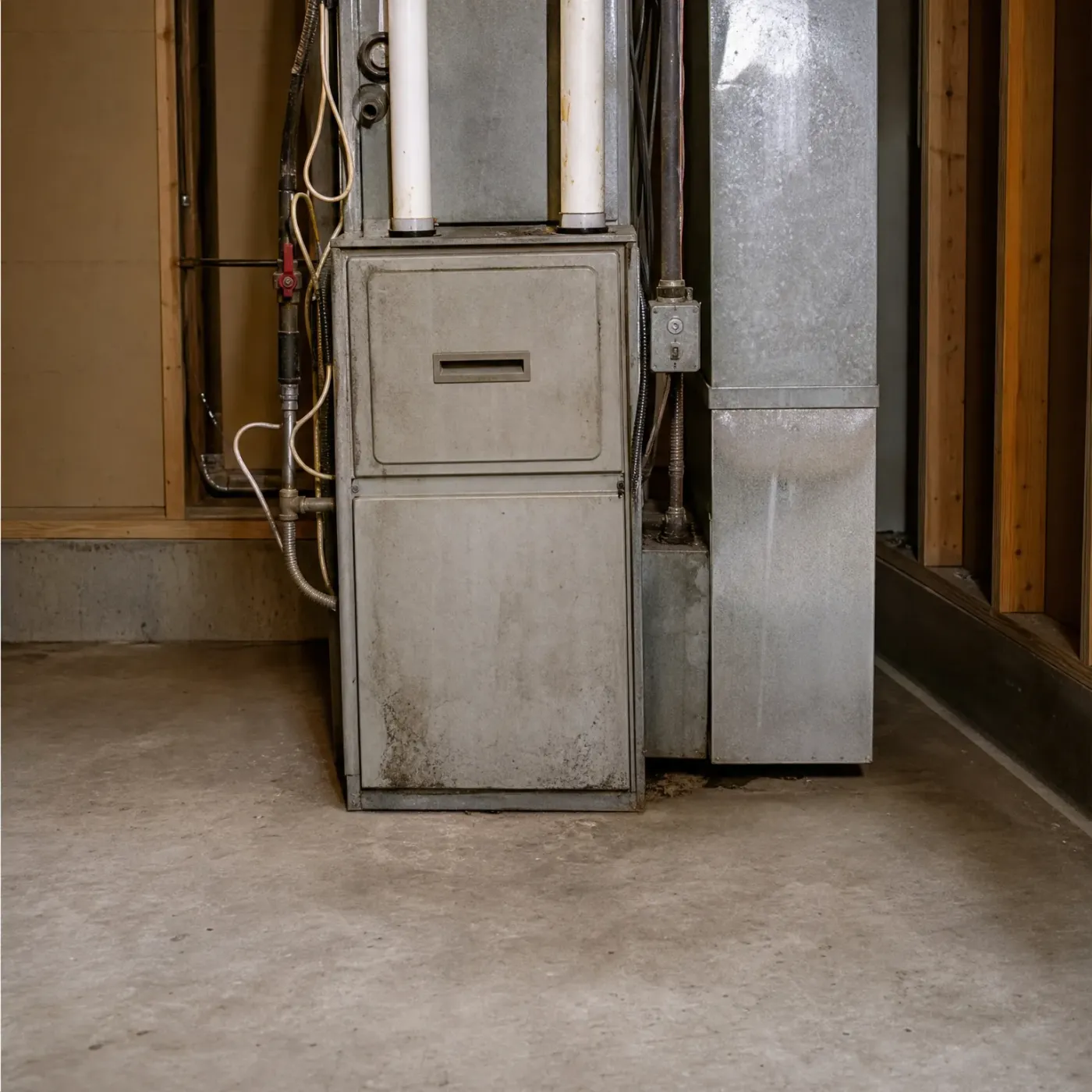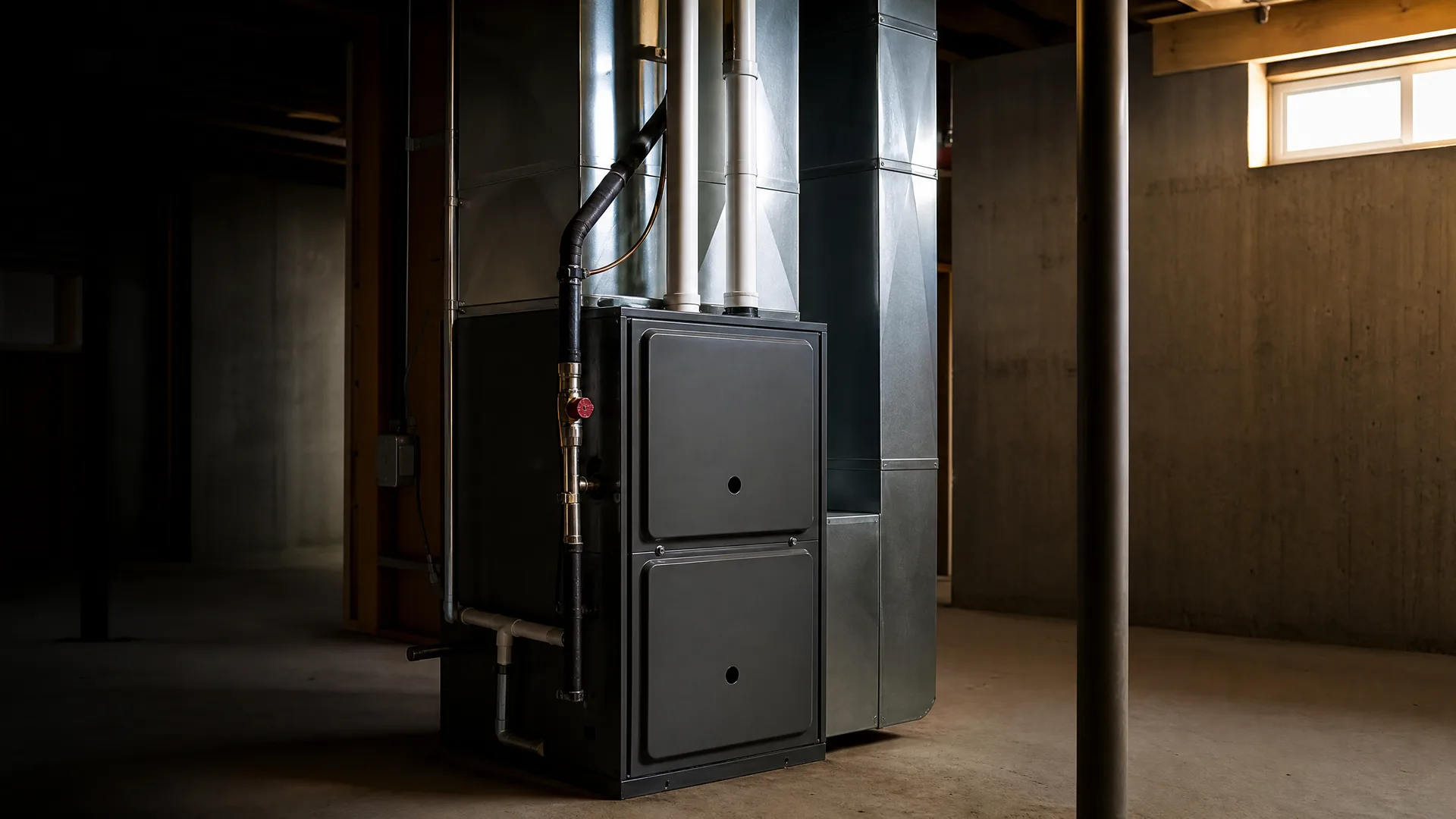




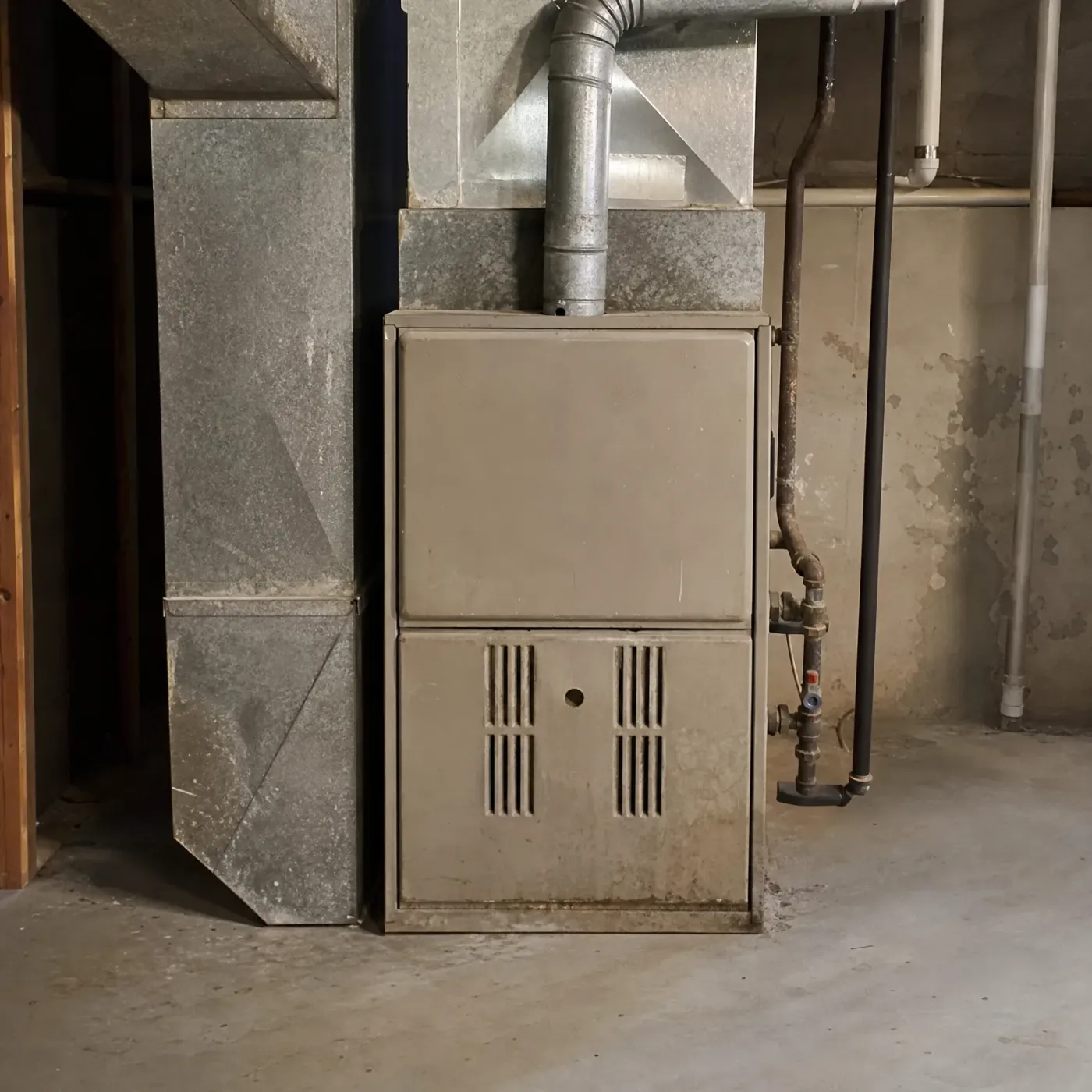
How long a furnace lasts in St. Louis, MO

I'm done searching

A furnace that's starting to quit on you in a St. Louis winter doesn't wait for a convenient week. Cold snaps here don't give much warning, and once a furnace is on its way out, you're stuck deciding whether to gamble on one more season or replace it now. Either way, the part most people dread isn't the decision. It's finding someone to call: searching around, phoning a few places, explaining what's wrong with your system to each one, then waiting on quotes to compare. That's hours you don't have when the house is getting cold. Send the form here and that work is off your plate. You won't be the one tracking down a contractor or repeating yourself to every voice on the phone. Someone qualified for the job gets matched to you, and from there it's their question to answer, not yours. That's the whole point of the button below.

A furnace in St. Louis lasts 15 to 20 years. Gas furnaces make up most of the heating here, and that span is normal for a gas furnace that's been maintained, meaning the burners and heat exchanger cleaned and checked most years. What shortens it is the swing this region asks of the equipment: summers that stay hot and muggy into September, winters that turn cold fast, so the furnace sits idle half the year then gets asked to run hard with little warm-up. A furnace near the end of that range that starts short-cycling, running longer to hit the same temperature, or tripping its limit switch is telling you it's failing, not having an off day. If your furnace came with the house and you don't know its age, the date on the nameplate inside the cabinet will tell you where it stands. Past 15 years, a repair decision is really a decision about how much longer you want to bet on it.

Why does a furnace here wear faster than in a milder state?

  • Winter nights average 26°F

    Winter nights average 26°F here, so a furnace runs long hard cycles to hold the house steady until morning.

  • Heat runs October through April

    Heat runs October through April, close to seven months a year, which adds up to more hours on the same equipment.

  • 66.8% of homes heat with gas

    66.8% of homes here heat with gas, so most of this wear is on burners and heat exchangers, not electric elements.

NOAA nClimDiv 1991-2020 · ACS 2020-2024

Keep servicing an older furnace and you're betting on a known routine: a cleaning and inspection most years, parts replaced as they wear, a bill when something fails. Plenty of furnaces make it to 20 on that bet.

Replace it ahead of a failure and you're trading that bet for a scheduled job on your timeline, not a cold morning's. You pick the week. You're not choosing between a contractor at 2 a.m. and whoever answers first.

A man in a blue sweatshirt reclines with closed eyes in a brown leather armchair in a living room with a bookshelf, houseplant, sofa, window, and a side table holding newspapers and a dark mug.
A bearded man in a gray pullover reclines with closed eyes on a brown leather sofa in a sunlit room with a window, framed picture, potted plant, and a wooden cabinet holding papers and a dark mug.
A man in a gray sweater leans back with closed eyes in a brown leather armchair beside a wooden side table holding a dark mug and a folded newspaper, with bookshelves and a window seat behind him.
A man in a green sweater reclines in an armchair with his eyes closed and a slight smile, beside a window with plants, a small table holding a mug and folded newspaper, and bookshelves behind him.

A furnace doesn't just flip on. The burners fire first, and the furnace waits until the heat exchanger has warmed up before the blower starts pushing air, so you're not getting a blast of cold from the vents. Before any of that, an inducer motor has to clear exhaust out through the vent. If it can't, the furnace won't light at all. The igniter is what actually sets the gas burning, and after enough winters of long cycles, it's often the first thing to wear out. A flame sensor watches for that flame and cuts the gas if it's not there, regardless of how old the unit is. The part that decides how long the whole furnace lasts is the heat exchanger. It's the one piece that can't be swapped out on its own. Once it cracks or corrodes, the furnace is done, not repaired. In St. Louis, where the furnace runs long and hard for months at a stretch, that wear lands on the heat exchanger sooner than it would somewhere milder.

How a gas furnace actually runs

  • A gas furnace fires the burners first, then waits for the heat exchanger to warm before the blower kicks on, so the house doesn't blow cold air.
  • The heat exchanger is the part that cracks or corrodes with age, and once it does, the furnace has to be replaced rather than repaired.
  • An igniter glows or sparks to light the gas, and it's one of the first parts to fail after years of long winter cycles.
  • The inducer motor pulls exhaust out through the vent before the burners light, and a furnace won't start at all if it can't do that job.
  • Every long cycle through a St. Louis winter adds wear to the same handful of parts, which is why furnaces that run hardest tend to need the heat exchanger replaced sooner.
  • A flame sensor shuts the gas off if it doesn't detect a flame, a safety step that has nothing to do with how old the furnace is.
A beige gas furnace in a basement with a metal flue pipe, galvanized sheet-metal ductwork to its left, and gas and water pipes along the concrete wall to its right.
Before you get your furnace installation
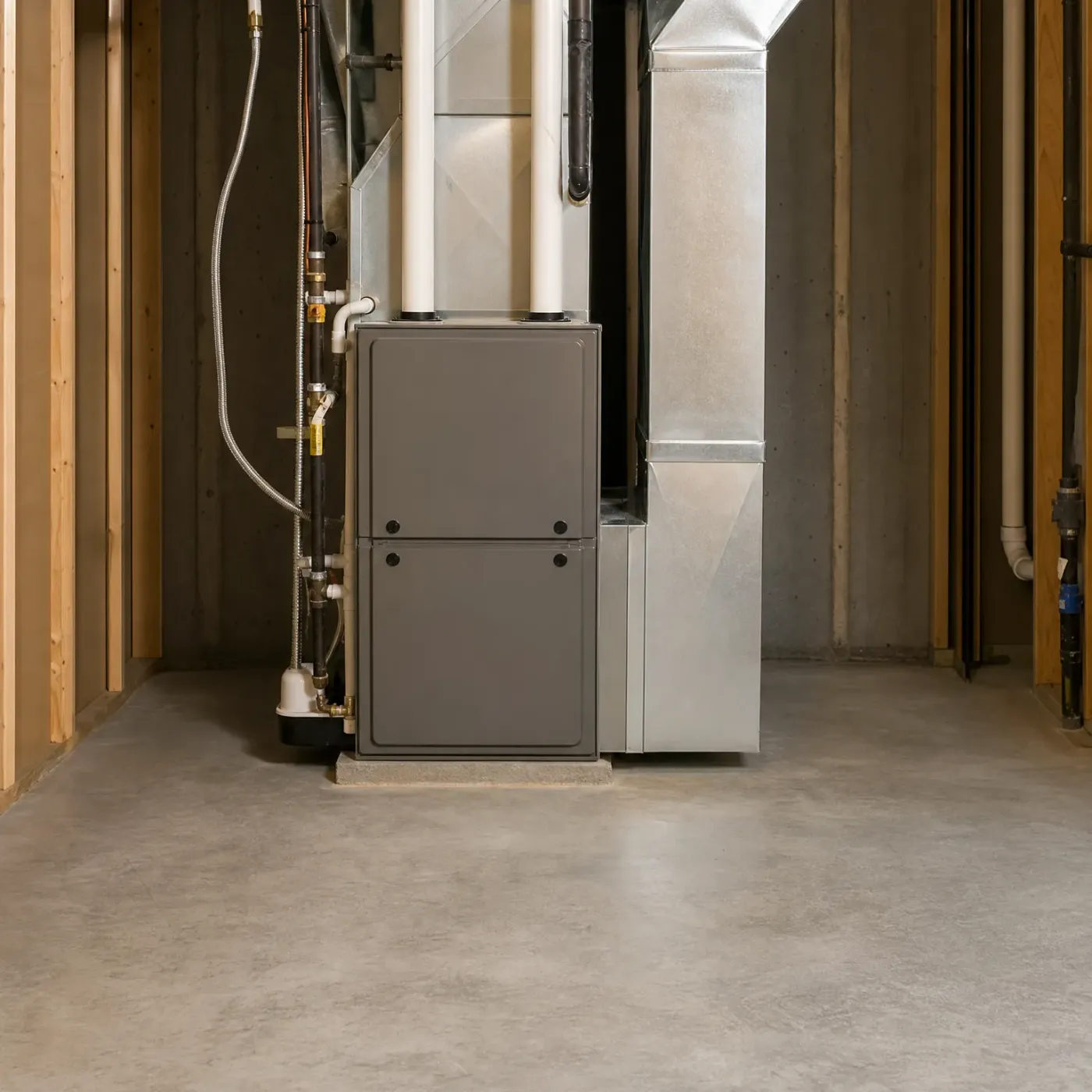
A gray high-efficiency furnace with white PVC vent pipes stands on a concrete pad in a basement, beside sheet-metal ductwork, copper piping and a poured concrete wall with wood framing at left.
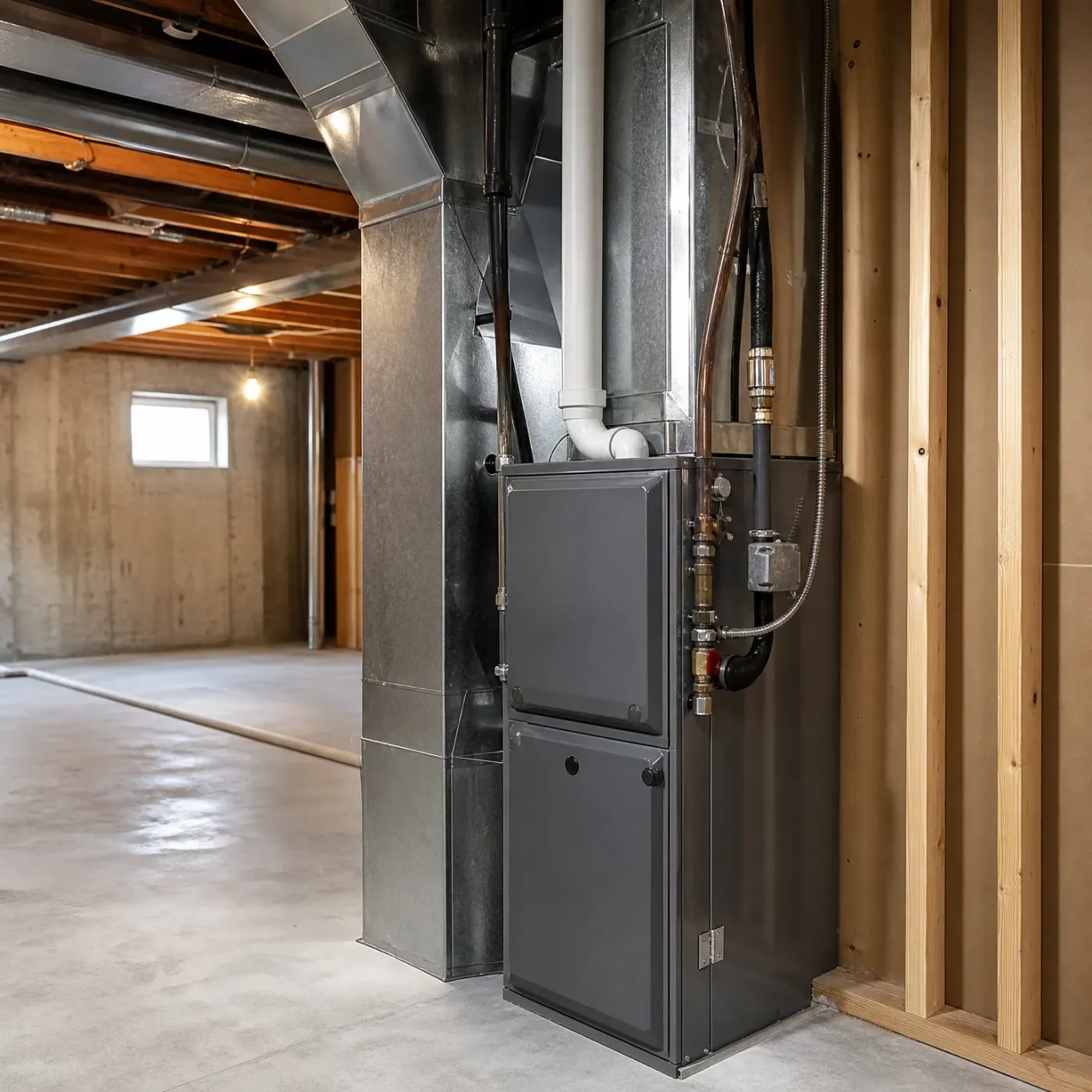
After you get your furnace installation
A gray furnace with copper and flexible piping stands against a wood-framed wall in an unfinished basement, connected to galvanized sheet-metal ductwork and PVC venting, with a concrete floor and exposed joists.

One request and it's handed off

Skip collecting and comparing quotes for the new furnace.

After you send the request, you're done searching.

Hand it over

It costs nothing to send, and you don't have to hire anyone.

Is your furnace telling you it's done

Walk past it and listen. A furnace near the end makes noise it didn't used to: a bang when the burners light, a screech from the blower, a rattle that wasn't there last winter. You might notice a room or two that won't hold heat anymore, or a short cycle that shuts off before the house catches up. Some people notice the smell first, a burnt or metallic smell when it kicks on. A yellow flame instead of blue is worth paying attention to, since that can mean the gas isn't burning clean. None of this means it quits tonight. It means the parts inside are wearing the way parts do, and a cracked heat exchanger or a failing igniter won't fix itself.

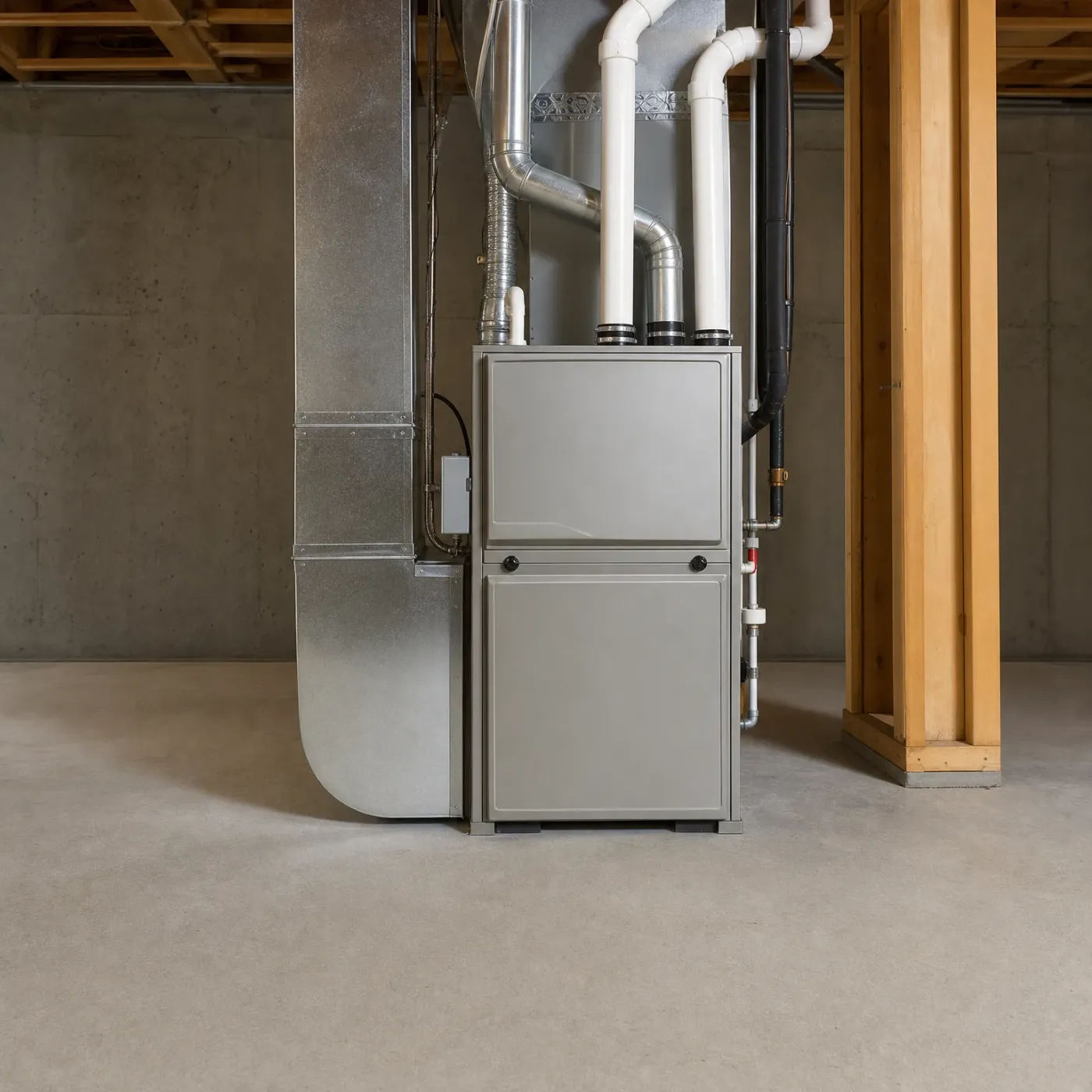
A gray high-efficiency furnace stands on a concrete basement floor beside sheet-metal ductwork, with white PVC vent pipes and a black flexible line running up to exposed wood floor joists, next to a wood-framed post against a concrete wall.

Running the way it should

The burners light, the heat exchanger warms, and the blower pushes air through the ductwork without a fight. The flue and condensate lines overhead clear exhaust the way they're supposed to. A furnace like this still has years left in it.
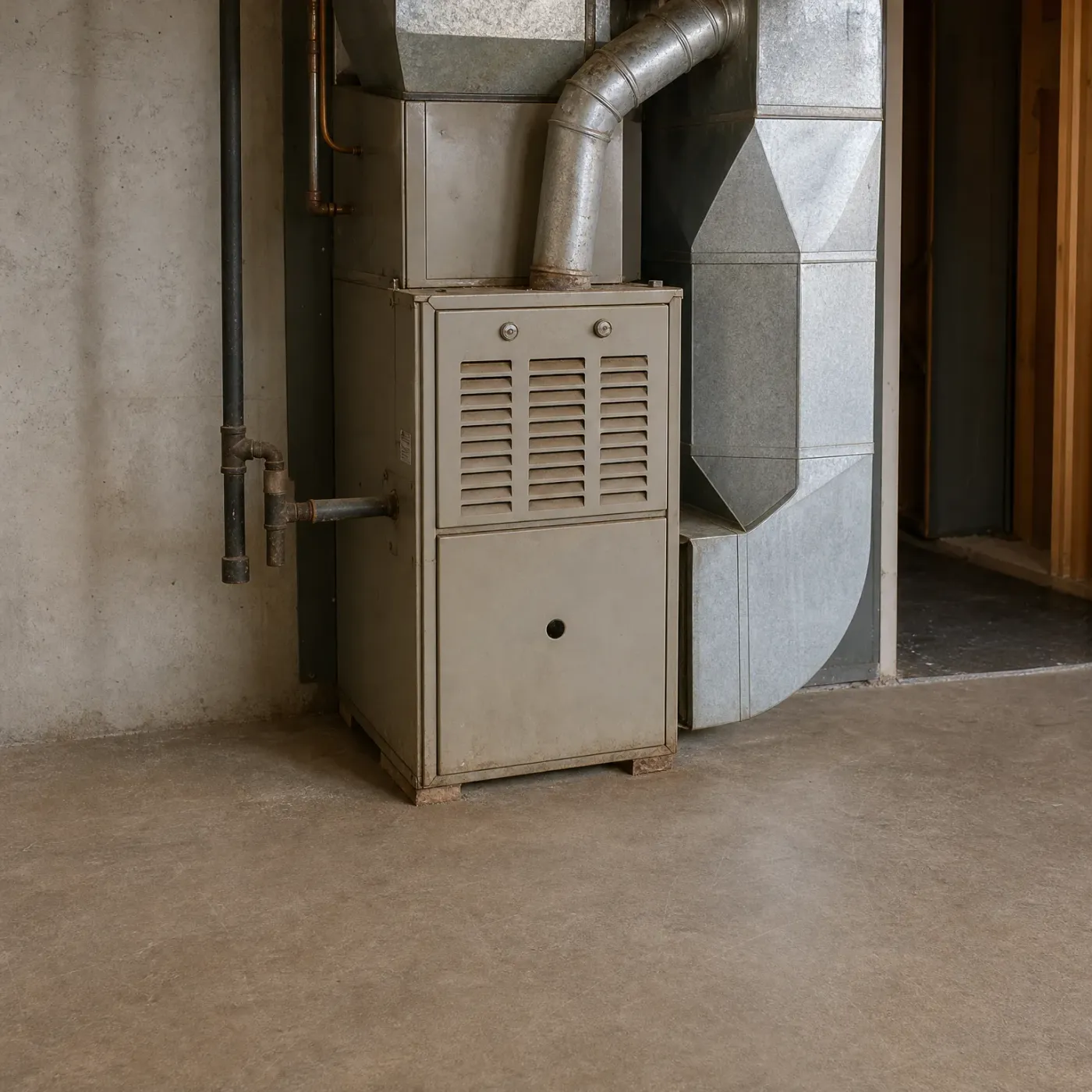

A beige metal furnace with a louvered front panel stands on a concrete floor against a concrete wall, connected to galvanized sheet-metal ductwork and a metal pipe.

Showing its age

Black iron gas pipe and an older upflow cabinet don't tell you the furnace is failing by themselves, but a furnace this old is closer to the end of its run than the start. Once the heat exchanger goes, there's no patching it.

A closed silver laptop and a glazed ceramic mug on a wooden table, with a blurred kitchen counter, potted plant, cutting board and window in the background.

What an aging furnace costs you this winter

A furnace past 15 years doesn't fail all at once. It shows up first in the gas bill, because a worn heat exchanger and dirty burners make it work longer to hold the house at the same temperature through a 26°F night. You'll notice a room that used to heat fine now lags behind, or the furnace running well past when it used to shut off. None of that is comfortable, and none of it is cheap to ignore for another St. Louis winter.

The part that actually eats your evening is finding someone to look at it. Calling around for a contractor who can come out before the next cold snap, explaining the noise and the cold room over and over, waiting on quotes that come back different prices for the same job. Send one form through this page and that search is done. You're not sorting through names in the phone book at 9pm with a furnace that won't hold 68.

Interior corner with a beige sofa holding a dark green and a light cushion and a textured throw, a potted small-leaved tree beside a white-framed window, and a dark shallow bowl on a wooden coffee table in the foreground.
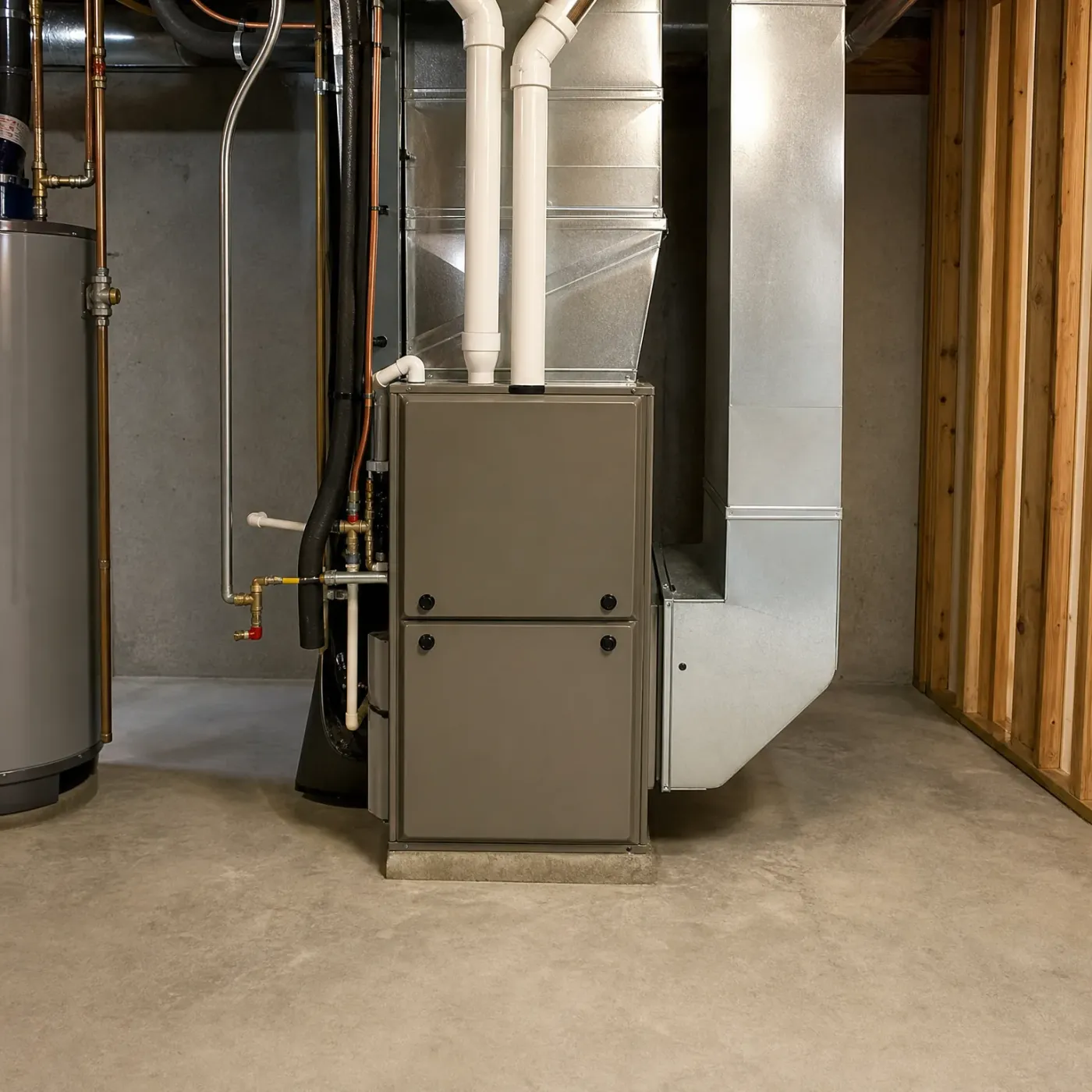
A gray high-efficiency furnace in a basement with PVC vent pipes, sheet-metal ductwork, copper and insulated pipes, a water heater at left, and an unfinished wood-stud wall at right.

Working as it should

PVC flue pipes and sheet-metal ductwork tell you this is a newer, high-efficiency unit. It fires, warms, and moves air through the house without strain. Left alone with yearly service, it has years ahead of it.

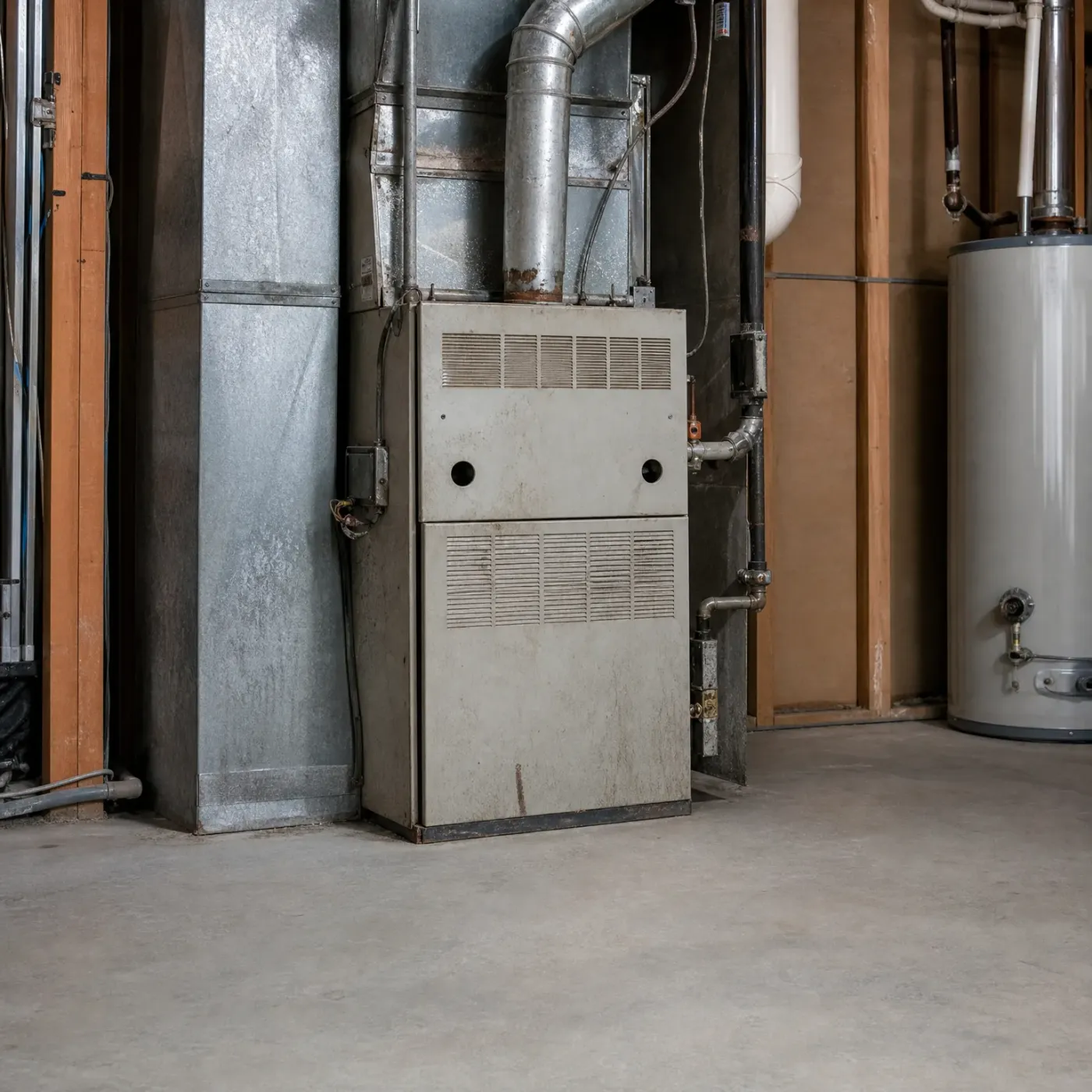
An older beige furnace with louvered front panels stands on a concrete basement floor beside galvanized ductwork, metal and plastic pipes, exposed wood framing, and a cylindrical water heater at right.

On its way out

Galvanized ductwork and an older flue mean this furnace has likely been down there a long time. Wood framing and exposed pipe aren't the issue, the furnace's age is. One past 15 years is closer to the end than the start.

One More Winter or Replace Now

One more season

  • You skip the cost of a new furnace now and spend on repairs only as parts actually fail.
  • A furnace that's still heating evenly, with no cracks found in the heat exchanger, can often be nursed through another winter.
  • You keep a system you already know, so there's no new thermostat setup or learning how a different unit sounds and runs.
  • Cold snaps that drop into the teens or single digits push an old furnace hardest, and that's when a strained unit is most likely to quit.
  • Every repair on a furnace past 15 years is a bet that the next part to go isn't the heat exchanger itself.
  • If it fails on one of St. Louis's cold nights, you're without heat until someone can get out to look at it.

Replace now

  • You pick the week it happens instead of finding out on a night when it's 15 degrees outside and dropping.
  • A new furnace is sized and installed before the coldest stretch of winter puts any strain on it.
  • You stop paying to patch a heat exchanger or blower motor that's already past what it was built to last.
  • A gas furnace installed now runs more efficiently than one that's been working harder each winter to hold the same temperature.
  • You avoid the gap between an old unit failing and a new one going in, which in January means a cold house in the meantime.
  • You're done comparing contractors, checking licenses, and getting quotes before the cold weather makes the decision for you.
A gray high-efficiency furnace with white PVC venting pipes stands on blocks in a basement next to sheet-metal ductwork, with exposed wood framing on the left and a concrete wall and floor.
New PVC flue and copper gas lines mean this furnace vents and fires the way it was designed to, no strain yet.
An older gas furnace with two white PVC vent pipes stands on a concrete basement floor beside galvanized sheet-metal ductwork, flexible conduit, and piping along a wall.
A metal cabinet this worn and flex gas lines like these usually mean the furnace is on borrowed time.

Winter nights average 26°F

A night that cold means the furnace runs most of the dark hours just to hold the house steady, not in short bursts but in long stretches. That's the wear that adds up over a winter, in the burners and the heat exchanger, long before the calendar says 15 years.

NOAA nClimDiv 1991-2020

A gray-haired man with a beard in a blue button-placket shirt reclines on a couch with his eyes closed, beside a sunlit window with a green plant.
A woman in a cream knit sweater sits in an armchair with her eyes closed near a window showing yellow autumn foliage, with a mug on a round wooden side table beside her.

Where your furnace stands

  • A furnace in St. Louis lasts 15 to 20 years with yearly burner and heat exchanger checks.
  • Cold nights near 26°F and a heating stretch of nearly seven months push a furnace harder than milder states.
  • Noise, uneven rooms, and a rising gas bill are the signs a furnace is closer to the end than the middle.
  • A cracked or corroded heat exchanger means replacement, not another repair.
  • Waiting for a breakdown trades a planned decision for a cold house and a scramble to find someone who can get to it.
  • Sending one form replaces calling around, repeating the same problem to each contractor, and sorting through quotes yourself.

Fifteen to twenty years is the honest answer for a furnace in St. Louis, and where yours falls in that range comes down to what it's been through. A furnace that's had its burners and heat exchanger checked most years, and hasn't been asked to run flat out every one of those cold nights near 26°F, tends toward the far end. One that's been skipped on service, or that's fought through seven months of heat calls a year without much attention, tends toward the near end. The signs tell you more than the age on the paperwork. A bang at startup, a room that won't warm, a gas bill that's crept up without a colder winter to explain it, these point at a furnace closer to the end than the middle. The one sign that settles it outright is a cracked or corroded heat exchanger. That's not a repair, because the part that cracks is the part that can't be patched, and a furnace with a compromised heat exchanger gets replaced, not nursed along.

What you don't want is to find that out the hard way, on a night cold enough that the furnace is already running long and hard to keep up. That's when a decision you could have made on your own schedule turns into a scramble, calling around, explaining the same noise or the same bill to three different people, trying to sort quotes you have no time to compare. One form moves that off your plate. The furnace still has to be judged and installed by someone who knows the work, but finding that person stops being something you have to do yourself.

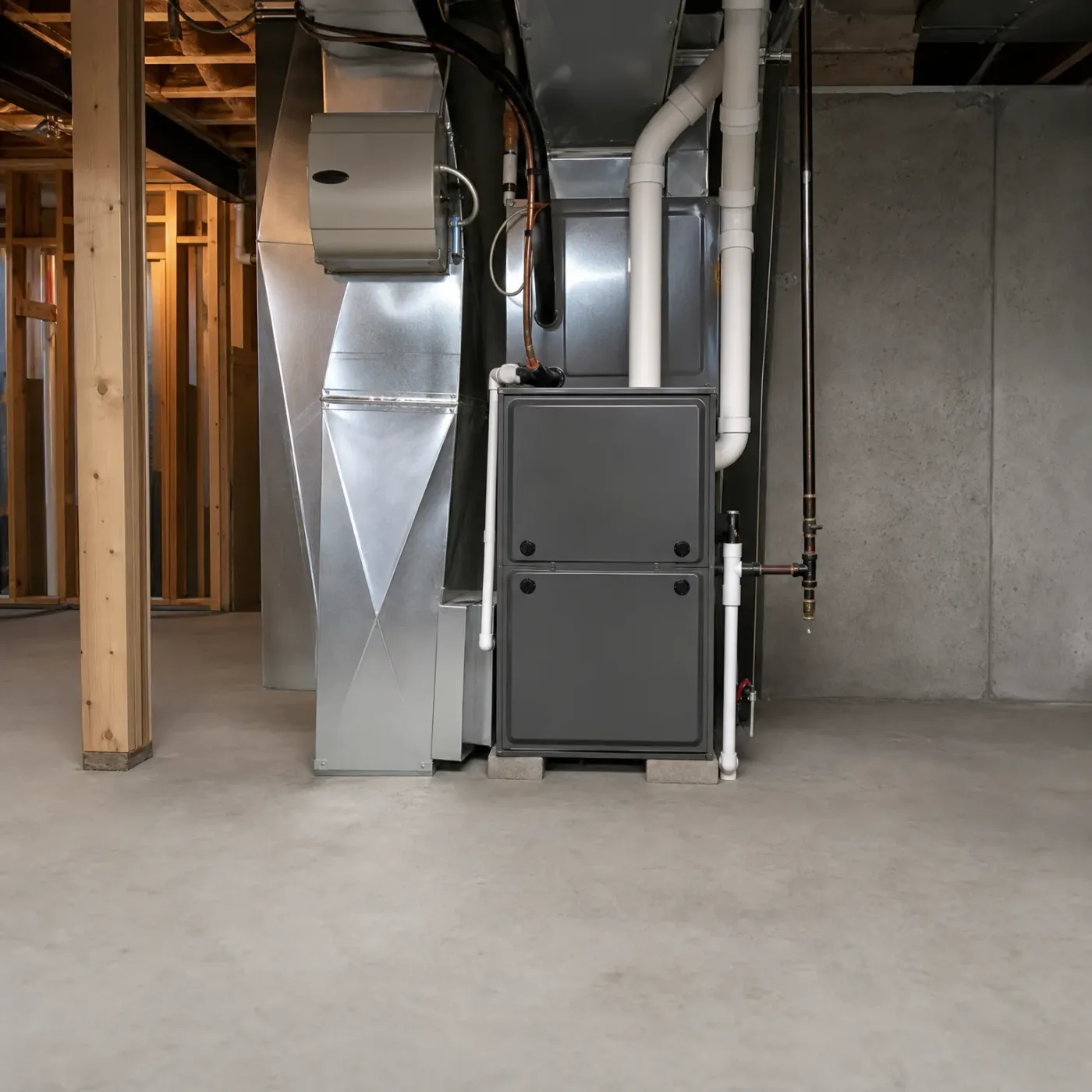
A dark gray high-efficiency furnace with two white vent pipes and connected sheet-metal ductwork stands in an unfinished basement with concrete walls, a support pole, and a small window.

Done looking for a furnace pro

Step 1 of 3: Equipment