Furnace tune-up before winter in Liberty, MO

Send the form, and lining up the furnace tune-up stops being yours to chase.

Let a pro reach out

When should I get my furnace tuned up before winter?

You're thinking about winter before it gets here, which is the right time to ask this. Clay County gets cold enough that a furnace runs hard for months once it starts, and nobody wants to find out something is wrong on the first night it drops below freezing. The question is just when to get someone out to check it over before that happens.

September or October, before the first cold snap

A furnace sits unused most of the year, and the first real cold snap is when a worn igniter, a cracked heat exchanger, or a dirty flame sensor shows up, usually at night, usually when it's hard to get someone out fast. Getting it checked in September or October, while it's still mild outside, means any of that gets caught and fixed before you're relying on the furnace every day. Most homes in Clay County heat with gas, and a gas furnace that hasn't run since spring needs to light reliably and burn clean from the first cold morning on. A tune-up before winter is the way to find out it will, instead of finding out it won't.

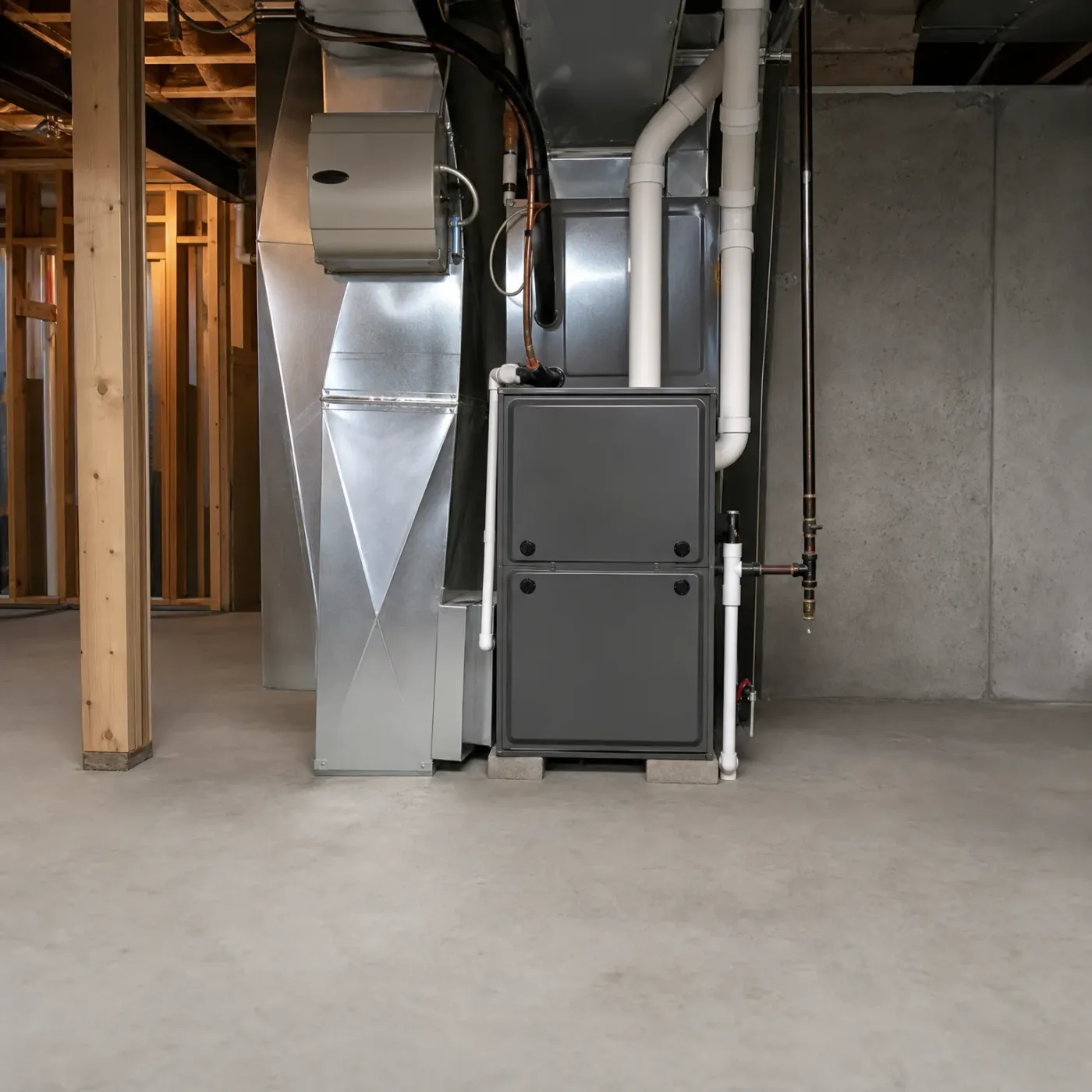
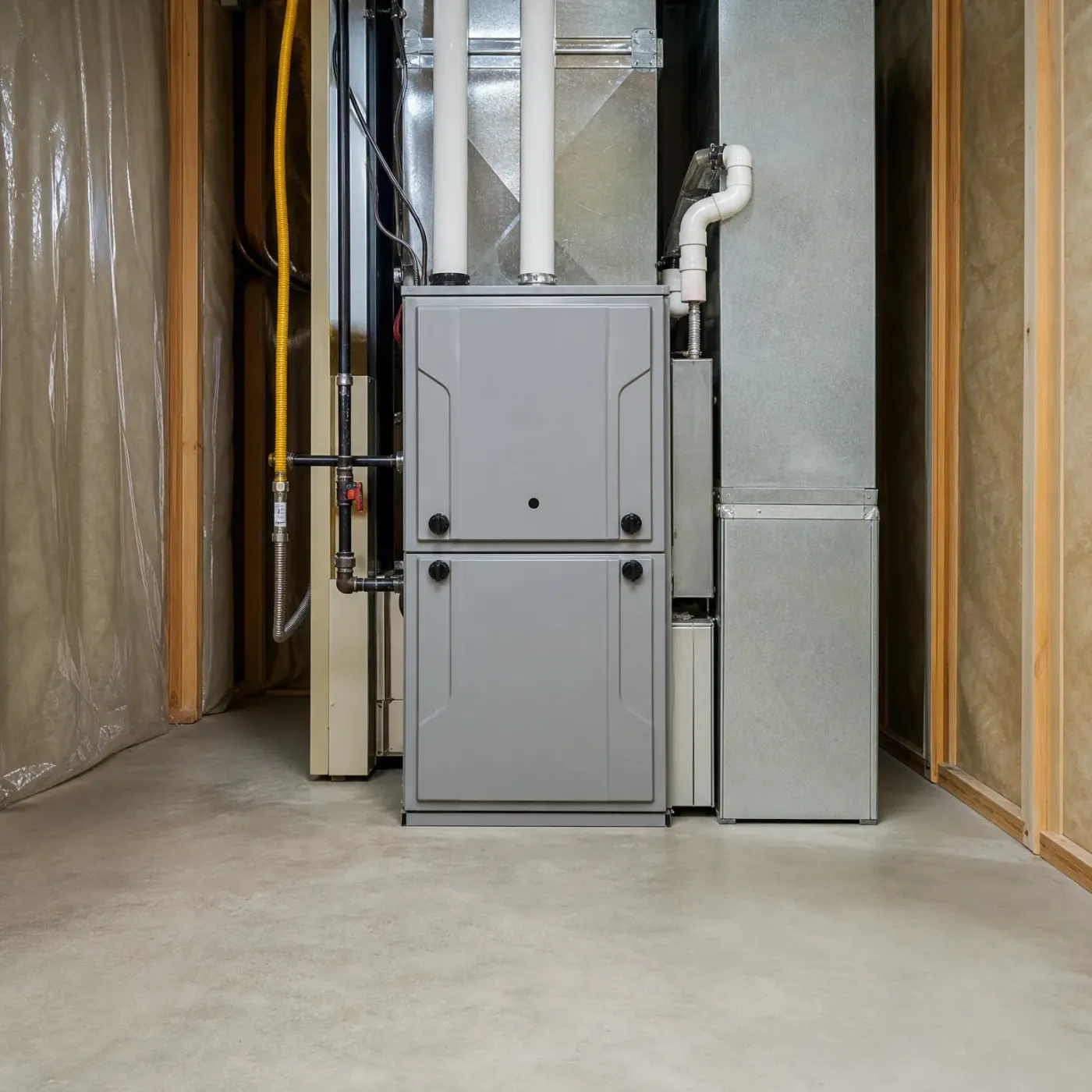
A gray high-efficiency furnace with white PVC venting pipes stands on blocks in a basement next to sheet-metal ductwork, with exposed wood framing on the left and a concrete wall and floor.

A furnace that's been serviced

This is what a furnace looks like when it's kept up. The flue and condensate lines run clean to the outside, the gas line is tight, and nothing around the cabinet is loose or scorched. A furnace tuned up before Clay County's cold sets in runs like this all winter.

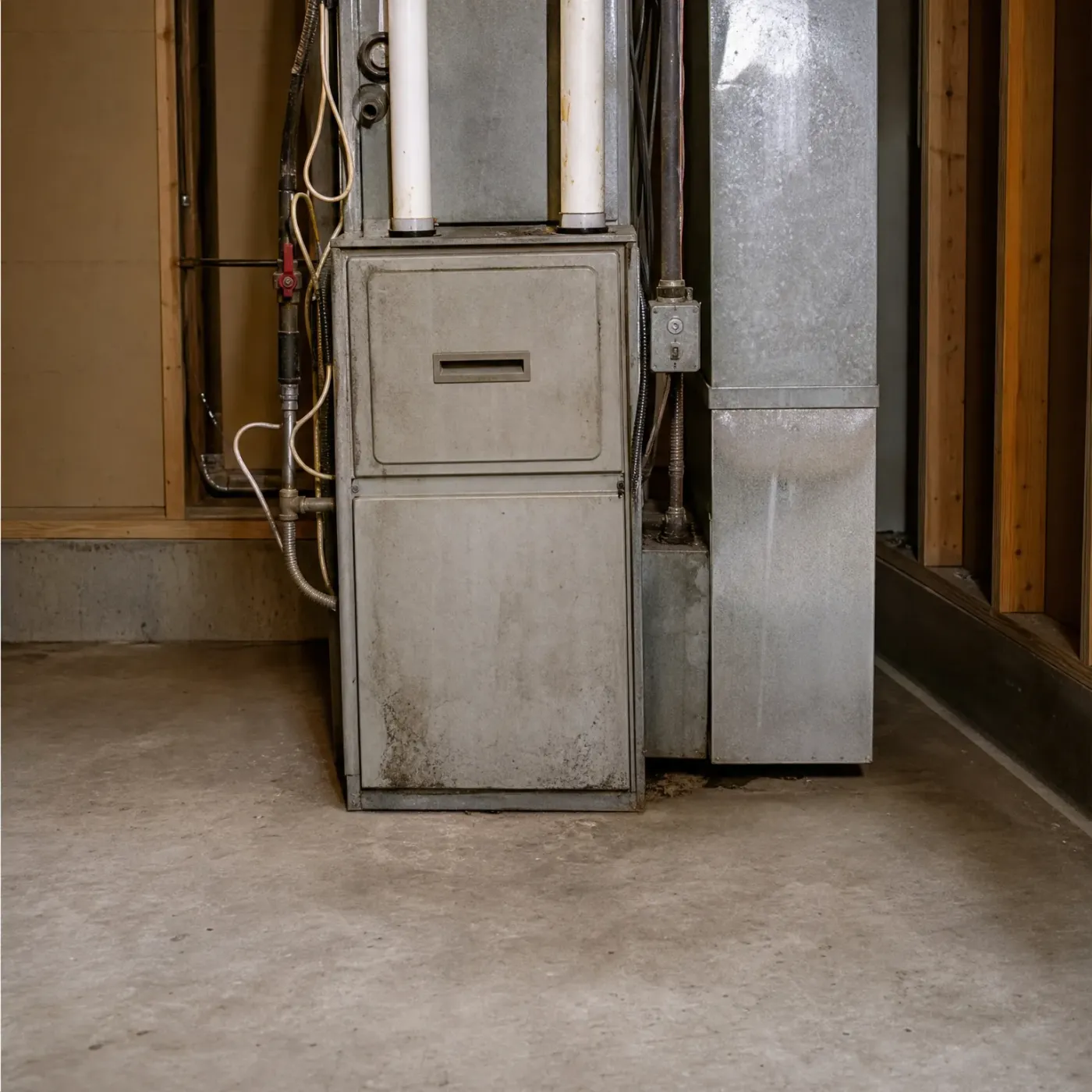
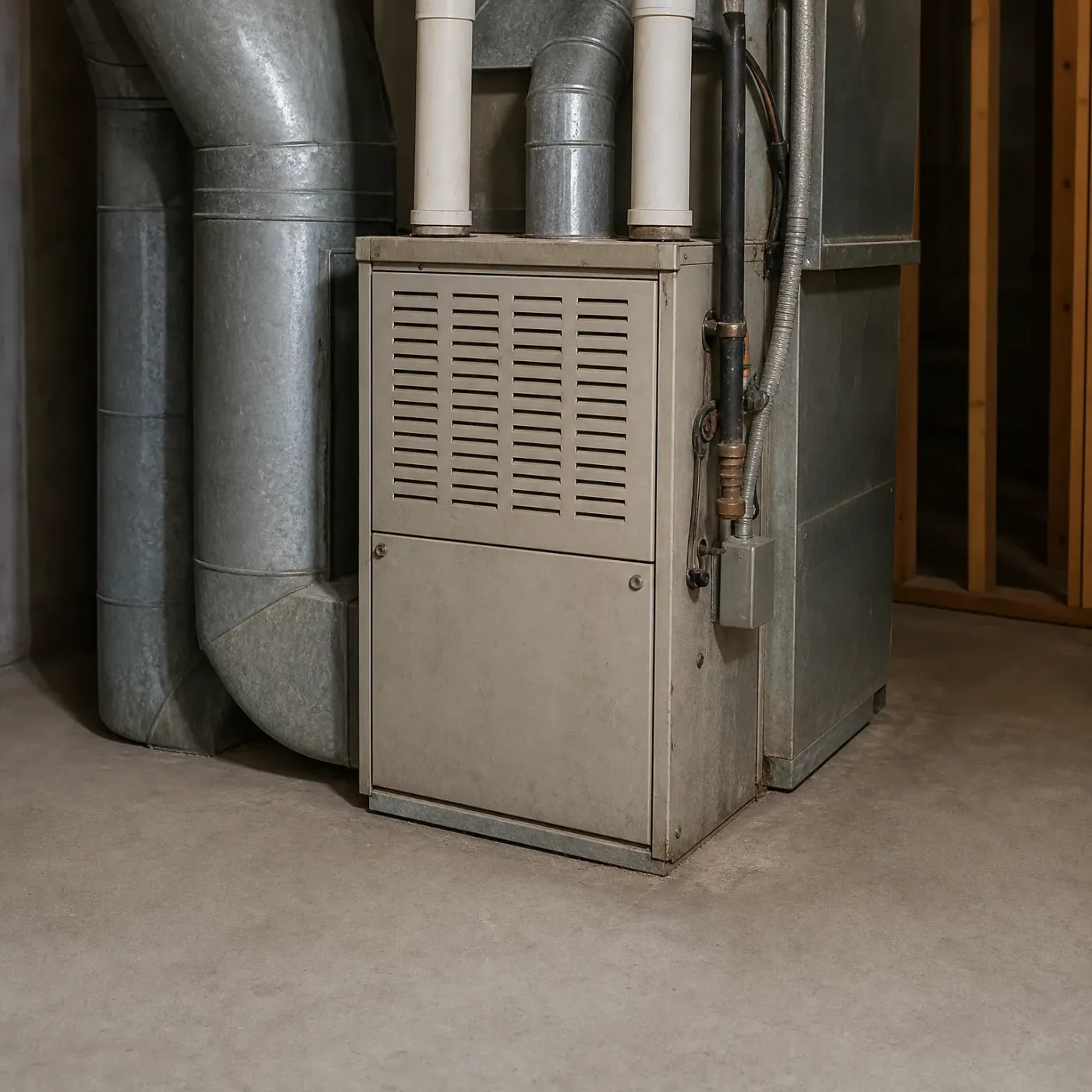
An older gas furnace with two white PVC vent pipes stands on a concrete basement floor beside galvanized sheet-metal ductwork, flexible conduit, and piping along a wall.

A furnace left alone

This one hasn't seen a tech in a while. The cabinet shows its age, and nobody's checked the burners, the flue or the gas connection since who knows when. Furnaces like this still run, until the one night it's 15 degrees outside and they don't.

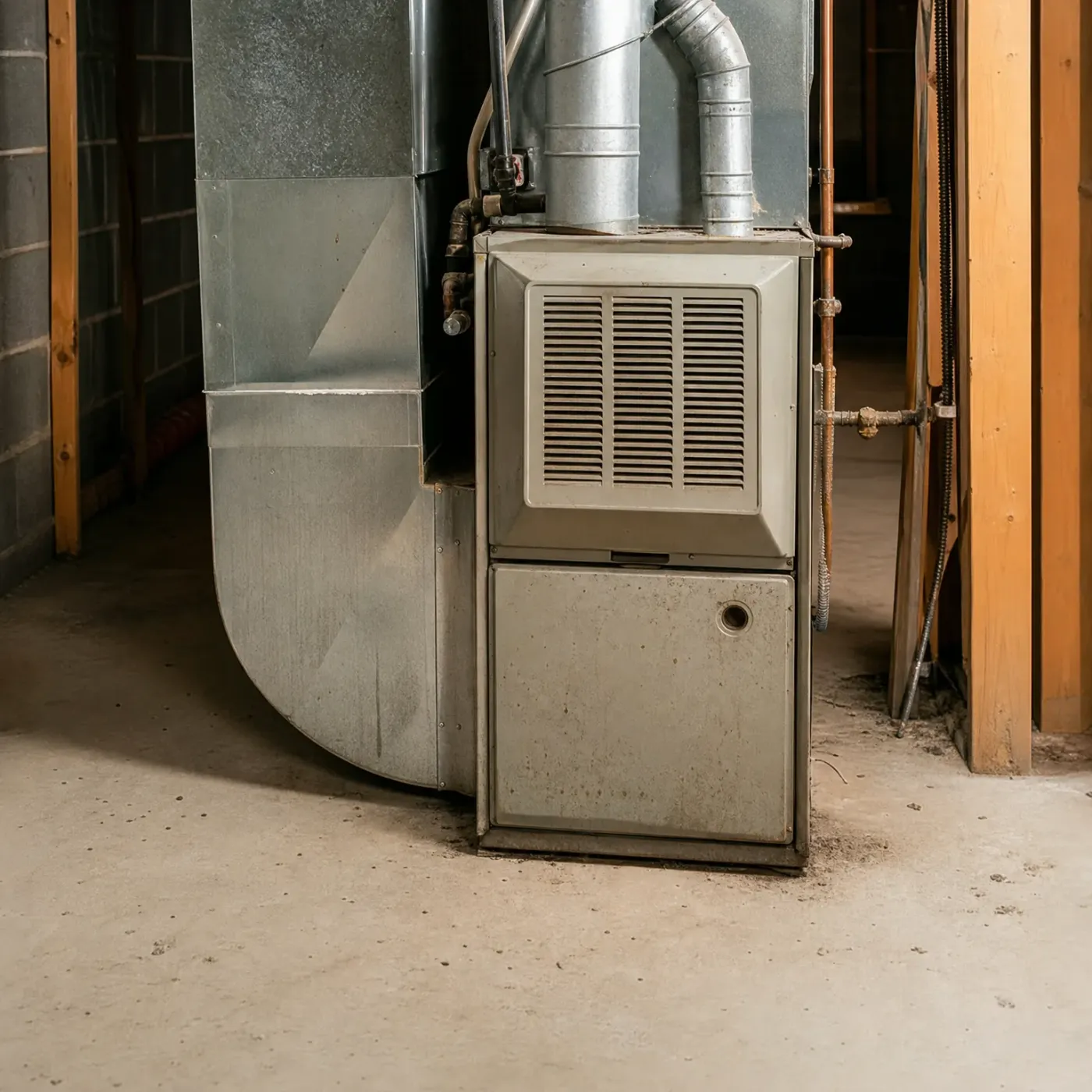
An older gas furnace with a louvered front panel stands on a concrete basement floor beside large sheet-metal ductwork, a metal flue pipe, copper piping and wood framing.
Before you get your furnace maintenance
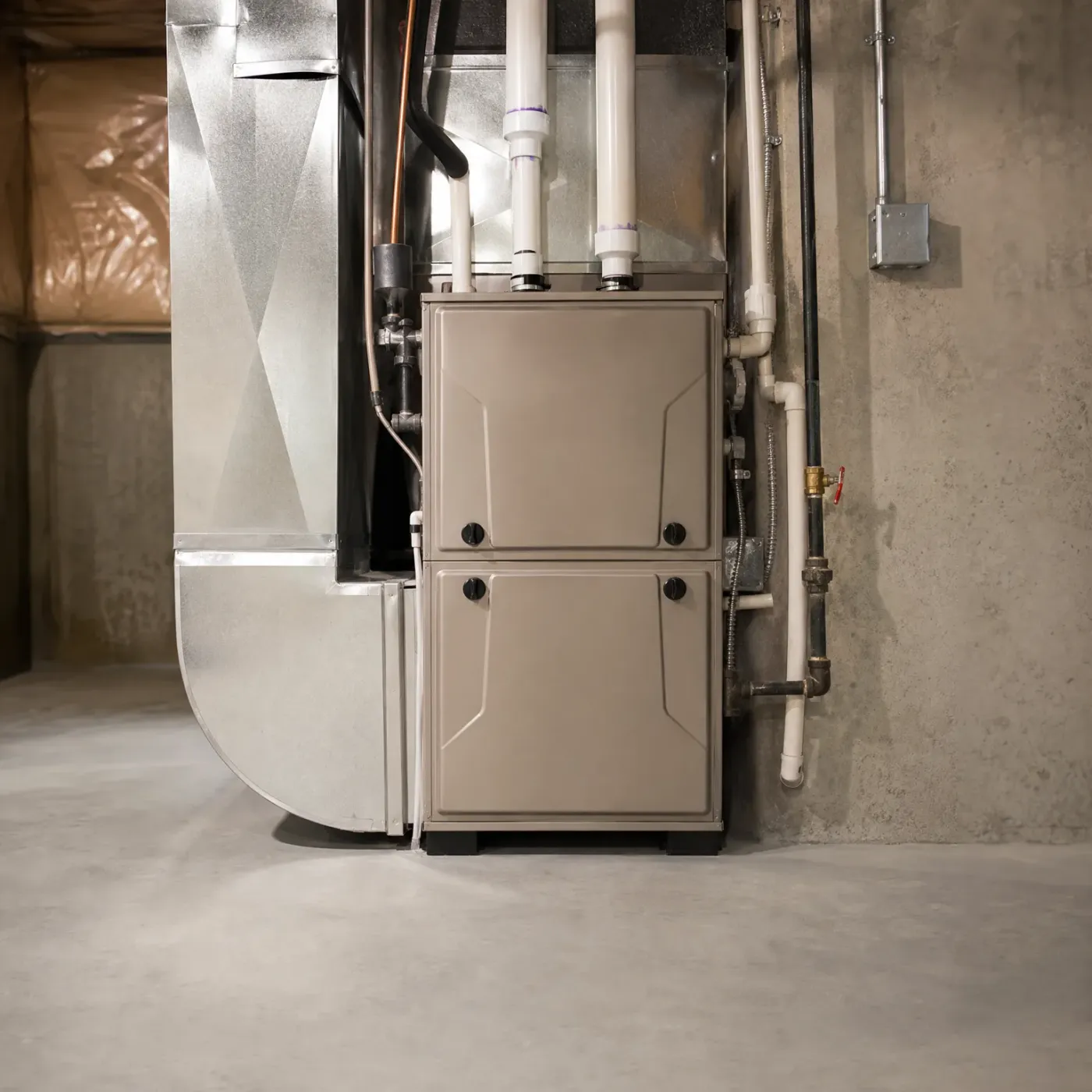
A beige high-efficiency furnace stands on a concrete basement floor beside sheet-metal ductwork, with white PVC vent pipes, flexible conduit and copper and steel piping running up a concrete wall to an electrical box.
After you get your furnace maintenance

A technician starts by watching the flame itself, since the color and shape say a lot about how clean the burners are firing. From there the work moves inside the cabinet. The heat exchanger gets a close look, because a crack there is the one thing that turns a furnace into a hazard rather than a maintenance item. The igniter gets tested under an actual call for heat, not just a glance, since it can look fine and still fail to do its job. The blower motor's amp draw gets measured against what the nameplate says it should pull, which catches a motor on its way out before it quits in January. Outside the firebox, the flue connection gets checked for a tight seal and the gas pressure at the manifold gets set to spec. Both of those affect how the furnace burns fuel all winter, not just whether it turns on.

What a tune-up actually checks

  • A tech checks the flame through the viewing port, looking for a steady blue cone instead of one that flickers yellow or lifts off the burner.
  • The heat exchanger gets inspected for hairline cracks, since a cracked exchanger can let combustion gas mix into the air moving through your ducts.
  • The igniter draws power each time the thermostat calls for heat, and a weak one can glow but still fail to light the burners.
  • Amp draw on the blower motor gets measured against the nameplate rating to catch a motor that's starting to work harder than it should.
  • The flue connection gets checked for a tight seal, since a loose joint lets combustion gas leak out instead of venting outside.
  • Gas pressure at the manifold gets set to the furnace's rated specification, because too high or too low changes how clean the burners fire.
A gray-haired man in a blue quarter-zip sweater sits in an armchair with his eyes closed, beside a large window with bare trees outside and a potted plant and lamp nearby.
A woman in a cream knit sweater sits in an armchair with her eyes closed and head tilted back, beside a window showing orange autumn foliage and a wooden side table with a mug.

Send one request and you're done looking

You've already read what a tune-up covers and why Clay County winters make it worth doing now. The part left is getting someone out to your house to do it. That usually means searching listings, calling a few numbers, explaining the same thing about your furnace three or four times, then sitting with quotes trying to guess which one is fair. Send the request here and that work is gone. One contractor gets it, not five competing for your callback, and there's nothing to sign and nothing owed just for asking. Your furnace is going to run hard once the cold settles in for good, and whatever's wrong with it now, a cracked exchanger, a weak igniter, a clogged flue, is easier to deal with before that happens than in the middle of a January night when it quits. Handing this off doesn't make the repair smaller. It just means you're not the one finding who does it.

What an unserviced furnace costs you

  • A furnace that skips its yearly check can throw its limit switch or overheat on the first hard freeze of the year.
  • Dust built up on the burners shows up as a gas smell or a weak, uneven flame instead of a clean blue one.
  • A clogged filter makes the blower work harder, and that shortens the life of the motor over time.
  • Carbon monoxide from a cracked heat exchanger has no smell, so a furnace can be unsafe without any sign of it.
  • A furnace that short-cycles or won't hold heat on a cold night in Liberty often traces back to something routine maintenance would have caught.
  • Skipping the tune-up can mean a higher gas bill all winter from a furnace that's working harder than it needs to.

A furnace that hasn't been looked at in a year doesn't announce it. It just runs worse, and you pay for that in pieces you don't connect to each other. The gas bill creeps up because a dirty burner or a clogged filter makes the system work harder to put out the same heat. The blower motor wears faster under that extra strain, and a motor that would have lasted years starts failing early. Some of this you can catch yourself: a yellow flame instead of blue, a faint gas smell near the unit, a furnace that cycles on and off more than it used to, or one that runs most of the night without the house actually feeling warm. Those are the signs a tune-up usually prevents.

Some of it you can't catch. A cracked heat exchanger can leak carbon monoxide into the air your household breathes, and there's no smell or color to warn you. A limit switch that's never been tested can fail exactly when the furnace is working hardest, which in Clay County means the first real cold snap of the year. None of this means your furnace is in bad shape. It means a furnace that hasn't had a yearly check is harder to trust than one that has, especially once it has to run for months straight without a break. A tune-up catches the ordinary wear before it turns into a cold house or a bigger repair.

A gray high-efficiency furnace with white PVC vent pipes stands in an unfinished basement beside sheet-metal ductwork, gas piping, and insulated stud walls on a concrete floor.
A furnace running the way it should, with a steady flame and clean lines to the gas and the vent outside.
A beige sheet-metal furnace with a louvered upper panel stands on a concrete basement floor, connected to galvanized ductwork, white PVC vent pipes, and a metal gas line with an electrical box.
A furnace left on its own, where a cracked cabinet seam or a loose gas line can go unnoticed until it fails.
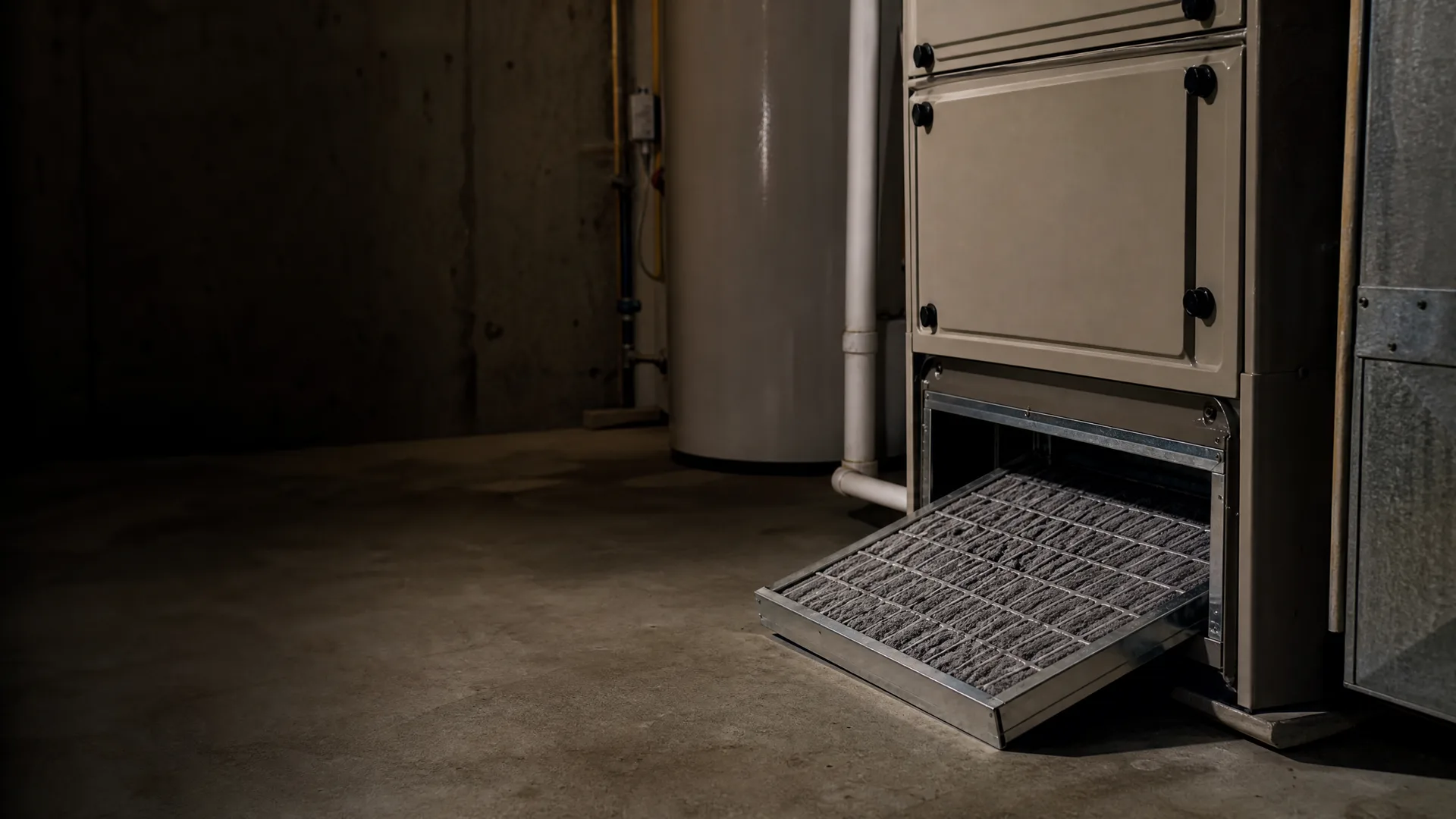
A furnace in a dim basement with a dirty pleated air filter partially pulled out of its slot, beside a water heater and concrete walls and floor.

You're down in the basement on a Saturday afternoon, the light coming in low through the one window near the ceiling. You've pulled the filter to check it before the weather turns, and it's worse than you expected, grey all the way through, the kind you can't see light past anymore. It's been in there since sometime in spring. You set it on top of the furnace and crouch down to look at the slot it came out of, thinking about how cold it got last January and how the furnace ran almost nonstop for a week straight. You're not sure what else back there needs a look, just that the filter was the one thing you knew to check yourself.
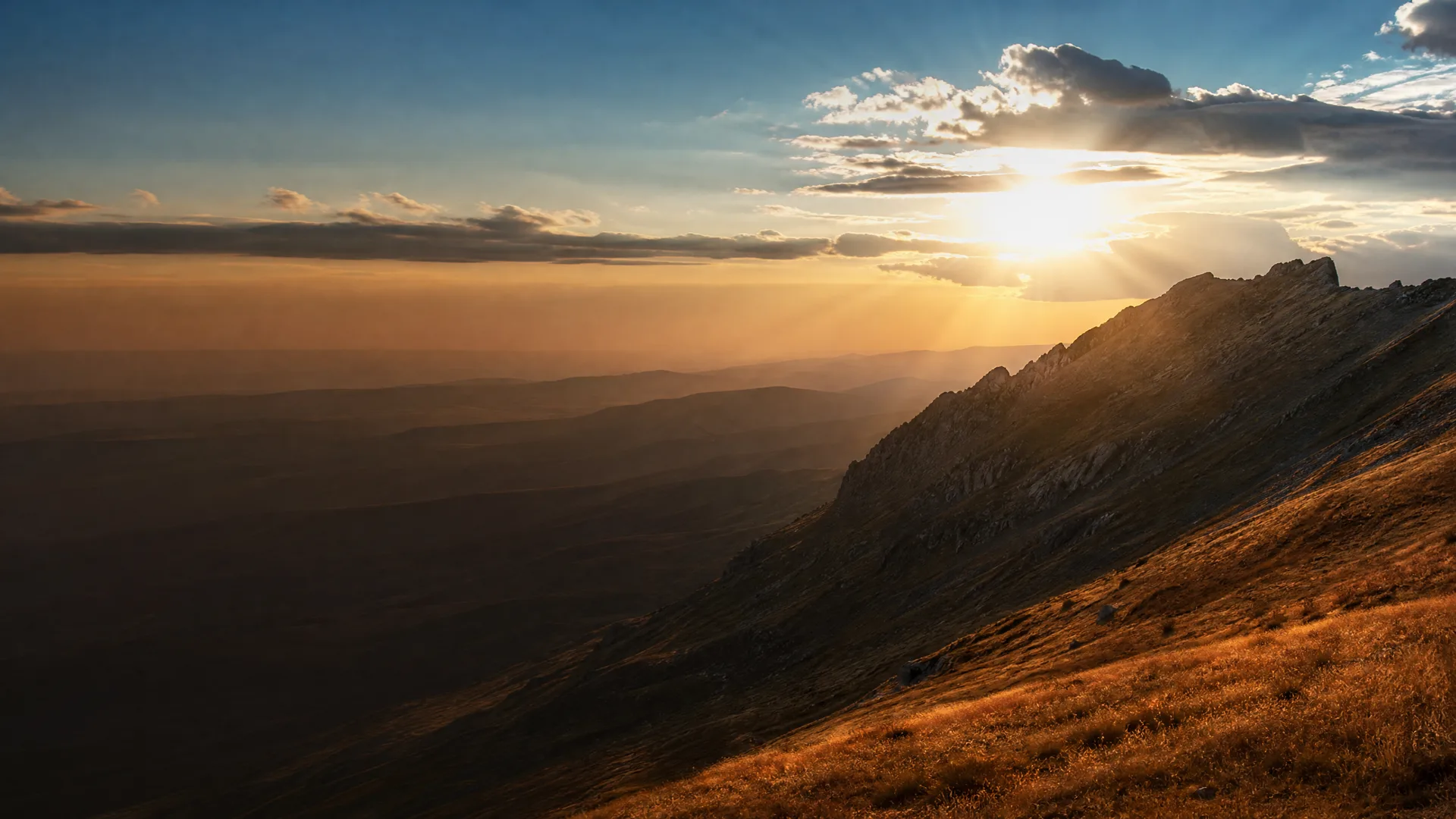

Winter nights average 22°F

At 22 degrees, your furnace isn't cycling on and off anymore. It's running long stretches to hold the house, and it does that most nights from December through February. A furnace that hasn't been checked has to work through all of that on whatever shape it was left in.

NOAA nClimDiv 1991-2020

A man in a gray sweater reclines in a brown leather armchair with his eyes closed, beside a wooden side table holding a mug, a folded newspaper and a potted plant, with a bookshelf and sunlit window behind him.
A man with greying hair and a dark sweater leans back on an armchair with his eyes closed and a slight smile, in a living room with a bookshelf, plant, folded newspaper and mug on a wooden table.
A man in a gray fleece jacket sits reclined in a leather chair with his eyes closed, in a room with bookshelves, a table lamp, a window, and a desk holding a folded newspaper and a dark mug.
A bearded man in a gray fleece pullover sits with eyes closed in a brown leather armchair in a living room, with a floor lamp, bookshelf, potted plants, a side table holding newspapers and a dark mug, and a bright window behind him.

A furnace tune-up before winter comes down to one thing: having someone check the flame, the exchanger, and the gas line while the weather still gives you room to wait on a repair. Clay County's cold months don't leave much room for that once they arrive. You've seen what gets checked and what happens when it doesn't. What's left is finding someone to do it, and that part usually means scrolling through listings you can't tell apart, calling a few and waiting on callbacks, explaining the same thing about your furnace more than once, then weighing quotes against each other without much to go on. Send the form and that part is done. You're not the one tracking down a contractor anymore. A furnace that's been looked at by someone who knows what to look for is going to handle December through February a lot better than one that hasn't, and that's true whether you get to it this week or wait until the first cold snap reminds you.

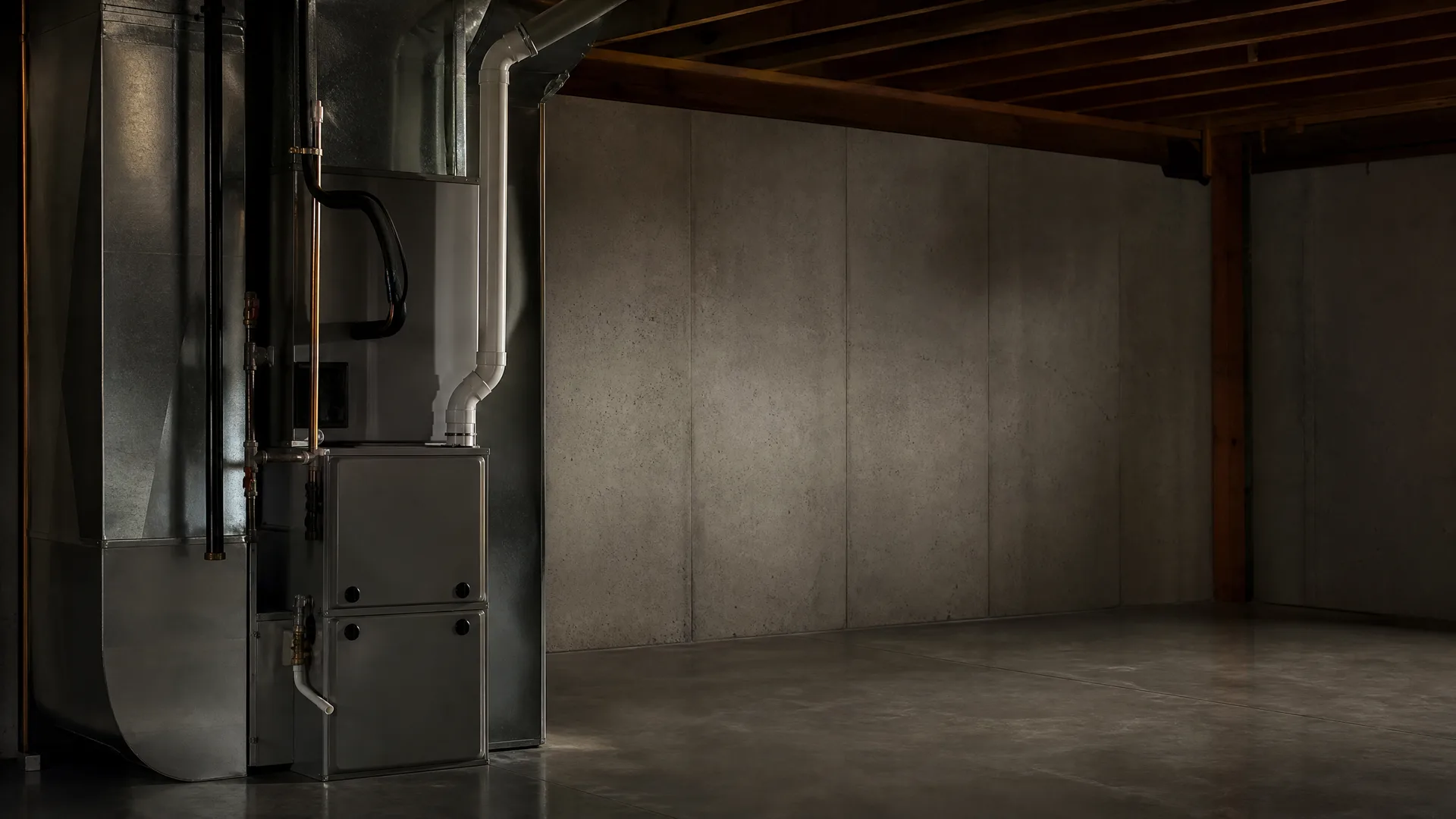
A dimly lit basement with concrete floor and walls, exposed wood joists, and a furnace with sheet-metal ductwork and copper piping on the left side.

Finding a pro stops being your job

Skip calling around to set up a furnace tune-up.

Step 1 of 3: Equipment