Furnace pilot light won't stay lit in O'Fallon, MO

Step 1 of 3: Equipment

Why won't my furnace pilot light stay lit?

A pilot light that keeps going out is one of those small problems worth catching early, before it turns into a cold house on a hard winter night. You light it, it holds for a minute, maybe an hour, then dies again. It's not random. Something specific is cutting the flame or starving it, and once you know what to look for, the cause is usually easy to point to.

A weak thermocouple is the most common reason

The thermocouple is the small copper rod that sits in the pilot flame and tells the gas valve the flame is lit. When it weakens or sits out of position, it reads the flame as out even when it's burning, and the valve shuts the gas off. A draft blowing across the pilot can do the same thing, which matters here since St. Charles County winters bring wind along with the cold. A dirty pilot orifice or a failing gas valve can also be behind it. Since most furnaces in the area run on gas all winter, a pilot that won't hold means no heat until it's sorted out, and it's worth having looked at before the next cold snap.

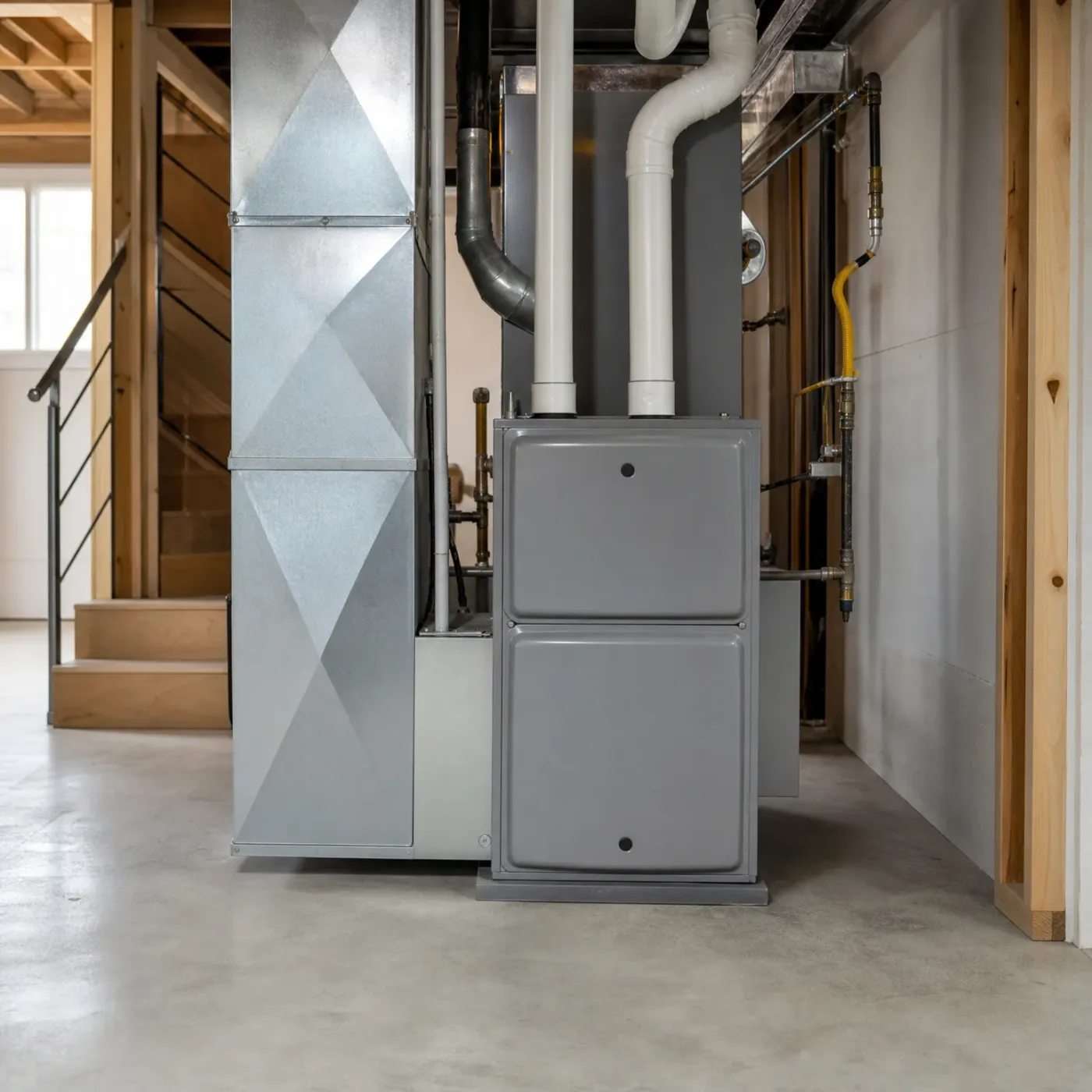
A gray high-efficiency furnace with white PVC vent pipes stands beside galvanized sheet-metal ductwork in a basement with a concrete floor, with a wooden staircase and railing at left.

Pilot Lit and Holding

This is what it should look like. The pilot burns steady, a small blue flame wrapped around the thermocouple, and the burners fire clean when the thermostat calls. No clicking out after a few minutes, no smell of gas. The furnace cycles on and off through the day without you touching it.

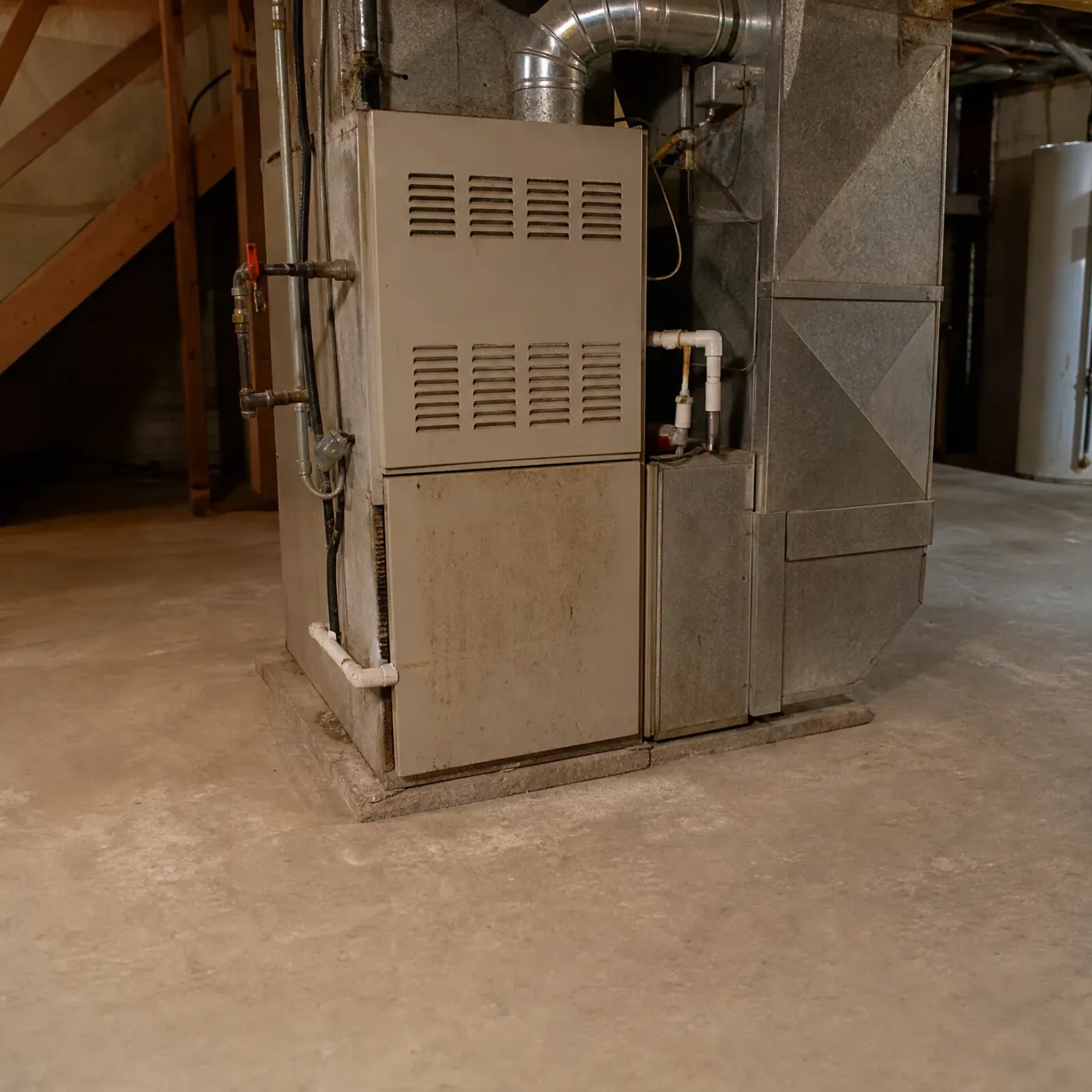
An older gas furnace with louvered panels sits on a concrete pad in a basement, connected to sheet-metal ductwork and PVC and metal pipes, with a water heater and wooden stair framing in the background.

Pilot Going Out

This is the furnace that needs a look. The pilot won't hold, or it lights and dies again within minutes. Sometimes the flame is weak or yellow instead of steady blue. A furnace that can't keep its pilot lit won't heat your house, and on a cold night that's not something to put off.

A woman in a cream cowl-neck sweater sits by a window with snow outside, in a dimly lit living room with a sofa, lit lamp, mirror, candles and a fireplace.
A woman in a gray turtleneck sweater sits beside a large window looking out at snow-covered evergreen trees, in a dimly lit living room with a lit fireplace, lamps, couch and houseplant.
A woman in a cream turtleneck sweater stands beside a large window with snow-covered ground and bare trees outside, in a dimly lit living room with lamps, a sofa and framed art.
A woman in a grey cowl-neck sweater stands indoors near a window, looking out at falling snow, with a lamp, framed picture and couch in the warmly lit room behind her.

The Thermocouple Does the Work

The thermocouple is a small rod that sits right in the pilot flame. Once it heats up, it tells the gas valve to stay open. If it cools even a little, from a weak flame or a draft, the valve reads that as the pilot being out and shuts the gas off. That is why a pilot can look fine one hour and be dead the next. It is not holding steady for a long stretch that matters. It is whether the thermocouple is getting enough heat, placed right, and clean enough to read the flame correctly every time.

A Furnace That Sits Idle in Summer

Gas furnaces here run hard from November through March and then sit unused for months once the weather turns. That long stretch without a flame gives dust time to settle on the pilot assembly and lets a thermocouple that was already wearing out go unnoticed until the first cold night calls for heat. A furnace that lit fine last winter can still have a pilot problem waiting in it by the time it gets switched back on, since nothing about sitting idle fixes a part that was already on its way out.

A bearded man in a plaid flannel shirt sits indoors looking out a window at snow-covered trees, with a steaming mug on the sill and wooden kitchen shelves behind him.
A bearded man in a navy T-shirt sits on a light-colored couch indoors, smiling while looking down at a laptop screen in the foreground, with a framed picture and a potted plant blurred behind him.

No Heat in a Cold Snap

A pilot that won't hold means no furnace when St. Charles County temperatures drop hard overnight. A house can lose heat fast once the burners stop firing for good.

Request a pro

A Furnace Running on a Weak Signal

A thermocouple or valve that's failing can still let the furnace limp along for a while. Waiting it out risks a full shutdown on the night you need heat most.

Request a pro

Call Now or Keep Watching

Call Now

  • A pilot that won't hold on a night when temperatures drop hard means a cold house by morning, with no backup until it's fixed.
  • A weak thermocouple signal can get worse fast, and a furnace that cycles out on its own isn't one to leave alone overnight.
  • A gas smell near the pilot assembly, even faint, is reason to shut the valve and get someone out rather than wait.
  • If the pilot won't stay lit after you've tried relighting it a couple of times, the part causing it isn't going to fix itself.
  • Gas furnaces in St. Charles County carry the heating load most of the winter, so a dead pilot here isn't a minor inconvenience.

Worth Watching

  • If the pilot is holding for an hour or more before dying, the furnace is still usable for now while you arrange a repair.
  • A thermocouple that's just old and worn, with no burning smell or soot, is a slower problem than a cracked or shorted one.
  • Mild weather in the stretch between winter's worst cold gives a little more room to schedule the fix around your week.
  • A furnace that still lights clean and holds during the day, but drops out overnight, points to a specific weak spot worth describing to the contractor.
  • Catching it while the pilot still lights at all is easier to diagnose than waiting until it won't light back up.
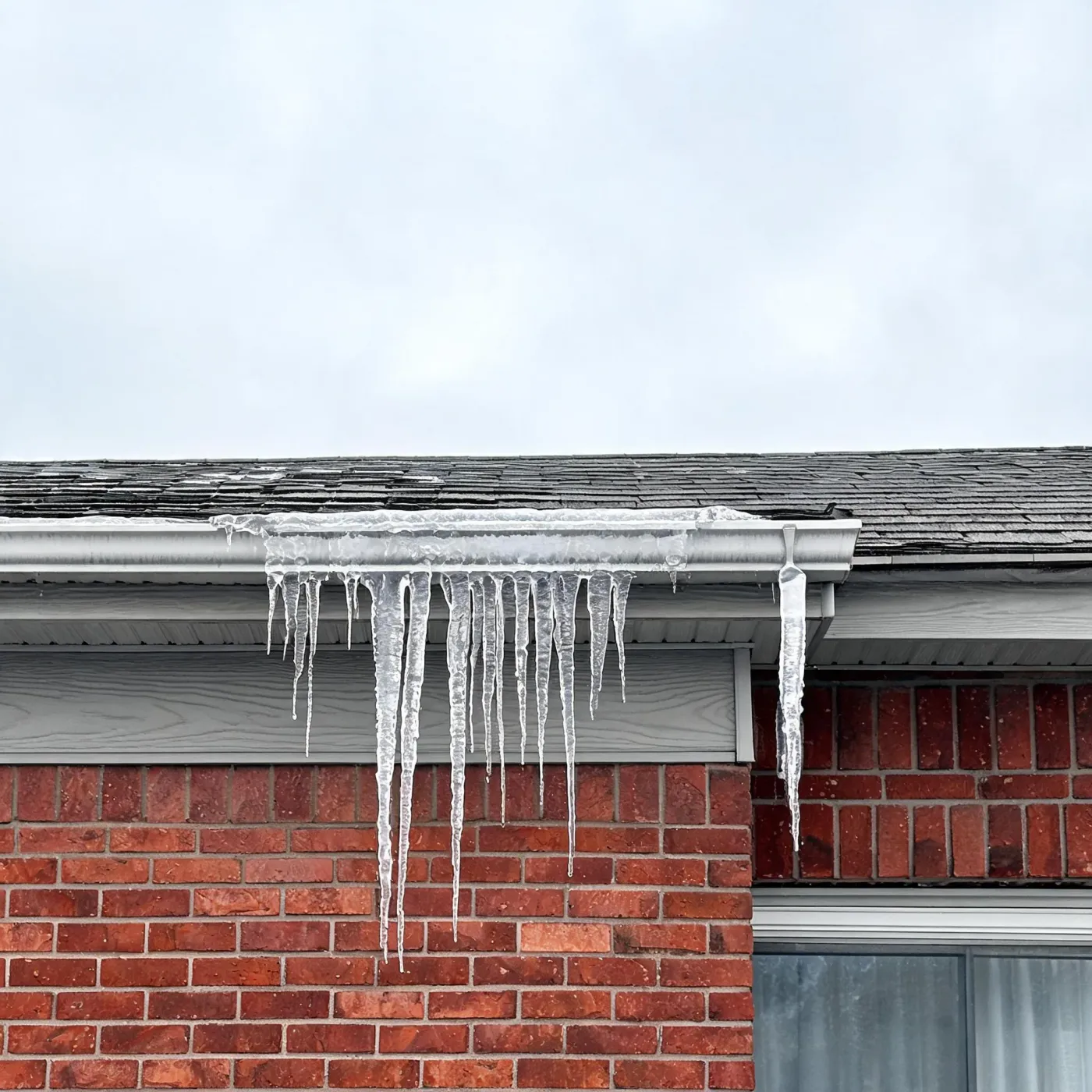
Icicles hanging from a metal gutter along the edge of a shingled roof above gray siding and a red brick wall, under an overcast sky.

Winter nights in St. Charles County average 25°F, cold enough that a furnace runs long stretches without a break. A pilot that won't hold doesn't get much rest to begin with, and a weak thermocouple signal shows itself fastest on nights like that, when the burners are calling over and over instead of cycling off for a while. If yours has been dying out more in the last few cold snaps, that's not bad luck. Once you send in the form, you're done hunting for someone to look at it. A contractor who handles this in St. Charles County takes it from there and reaches out to you directly. Source: regional overnight averages for December through February.

NOAA nClimDiv 1991-2020

A pro who works on furnaces

A pilot that keeps dying is not something to watch and wait on, not with St. Charles County winters running the way they do. Every relight is a guess at how long it holds this time, and a furnace that cycles out on its own tends to do it again sooner than later. Most homes in O'Fallon heat with gas, so when the pilot won't stay lit, there's no backup system warming the house while you sort it out. Figuring out whether it's the thermocouple, the valve, or a draft problem takes someone who's looked at enough of these to know the difference fast. Handing it off now means you're not the one running back downstairs every hour to check a flame that keeps going out.

Relight it yourself and it might hold fine for a few days. A pilot that only fails once in a while can mean a draft or a speck of dirt on the thermocouple, nothing that needs a part replaced yet.

Relight it and it dies again within the hour, every time, and the thermocouple itself is likely worn out or the gas valve is starting to fail. That kind of pattern doesn't fix itself with another match.

Why does my pilot light go out so often here?

  • Winter nights average 25°F

    Winter nights average 25°F, cold enough to run the burners for hours straight, and a weak pilot signal shows up fastest on a long run like that.

  • Heat runs October through April

    Heat runs October through April here, close to seven months, so a pilot that won't hold has that many months to keep failing on you.

  • 65.9% of homes heat with gas

    65.9% of homes in St. Charles County heat with gas, so when a pilot won't stay lit, it's a problem most of your neighbors have dealt with too.

NOAA nClimDiv 1991-2020 · ACS 2020-2024

What Keeps the Pilot Honest

  • A pilot that won't hold almost always comes down to a weak thermocouple or a dirty one, not the gas supply.
  • Nights near 25°F put a furnace through long, steady runs, and that's when a weak pilot signal fails first.
  • Heat stays on October through April in St. Charles County, so a pilot problem left alone gets more chances to worsen, not fewer.
  • A pilot that only quits once in a while can mean dirt or a draft, no part replacement needed yet.
  • A pilot that dies every time within the hour points to a thermocouple or gas valve that needs replacing.
  • Once a contractor is matched to the job, finding help is no longer something you have to manage yourself.

Most of what you've read here comes down to one small part. The thermocouple sits in the flame, reads the heat, and tells the gas valve to stay open. When it's weak or dirty, or when a draft cools it between burner cycles, the valve closes and the pilot drops out. That's the pattern behind nearly every call like this one, far more often than a gas supply problem.

Where you land depends on how the pilot's actually behaving. If it holds most nights and only drops once in a while, a contractor can likely clean it or adjust it without replacing anything. If it dies every time, within the same hour, no matter how many times you relight it, that's a thermocouple or valve that's done and needs swapping out.

Either way, a furnace running long stretches on a 25°F night doesn't give a weak pilot much room to recover between calls for heat. And with the season running October through April here, a pilot that's struggling now tends to keep struggling, not fix itself with time.

Once you send the form, the search part is done. A contractor gets matched to the job and reaches out, and from there it's their read on the thermocouple, the valve, and what the pilot needs to hold steady again.
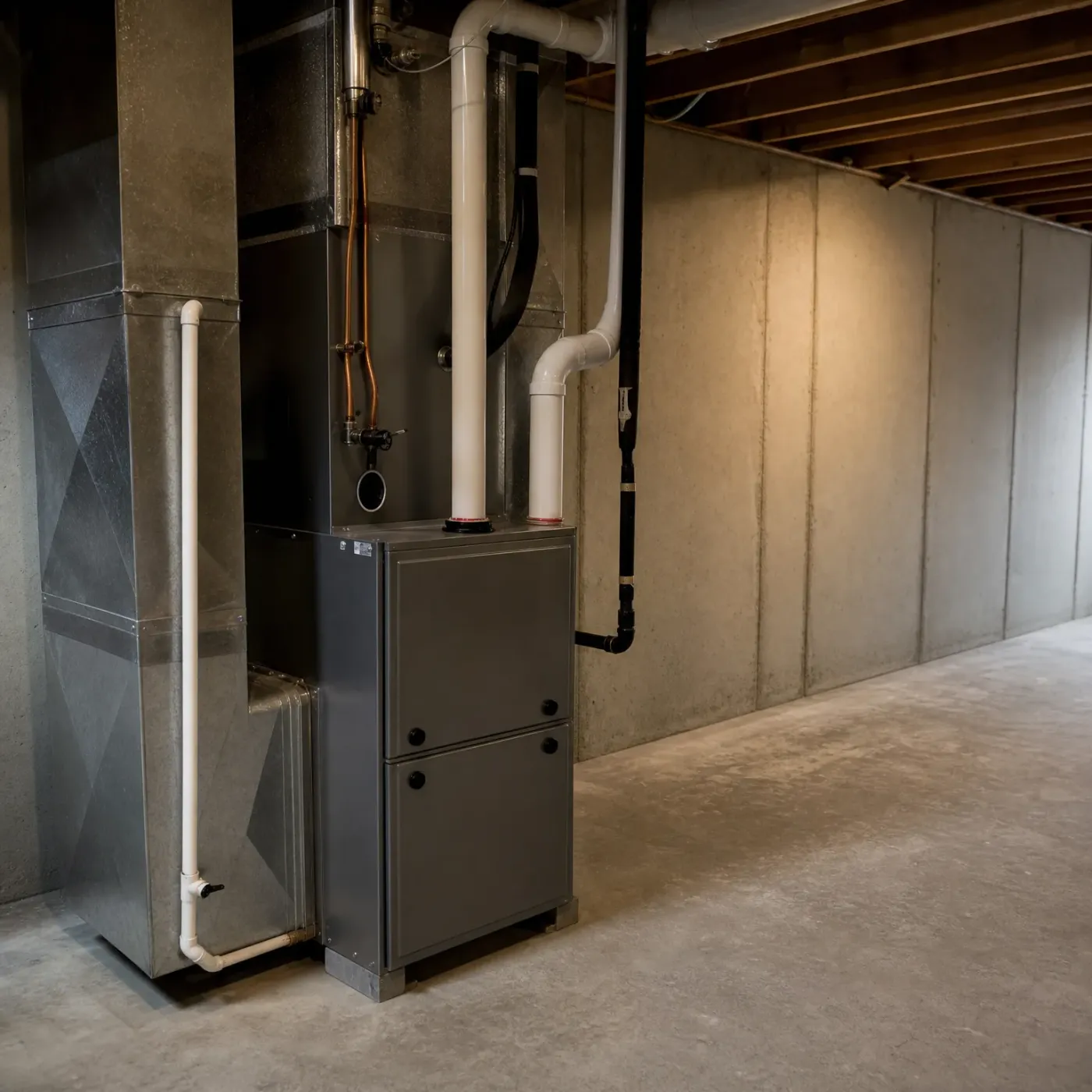
A gray high-efficiency furnace in an unfinished basement with concrete walls and floor, connected to sheet-metal ductwork, white PVC vent pipes, and a black drain line beneath exposed wood joists.

Get your furnace to the right pro

Send it today

Send the request and finding a pro stops being your problem.

It costs nothing to send, and you don't have to hire anyone.