Running the way it should
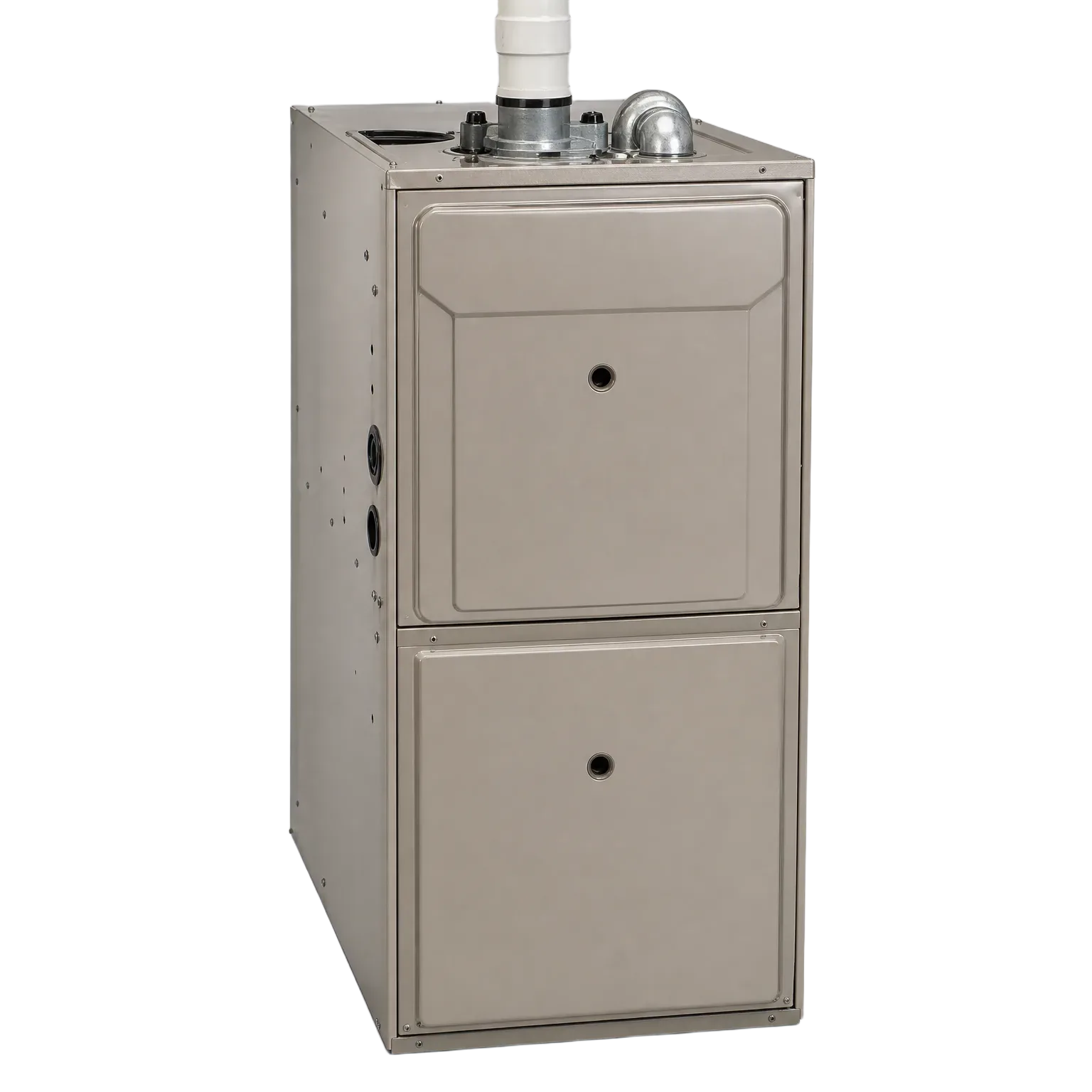
A furnace like this moves air through sheet-metal ductwork without a sound beyond a steady hum. The blower comes on, holds, and shuts off clean. Nothing bangs, nothing rattles, nothing screeches as it spins up.
A loud bang, a rattle, or a screech from your furnace is not something to wait out, and most homes around Joplin heat with electric furnaces that run hard through the cold months. Once something starts making noise, it keeps making noise until a contractor finds the cause. Finding that contractor is usually the slow part. You search, you call a few companies, you explain the sound over the phone, maybe twice, and then you wait on quotes to compare before you even know who you are letting into your house. This page skips that. One request connects you to a licensed contractor local to Jasper County, someone who works on furnaces like yours every winter and has heard this noise before in homes nearby. No flood of calls from competing companies, no repeating yourself. Tell them what you hear, and let them tell you what it means.
A bang when the furnace kicks on, a rattle while it runs, or a screech that fades as the blower spins up is the kind of thing that makes you want to know what's actually wrong before you decide whether to shut it off and wait or call someone now. Electric furnaces run hard through a Jasper County winter, and the noise usually points to a specific part rather than the whole unit failing.
A bang usually means the blower is forcing air past a loose panel or a duct connection that's worked itself free. A rattle is often a screw or a mounting bolt that's backed out somewhere in the blower compartment. A screech points to the blower motor bearing or the wheel itself rubbing where it shouldn't. None of these mean the furnace needs to be replaced. They mean one part is loose, worn, or misaligned, and a furnace that runs daily through a Jasper County winter puts enough hours on these parts for that to happen. Left alone, a loose part usually works looser and a worn bearing usually wears further, so the noise tends to get worse rather than go away on its own.
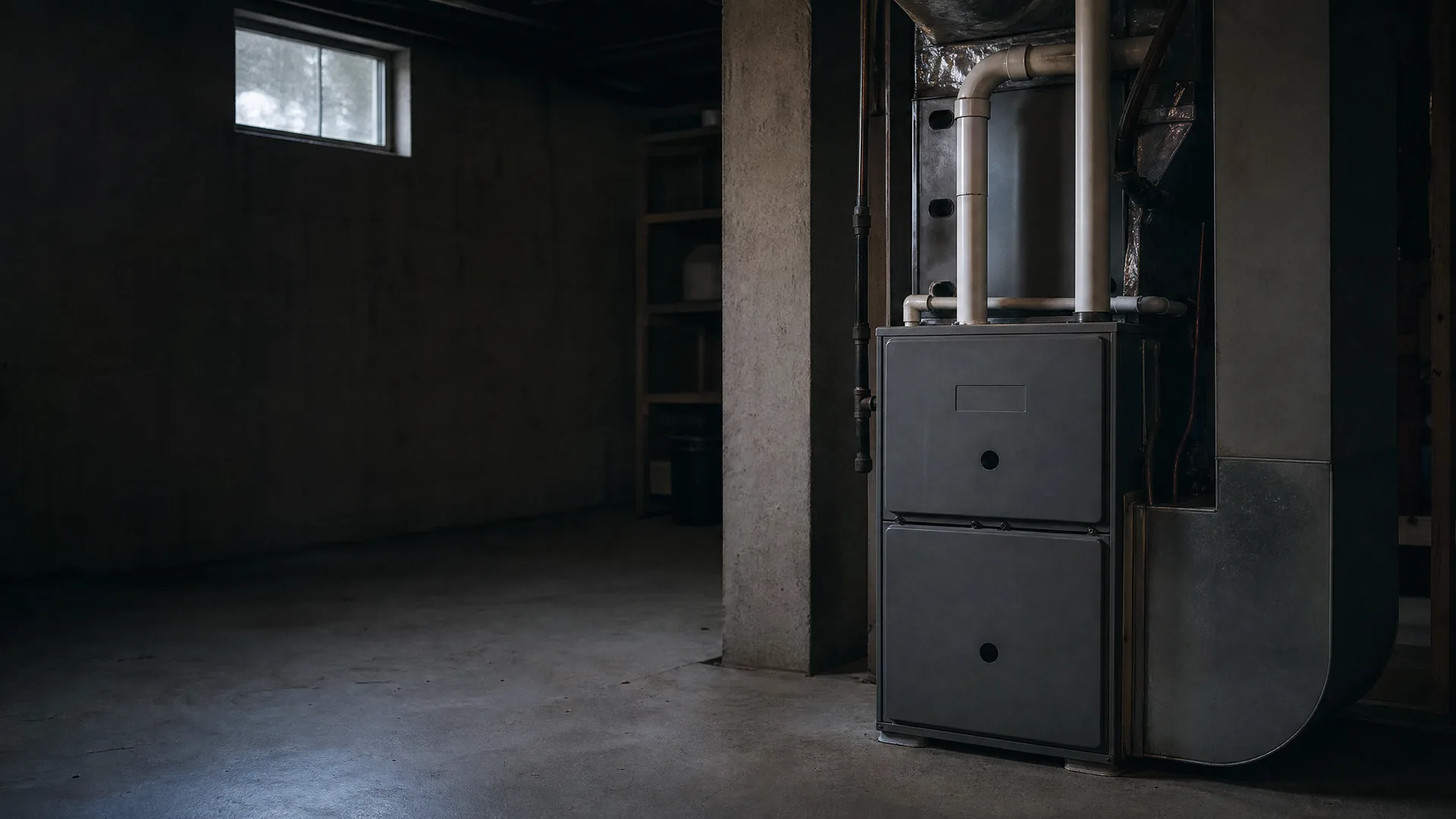
You're down in the basement around six, after dark, when the cold has settled in enough that the furnace should be running steady. Instead it sits quiet. A bang came from it twenty minutes ago, loud enough that you went down to look, and you cut the power at the switch before you'd even decided what you were doing. Now there's nothing but the HVAC light on the front panel and a little dust still hanging in the air where the cabinet rattled. The house is starting to lose its warmth. Upstairs it's a November night in Jasper County, cold enough that this can't sit till morning.
Winter nights average 27°F
Winter nights here average 27°F. A furnace that's banging or screeching at that temperature isn't one you can leave off overnight while you wait and see.
Heat runs October through April
Heat runs here from October through April, about seven months. A noise that starts in November has five more months to get worse before spring.
47.9% of homes heat with electricity
47.9% of homes in Jasper County heat with electricity. If yours is one of them, an electric furnace is what's making that sound, and what a contractor needs to know before they even walk in.
NOAA nClimDiv 1991-2020 · ACS 2020-2024
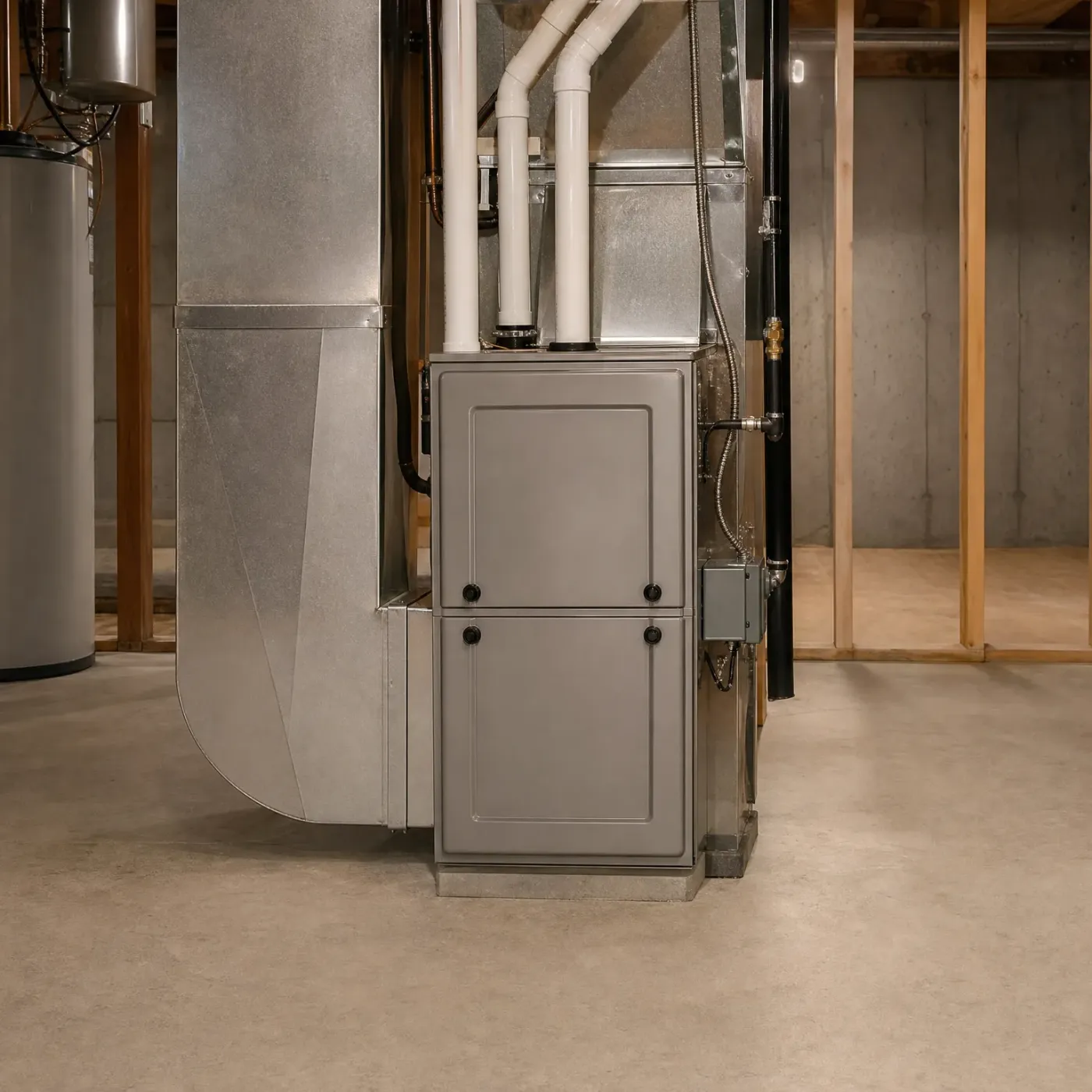
A furnace like this moves air through sheet-metal ductwork without a sound beyond a steady hum. The blower comes on, holds, and shuts off clean. Nothing bangs, nothing rattles, nothing screeches as it spins up.
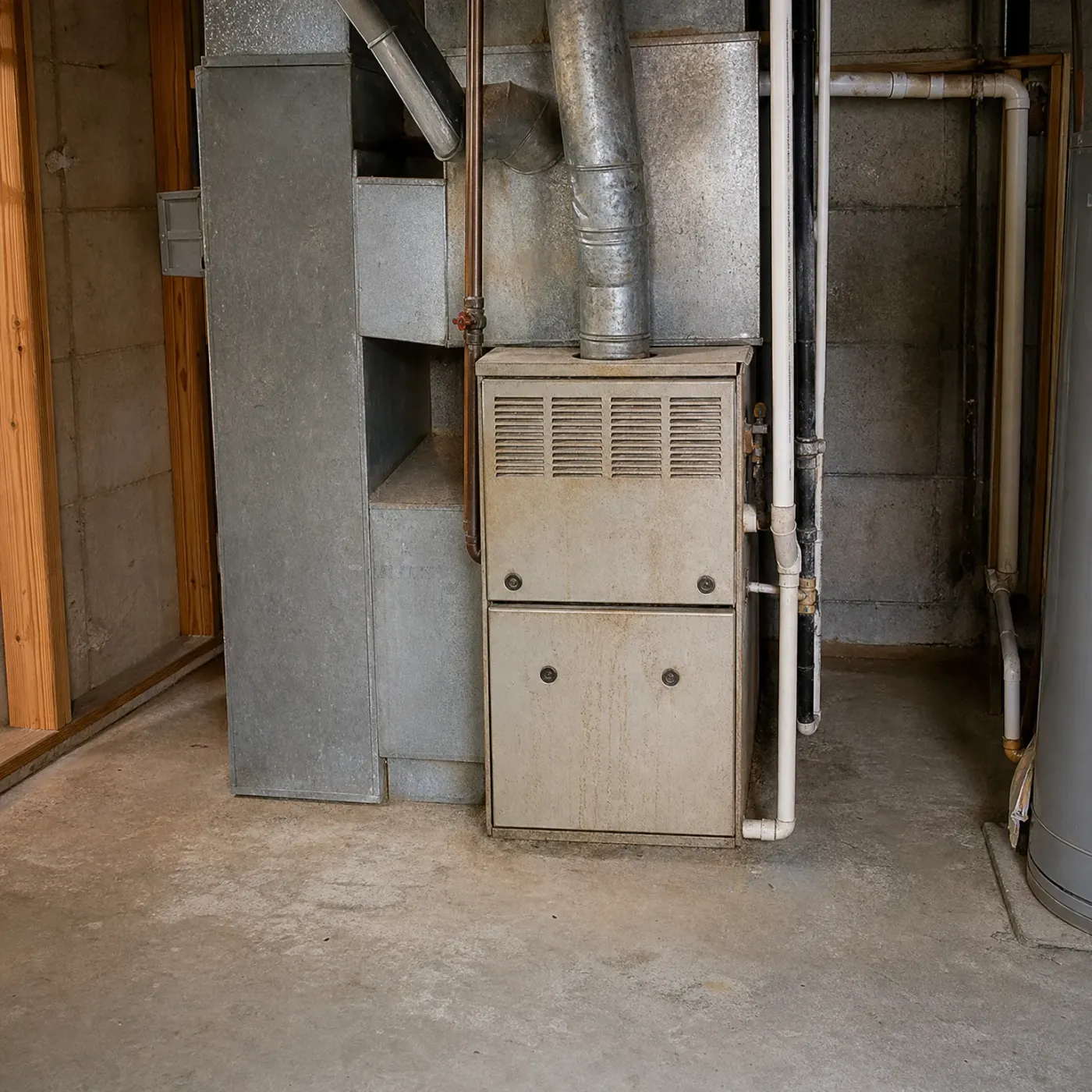
Galvanized ductwork and older components carry noise further than newer systems do. A bang here can mean delayed ignition. A rattle can mean a loose panel or a failing part working itself apart one cycle at a time.
Cold air moves across the flame sensor and ignites the gas burners
The blower motor spins up to push heated air into the ducts
Metal ductwork expands as warm air starts moving through it
A worn part knocks, scrapes, or squeals somewhere in that path
Walk through what's actually happening. The noise comes at a specific point, maybe right when the furnace kicks on, maybe only once the blower's been running a minute or two. You might smell something with it, a burnt dust smell the first time it fires after sitting, or something sharper that wasn't there before. The air coming out of the vents might feel weaker than usual, or you might notice the furnace short cycling, shutting off and restarting more often than it should. A rattle that was faint last week and is sharper now means a part has worked itself looser. Left alone, a loose or worn part usually fails the rest of the way, and you lose heat on a night you need it.




A licensed pro who repairs furnaces in Jasper County gets your request.
No charge to send it. You decide if you hire them.
Most of what you hear traces back to a handful of parts, and where the sound falls in the cycle tells you which one. Right at startup, before air is even moving, a rattle usually means something loose is sitting against the blower wheel or resting on the housing wall. That wheel is a squirrel cage, a cylinder of thin metal blades that spins to push air through the ducts, and when dirt builds up unevenly across those blades it throws the whole thing off balance. An unbalanced wheel doesn't just spin faster or slower, it wobbles, and a wobbling wheel knocks against the housing on every rotation. A squeal is a different part doing a different thing. If it fades out after a few seconds, that's the motor bearing working past some resistance as it spins up to speed, not metal ductwork, since ductwork doesn't produce a sound that changes pitch like that. Electric furnaces don't have a gas burner or an ignition sequence, so a bang right when the furnace kicks on is almost always the sheet-metal ductwork itself, popping as it takes on a sudden rush of heated air and expands. And sometimes the furnace isn't the real source at all. A panel that's not seated right, or a brace that's come a little loose, can buzz or rattle against the cabinet in a way that sounds like it's coming from somewhere deep inside when it's really just a loose piece of metal a few inches from where the sound seems to start.
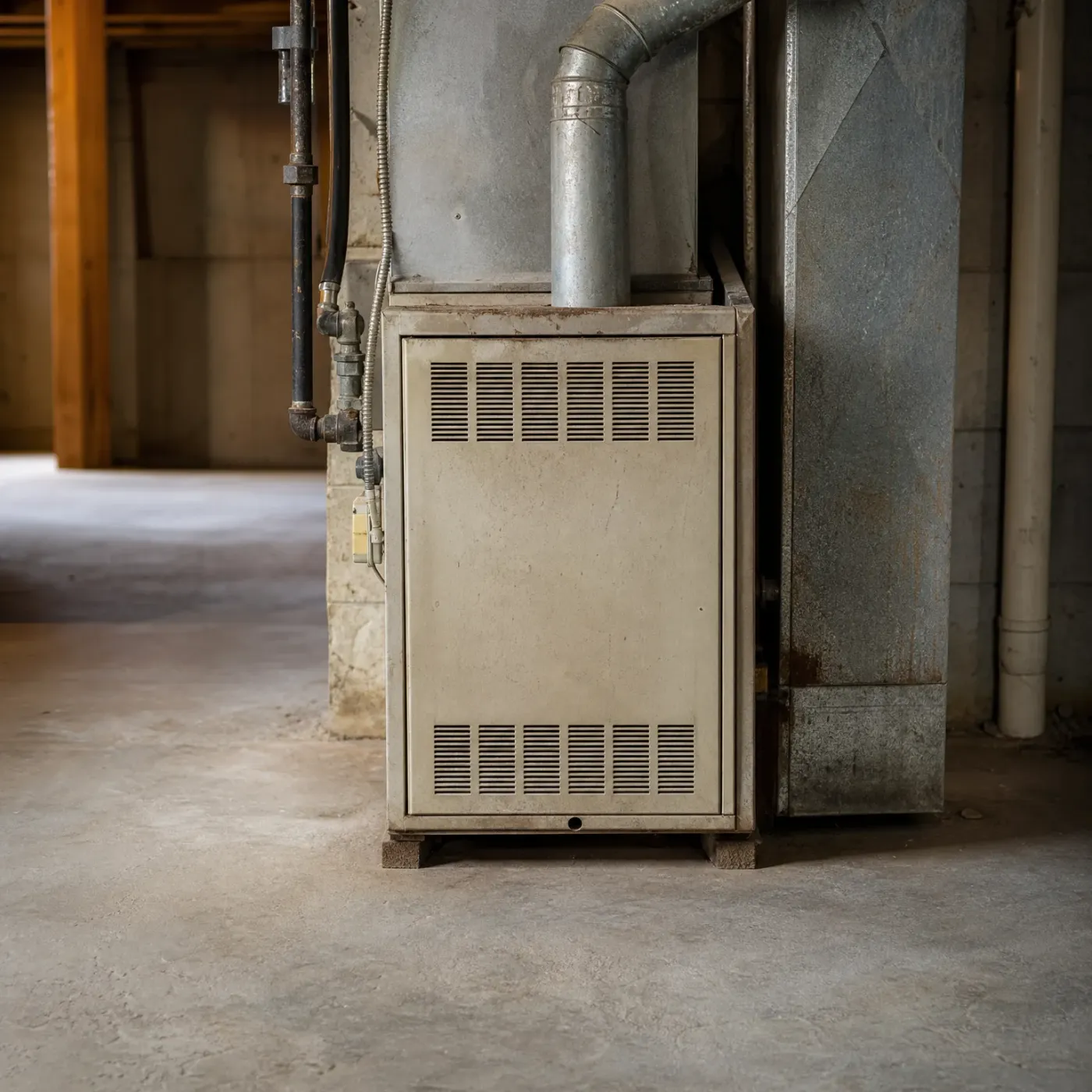
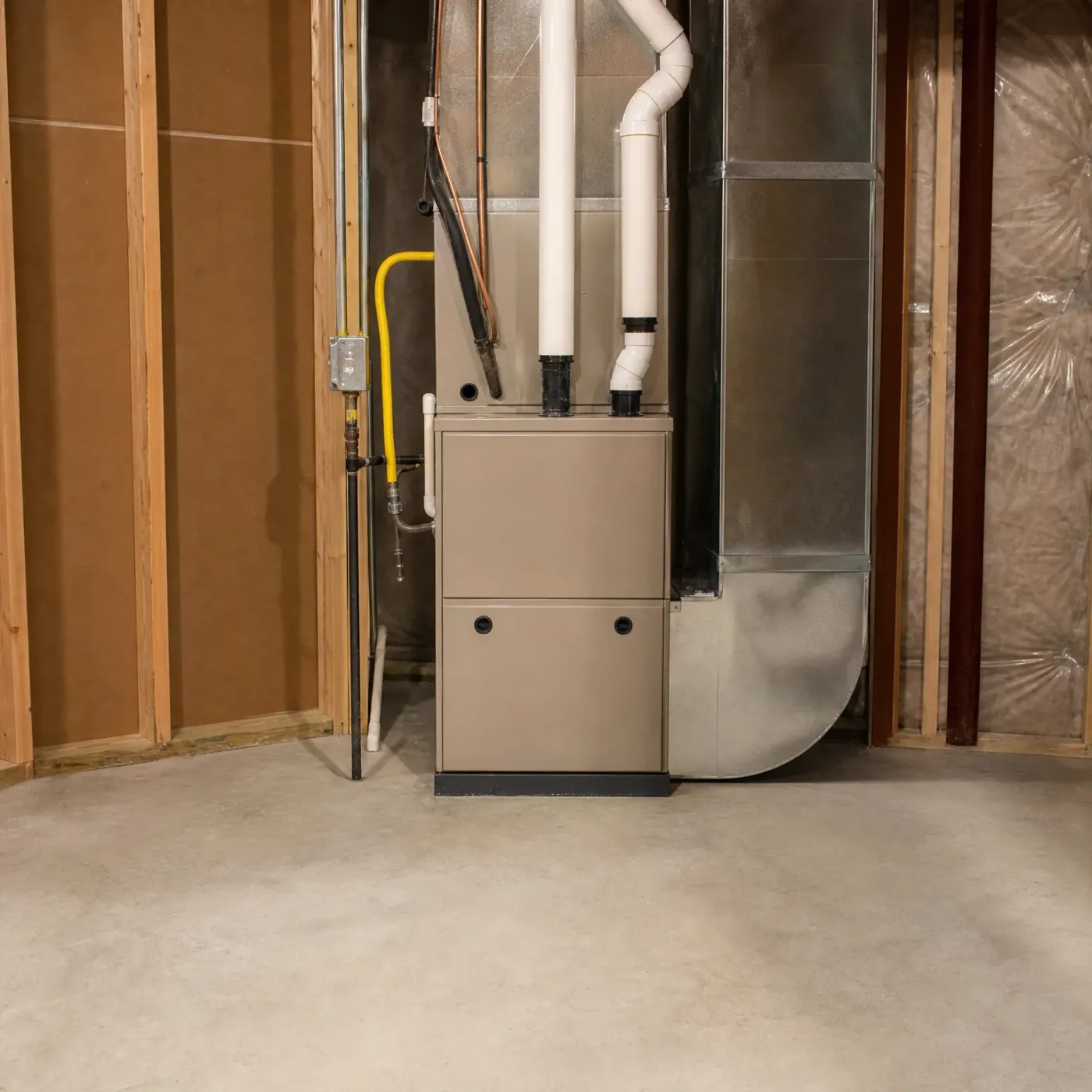
A rattle or screech doesn't stay put. The squirrel cage spins a few hundred times a minute, and if something is dragging against it, that contact wears a groove, and the groove makes more contact next cycle. A motor mount that's cracked flexes a little more each time the blower starts and stops. By the time a furnace is loud enough to hear from upstairs, the part behind it has usually been wearing for a while. Nothing about a furnace fixes itself running. The noise you hear tonight is the quietest that part is going to sound.
There's no gas burner to worry about, no flame sensor, no risk of carbon monoxide from a cracked heat exchanger. But the blower motor, the blower wheel, and the mounts holding them still wear the same way they would in any furnace. Jasper County homes running electric heat from October through April put real hours on that motor every winter. A contractor who works on electric furnaces all season knows which of those parts fails first in a given brand, and can usually narrow it down before taking the panel off.
At 27°F overnight, your furnace isn't cycling on once or twice and calling it done. It's holding that knock or rattle for hours at a stretch to keep the house warm. A noise that might be easy to ignore on a mild night turns into a lot of wear by morning.
NOAA nClimDiv 1991-2020
A furnace that bangs, rattles, or screeches is telling you something is loose, worn, or dragging where it shouldn't be, and that gets worse the longer it runs, not better. In a Jasper County winter, with nights near 27°F and the furnace carrying the house from October through April, that's not a sound to sit with. A licensed local contractor who works on these furnaces every winter can hear what you're describing, or come look at it, and tell you what's actually making that noise and what it takes to stop it. That's one call, to someone who knows this equipment, instead of you sorting through companies and explaining the same bang or rattle over and over. Your furnace should run on a steady hum, nothing more, and getting it back to that is what the repair is for.


Skip the calls to every shop
The pro who gets in touch is licensed in Missouri and works in Jasper County.